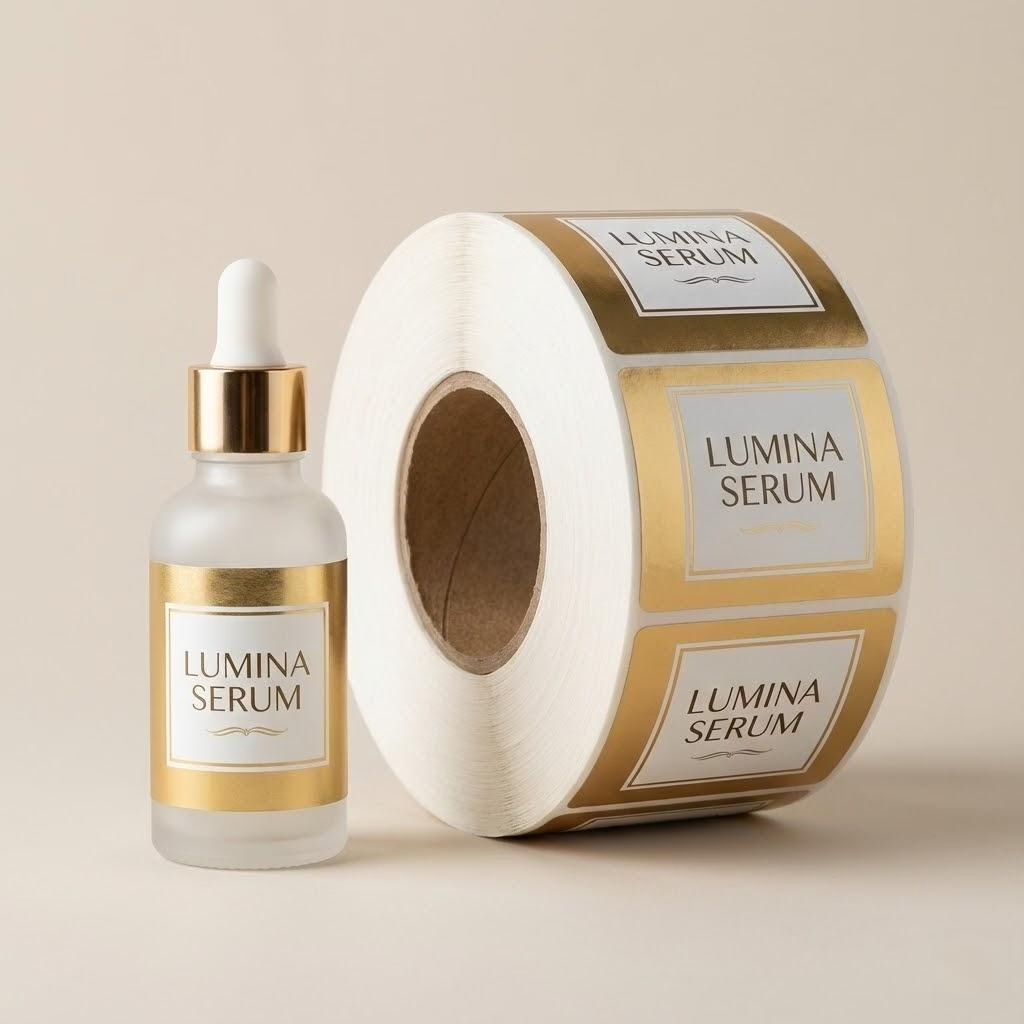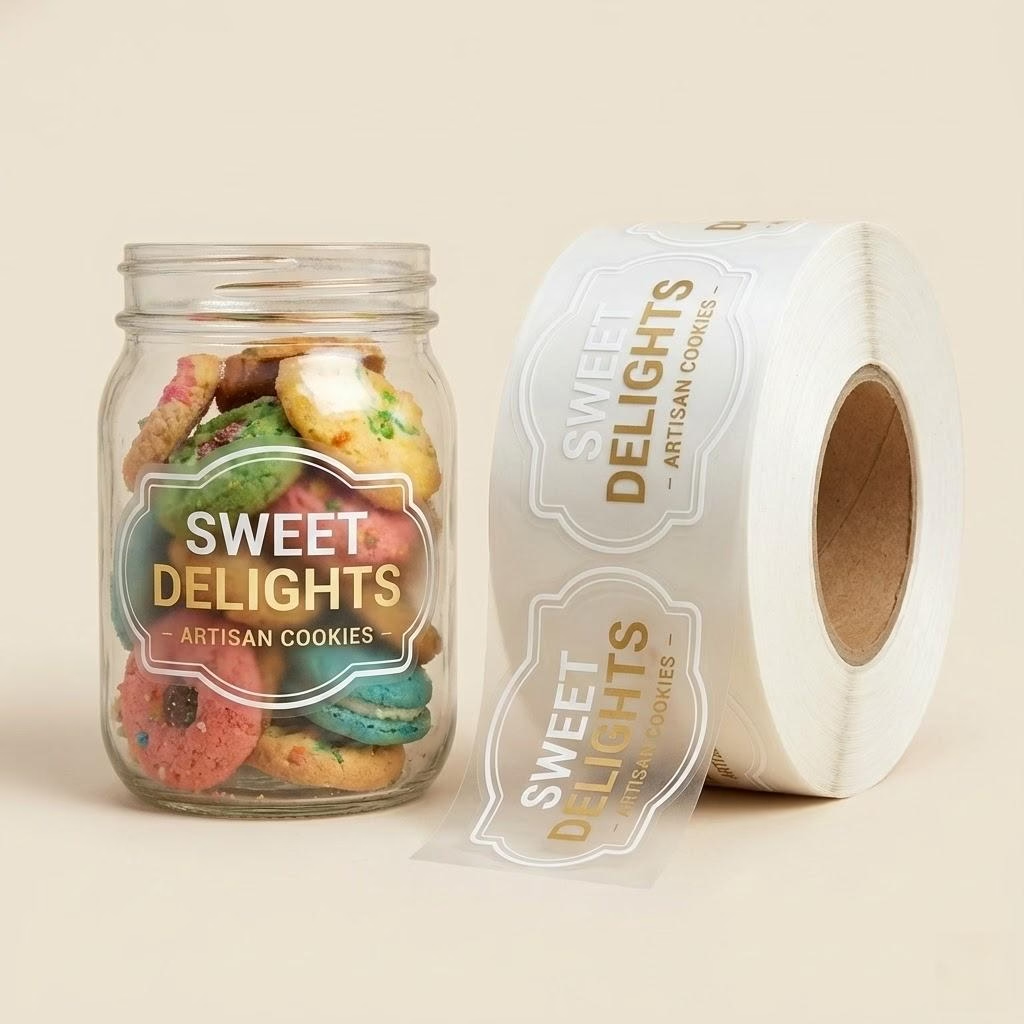
Most luxury brands think the “no-label” look is just about picking a clear film. They are wrong. If you want a flawless invisible finish without the typical production nightmares, here is the exact technical blueprint you need to win.
Master clear BOPP cosmetic roll labels by choosing film with a haze value under 2% and high-leveling adhesives (22-24g/㎡). Using PET liners instead of paper ensures a smooth finish, effectively eliminating the “silvering” effect for a seamless look on luxury skincare bottle packaging.
But choosing the film is only the first step. Read on to discover the specific engineering secrets—like MDO recovery and sensor calibration—that keep your high-speed labeling line running at peak efficiency.
1. The Physics of Clarity: Why “Transparent” Isn’t Enough
In B2B procurement, “clear” is a vague term; Haze Value is a technical specification. Most standard transparent labels fail on luxury bottles because they aren’t truly invisible—they are merely translucent.
Understanding the Haze Value
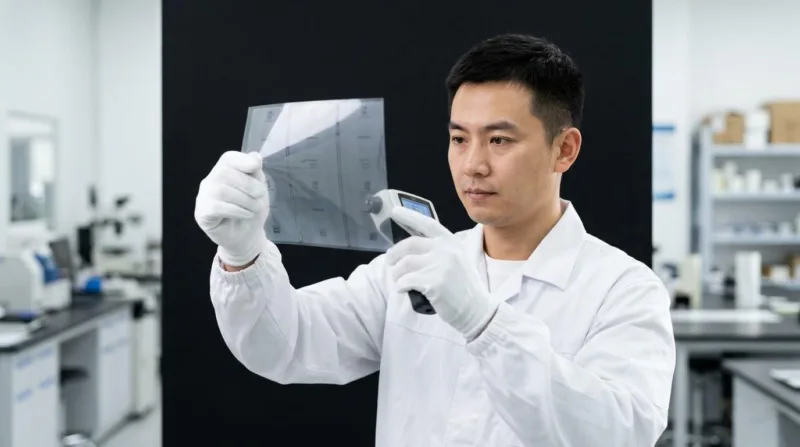
When you apply a standard clear label to a dark-colored or frosted bottle, you often see a slight “milky” or foggy appearance. This is caused by light scattering. To achieve a true “No-Label” finish, your material must meet the following industrial benchmarks:
Table 1: Standard vs. Engineering Grade Transparent Labels
| Technical Metric | Standard Clear BOPP | Industrial Grade (Label Printing China) | Impact on Brand Perception |
|---|---|---|---|
| Haze Value | 5% – 8% | < 2% | Eliminates the “milky” fog on dark bottles. |
| Light Transmittance | ~85% | > 90% | Ensures 100% color accuracy of the bottle. |
| Adhesive Flow | Standard | High-Leveling PSA | Prevents “Orange Peel” texture in the glue. |
| Liner Type | Glassine Paper | 23μ / 30μ PET Liner | Determines the smoothness of the adhesive. |
“The ‘No-Label’ look is more than just a design trend; it’s a technical challenge of balancing material transparency with adhesive performance. High-clarity BOPP films must not only disappear on the container but also withstand the physical rigors of the supply chain.” — Tina Hart, Vice President of Marketing, Avery Dennison.
2. Solving the “Silvering” Nightmare: Adhesive Engineering
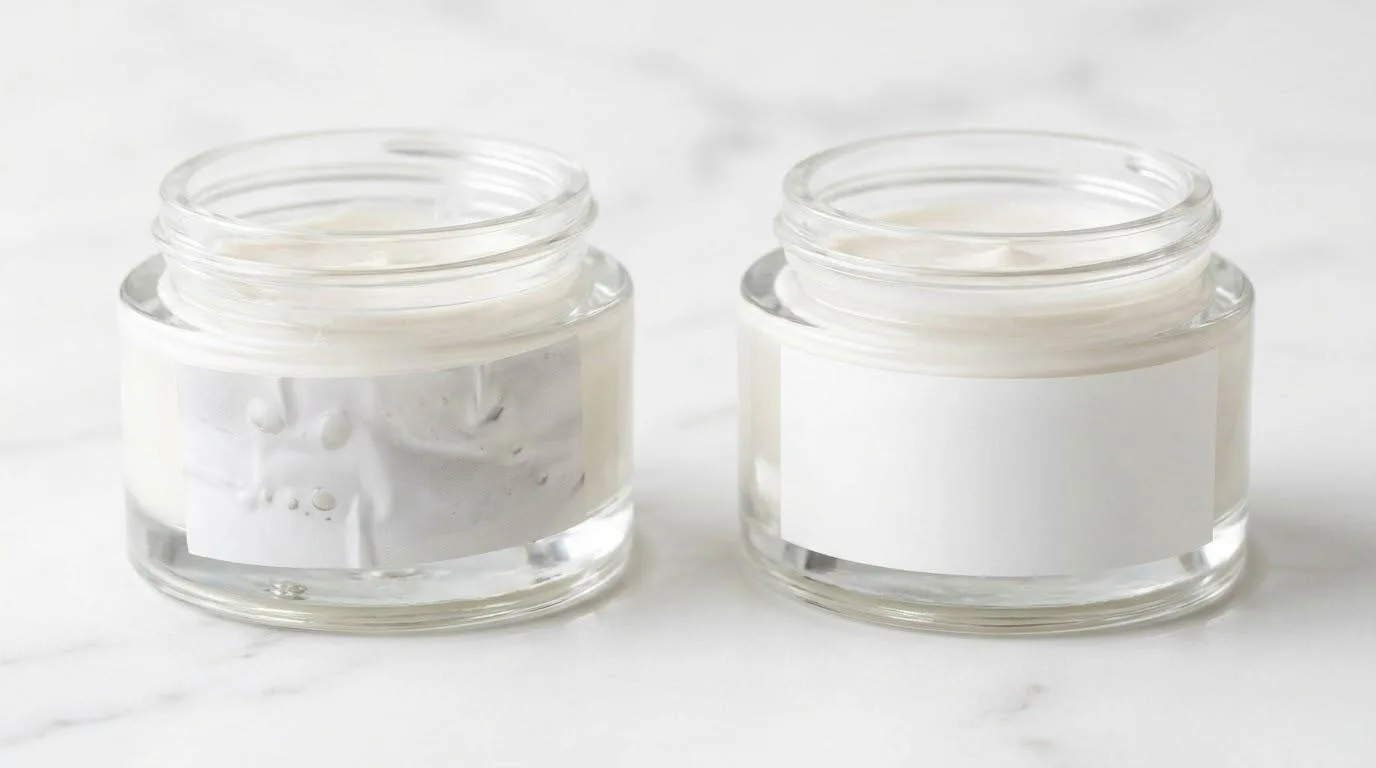
The most common failure in transparent labeling is the Silvering Effect. These are microscopic air bubbles trapped between the label and the container. They look like silver specks and instantly scream “cheap sticker.”
The “Optical Bridge” Logic
To eliminate silvering, the adhesive must act as an optical bridge, filling every microscopic valley on the surface of the container.
- Surface Tension (Dyne Levels): Your bottles must be tested for surface energy. We recommend a tension of 38–42 dynes/cm. If it is below 34, the adhesive won’t “wet” the surface, leading to air entrapment.
- Adhesive Coat Weight: Standard labels use 18g/㎡ of glue. For glass bottles with subtle surface irregularities, we increase the coat weight to 22g/㎡ or 24g/㎡. That extra 4g of adhesive acts as a “buffer” to displace air.
- The “Orange Peel” Trap: If the adhesive dries too quickly during production, it creates a micro-texture known as “orange peel.” This causes light to scatter, making the label look dirty. Use only low-haze leveling adhesives to ensure a mirror-like finish.
3. High-Speed Automation: The PET Liner Advantage
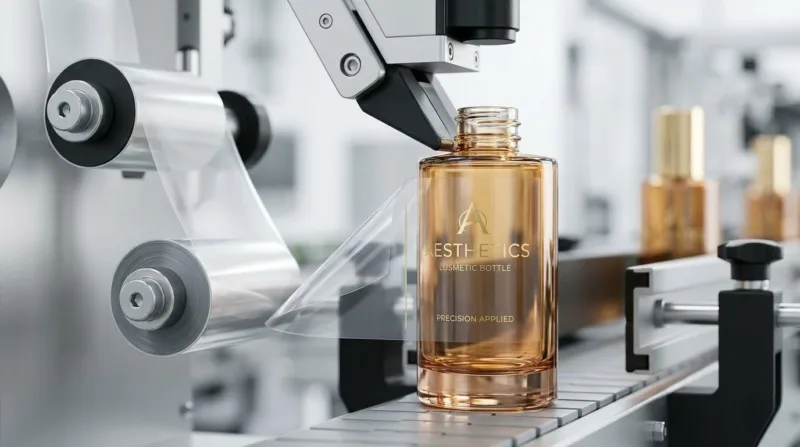
In the factory, we say: Consistency is OEE (Overall Equipment Effectiveness).
If your production line runs at 200+ bottles per minute, the liner (the backing paper) is the most critical component of your label roll.
Why Luxury Brands Are Abandoning Glassine Liners
Standard paper liners (Glassine) have natural fibers that leave a micro-imprint on the adhesive. When you peel the label off, the adhesive is already “textured,” which ruins the transparency. Vetting a China-Based Label Factory ensures you get consistent liner quality.
Ready to Master the “No-Label” Look?
Don’t let bubbles and haze ruin your premium skincare line. Get factory-direct Clear BOPP Cosmetic Roll Labels engineered for 100% machine-readiness and save 30% today.
The Solution: 23μ / 30μ PET Liners
- Precision: PET liners are incredibly smooth. They act as a mold, ensuring the adhesive layer is perfectly flat.
- Strength: PET has 40% higher tensile strength than paper. This reduces web breaks on high-speed applicators by 95%.
- Sensor Calibration: Transparent labels on transparent bottles are a nightmare for optical sensors. By using a PET liner with Black Mark (Timing Mark) printing on the reverse, your machine can achieve ±0.5mm registration accuracy without skipping a beat.
4. The Squeeze Test: Why Standard BOPP Fails on Tubes
Not all skincare packaging is rigid. If you are labeling squeeze tubes for facial cleansers or hand creams, standard BOPP is your enemy.
The “Material Memory” Trap
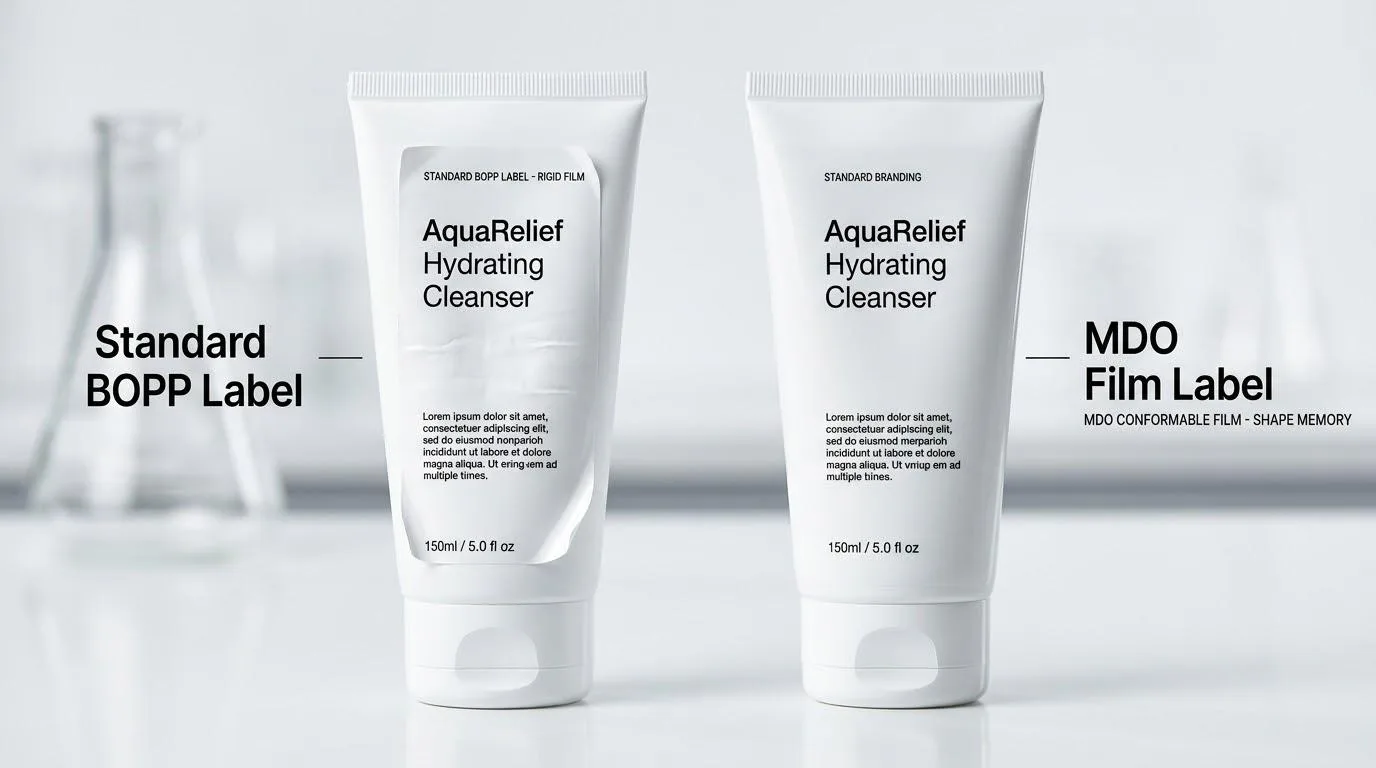
At MLabel Printing China, we once encountered a client who used standard 60μ BOPP on a tapered, flexible tube. Within 48 hours, the labels began to develop “tunnels” and edge lifting. The Root Cause: BOPP is a biaxially oriented film. It has “memory” and wants to stay flat. When you wrap it around a curve and then squeeze the tube, the label fights back.
The Soul of the Solution: MDO Film
For any container with a diameter under 30mm or any flexible “squeeze” application, we mandate MDO (Machine Direction Oriented) Film.
- MDO is stretched in only one direction, making it far more supple and conformable.
- It has Zero Memory Snapback, meaning it moves with the bottle’s deformation and stays flat, even after 1,000 squeezes.
5. Chemical Resistance and Color Consistency
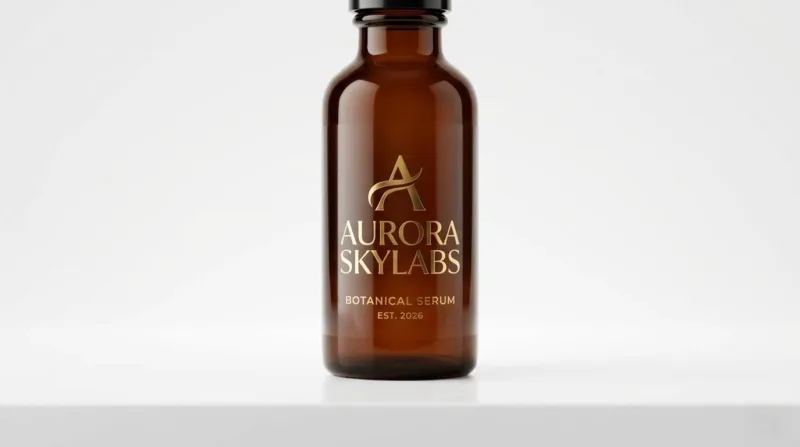
A luxury label that peels after three uses is a brand disaster. Skincare products are chemically aggressive—full of essential oils, alcohols, and surfactants.
- UVP Top-coats: We apply a specialized Ultra-Violet Protective Top-coat that passes a 48-hour chemical immersion test. This ensures the ink doesn’t dissolve when a consumer with oily hands handles the bottle.
- Delta E (ΔE) < 1.0: In luxury branding, “close enough” isn’t good enough. We use spectrophotometers to ensure that the gold foil or brand colors on your labels stay within a ΔE < 1.0 variance across different batches. This ensures that a bottle bought in New York looks identical to one bought in Paris.
“In an era where OEE is the primary metric for manufacturing success, the compatibility between the label roll and the automatic applicator is what separates successful brands from those plagued by production bottlenecks.” — Matt Reynolds, Editor, Packaging World.
6. The Procurement Audit: Your “No-Label” Checklist
To ensure your next order of Clear BOPP Cosmetic Roll Labels is an engineering success, audit your Label Supplier with these five questions:
- Haze Certification: Can you provide a test report showing a Haze Value of < 2%?
- Liner Specification: Are you using a PET liner to ensure adhesive smoothness for high-speed application?
- Dyne Testing: Have we matched the adhesive coat weight (e.g., 24g/㎡) to my specific bottle’s surface energy?
- Conformability Check: Is the bottle tapered or squeezable? If so, are we using MDO film instead of standard BOPP?
- Chemical Barrier: Does the label have a top-coat that survives exposure to the specific oils in my formula?
The Bottom Line
A transparent label is not just a sticker; it is a functional component of your automated production line. At Label Printing China, we believe that perfect transparency is calculated, not just printed.
Stop overpaying for “standard” labels that fail on the line. Let’s engineer a solution that makes your brand truly invisible—and your production truly seamless.