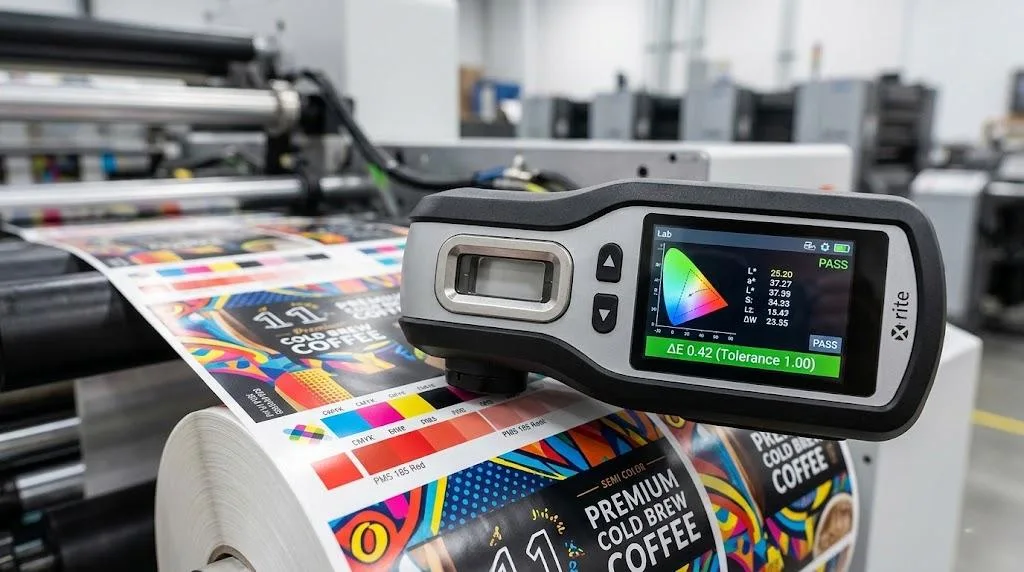
Most procurement managers focus on the “sticker price,” but ignore the hidden production traps and labels hidden sourcing costs that drain your bottom line. I’ll show you how to master your 2026 budget using a professional Label Printing Cost Analysis that focuses on long-term ROI instead of just low-quality bargains.
A label printing cost analysis shows unit price is only 15% of total applied cost. The remaining 85% stems from hidden expenses like production downtime, SKU obsolescence, and 2026 regulatory fines (EPR taxes), proving that low-quality materials significantly increase long-term business costs.
Ready to stop leaking profits and protect your production OEE? Let’s dive into the “10-micron trap” and the specific TCO formulas you need to use right now.
Why the Lowest Unit Price Often Leads to the Highest Total Cost
Have you ever looked at a quote for custom labels and felt a surge of satisfaction because you found a supplier willing to shave off two cents per unit?
While it feels like a win for the procurement department, it often overlooks the massive profit potential of premium label upgrades that justify much higher retail margins.
But as we head into 2026, I want to tell you why that “win” often turns into a $12,000 disaster by the time the product hits the assembly line.
I recently consulted for a premium dietary supplement brand that was celebrating a successful negotiation. They had managed to secure a label price that was roughly 15% lower than their previous contract. However, three weeks later, I received a frantic call.
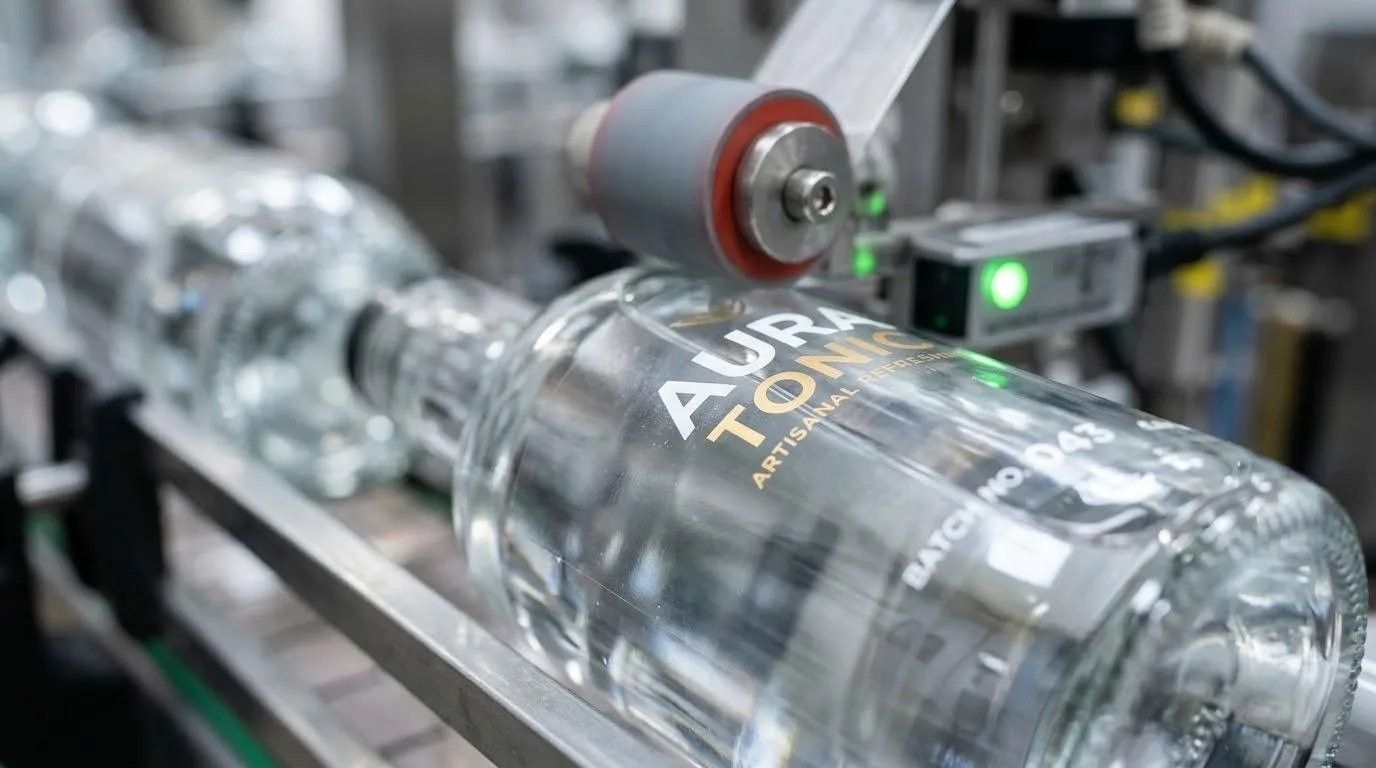
Their high-speed labeling line, which usually processes 400 bottles per minute, was stopping every 20 minutes.
The culprit? A ‘cheap’ liner that couldn’t handle the tension of the automated applicator, a primary driver of technical liner engineering pitfalls that halt production.
In a single afternoon, they lost four hours of production. At an operational cost of $3,200 per hour, that one-cent saving resulted in a $12,800 loss in output. This is why a modern Label Printing Cost Analysis must move beyond the surface-level unit price and look at the “Total Applied Cost.”
The Math Behind the Label Cost Iceberg

If you only look at the invoice, you are only seeing about 15% of your actual expenses. To truly understand your budget, you need to use the Total Applied Cost (TAC) formula.
At Label Printing China, we use this to help our partners find hidden efficiencies that a simple quote would never reveal. This is especially vital when navigating Domestic vs. Overseas Label Printing decisions.
TAC = (P × Q) + S + L + (Cdt × Rf) + (Vi × Ro)
- P (Unit Price): The number on your invoice.
- Q (Quantity): The volume you order.
- S (Setup Fees): Tooling, plates, and design versioning.
- L (Logistics): Shipping, handling, and tariffs, which must be precisely calculated using an import landed cost model to avoid budget depletion.
- Cdt (Downtime Cost): Your hourly production value (often the biggest hidden variable).
- Rf (Failure Rate): How often labels jam, peel, or tear.
- Vi (Inventory Value): The capital tied up in stored labels.
- Ro (Obsolescence Rate): The percentage of labels you throw away due to design or regulation changes.
“The ‘hidden’ cost of choosing the cheapest supplier is the price of fragility. A low-cost label is an asset only until it fails; then, it becomes a massive liability.” — Dr. Yossi Sheffi, Director of the MIT Center for Transportation and Logistics.
The 1:10:100 Rule of Quality
To visualize this, think of the 1:10:100 rule. Spending $1 on high-quality materials and a professional partner like Label Printing China at the start is your prevention phase, which requires following a technical label sign-off protocol to prevent costly downstream errors.
If you skip that and have to correct errors in your own warehouse, it will cost you $10, particularly when rework involves mastering bubble-free label application for small batches.
But if that label fails on the retail shelf—experiencing label flagging in a humid Amazon warehouse or missing a 2026 compliance code—it will cost you $100 in brand damage, retail fines, and lost customers.
The 10-Micron Margin and the Butterfly Effect
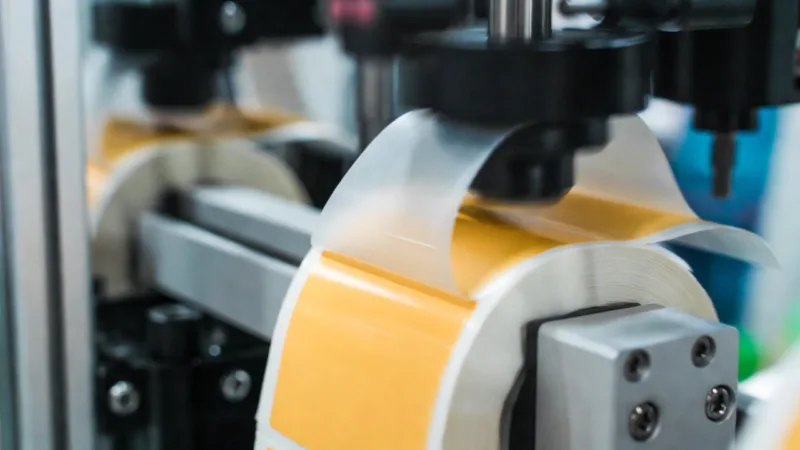
In nine years of running a factory, I have learned that the most dangerous part of a label is the part you throw away: the liner, which must be paired with correct unwind orientation standards to avoid downtime.
Most procurement managers focus on the “face stock” (what the consumer sees), but the liner is the precision component that interacts with your machinery.
I see this “10-Micron Trap” constantly. A client switches to a budget supplier who uses a Glassine liner with a thickness variance of just 10 microns too much or too little—a precision failure explored in our zero-downtime label engineering guide that triggers sensor errors and line stoppages.
The Reality on the Factory Floor: Modern high-speed applicators use optical sensors to detect the gap between labels. When your liner thickness fluctuates, the sensor “goes blind.”
It either misses the label or triggers a false “breakage” alarm, an expensive error that requires professional troubleshooting sensor alarms to resolve.
Furthermore, cheap liners often have uneven silicone coating. This leads to inconsistent “Release Force”—the amount of energy required to peel the label from the backing.
If the release force is too high, the label stays on the liner and wraps around the roller. If it’s too low, labels pre-dispense and jam the machine, which is why we recommend reviewing our guide on label roll capacity.
A $0.05 label that stops a $5,000-per-hour line is a catastrophic failure.
At Label Printing China, we treat liner consistency as a non-negotiable engineering standard to ensure peak Overall Equipment Effectiveness (OEE) for your Custom Roll Labels.
Ready to Ensure 100% Machine-Ready Labels?
Stop guessing about liner thickness and downtime. Get precision-engineered roll labels designed to keep your high-speed production line running at peak OEE.
The 2026 Regulatory Eco-Tax Bomb

We are entering a new era of “Regulatory Black Swans.” By 2026, laws like California’s SB 54 and the EU’s Packaging and Packaging Waste Regulation (PPWR) are no longer distant threats—they are active financial variables.
Many “low-cost” suppliers save money by using non-recyclable adhesives. However, industrial food labels require specific moisture-proof BOPP and eco-compliant glues to prevent peeling and avoid massive regulatory risks.
- Extended Producer Responsibility (EPR) Taxes: In 2026, brands are increasingly being taxed based on the “recyclability” of their entire package. A non-compliant label can trigger an Eco-Tax of 10% to 15% on the total packaging cost.
- Digital Product Passports (DPP): Future-proof labels now require high-definition variable data (QR codes or RFID) for traceability. Cheap printing processes often suffer from “bleeding” or poor contrast, making these codes unscanable. If your “cheap” label can’t be scanned by a warehouse robot, your entire shipment could be rejected.
Compliance is no longer a “nice-to-have” feature; in 2026, compliance is your profit moat, often requiring a vendor consolidation strategy to ensure seamless data reporting across your entire product line.
The Inventory Illusion and the Hidden Inventory Tax
We’ve all seen the tier pricing that promises a 40% discount if you order 500,000 units instead of 50,000. It looks great on a spreadsheet. However, in the fast-moving 2026 market, this is often a trap.
Consider a craft beer brand that ordered an 18-month supply of labels to hit a “bulk discount” price, a costly mistake that could have been avoided by following a professional label sourcing checklist during the vendor qualification stage.
Eight months into that supply, the FDA updated its labeling requirements for a specific ingredient.
Suddenly, the remaining 200,000 labels in their warehouse became “expensive sticky waste,” a frequent inventory disaster manageable through multi-SKU cost optimization for small batch launches.
The Solution: The Flexibility Premium. This is where Label Printing China recommends a shift in strategy. Instead of chasing bulk discounts, look at Digital Printing for high-variability SKUs or a “Master Order + Split Delivery” model through a professional Custom Label Printing partner.
| Cost Factor | Bulk Flexo (The “Cheap” Way) | Digital/Hybrid (The “Value” Way) |
|---|---|---|
| Initial Unit Price | Low ($0.05) | Moderate ($0.08) |
| Inventory Risk | High (18-month stock) | Low (On-demand) |
| Obsolescence Cost | High (15-20% waste) | Zero |
| 2026 Reality | Fragile | Resilient |
“Winners are those who move toward ‘value-per-package’ strategies. Optimizing purely for the lowest material cost inadvertently increases systemic complexity and waste.” — David Feber, Senior Partner at McKinsey & Company.
How to Audit a Label Partner for 2026
If you want to move away from being a “price-taker” and become a “value-creator,” you need to change the questions you ask your suppliers. Stop asking “What is your lowest price?” and start asking these five technical questions:
“What is your liner’s thickness tolerance and release force stability?”
If they don’t have a data sheet for this, they aren’t ready for your automated line.
“How do you handle version control for 2026 regulatory updates?”
Look for a partner with a robust digital workflow that prevents blurry design files and outdated graphics from being printed.
“Are your adhesives pre-certified for SB 54 and EPR standards?”
This prevents the “Eco-Tax” from eating your margins later.
“What is your ‘Total Applied Cost’ audit process?”
A professional partner should be able to help you calculate how their labels affect your OEE.
“Can you support a Master Order with split-delivery to reduce my inventory risk?”
This shows they are invested in your cash flow, not just their own press-run efficiency.
Choosing Resilience Over Cheapness
The 2026 market is unforgiving to those who only look at the bottom line of an invoice, emphasizing the urgent need for specialized label budget protection strategies to navigate ongoing market volatility.
In an environment of high-speed automation and strict global regulations, your labels are either a bridge to your customer or a barrier to your production.
At Label Printing China, we’ve spent nearly a decade proving that a professional Label Printing Cost Analysis is the most powerful tool in a procurement manager’s arsenal. By investing in material consistency, regulatory compliance, and supply chain flexibility, you aren’t just buying a label—you are securing your brand’s future.
Are you still chasing that one-cent saving, or are you ready to audit your “Total Applied Cost” for 2026?
Don’t wait for a $12,000 downtime event to tell you that your labels were too cheap; start identifying supplier red flags today and build a supply chain that reflects the true value of your brand.
Would you like our team at Label Printing China to perform a free TCO Audit on your current label specs? Reach out to our technical experts today..