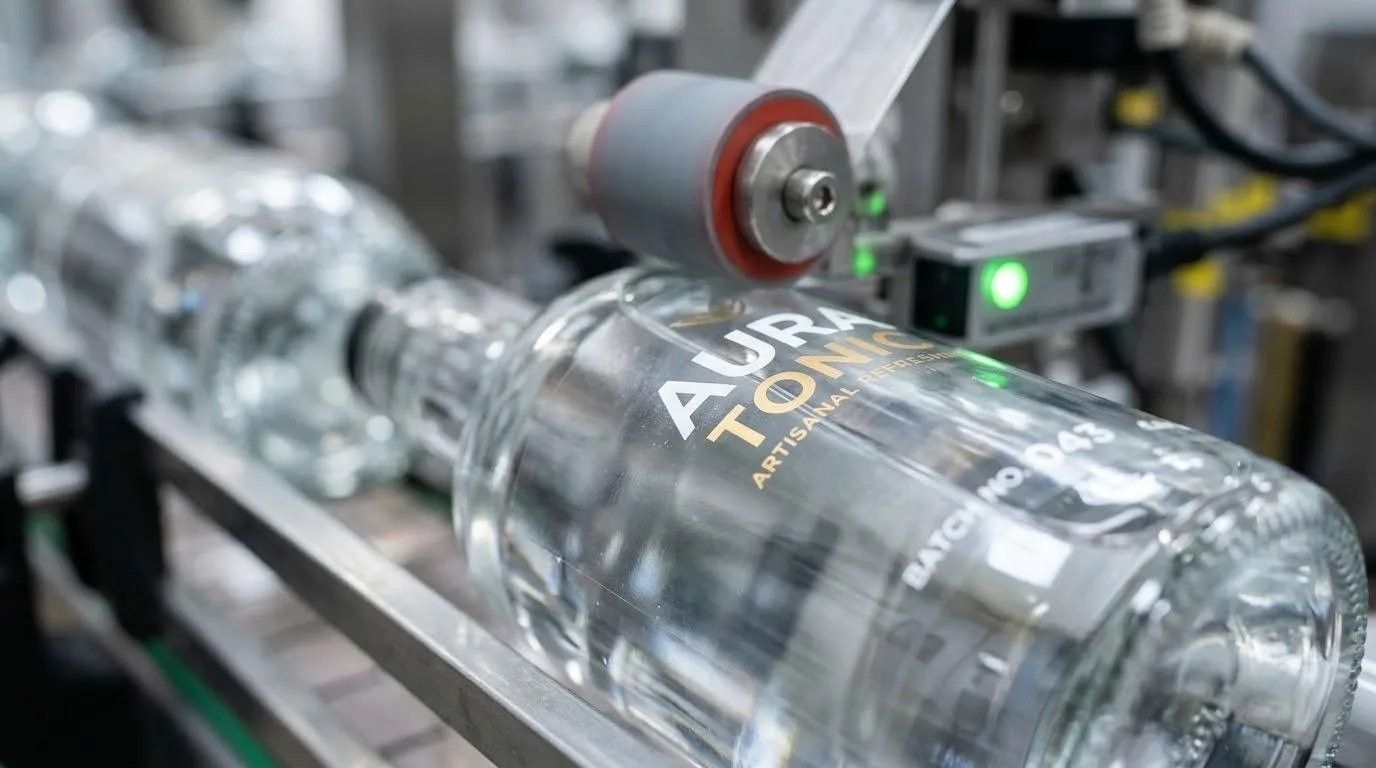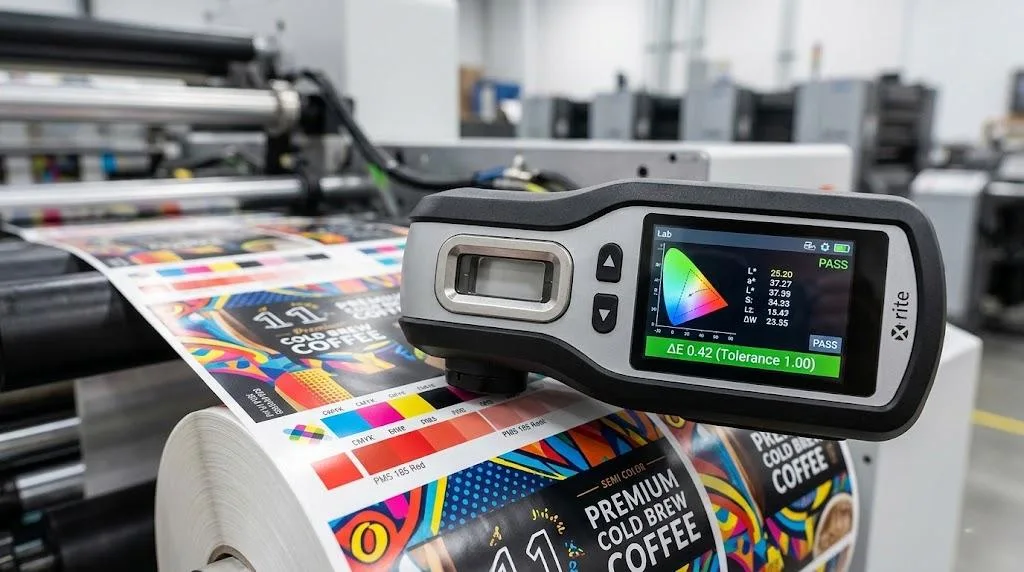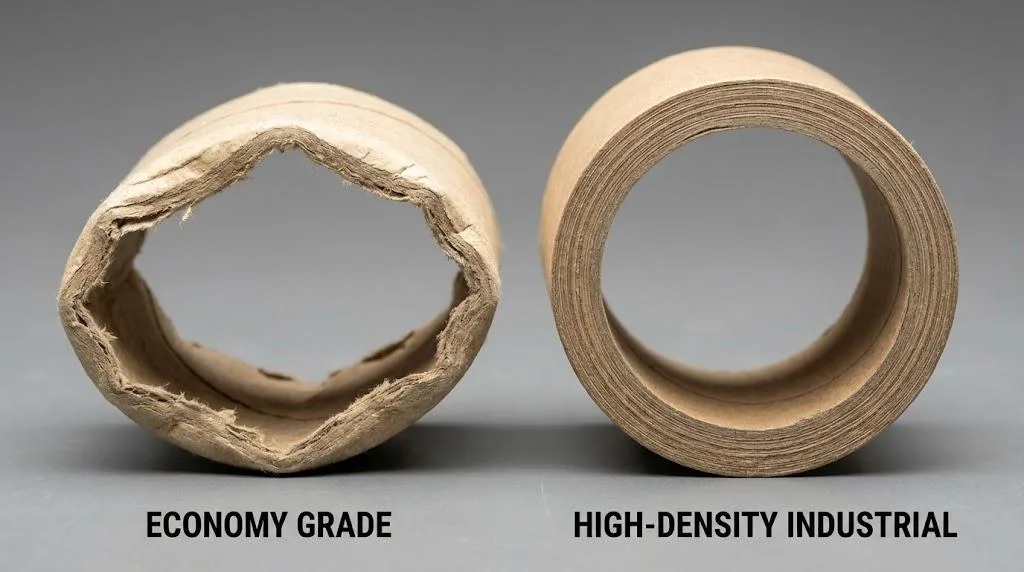
Stop overpaying for your packaging. Most VPs focus exclusively on unit price, but the real profit killers are the hidden drains buried deep within your supply chain. I will show you exactly how to identify these leaks and fix them using a proven strategic bundling framework.
Labels hidden sourcing costs include administrative overhead, inventory carrying fees (15–30% annually), machine setup inefficiencies, fixed customs entry fees, and production downtime risks. Strategic bundling minimizes these expenses by consolidating SKUs and optimizing material web width utilization.
Want to see the data-backed “Iceberg Model” that reveals the true price of your labels? Keep reading to learn the exact formulas and bundling strategies we use to boost procurement ROI in 2026.
1. The Administrative Tax: The $150 Paperwork Leak

Every time your team issues a Purchase Order (PO), you aren’t just buying labels; you are triggering a costly internal process. According to the 2025 BME procurement benchmark, the average administrative cost to process, track, and reconcile a single PO is between $120 and $150.
The Complexity Tax of Fragmented SKU Sourcing
If your brand has 100 SKUs and you order them in small, “as-needed” batches, you might be issuing 40 to 50 POs a year. That is $7,500 in pure administrative overhead before a single drop of ink hits the paper.
Conducting a thorough label printing cost analysis often reveals that these hidden fees far outweigh any pennies saved on unit price.
The Solution: Stop treating every SKU as an isolated event. By implementing Strategic Bundling, you consolidate these 100 SKUs into quarterly “Master Orders.”
You reduce 50 POs to 4, immediately recovering thousands of dollars in labor costs and allowing your procurement team to focus on high-value strategy rather than chasing tracking numbers.
2. The “Zombie SKU” Trap: Carrying Costs and Obsolescence
One of the most common mistakes I see from my perspective as a factory owner is the “Volume Discount Trap.” A procurement manager orders 12 months of stock for a low-volume SKU to hit a $0.02 price break, only to have that stock sit in a warehouse for 300 days.
The Real Cost of “Cheap” Inventory
Inventory isn’t free. Between warehouse rent, insurance, climate control, and capital tie-up, the industry standard for Inventory Carrying Cost is 15% to 30% of the label’s value per year.
Even more lethal is Obsolescence. In 2026, market regulations and marketing pivots happen fast. If you hold 12 months of stock and the FDA changes a labeling requirement in month six, your “cheap” labels become expensive trash.
I have seen clients lose $10,000 in a single design update because they prioritized unit price over agility. It is critical to how to choose a label supplier who understands these lifecycle risks.
The Solution: Move to a “Material Normalization” strategy. Instead of ordering finished goods, we help you lock in the price for the raw material (Master Rolls) and use a “Small Batch, High Frequency” bundling model. This keeps your inventory fresh, reduces carrying costs, and eliminates the risk of $0.00 labels.
3. The Setup Efficiency Tax: The Myth of “Free” Tooling
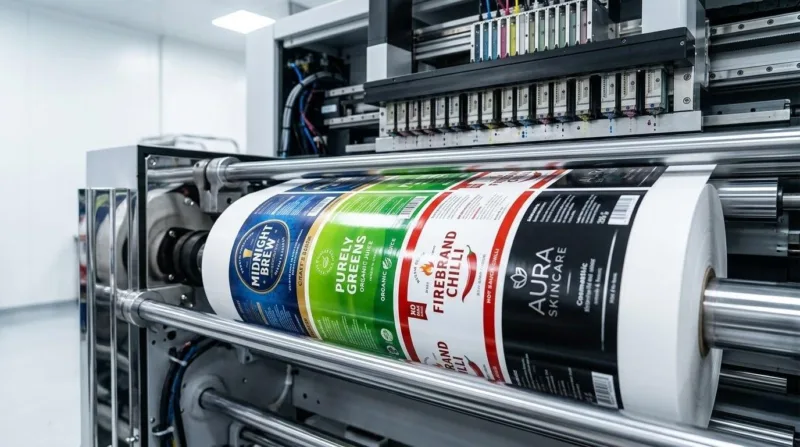
Many suppliers will offer “Free Die-Cutting” or “No Setup Fees” to win your business. In reality, there is no such thing as a free setup.
If a factory has to stop a high-speed press 15 times to change plates and dies for 15 slightly different SKU sizes, that downtime is factored into your unit price.
The Physics of the Master Roll (Factory-Floor Insight)
Most industrial label presses use raw material in fixed widths, typically 330mm or 450mm. To maintain high Overall Equipment Effectiveness (OEE), every inch of that web width must be utilized.
- The Problem: If you have 10 SKUs that are all 105mm wide, we can only fit two labels across a 330mm web, wasting nearly 30% of the material on the edges.
- The Solution: Through a SKU Family Audit, we identify these inefficiencies. If you can standardize your widths to 100mm, we can fit three labels across the same roll.
By utilizing Combo Runs (Co-printing), we maximize the “Web Width Utilization” to achieve true cost reduction without compromising on quality.
Ready to Optimize Your Custom Label Procurement?
Stop the budget leaks. Leverage our 18 years of precision manufacturing to consolidate your SKU family and ensure 100% machine-ready labels while slashing hidden sourcing costs.
4. The Logistics Fixed-Fee Trap: Customs and Last-Mile Minimums
For brands sourcing labels from China to the United States, the freight rate per kilogram is often the least significant part of the logistics bill. The “Hidden Sourcing Costs” lie in the Fixed Entry Fees.
The Math of International Shipping
Every shipment entering the U.S. incurs:
- Customs Entry Fee: Typically $150 – $250 per entry.
- Origin Handling Charges: Fixed per shipment.
- Last-Mile Trucking Minimums: Often $100+ regardless of weight.
If you ship 500kg of labels in five separate 100kg batches, you are paying these fixed fees five times. This can add an invisible 8% to 12% surcharge to your total landed cost. We recommend you Calculate Label Landed Costs accurately to avoid these budget leaks.
The Solution: We synchronize our production with your U.S. procurement cycles. By bundling 3-6 months of SKU requirements into a single LCL (Less than Container Load) shipment, we spread that $250 entry fee over 500,000 labels instead of 50,000.
5. Lead-Time Fragility: The $400-per-Minute Nightmare
The ultimate hidden cost is the “Out-of-Stock” catastrophe. In high-volume manufacturing, a missing label is a production line killer.
The Cost of Line Downtime
Industry data suggests that a production line stoppage due to missing packaging components can cost between $200 and $400 per minute. If you are sourcing from a “transactional” supplier who doesn’t understand your buffer requirements, one late shipment can wipe out an entire year’s worth of “price savings” in a single afternoon.
The Solution: Gartner Research indicates that strategic vendor consolidation can improve inventory turnover by 15% while reducing administrative overhead by 22%. We act as a “Strategic Buffer.”
By bundling your SKUs and maintaining a “Safety Material Stock” in our facility, we ensure that even if you have a sudden 20% spike in demand, we can print and ship within 48 hours because the material is already allocated and the “Bundling Logic” is pre-set.
Summary: Total Cost of Ownership (TCO) Comparison
| Cost Factor | Traditional Sourcing | Strategic Bundling (Label Printing China) |
|---|---|---|
| Admin Fees | $120+ per small order | Consolidated (Lowers Admin by 22%) |
| Material Waste | High (Sub-optimal web use) | Minimal (Maximized Web Width) |
| Inventory Risk | High Obsolescence (Bulk orders) | Agile (Small batch, high freq) |
Real-World Case Study: The California Health Brand Pivot
The Scenario: A client in the personal care space had 20 SKUs with widths varying from 57mm to 63mm. They were paying separate setup fees for every order and faced constant “Rush Shipping” charges because their small orders were always at the back of the production queue.
The Label Printing China Intervention:
- SKU Audit: We standardized all 20 SKUs to a 60mm width.
- Material Normalization: We moved them from three different “silver” materials to one high-performance Silver BOPP.
- Strategic Bundling: We consolidated their 20 individual orders into one “Monthly Combo Run.”
The Result:
- Unit Price Reduction: 15% due to optimized web utilization and elimination of redundant setup cycles.
- Freight Savings: 40% (moving from air-express to consolidated ocean-DDP).
- Obsolescence: Reduced to zero because we only printed a 60-day supply of finished labels at a time.
Your 2026 Procurement Strategy
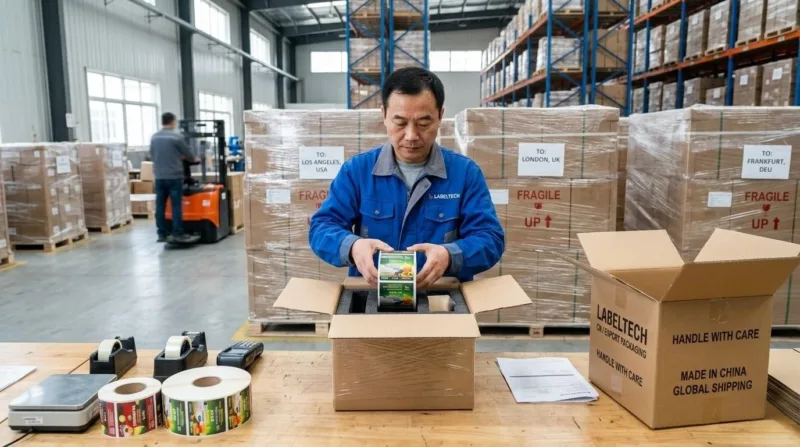
In the current global economy, the most successful Procurement VPs aren’t those who find the “cheapest” factory, but those who build the most “integrated” supply chain. Understanding the Total Cost of Ownership (TCO) is essential for long-term brand health.
As Dan Muenzer, former President of the Tag and Label Manufacturers Institute (TLMI), emphasizes: “Waste in the label industry isn’t just about leftover paper; it’s about setup time and machine downtime. This ‘Co-printing’ synergy is the only way to achieve true sustainability and cost reduction simultaneously.”
How to Start Cutting Your Hidden Costs Today
If you want to achieve the “12.5% Rule”—where every increase in inventory turnover reduces your TCO by 12.5%—start with these three steps:
- Request a Web Width Audit: Ask your current supplier what percentage of their raw material is being wasted on your specific SKU sizes.
- Quantify Your Fixed Logistics Costs: Calculate exactly how much you paid in customs entry and handling fees last year.
- Bundle by “Family”: Group your SKUs by material and size, not just by product line.
At Label Printing China, we don’t just quote prices; we audit supply chains. If you are ready to stop the $50,000 leak in your budget, we can provide a Complimentary Total Cost of Ownership (TCO) Audit for your current label portfolio.
Would you like me to analyze your current SKU list and identify which labels are candidates for “Combo Run” bundling to save on your 2026 budget?