Stop competing on price and start winning on perception. This guide reveals how elite brands use Spot UV and foil stamping to transform standard labels into high-margin luxury assets that command instant authority.
Tactile branding for custom cosmetic labels uses finishes like Spot UV and foil stamping to create physical textures that increase perceived value. By triggering a sensory response, these enhancements allow luxury brands to justify premium pricing and significantly improve shelf conversion rates.
But executing these finishes without technical failures requires a specific factory-level strategy. Read on to see the exact specs, ROI data, and “real-world” pitfalls you must avoid to scale your brand.
I. The Psychology of Haptics: Why “Touch” Equals “Trust”
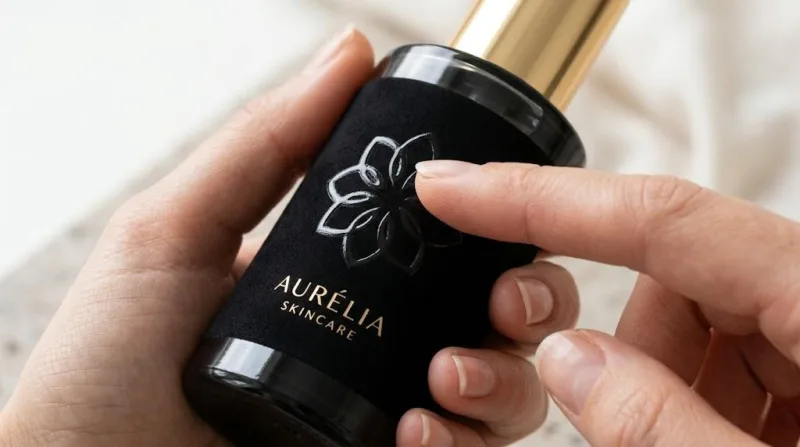
The “Endowment Effect” in consumer psychology suggests that the longer a customer holds a product, the more they feel a sense of ownership. Tactile finishes are the primary driver of this “dwell time.”
Research in neuro-marketing shows that physical texture reduces “buyer’s remorse” because the weight and feel of the packaging provide a tangible justification for the expenditure.
“In the premium segment, if you cannot make the consumer feel the brand through their fingertips, you have lost the battle for the shelf. Texture is the bridge between a digital ad and a physical purchase.”
— Expert Insight: International Packaging Design Lead
The Three Pillars of Tactile Conversion:
- Neurological Confirmation: Raised textures (Spot UV) trigger the somatosensory cortex, signaling “high effort” in manufacturing.
- Light Manipulation: Metallic foils create a visual “stop-and-stare” effect that standard CMYK colors cannot replicate.
- Emotional Friction: Soft-touch laminates create a “velvet” resistance that slows down the unboxing experience, making it feel more intentional.
II. The Strategic Comparison: Standard vs. Premium Execution
To justify a higher unit price to your stakeholders, you must understand the ROI of these finishes. The following table breaks down the technical and psychological impact of tactical upgrades.
| Feature | Standard “Economy” | Premium “Boutique” | Technical Requirement | Consumer Perception |
|---|---|---|---|---|
| Primary Finish | Gloss/Matte Varnish | Soft-Touch Laminate | >25 Micron Film | From “Plastic” to “Velvet” |
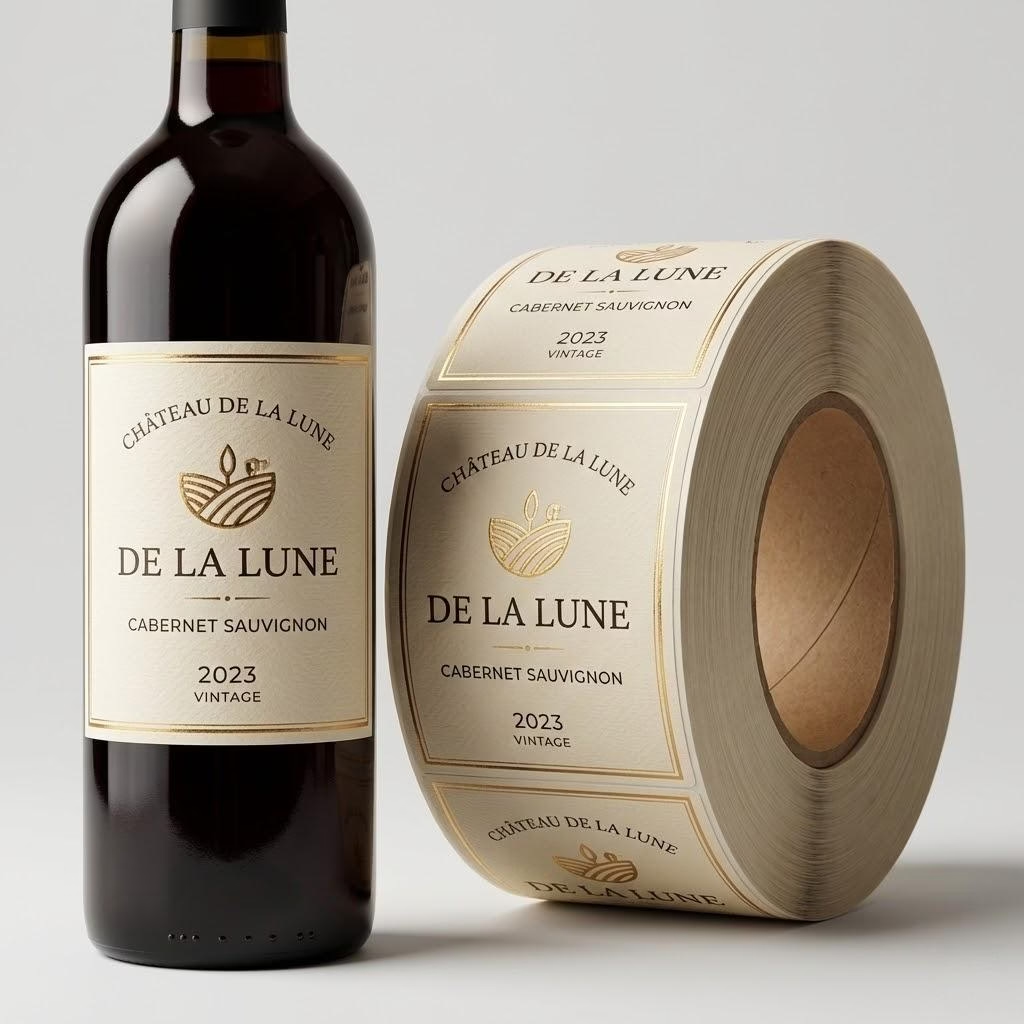
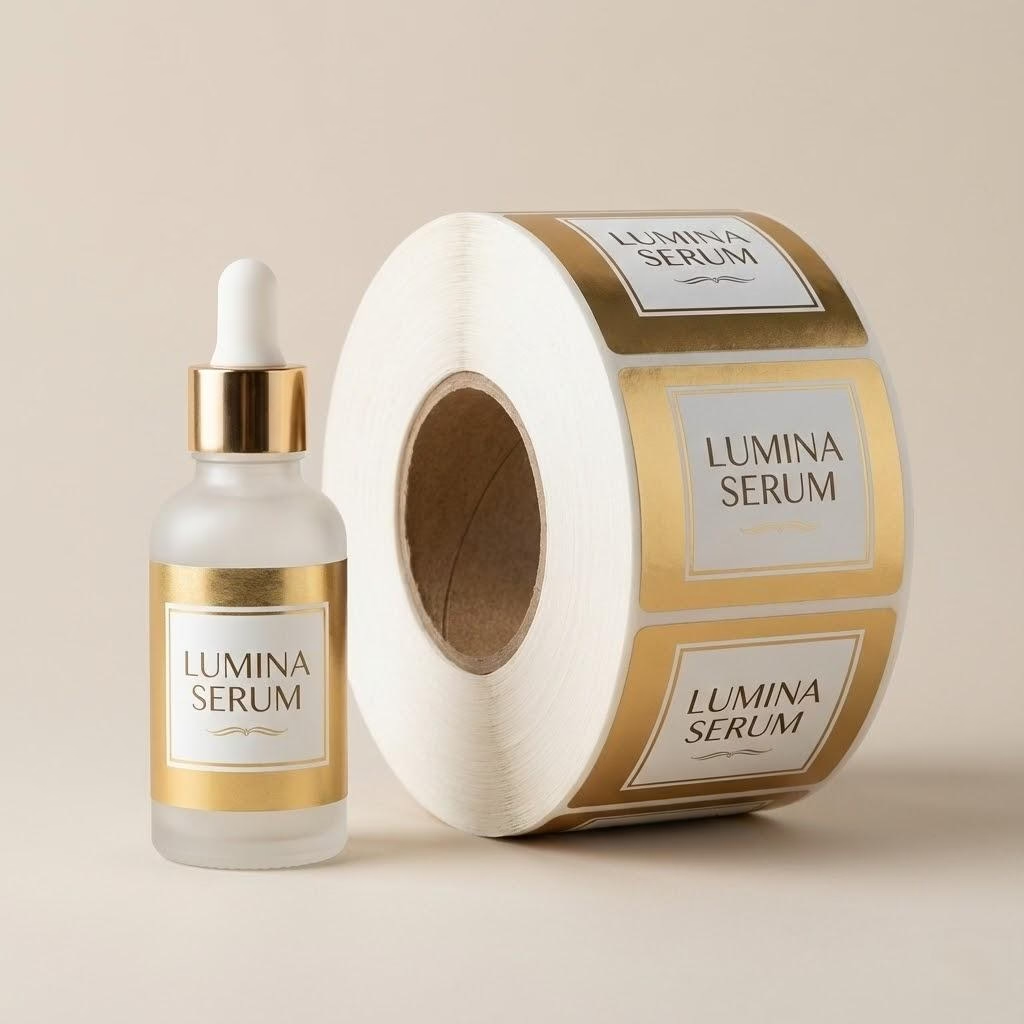
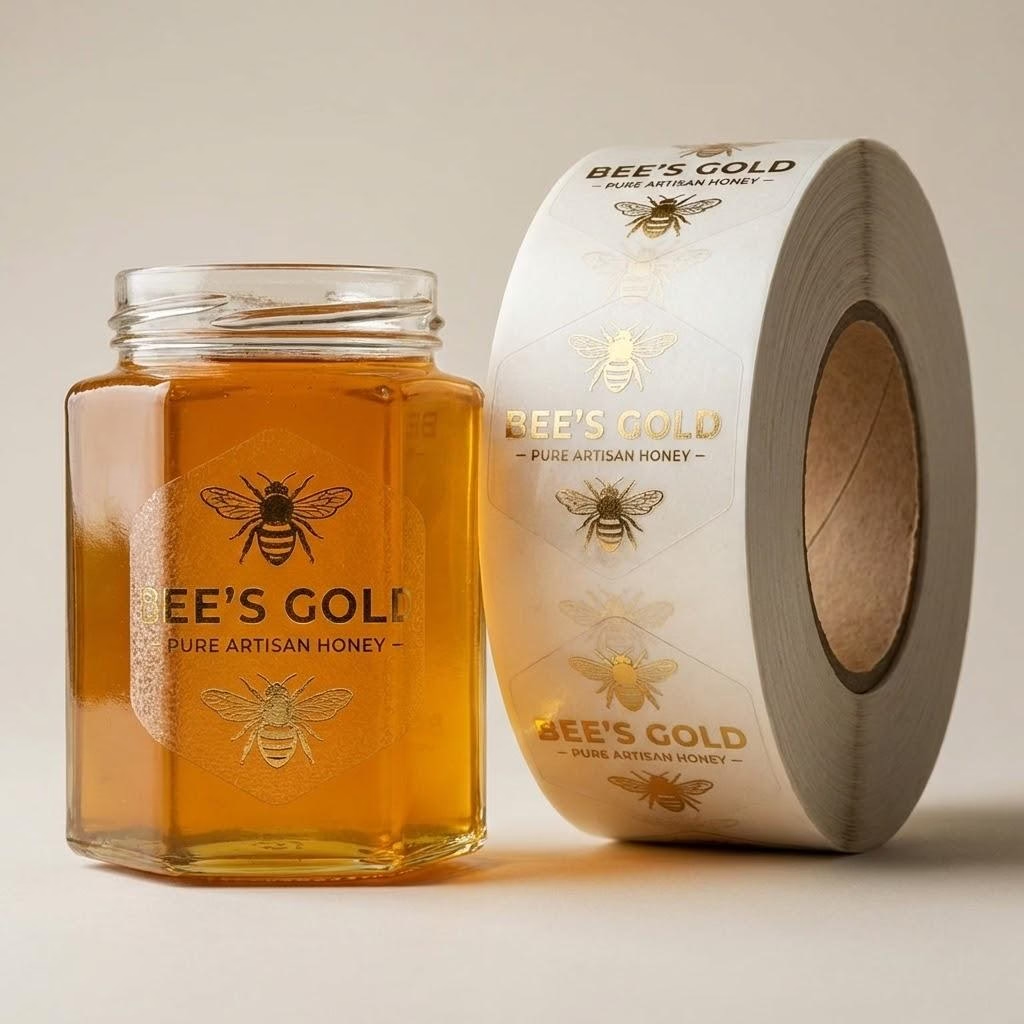
| Visual Accents | Metallic Ink | Hot Foil Stamping | Brass/Magnesium Dies | From “Flat Grey” to “Jewelry” |
| Textural Depth | Flat Surface | High-Build Spot UV | 50-100 Micron Varnish | From “2D” to “3D Sculpted” |
| Registration | $\pm 0.5mm$ | $\pm 0.1mm$ | Servo-Driven Press | Engineering Grade |
| Unit Cost (Est.) | $0.03 – $0.05 | $0.09 – $0.14 | Direct Factory Sourcing | +$20.00 Retail Value |
III. High-Build Spot UV: Engineering the 3D Experience
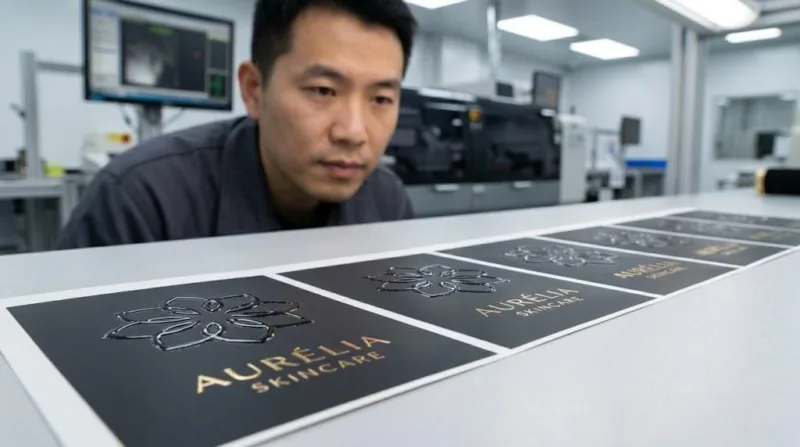
Spot UV is the most misunderstood tool in the procurement arsenal. It is not just “shiny coating.” When executed with high-precision UV curing, it becomes a physical ridge that guides the consumer’s touch.
The Engineering of “The Ridge”
In a high-end factory environment, we measure the “build” of Spot UV in microns. For cosmetic labels, a standard “flat” UV is useless. You need High-Build (3D) UV.
This requires a specific varnish viscosity and high-intensity LED curing lamps to ensure the “dome” of the varnish doesn’t flatten out before it sets. This is a critical step in our “Machine-Ready” protocol for brand owners.
- The Logo Anchor: Use 100-micron raised UV on the brand logo. It ensures that the brand name is the first thing the consumer “feels” when they pick up the bottle.
- The Ingredient Highlight: For “Clean Beauty” brands, applying Spot UV to key active ingredients (e.g., Niacinamide) creates a hierarchy of information.
- Pattern Contrast: Use a matte base with a glossy Spot UV pattern (like rain droplets or floral vines) to create depth without visual clutter.
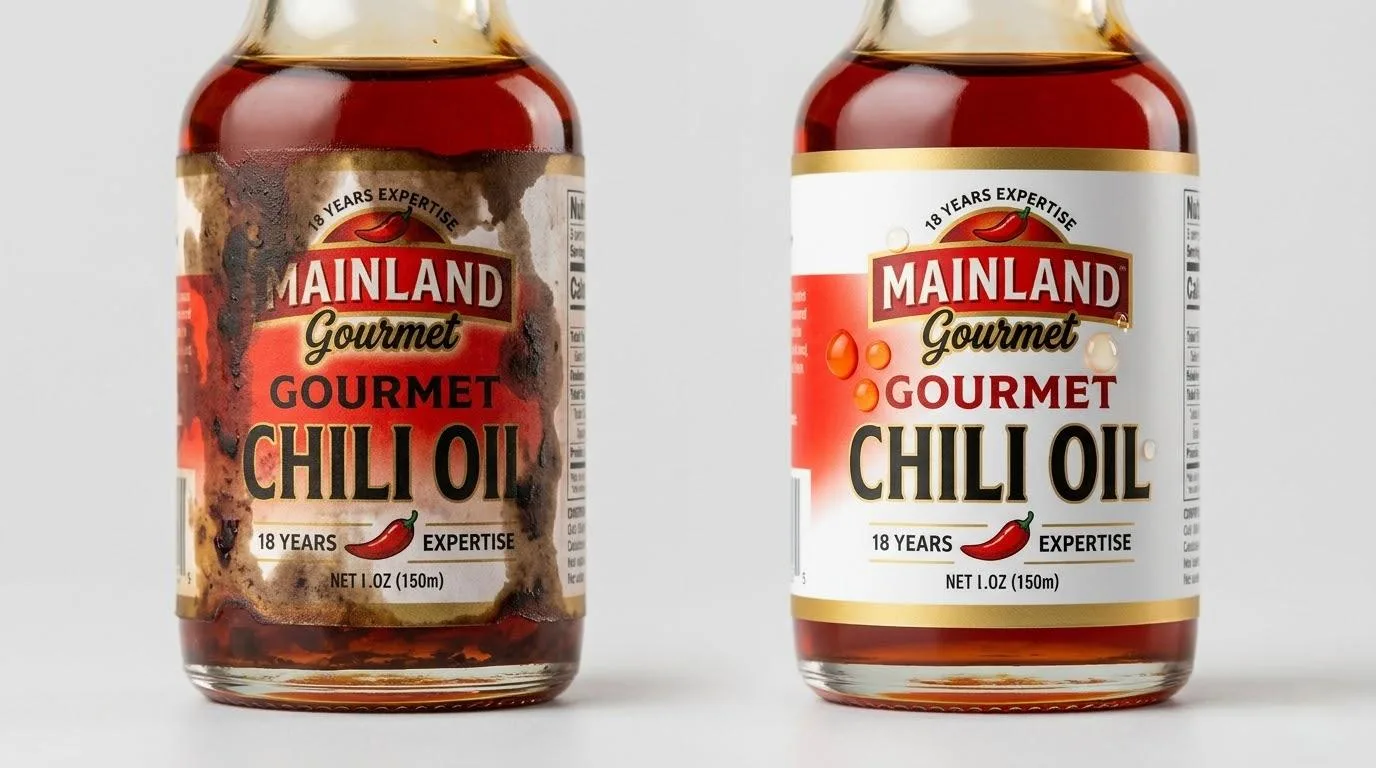
Factory Insider Warning: Beware of “Orange Peel” texture. In my 18 years on the factory floor, I’ve seen countless luxury projects ruined because the UV lamps weren’t calibrated for the ink density. If the UV surface looks pitted or bubbly, your “premium” brand looks like a cheap knock-off. Demand a smooth, glass-like finish.
IV. Metallic Foil Stamping: The Light of Authority
If Spot UV is the texture, Foil Stamping is the light. In the cosmetic industry, metallic finishes are a universal shorthand for authority and heritage. Before you start, ensure you choose a label supplier that understands multi-process registration.
1. Hot Foil vs. Cold Foil: The Procurement Choice
- Hot Foil Stamping: The “Gold Standard.” It uses a heated brass die to press the foil into the material. This creates a slight deboss (indentation) that feels incredibly high-end. It is the only way to achieve 100% opacity on dark stocks.
- Cold Foil Printing: An in-line process. It is faster and cheaper for high-volume runs but lacks the physical “dent” of hot foil. It is better for labels with complex gradients or ultra-fine lines.
2. The Critical Registration Rule
Precision is the only difference between “Premium” and “Pantry.” If your gold foil is shifted even 0.2mm away from the printed border, it creates a “halo effect” that signals low quality.
- The Industry Average: $\pm 0.4mm$ (Bulk factories).
- The Boutique Standard: $\pm 0.1mm$ (Required for luxury skincare).
V. Soft-Touch Finishes: Creating the “Second Skin”
The bottle is the consumer’s “second skin” interaction. A Soft-Touch finish (typically a specialized BOPP film) transforms the cold, hard surface of a glass or plastic container into something that feels organic and soft—much like the skin the product is intended to treat.
Why it Justifies Premium Pricing:
- Anti-Glare Luxury: Soft-touch surfaces don’t reflect harsh retail lights, making your typography easier to read and more “photogenic” for Instagram marketing.
- Anti-Fingerprint Technology: Nothing kills a premium feel faster than a bottle covered in greasy fingerprints. High-quality soft-touch laminates are naturally fingerprint-resistant.
- Durability: Unlike standard matte varnishes which can “scuff,” premium soft-touch films are resilient and maintain their velvet feel throughout the product’s life.
Ready to Elevate Your Brand Perception?
Stop settling for generic labels that hurt your margins. Our “Machine-Ready” premium finishes guarantee that your packaging justifies your luxury price point while saving you 30% via factory-direct sourcing.
VI. Real-World Experience: The “Fiber Direction” Disaster
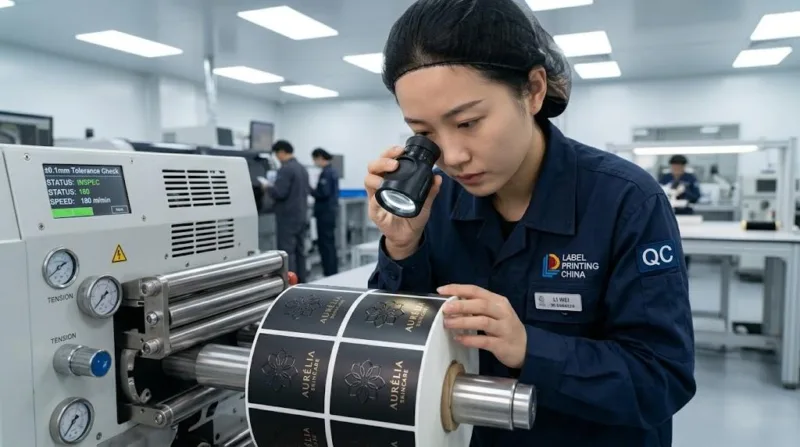
A high-end organic skincare brand ordered 250,000 premium labels with gold foil and soft-touch laminate. They chose a supplier based on the lowest unit price, assuming “a label is a label.”
To minimize material waste and hit the low price point, the supplier rotated the labels on the master roll, ignoring the Fiber Direction (Grain) of the paper substrate. This is a classic “hidden cost” discussed in our label printing cost analysis.
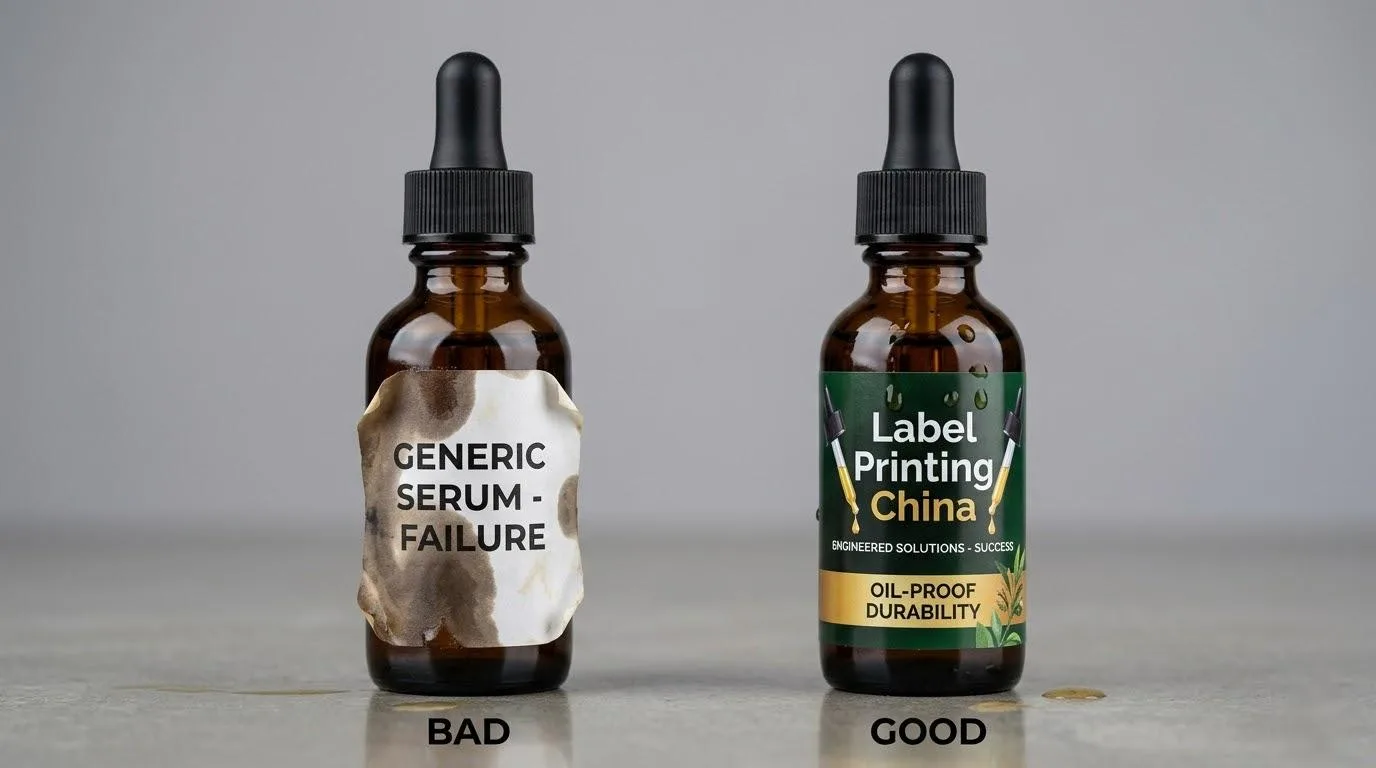
The Result: When the labels were applied to the curved 30ml serum bottles, the natural stiffness of the “against-the-grain” paper caused the edges to pop up—a phenomenon called “flagging.” Within 48 hours of production, 30% of the bottles were defective.
Premium branding is an engineering challenge. Use our China-based factory audit checklist to vet your partner’s technical standards.
- Always verify the “Release Force” of the liner for automated application.
- Always perform a Cross-Hatch Tape Test (ASTM D3359) to ensure foil-to-laminate adhesion.
- Factory Truth: If your supplier doesn’t ask about your bottle’s diameter and application speed, they aren’t a premium partner.
VII. The Sustainability Paradox: Luxury Without the Guilt
By 2026, premium branding must be “Responsible Luxury.” Many procurement managers fear that adding Spot UV or Foil Stamping makes a label non-recyclable. This is a myth that needs to be debunked.
- Transfer Foils: Modern foils are so thin (less than 5 microns) that they dissipate during the de-inking process in paper recycling facilities, leaving no metallic residue.
- Wash-Off Adhesives: Pair your luxury finishes with wash-off adhesives. This allows the label to be completely removed from the glass bottle during recycling, ensuring the container can be reused.
- FSC-Certified Substrates: Combine luxury textures with FSC-certified papers. This provides the “ethical backstory” that justifies a $100+ price point.
VIII. The Procurement Checklist: 5 Questions to Ask Your Factory
Before you sign a contract for “premium” labels, put your supplier through this technical audit.
- Registration Precision: “What is your guaranteed tolerance for Foil-to-UV registration? Can you hit $\pm 0.1mm$?”
- Adhesion Protocol: “Do you perform ASTM D3359 tape testing on multi-process labels to ensure the foil doesn’t flake?”
- Pre-Press Audit: “Do you check font-weight for foil compatibility? (Ultra-thin fonts often ‘fill in’ during hot stamping).”
- Color Consistency: “What Delta-E ($\Delta E$) variance do you guarantee across the entire run? (For luxury, it should be < 2.0).”
- Trial Runs: “Can you provide a ‘Test Roll’ of 500 units for our automated labeling line before we commit to 100k?”
IX. Final Summary: The Cost of Being “Cheap”
In the world of Custom Cosmetic Labels, the most expensive label is the one that fails to convert a customer.
Adding $0.06 to your unit cost for Spot UV and Foil Stamping might feel like a budget hit. However, if that $0.06 allows you to move your retail price from $45.00 to $65.00, your margin grows exponentially.
Readability is conversion. Tactility is trust. If your brand looks, feels, and reacts like a luxury item, the consumer will treat it as one. Stop asking your supplier for the “lowest price.” Start asking them for the “highest perceived value.”
Need a technical audit for your next high-end label project? As an ISO-certified direct manufacturer with 18 years of technical expertise in the Shenzhen printing hub, we specialize in the “impossible” registration tasks that middlemen avoid.
Contact us today for a free Sensory Audit of your current packaging. Let’s make your brand something your customers can truly feel.