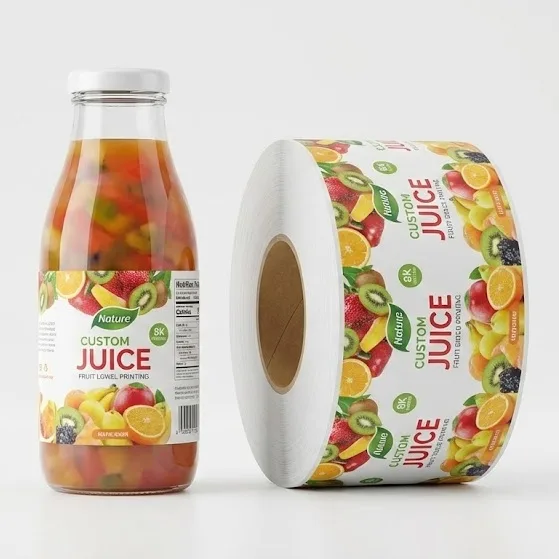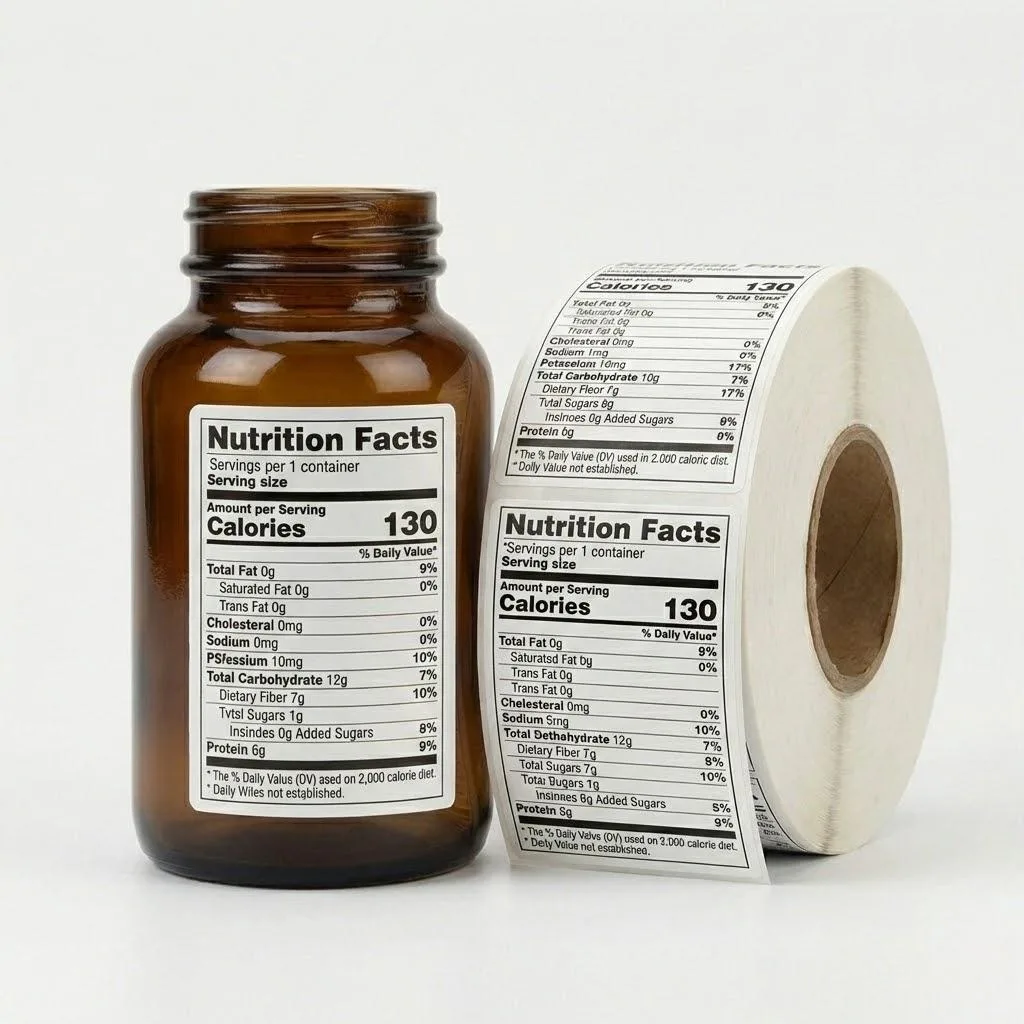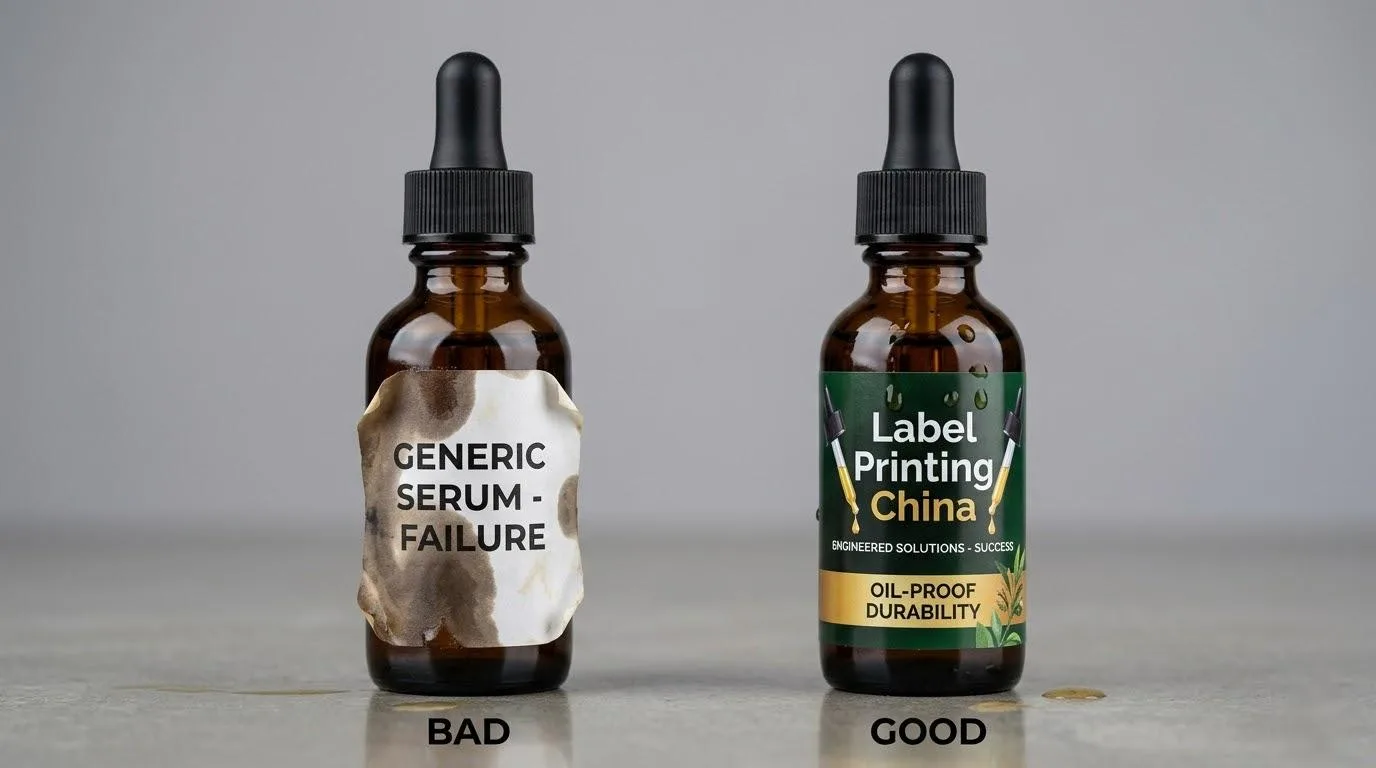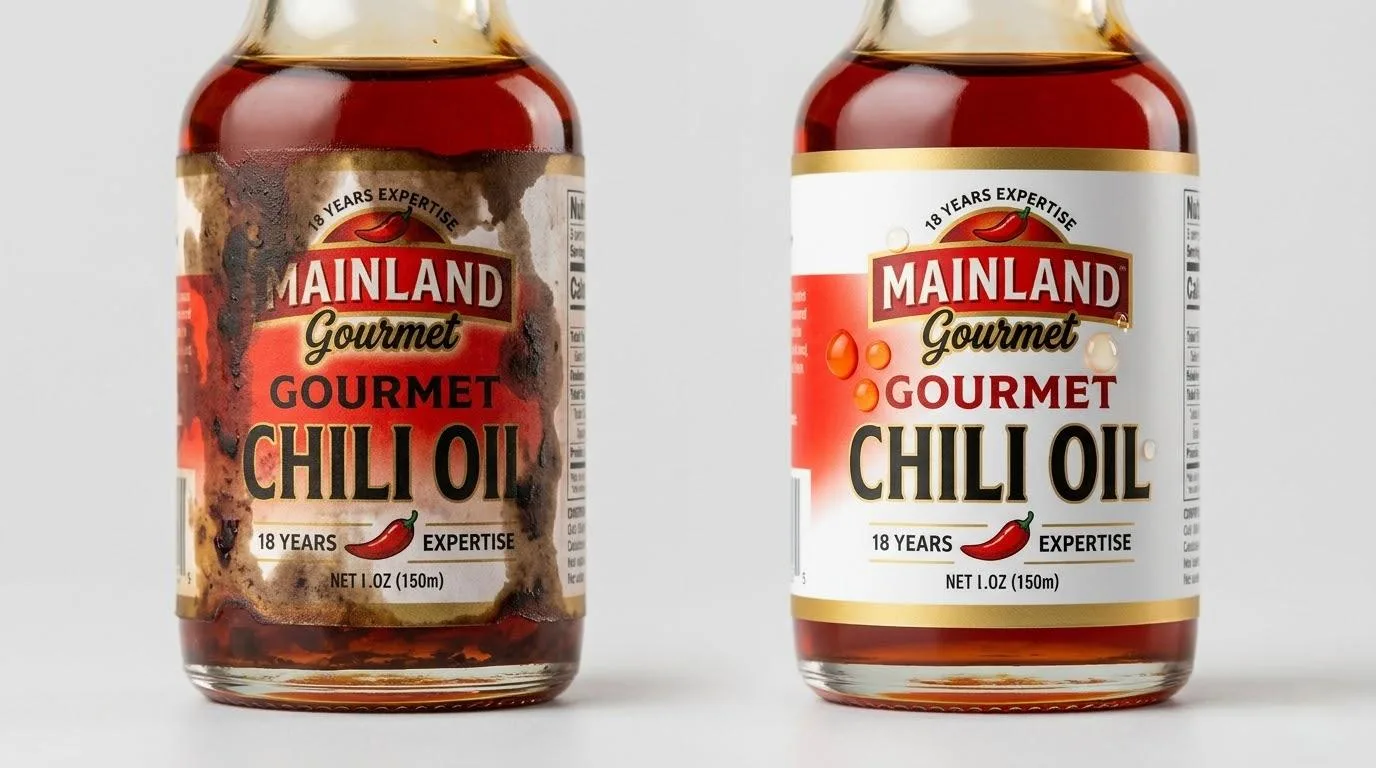
If your juice labels are bubbling or peeling in the cooler, you are losing more than just shelf appeal—you’re losing retail trust and revenue. I’ve spent many years in the printing industry helping brands solve “tunneling” issues and stay on the shelf. This guide reveals exactly why standard labels fail in grocery fridges and how to fix it for good.
Labels fail in grocery fridges due to thermal shock and moisture-induced “tunneling.” Standard materials lack the mechanical stiffness to handle temperature fluctuations. The solution is 2.4mil BOPP paired with high-tack adhesive, which provides a superior moisture barrier and resists container expansion.
But stickiness is only half the battle. To truly protect your brand, you need to understand the “Initial Tack” physics and the hidden costs of using budget materials in a high-humidity environment.
The Myth of the “Standard” Label
Most production managers assume that moving from paper to any plastic film (like standard Polypropylene) solves the moisture problem. It doesn’t.
Waterproofing only stops the ink from running; it does nothing to address the mechanical failure of the bond between the label and the bottle. To survive the modern cold chain, you need a solution rooted in physics, not just material choice.
Technical Comparison: Why 2.4mil BOPP is the Industry Standard
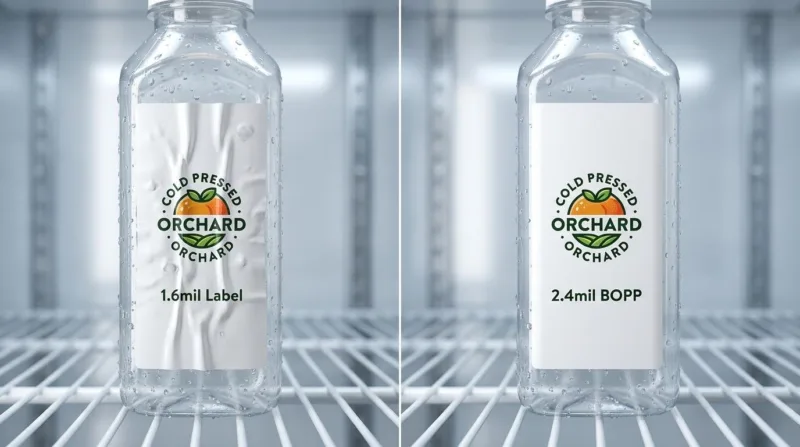
To understand why your current labels might be failing, we have to look at the data. Below is a comparison of the three most common materials used in the beverage industry.
| Feature | Standard Paper | 1.6mil BOPP | 2.4mil BOPP |
|---|---|---|---|
| Moisture Barrier (MVTR) | Poor (>100g/m²) | Good (~4.0g/m²) | Excellent (<2.0g/m²) |
| Mechanical Stiffness | Low | Moderate | High Resilience |
| Thermal Shock Resistance | None (Swells) | Low (Tunneling Risk) | High (Maintains Shape) |
| Retail Failure Risk | Critical | Moderate | Minimal |
“The transition from traditional paper substrates to film-based solutions like BOPP is no longer a luxury but a functional requirement in the beverage sector. As the cold chain becomes more complex, the material’s ability to act as a total moisture barrier is what defines the ‘shelf-life’ of the brand’s visual identity.”
— Corey Reardon, President and CEO of AWA Alexander Watson Associates.
The Physics of Failure: Understanding Thermal Shock
Why does a label that looked perfect in the factory fail 48 hours later in a grocery store? The answer is Thermal Shock.
When you fill a bottle with juice at 4°C (40°F), the container contracts. When it moves to a humid loading dock, it expands and gathers condensation. Finally, in the grocery fridge, it settles back into a cold state.
Managing the temperature differential is critical to label integrity.
The “Tunneling” Effect
Thin labels (1.6mil and below) lack the Modulus of Elasticity—the physical “stiffness”—required to move with the bottle. As the PET or glass bottle expands and contracts, a thin label is easily pushed away from the surface by micro-droplets of water.
Because 2.4mil BOPP is significantly thicker, it acts as a mechanical stabilizer. It has enough internal “backbone” to resist the shear forces of the bottle’s expansion. It doesn’t just stick; it reinforces the surface of the container.
The Factory Owner’s Perspective: The “Initial Tack” Trap
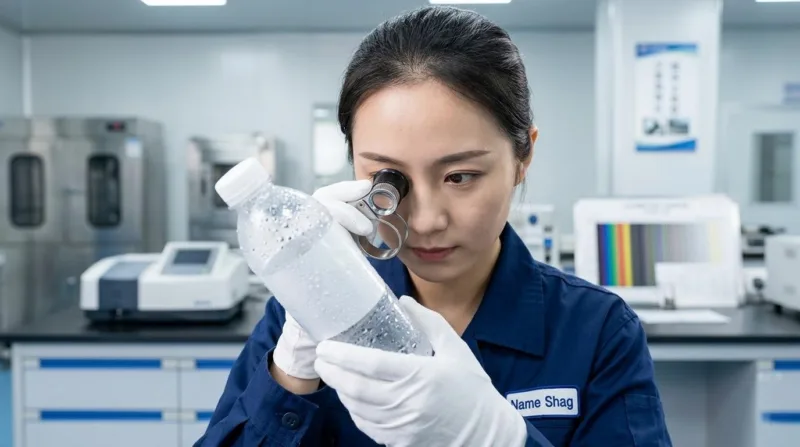
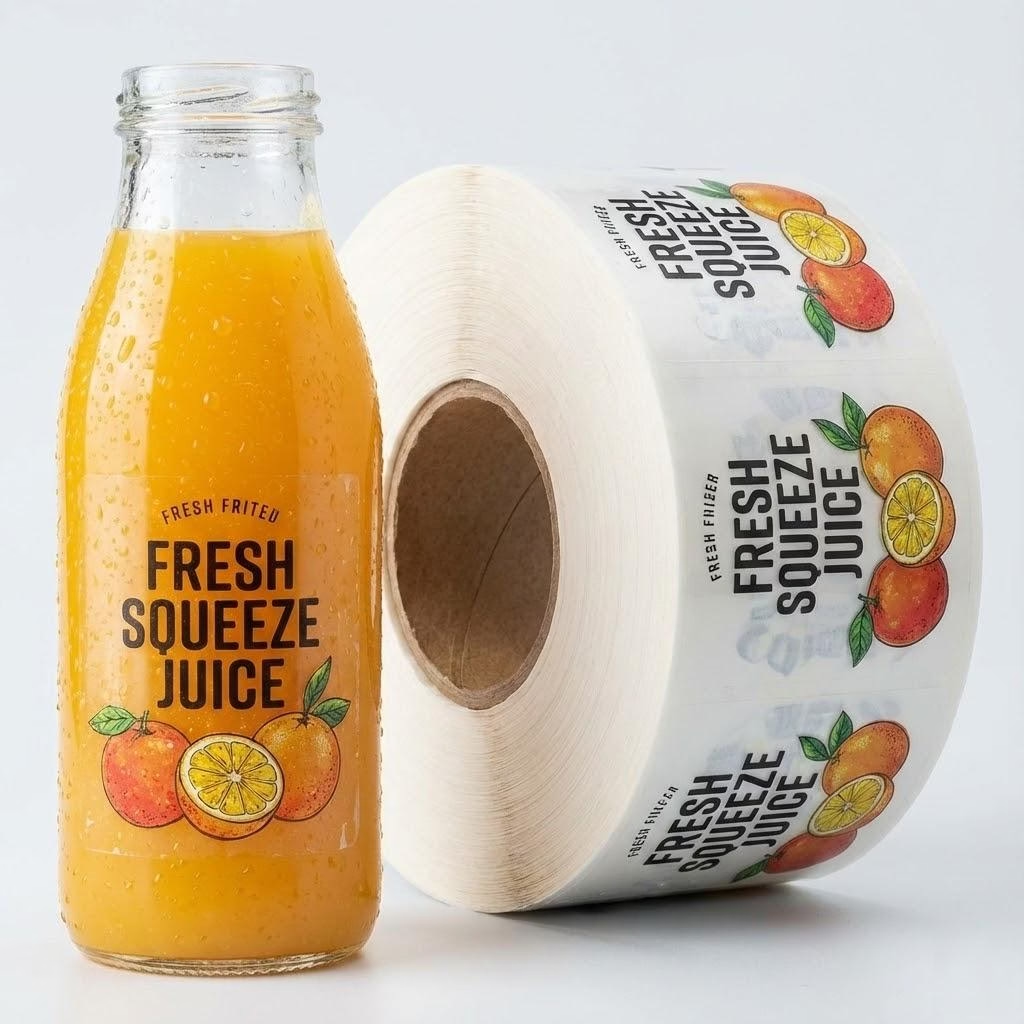
In our extensive experience managing custom juice bottle labels, I have seen hundreds of brands fall into the Laboratory Trap.
A supplier sends you a sample. You stick it on a dry bottle at room temperature. It stays. You think, “Perfect, let’s go with the cheaper 1.6mil option.” This is a fatal mistake.
Why “Initial Tack” is the Only Metric That Matters
In a real-world production environment, bottles are often damp or cold during the labeling process. This is where Initial Tack—the adhesive’s ability to create an instant bond—becomes critical.
- The Problem: Micro-condensation creates a “lubricated layer” between the glue and the bottle.
- The 2.4mil Advantage: A thicker face stock allows for a more aggressive, high-build adhesive layer. This glue “bites” through the moisture to anchor to the bottle’s Surface Energy before the condensation can interfere.
Ready to End the Label Tunneling Nightmare?
Don’t let poor material choice destroy your retail relationships. Discover our 100% machine-ready solutions specifically designed for the cold chain.
“In refrigerated environments, the ‘Initial Tack’ of the adhesive is the most critical variable. If the adhesive cannot overcome the low surface energy of a damp or cold bottle within the first few seconds of application, the risk of ‘flagging’ increases by over 60%.”
— Kaisa Kononen, Technical Product Manager at UPM Raflatac.
Financial Reality: The Total Cost of Ownership (TCO)
If you are a procurement manager, your goal is to reduce costs. However, looking only at the “price per thousand labels” is a narrow view that often leads to massive losses. You must calculate the Total Failure Cost.
The ROI Calculation
Consider a batch of 50,000 units. A 2.4mil label might cost slightly more upfront, but consider a 15% failure rate due to tunneling in the fridge (7,500 units):
- Labor Cost: 10 workers spent 8 hours manually peeling and re-labeling ($2,000).
- Waste Cost: 7,500 ruined labels and 500 damaged bottles ($600).
- Retail Fines: Penalty fees from the distributor for unsellable stock ($1,500).
- Brand Equity: Loss of shelf space and consumer trust.
Total Loss for “Saving” $250: Over $4,100.
The Bottom Line
Choosing the 2.4mil BOPP isn’t an “expense.” It is a Risk Mitigation Strategy. It is an insurance policy that ensures your $2,000 production run doesn’t turn into a $5,000 liability.
Real-World Case Study: The $50,000 “Budget” Disaster
One of my clients, a mid-sized artisanal juice brand, ignored our recommendation for 2.4mil BOPP. They were scaling up and felt that the $0.005 difference per label was too high. They went with a competitor who offered a 1.6mil “waterproof” film. This decision eventually cost them their entire regional contract.
The labels worked fine during the winter. But when summer hit, the humidity in the distribution chain spiked. The 1.6mil labels didn’t have the stiffness to handle the thermal shock of moving from 35°C loading docks to 4°C grocery coolers.
We stepped in and performed a Cold Chain Survival Audit. We replaced their material with a 2.4mil White BOPP featuring a specialized High-Tack Emulsion Acrylic adhesive. We proved, through a 48-hour submersion test, that the labels would remain 100% intact even in standing water. They won the retailer back three months later, but the cost of that “cheap” label was astronomical.
Implementation Guide: 3 Steps to “Zero-Failure” Labeling
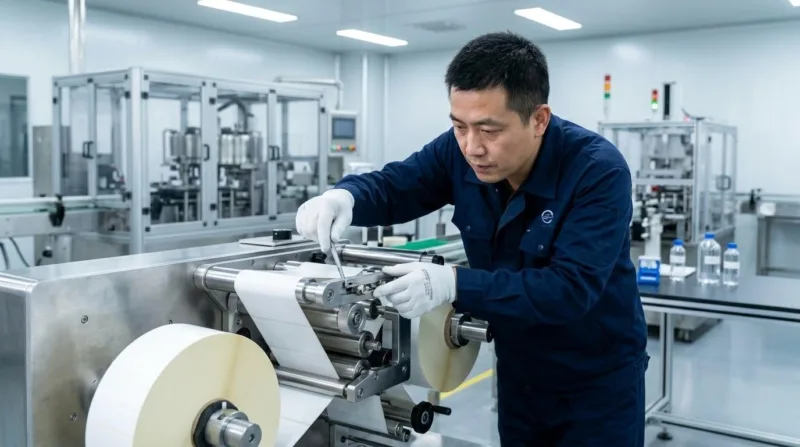
If you are ready to fix your labeling issues once and for all, follow this roadmap:
-
Audit Your Bottle Surface Energy
Not all plastic is the same. PET, HDPE, and Glass all have different Surface Energies.
Action: Ask your supplier to perform a Dyne Test on your bottles. If your bottle has low surface energy, you must use a high-tack adhesive paired with a 2.4mil film to prevent edge-lift. -
Verify the 24-Hour “Set” Time
Labels don’t reach full bond strength instantly.
Action: Ensure your production schedule allows for at least 24 hours of “set time” at room temperature before the bottles are moved into cold storage. -
Demand a “Thermal Shock” Test
Don’t settle for a “waterproof” guarantee.
Action: Ask for a test report that specifically simulates the move from room temperature (25°C) to refrigeration (4°C) at 90% humidity.
The 2026 Future: Sustainability Meets Performance
As a final insight, you must consider the evolving American regulatory landscape. By 2026, brands are under immense pressure to ensure their packaging is “circular.”
A failed, unsellable bottle of juice is far worse for the environment than a slightly thicker label.
Use 2.4mil BOPP, but pair it with a Wash-off Adhesive. This technology allows the label to stay permanently bonded in the cold fridge, but to detach cleanly during the high-heat caustic wash at the recycling plant.
Summary: The Final Decision
In production, clarity is power. To summarize the value of 2.4mil BOPP for your brand:
- Durability: It survives the 4°C to 25°C thermal shock cycle without tunneling.
- Brand Integrity: It ensures your barcode scans every time, protecting your retail relationships.
- Profitability: It eliminates the hidden costs of rework, labor, and retailer fines.
Stop viewing labels as a commodity. Start viewing them as a critical component of your product’s engineering. When the condensation hits and the temperature drops, you will be glad you chose the “hardcore” solution over the “budget” one.