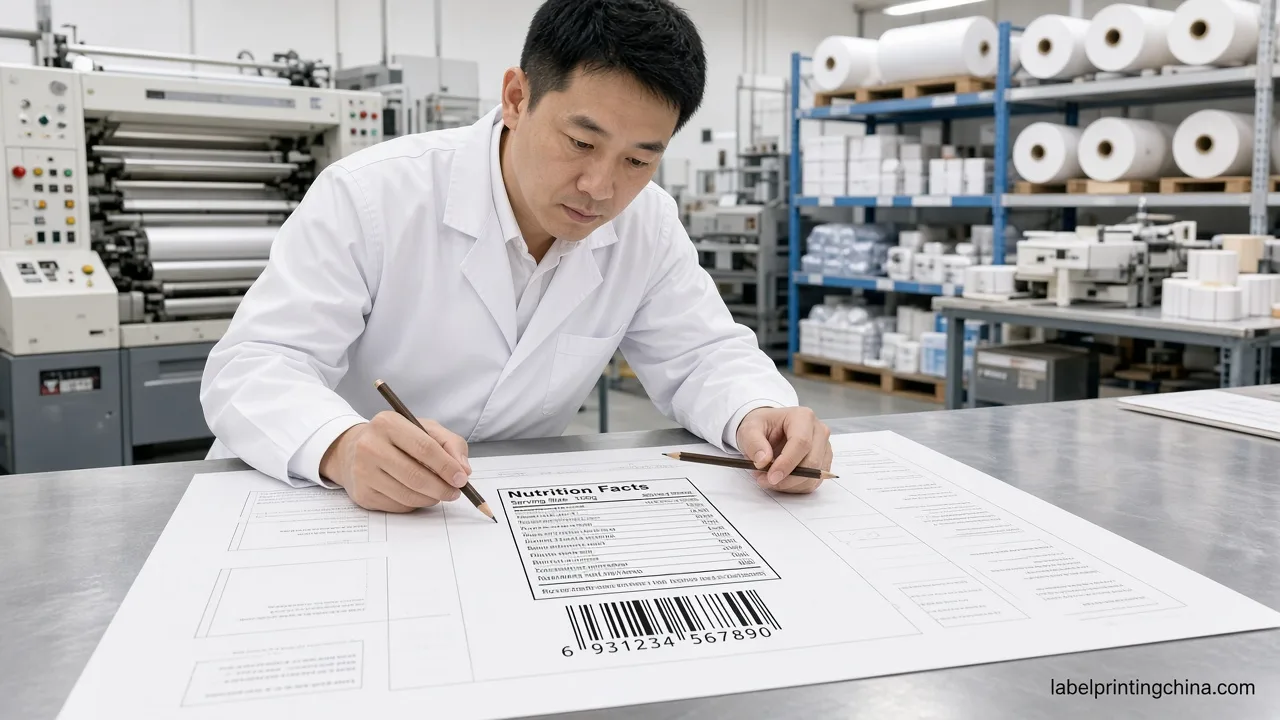
Paying your deposit shouldn’t feel like throwing money into a black box. In the world of high-volume B2B procurement, the manufacturing process is a high-precision journey from digital file auditing and ink-on-substrate calibration to mechanical die-cutting and global DDP delivery.
The custom label manufacturing process consists of four critical stages: Pre-Press Auditing to verify artwork and die-lines; On-Press Production where ink is applied to substrates via flexographic or digital presses; Mechanical Die-Cutting to ensure a “Machine-Ready” finish with precise release force; and Quality Control/Logistics for secure global fulfillment.
While these steps may seem standard, the difference between a successful run and a production-line disaster lies in the microscopic technical tolerances. Read on to discover the “Machine-Ready” physics and hidden environmental stress factors that 90% of manufacturers overlook.
The Strategic Defense Against 90% of Production Errors

In our extensive experience with global supply chains, we have found that the most expensive mistakes are those that bypass the blueprint stage. Before a single drop of ink touches the substrate, a rigorous 24-hour “Reverse Engineering” audit of your artwork is mandatory.
This is where we intercept the “invisible killers” that derail custom clear labels projects, such as incorrect bleed settings, font rasterization, and barcode scaling issues that can halt a retail checkout line.
“Quality comes not from inspection, but from improvement of the production process.” — Dr. W. Edwards Deming (Pioneer of Total Quality Management)
By enforcing a technical audit that includes trapped-color verification and die-line integrity checks, we shift the focus from catching mistakes to preventing them. This phase is not a mere clerical check; it is an objective industry perspective designed to ensure that the digital file is perfectly translated into a physical tool.
This proactive auditing is why our Machine-Ready guarantee starts in the studio, ensuring your project moves forward with a zero-friction foundation. When your brand relies on high-speed applicators, even a 0.1mm deviation in the die-line can cause catastrophic failure.
Standard Vendor vs. Industrial Precision Factory
| Feature | Standard Vendor Approach | Industrial Precision Approach |
|---|---|---|
| Artwork Review | Basic visual check of text/logos. | Technical audit of layers, trapping, and gradients. |
| Color Control | “Best effort” matching via CMYK. | Spectrophotometer-verified Pantone matching. |
| Risk Management | Blames client files if errors occur. | Proactive “Stop-and-Fix” protocol within 24 hours. |
| Value to Buyer | High risk of rework and delays. | Zero-Friction launch and cost certainty. |
Quick Guide: If your priority is cost certainty, choose the Industrial Precision approach; if you face frequent artwork errors, invest in proactive pre-press auditing.
The Transparent Feedback Protocol
Once the technical audit is complete, your project enters the production floor. This is where most vendors go silent, but it is precisely where we implement the Transparent Feedback Protocol.
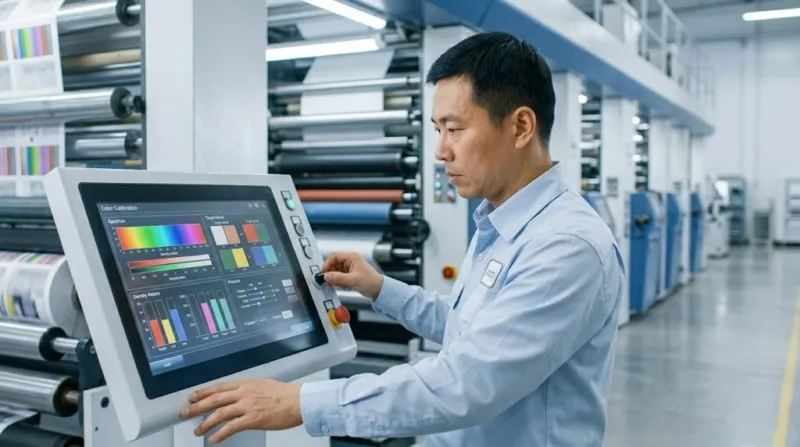
We understand that for a Senior Project Manager like Jack Wu, communication is a deliverable just as important as the labels themselves. Within hours of the first run, we provide a live video update of the color calibration process.
This isn’t a marketing clip; it is a 15-second technical verification showing the Pantone match and ink density under standardized lighting. By seeing the actual Heidelberg or high-speed flexographic press in motion with your specific job, you gain the Production Security needed to update your internal stakeholders.
This level of visibility ensures that the 30% cost savings you’ve secured don’t come at the expense of your peace of mind.
We don’t ask you to trust us; we provide the visual evidence that the 18 years of technical expertise we promise is actively being applied to your brand’s assets in real-time. This eliminates the “information vacuum” that characterizes traditional overseas sourcing.
Decoding the Physical Parameter Wall
The most dangerous trap in label procurement is a “perfect-looking” label that fails on the applicator. We recognize that labels are critical mechanical components. For high-speed lines running at 300+ BPM, visual aesthetics are secondary to physical performance.
To ensure your machine-ready roll labels survive the tension of automated application, we lock in three core metrics during the manufacturing process:
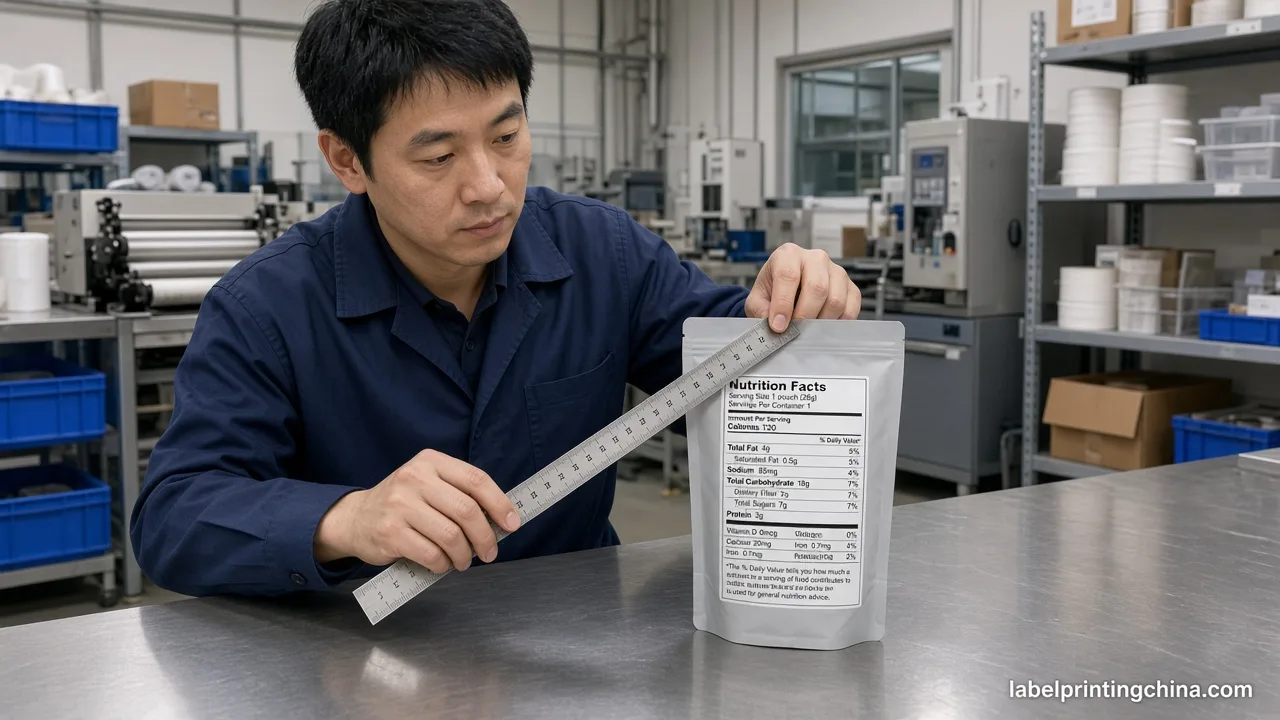
- Die-Cutting Precision: We maintain a depth tolerance of ±0.05mm. This ensures the blade cut penetrates the face stock and adhesive perfectly without scoring the release liner, which is the primary cause of liner breakage.
- Release Force Calibration: We stabilize the pull-force between 10g and 15g/25mm. This prevents “flying labels” that pop off too early or adhesive “hang” that causes machine alarms. You can verify these standards through Release Force Calibration protocols like FINAT FTM 10.
- Roll Tension Consistency: Utilizing infrared tension control during rewinding prevents “telescoping” rolls, ensuring the roll remains perfectly flat and aligned for your sensors.
When those transparent constructions reach the line, clear label sensor setup determines whether the first roll runs as flat as it left our rewinder.
REAL-WORLD EXPERIENCE: THE PERFECT-LOOKING DISASTER
A North American nutraceutical brand followed the “standard” advice of approving a visual sample. The labels arrived looking perfect, but their 300 BPM line began snapping every 15 minutes. The liner had been micro-pierced during die-cutting.
Our engineers identified that the previous vendor had no depth control. We reran the project with a calibrated ±0.05mm tolerance and sent a live tension test video to the client before shipping.
Never use visual standards to judge a mechanical part. Demand release force data and liner integrity verification.
Ready to Secure Machine-Ready Precision?
Don’t let production downtime destroy your ROI. Get a factory-direct quote that guarantees 30% savings and 100% applicator compatibility.
Managing the “Environmental Stress” Black Box
A manufacturing process that stops at “Boxing” is incomplete. Based on our macro-control of global supply chains, we factor in the “Environmental Stress” of the transit route. If your labels are crossing the equator in a container reaching 60°C, a standard adhesive will bleed, turning your rolls into a solid block.
“Resilience is not just about bouncing back from disruptions; it is about having the visibility and agility to anticipate them.” — Dr. Yossi Sheffi (Director of the MIT Center for Transportation and Logistics)
By anticipating these variables during the material selection phase, we adjust the adhesive formulation—perhaps increasing internal cohesion or widening the matrix waste-strip to 1.5mm to act as a “pressure buffer.”
This is where the synergy between technical manufacturing and DDP (Delivered Duty Paid) logistics becomes a competitive advantage. With Senior Project Manager Jack Wu overseeing the customs pre-clearance, you avoid the “border friction” that causes warehouse delays. Integrating a precise landed cost calculation into your planning ensures that the 30% savings are protected from port storage fees.
REAL-WORLD EXPERIENCE: THE EQUATOR OVERHEAT
A client ordered high-tack adhesive labels for beer bottles. The labels were produced perfectly but spent 22 days in a shipping container crossing tropical waters. By the time they reached the US, the adhesive had “oozed” from the edges, jamming the labelers.
We now use high-cohesion adhesives for all trans-oceanic summer shipments and mandate a 1.5mm “safe margin” on the liner to absorb any thermal expansion of the glue.
Your manufacturing specs must be dictated by the logistics route, not just the final application.
True cost efficiency isn’t found in a cheaper quote; it is engineered through a technical workflow that survives the journey and the machine.
The Total Cost of Ownership (TCO) Final Analysis

The “30% Savings” we promise is not a discount on quality; it is the elimination of waste. By integrating these four phases—Technical Auditing, Transparent Feedback, Physical Parameter Walls, and Logistics Pre-emption—we remove the hidden costs that standard vendors pass on to you.
Total Cost of Ownership Breakdown
| Cost Driver | Standard Vendor Impact | Label Printing China Strategy |
|---|---|---|
| Rework/Reprinting | 2-5% risk due to file errors. | 0% Risk: 24h Mandatory Pre-Press Audit. |
| Machine Downtime | $500-$2000/hr during jams. | 100% Machine-Ready: ±0.05mm die公差. |
| Logistics/Customs | Unpredictable port & storage fees. | Locked Pricing: DDP Seamless delivery. |
Quick Guide: To protect your production ROI, focus on machine-ready specs; to eliminate administrative stress, insist on DDP logistics integration.
The persistent problem of “overseas quality” is actually a problem of “overseas communication.” By following this transparent manufacturing SOP, we ensure that your brand is protected, your budget is respected, and your production line never stops moving.
Final Decision-Maker’s Checklist
- Does the vendor provide Spectrophotometer data for color consistency?
- Is the die-cutting tolerance explicitly locked at ±0.05mm?
- Will you receive Live Video Updates of the actual production run?
- Does the DDP price include protection against environmental adhesive bleed?
Stop guessing if your labels will survive the journey or the machine. Submit your machine model and日产能 requirements today, and our engineers will provide a complimentary “Machine-Ready” Physical Parameter Audit for your next run.