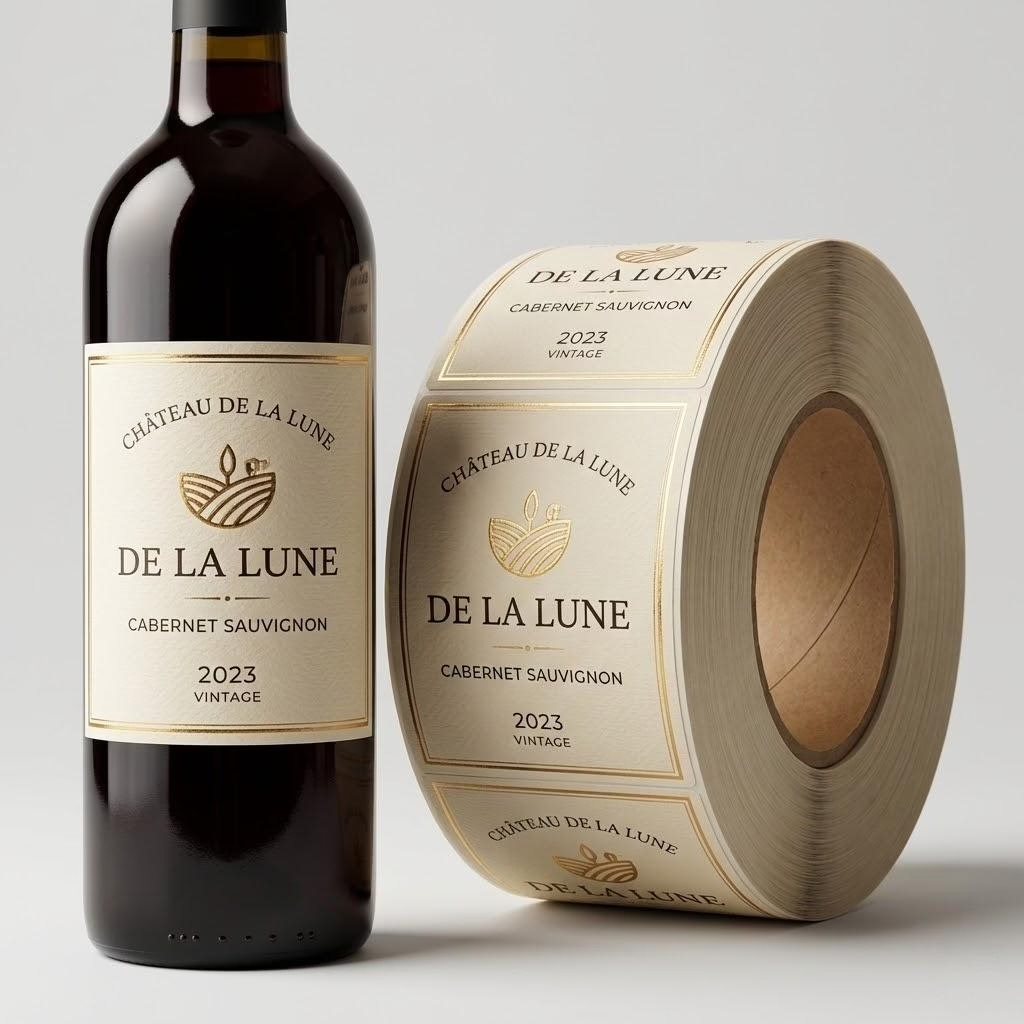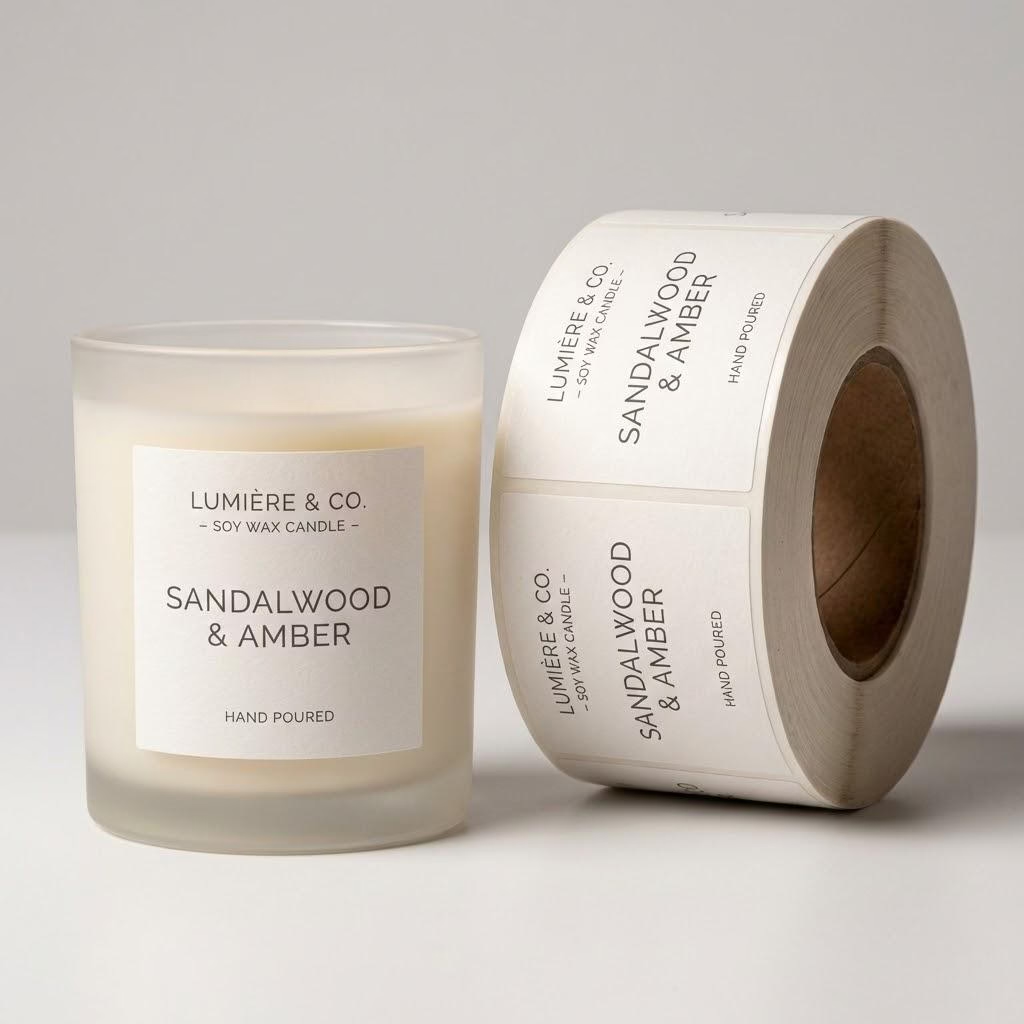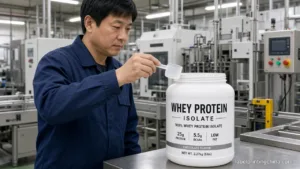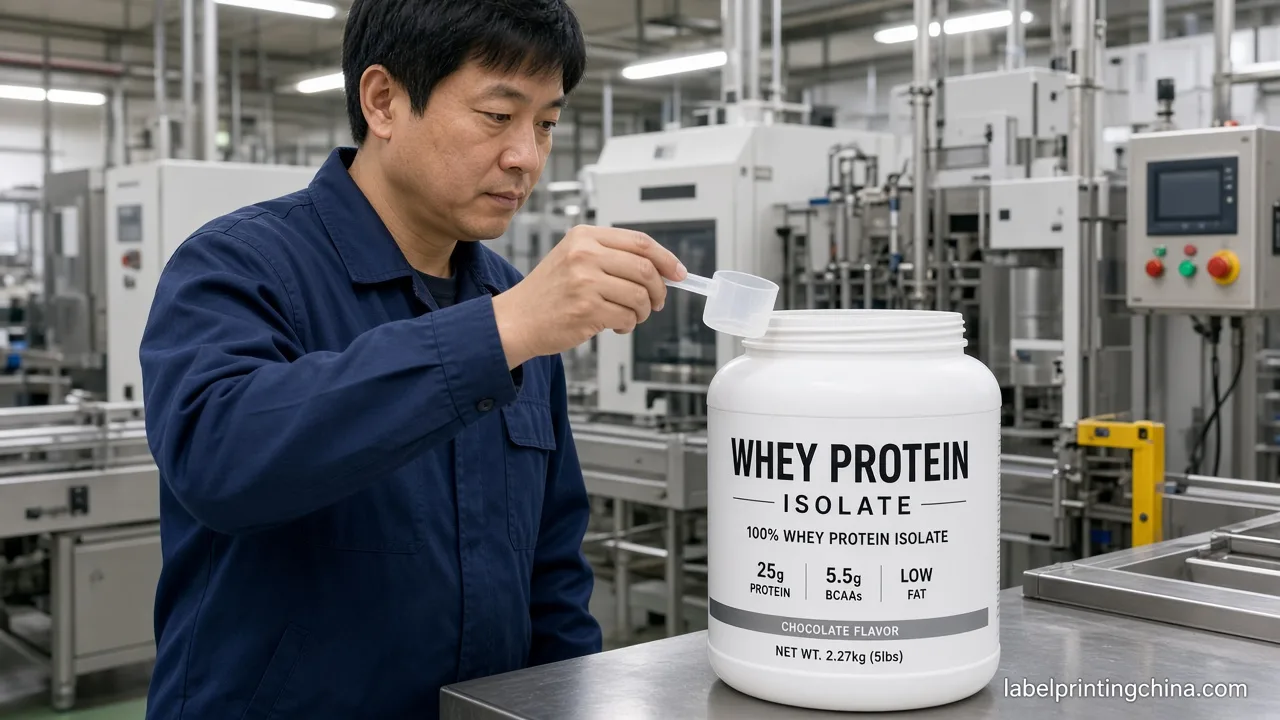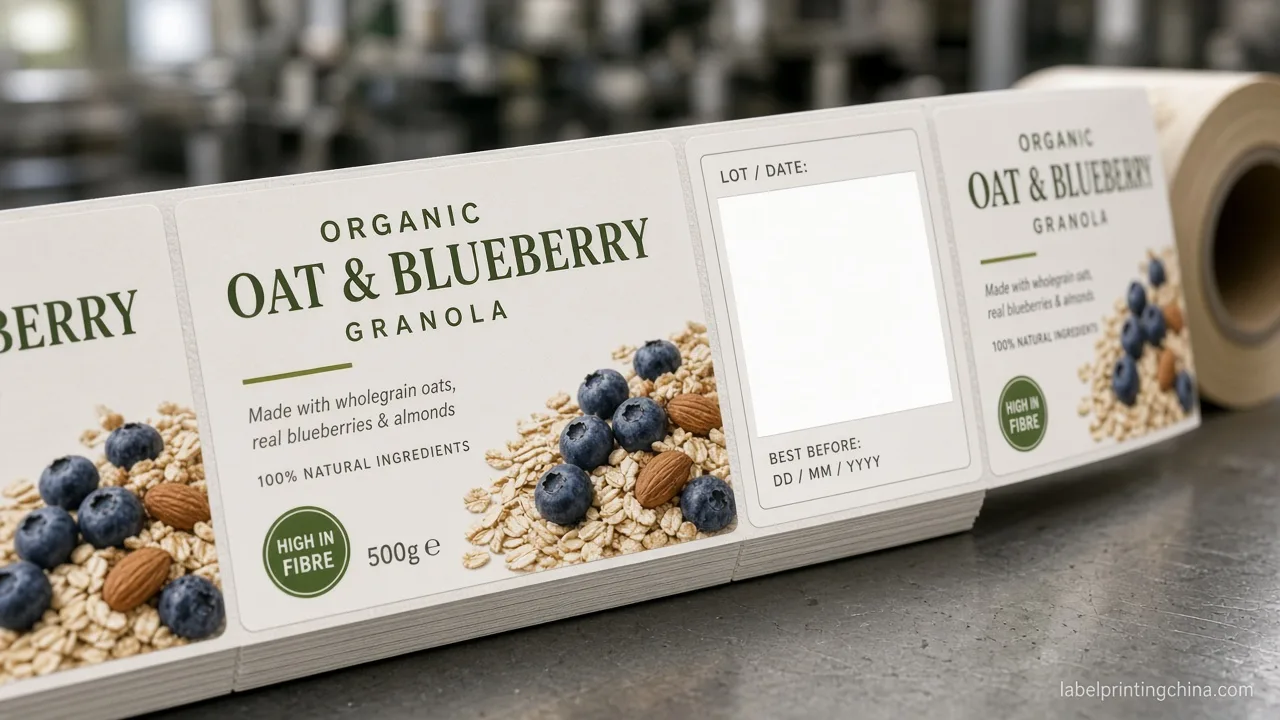
Struggling with crooked placement and peeling edges on your product packaging? You are about to discover the exact industrial Custom Label Manufacturing Process that guarantees flawless manual application.
Let me show you how to cut costs by 30% without sacrificing a single drop of premium quality, bridging the gap between handmade batches and fully automated production.
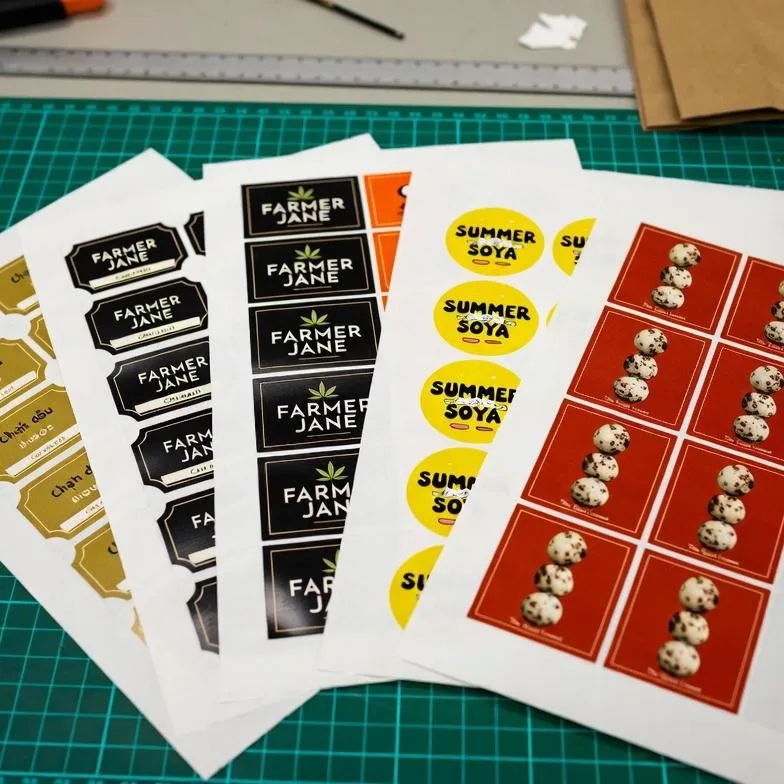
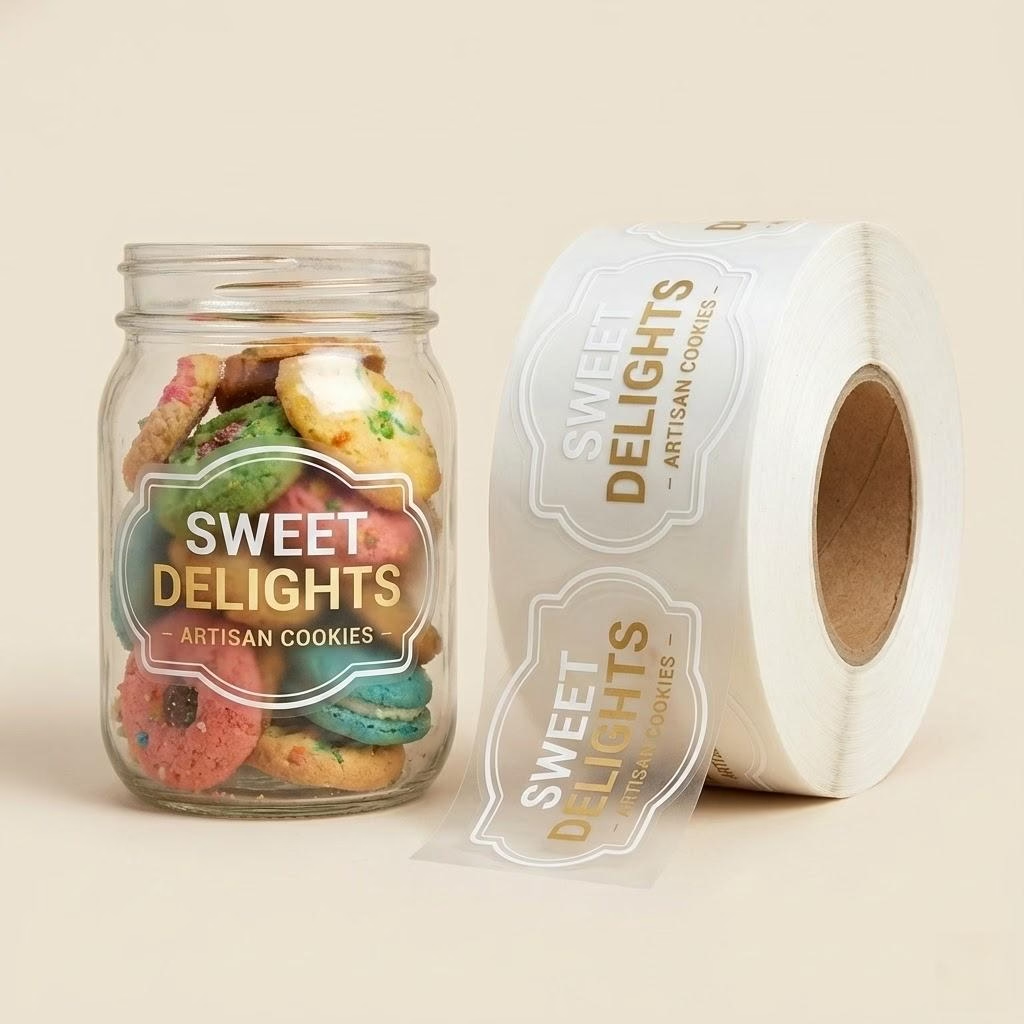
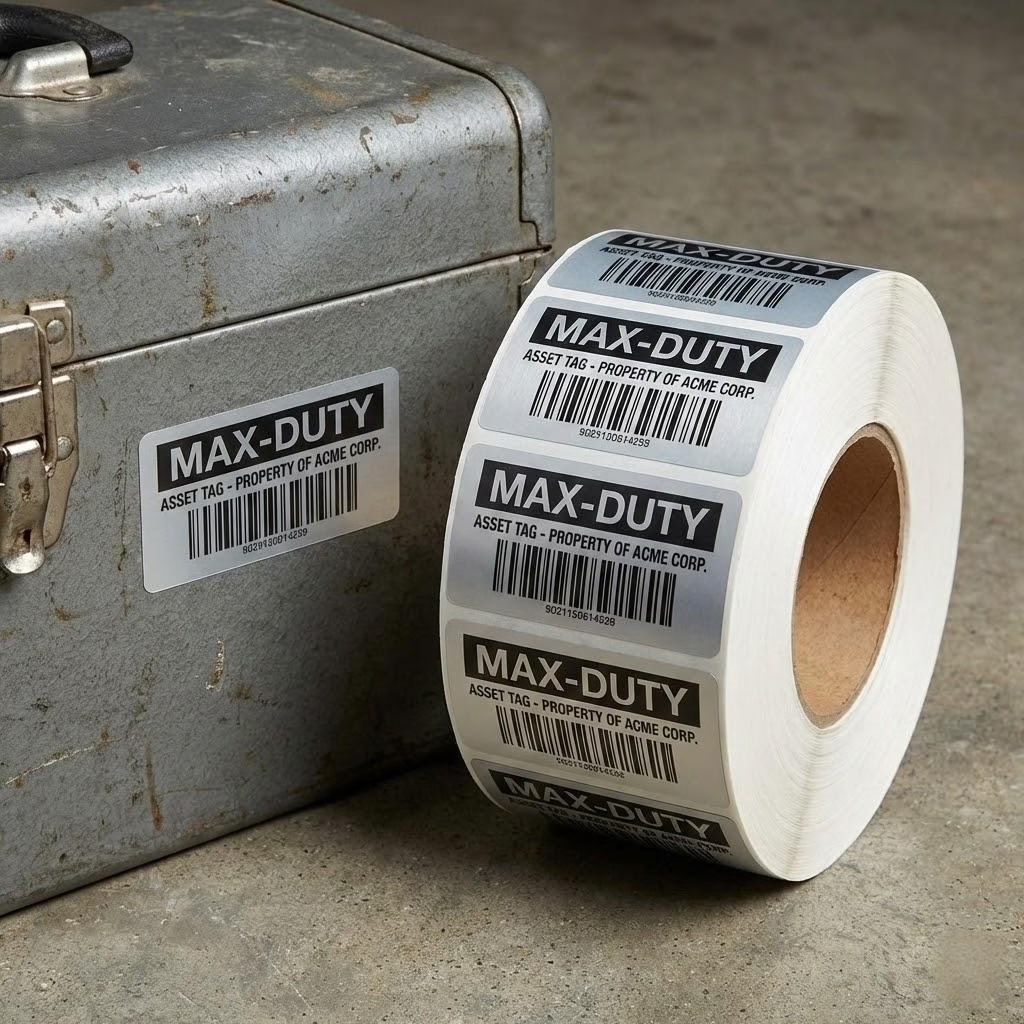
Sheet labels are custom-printed adhesive decals delivered on flat backing paper rather than continuous rolls. They are the most cost-effective packaging solution for growing businesses ordering under 15,000 units, offering premium industrial finishes without the high setup fees of automated rolls.
Want to see the exact blueprint we use to make these labels 100% machine-ready for your future automated lines? Keep reading.
I am going to reveal the low surface energy trap that ruins most beginner packaging—and how to avoid it completely, ensuring your brand equity remains untouched.
Why “Cheap” Labels Kill SMB Margins

As your order volumes surge past the threshold of early-stage production, you face a critical physical bottleneck. Sourcing packaging components from local digital print shops is rapidly eroding your margins, yet allocating heavy capital into fully automated application machinery remains financially premature.
When sheet programs grow into contour product labels, open the cut depth comparison before you lock kiss-cut sheets versus die-cut singles.
In this specific transition phase, most procurement managers make a fatal miscalculation. They view Custom Sheet Labels merely as a low-end, temporary compromise.
They wrongly assume that true industrial-grade quality is an exclusive feature reserved only for high-volume Custom Roll Labels. This cognitive bias leads directly to uncontrolled trial-and-error costs on the warehouse floor, eating into your profits.
True cost control—achieving that mandatory 30% margin improvement—requires treating flawless hand-applied labels with the exact same industrial precision as high-speed automated lines.
The Anatomy of 30% Savings
In B2B procurement, the initial unit price is a dangerous vanity metric. The Total Cost of Ownership (TCO) is what truly determines your operational success, especially when factoring in the hidden labor costs of a difficult application process.
Tipping Point Analysis: Packaging Cost & Efficiency
| Production Strategy | Ideal Volume Range | Setup Fee Burden | Margin Impact |
|---|---|---|---|
| Local Digital Printing | 100 – 1,000 units | Extremely High | Severe margin squeeze; low tactile quality. |
| Industrial Sheet Labels | 2,000 – 15,000 units | Low (Amortized) | Achieves up to 30% savings; premium substrates. |
| Roll Labels (Machine) | 20,000+ units | Moderate (Plate charges) | Highest efficiency; requires high throughput. |
Quick Guide: If your priority is achieving up to 30% savings with premium substrates for 2,000-15,000 units, choose Industrial Sheet Labels; if you face high setup fees and need manual flexibility, avoid roll labels until your volume dictates.
Shattering the “Information Vacuum”

The most severe operational risk in global sourcing is the “Information Vacuum.” This is the agonizing period between your initial deposit and the final DDP delivery where you are left completely in the dark, hoping the color profiles align and the pressure-sensitive adhesives perform as specified.
“Quality is pride of workmanship… Inspection with the aim of finding the bad ones and throwing them out is too late, ineffective, costly. Quality comes not from inspection but from improvement of the process.” — W. Edwards Deming
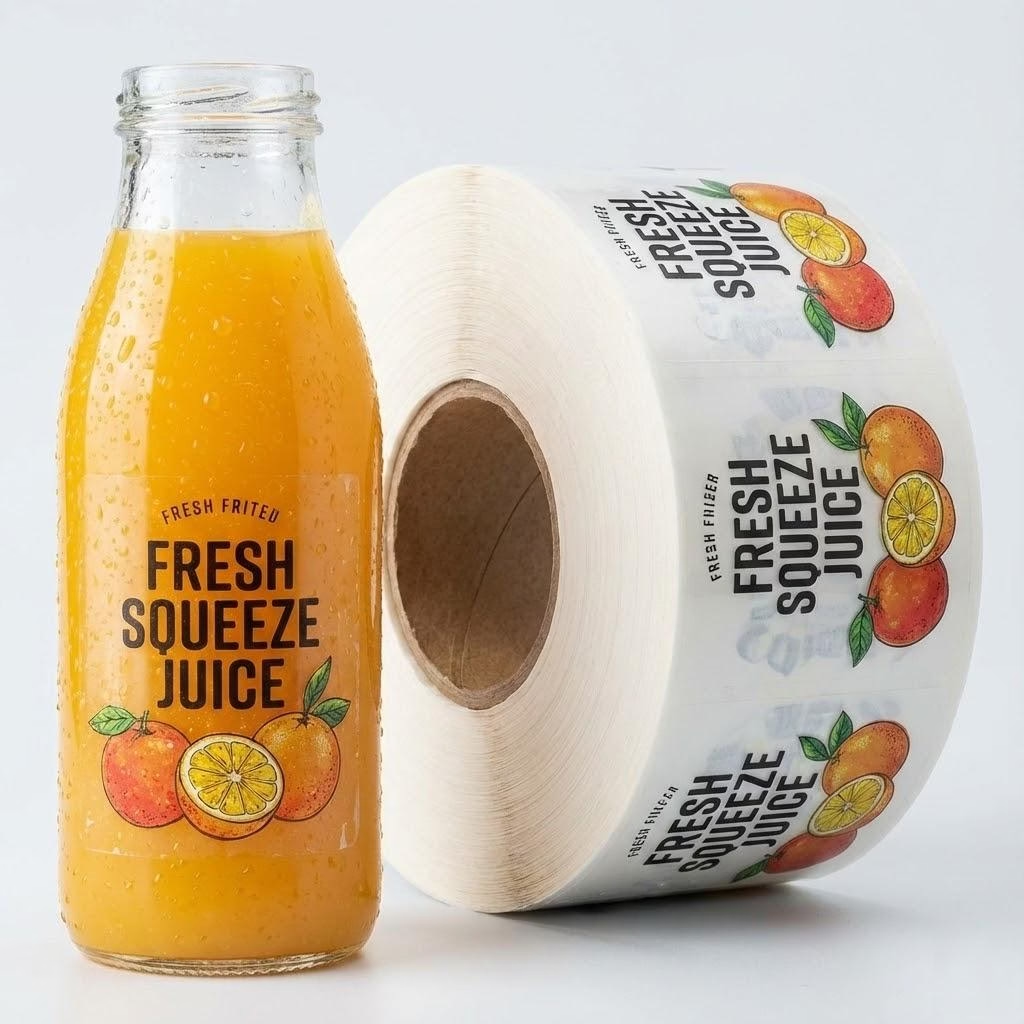
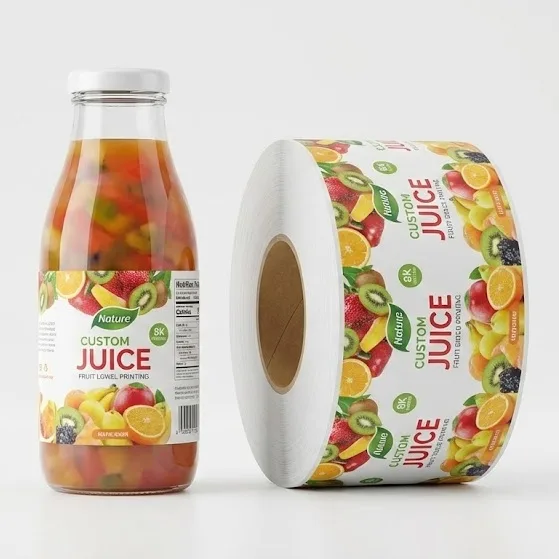
At Label Printing China, we shatter this vacuum by providing visual, verifiable data points at every critical node. We treat components like Custom Beverage Labels as highly engineered industrial assets, not just generic printed stickers.
The 4-Node Transparency Protocol
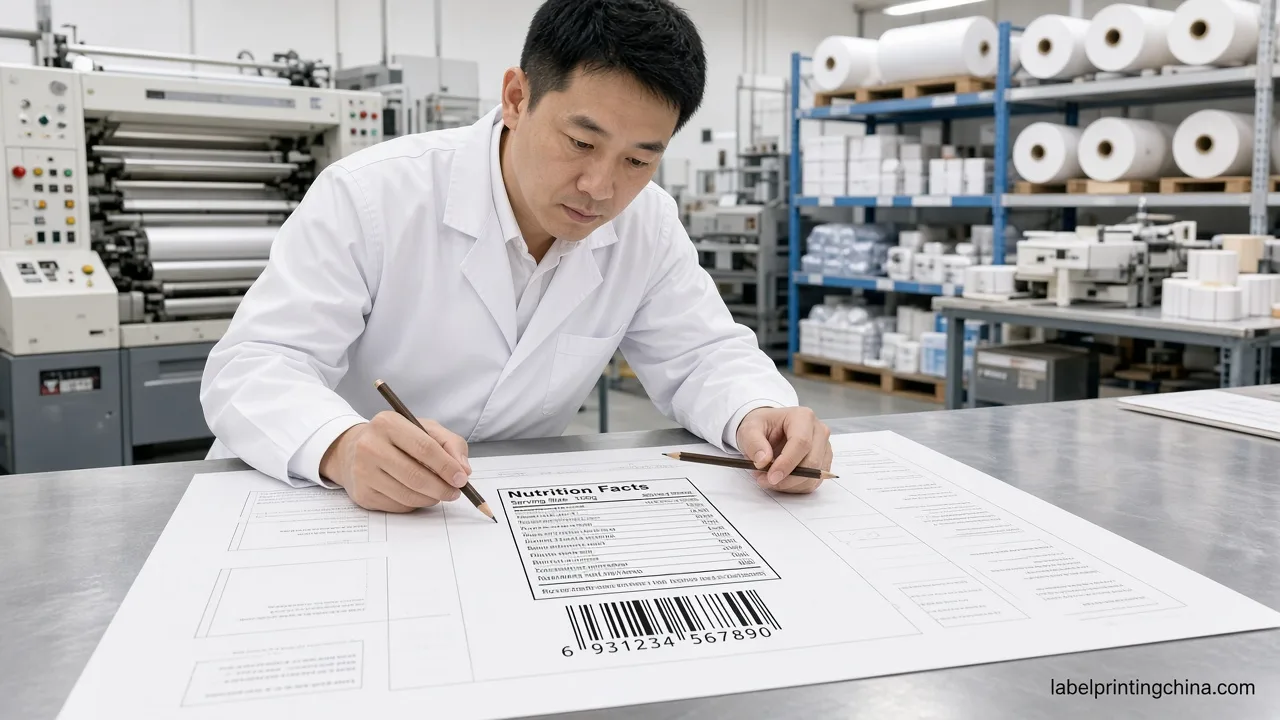
- Pre-Press Audit: We do not just blindly check your file; we perform a rigorous technical audit to verify bleed zones, die-cut vectors, and safety margins, preventing common issues like blurry Canva prints.
- Color Validation: We use Heidelberg equipment to lock in your brand’s Delta E, providing first-off press sheet videos under standardized D50 lighting conditions before mass production begins.
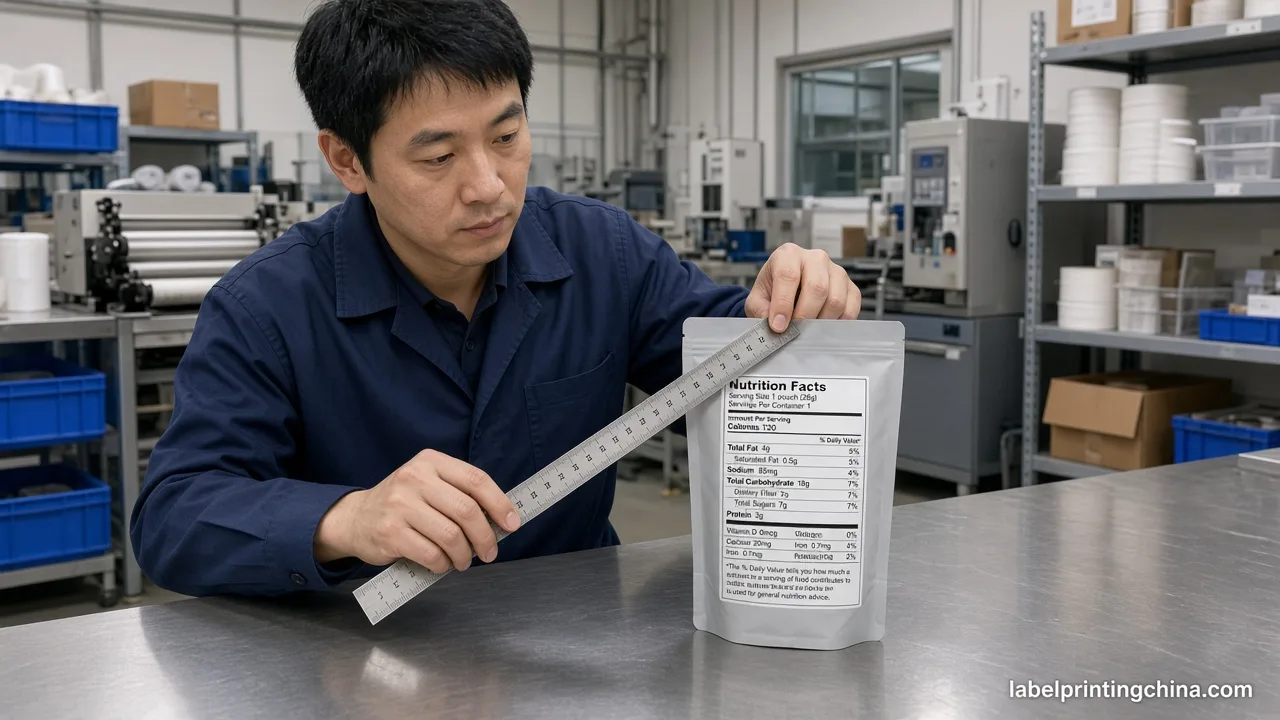
- ±0.2mm Tolerance Locking: This is the mechanical soul of manual application. If the die-cut is too deep, the liner tears; if it is too shallow, the label will not peel. We lock the tolerance at a microscopic ±0.2mm.
- Release Dynamics Test: Prior to boxing, we record a live manual peel test to prove the silicone release force is perfectly optimized for your human operators on the warehouse floor.
The LSE Die-Cutting Disaster
To understand why standard “cheap stickers” fail on the production floor, consider a fast-growing cosmetics brand that procured highly attractive matte BOPP sheet labels for their new High-Density Polyethylene (HDPE) face cream jars.
HDPE is categorized as a Low Surface Energy (LSE) plastic, which natively resists adhesion. Within 48 hours of hand-application, their generic acrylic adhesive failed completely, resulting in severe edge “flagging” across thousands of jars and making the product look DIY.
Resolving this required an immediate intervention of industrial precision. The generic acrylic was swapped for a specialized high-tack rubber-based formula, precisely matched to the 38-42 dynes/cm surface tension of the HDPE containers to ensure a permanent bond.
If you do not understand why labels peel off bottles, you are gambling with your brand equity. Always verify your substrate energy before printing.
Ready to Scale Your Brand with Premium Custom Sheet Labels?
Stop overpaying for low-quality prints. Leverage our 18 years of technical expertise to get industrial-grade sheet labels optimized for flawless manual application. Save up to 30% on your packaging costs while ensuring your products are 100% machine-ready for future growth.
The Physics of Flawless Manual Application

Once you secure the correct substrate and verify the strict tolerances, your warehouse execution dictates the final bond. Human operators require strict environmental and mechanical parameters to succeed.
- Thermal Activation: Pressure-sensitive adhesives are highly reactive to temperature; applying labels to cold glass or condensation-heavy containers in a warehouse below 10°C (50°F) guarantees edge curling because the adhesive cannot “wet out” properly.
- The 180-Degree Peel: Never pull the label upward, as pulling stretches film substrates like BOPP and causes micro-tears. The correct method is to fold the glassine liner sharply backward and pull the liner away from the label, leaving the label flat.
- Positioning Jigs: Eliminate human error by deploying low-cost positioning jigs made from 3D-printed plastic or rigid cardboard, ensuring exact horizontal and vertical alignment across thousands of units without automated machinery.
100% Machine-Ready: Engineering for Future Scale
The ultimate strategy to sustainably save 30% on your packaging overhead does not come from haggling over fractions of a cent on cheap paper; it comes from entirely eliminating future switching costs.
When weekly restocks outgrow hand-applied sheets, use the sheet to roll guide to time the sheet-to-roll switch and clear retail buyer sample gates before the next PO.
When your daily throughput crosses the critical threshold and your facility inevitably integrates an automated label dispenser, your material specifications should not require a complete overhaul. From your very first sheeted batch, your short-run orders must be engineered for future scale.
By implementing a Machine-Ready Label Manufacturing philosophy, we ensure that your sheet labels use the exact same ICC color profiles, material face-stocks, and adhesive formulas as the roll labels you will need next year, creating a zero-friction transition.
The Procurement Manager’s Vetting Node
To establish total dominance over your packaging supply chain and defend your decisions internally, you must upgrade your supplier auditing protocol before initiating a purchase order.
- Require Technical Data Sheets (TDS): Demand formal documentation detailing the exact adhesive tack and substrate dyne level compatibility, rather than accepting a vague promise of “strong glue.”
- Lock the Die-Cutting Guarantee: Ensure the supplier contractually guarantees a die-cut tolerance of ±0.2mm to allow flawless manual peeling without liner tearing or label destruction.
- Mandate Node-Based Transparency: Confirm that the facility offers a systemic video feedback loop, documenting the pre-press grid, the color lightbox test, and the physical peel test prior to international shipment.
Get Your Factory-Direct Quote
Stop treating your packaging components as an administrative afterthought, and start demanding industrial precision at every stage of the custom label manufacturing process.
Our team provides a Free Pre-Press Audit and a guaranteed 30% saving on industrial-grade custom labels, ensuring your transition from manual to automated application is flawless.