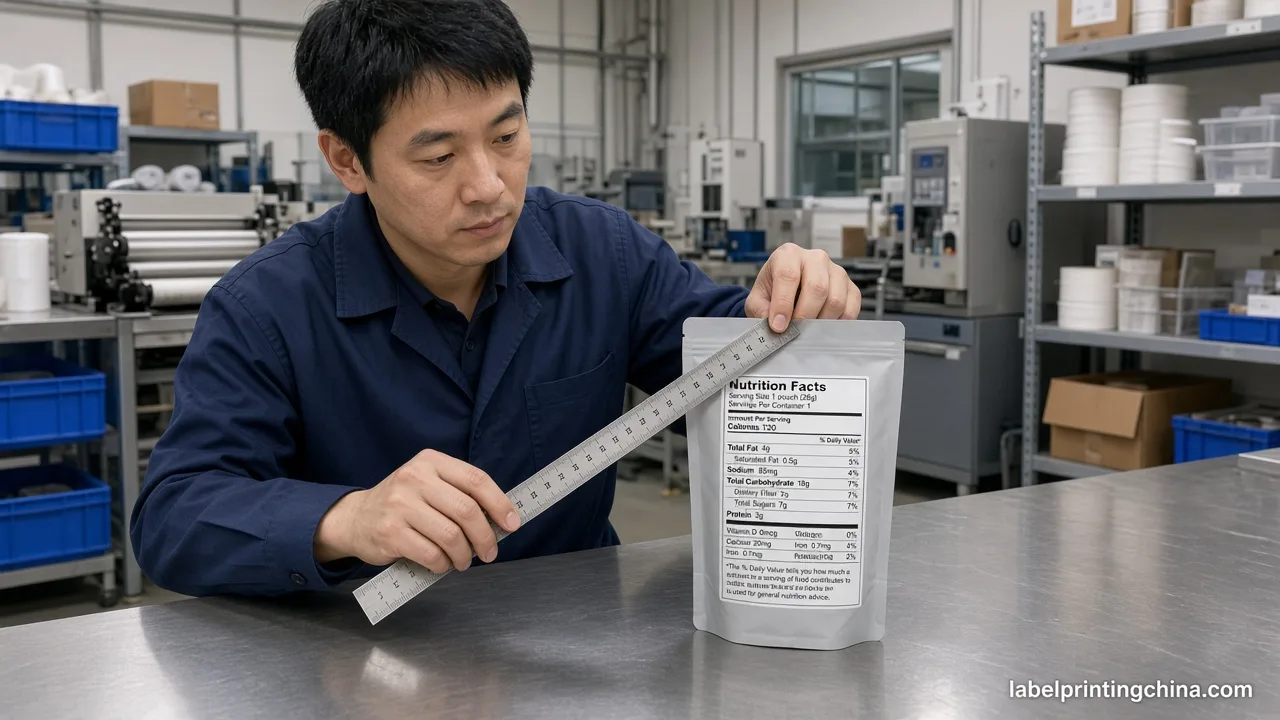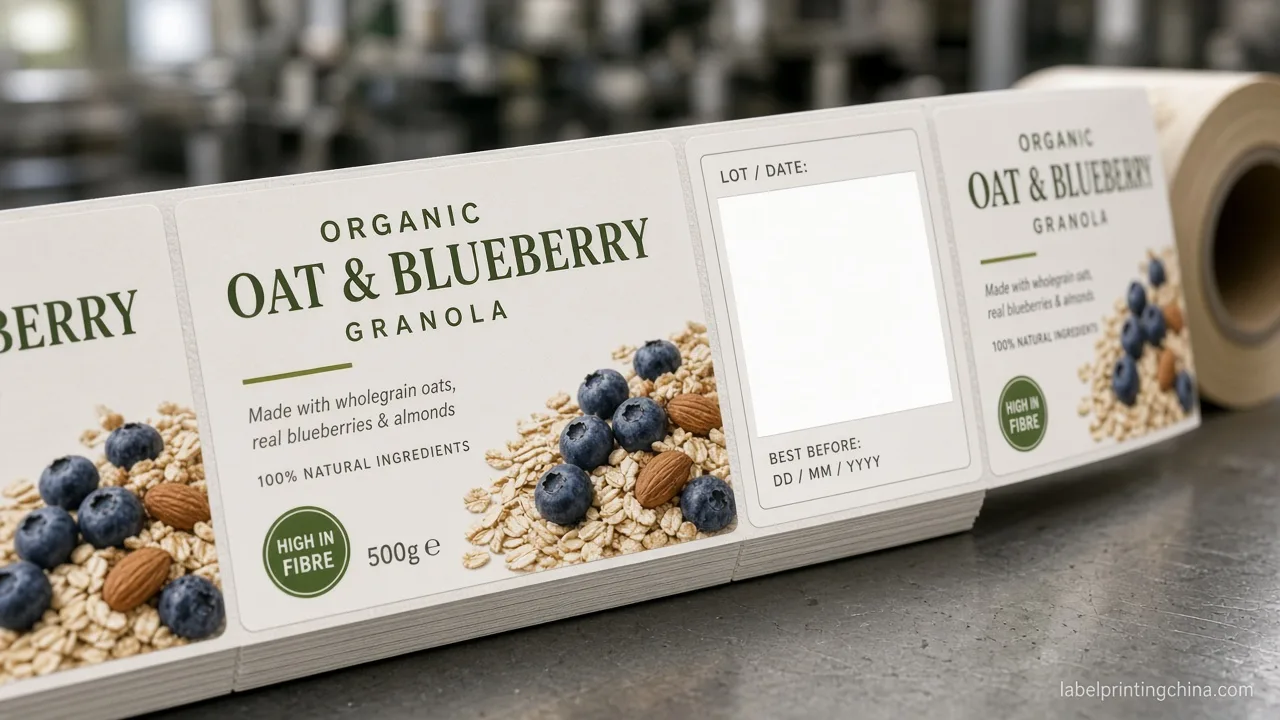
Changing label printers mid-season often fails for one reason: teams cancel the old purchase order before the new plant has proven die lines, color, and applicator fit on your line. Retail dates do not wait for “almost matching” proofs.
Switch suppliers with a five-step cutover—handover package, color lock, pilot lot, dual-run week, then kill the old PO—so labelling never becomes the line’s bottleneck during a vendor change.
What this means: clear the handoff list, press-proof gate, and Cutover Gate table before you move volume to a new roll-label partner and cancel safety stock.
Why Most Label Vendor Switches Create Downtime
Procurement cancels the incumbent the week a new quote looks cheaper. Production discovers the new roll will not mount: wrong unwind, soft liner, or a core that rattles on your spindle.
Equipment OEMs sell “zero downtime” as twin applicators for empty rolls—not as a factory change. Your job is continuity of supply, not a second print head on the line.
Vendors who only compete on landed unit price will push you past Steps 2–4. Insist that colour and applicator data sit in the same negotiation as price, or you will buy a cheap roll that stops the filler.
If you are still choosing vendors, run the red-flag audit in our label supplier checklist first. This page starts after you have already decided to move.
The Five-Step Seamless Transition SOP
Keep both plants booked until Step 5 clears. Parallel capacity is cheaper than a dark labeling station.
| Step | Owner action | Exit criterion |
|---|---|---|
| 1. Freeze specs | Export die, unwind, core, face stock, adhesive, varnish, variable fields | New plant acknowledges package in writing |
| 2. Color & press proof | Approve wet proof on production stock; lock ink recipes | ΔE vs master within buyer limit; no “close enough” |
| 3. Pilot lot | Order 1–2 SKUs at applicator speed on your line | Misapply / teardown rate within historical band |
| 4. Dual-run week | Split high runners; hold safety stock from incumbent | ≥7 days cover if new plant slips |
| 5. Cutover | Pass Cutover Gate table; then cancel or wind down old PO | All gate rows Pass; written rollback path |
Treat the table as a calendar, not a wish list. Skip a row and you reintroduce the exact downtime you meant to avoid.
Map owners by name for each step—procurement owns stock cover, engineering owns applicator fit, brand owns colour. Shared Slack threads without clear exits create silent delay.
Build a two-week buffer into retail ship windows before you announce the vendor change internally. Surprise cutovers are what empty the labelling bay.
Need a Supplier Transition Plan?
Send your die lines, unwind, and current PO calendar—we map a no-downtime cutover for your next roll program before you stop the incumbent.
Build the Handover File Package Before Anyone Prints
A “spec sheet PDF” from marketing is not enough. The new plant needs the same physical inputs your incumbent used for the last approved lot.
- Native die line + knife number or CAD; finished label size with corner radius
- Unwind diagram (1–8) matched to applicator photo or machine model
- Core ID (usually 1" or 3"), max OD, and preferred roll length
- Face stock + adhesive + topcoat codes from the last good PO—not catalog “equivalents”
- Approved print-ready PDF and, if used, ICC/profile notes for brand colors
- Variable-data field map (SKU, lot, barcode symbology) and sample scan files
One beverage buyer sent “final art” but omitted unwind. The first full pallet mounted backward; the line lost half a shift rewinding. After that, every RFQ packet on custom roll labels includes unwind + core photos before ink mixes.
Ask the incumbent for the last production Traveler—ink lots, anilox, and curing notes travel with the die. Document ownership early so soft-file disputes do not stall cutover week.
Bundle change control: any die tweak after Step 1 must re-open colour and pilot. Silent “minor knife polish” from a middleman is how hero SKUs fail the first production night.
Keep a physical master board in the same room as the new proofs—phone photos of shelf packs compress blues and hide white ink gaps that scanners and customers both catch.
Lock Color and Press Proofs Before the Pilot Lot
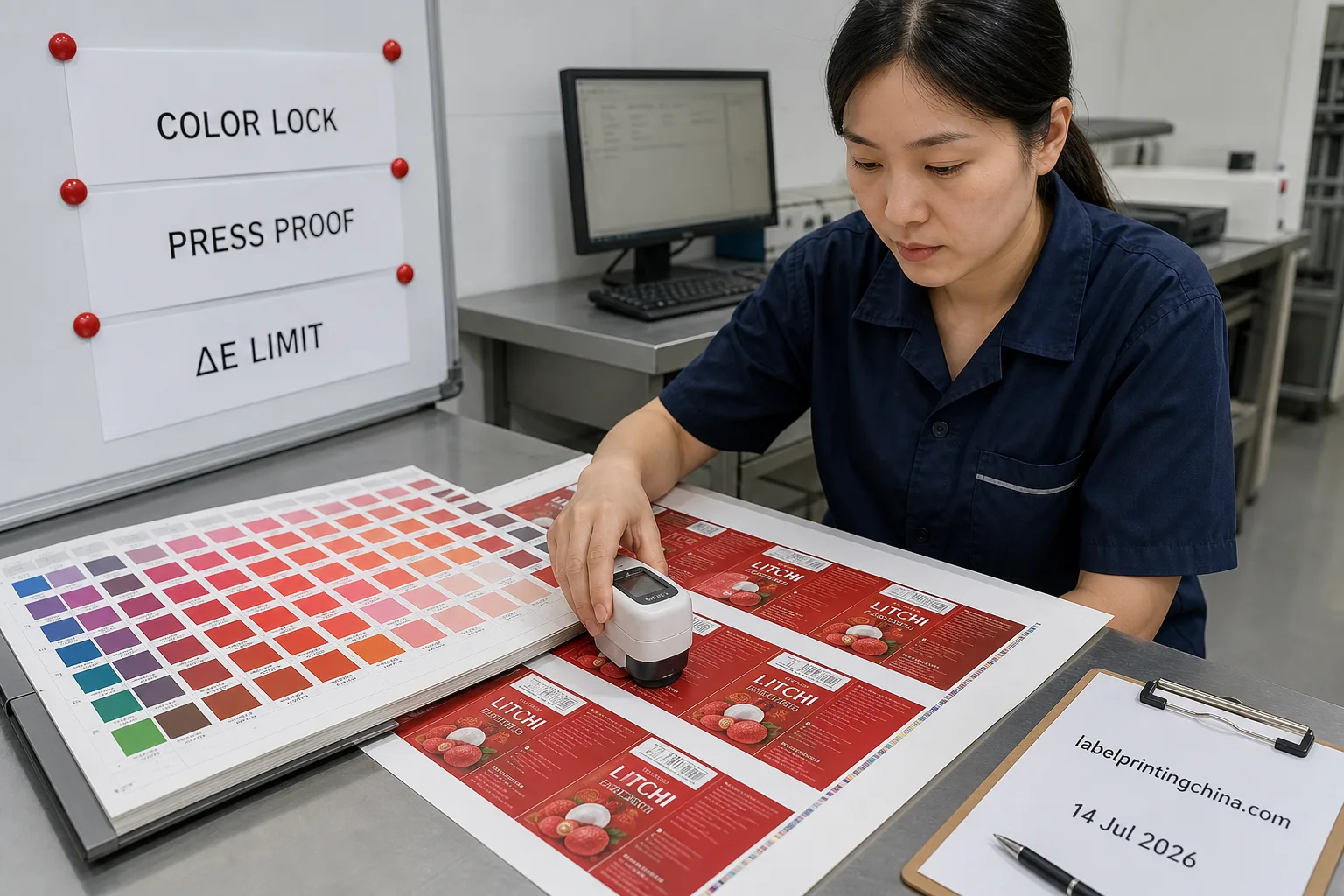
Screen proofs lie about opaque whites, metallics, and soft-touch varnish. Demand a press proof on the production face stock at press-ready coverage.
Measure brand-critical solids against your physical master. Many converters target ΔE ≤2–3 for primary brand colors; write your limit into the approval email so “looks fine on my monitor” cannot reopen the job.
The ICC color profiles site explains why device profiles matter when two plants print the same PDF. Pair that theory with a wet proof under your factory light, not only D50 booth talk.
When plants argue about “industry normal” tolerances, point both quality teams at a shared reference such as CIE colorimetry basics, then write your own ΔE ceiling into the PO—standards set language; your master board sets acceptance.
Red flags: “We will match on the big run”; proof on office paper; swapping film brand mid-pilot; approving under store LEDs only.
A sauce brand accepted a glossy film proof after years on matte paper. Shelf colour shifted under harsh retail light and forced a recall of three days’ output. Colour + finish must both pass before Step 3 volume.
Pilot Lot and Dual-Run Before You Kill Inventory
Pilot the SKUs that cycle fastest on your applicator—not the easiest sleeve shape. Record reject codes: wrinkle, flagging, smear, barcode no-read.
Hold at least seven days of labelling cover from the incumbent while the new plant finishes its first commercial lot. Dual-run is insurance, not distrust.
Compare door-delivered unit cost while both plants ship. Use the tiers in our roll label pricing guide so freight and plate fees do not hide a false win.
If dual-run burns overtime for more than one week, pause cutover and reopen Step 2. Chasing a two-cent unit save while the line starves is not a vendor win.
Photograph spindle left/right, dancer arm setting, and wipe-down SOP before the first new roll mounts. Those snaps settle “your film / our tension” arguments in minutes instead of shifts.
Finance should score dual-run as a temporary carrying-cost line, not as failure. Teams that hide dual-run under R&D often cancel it too early and recreate stockouts.
Run the Cutover Gate Before You Kill the Old PO
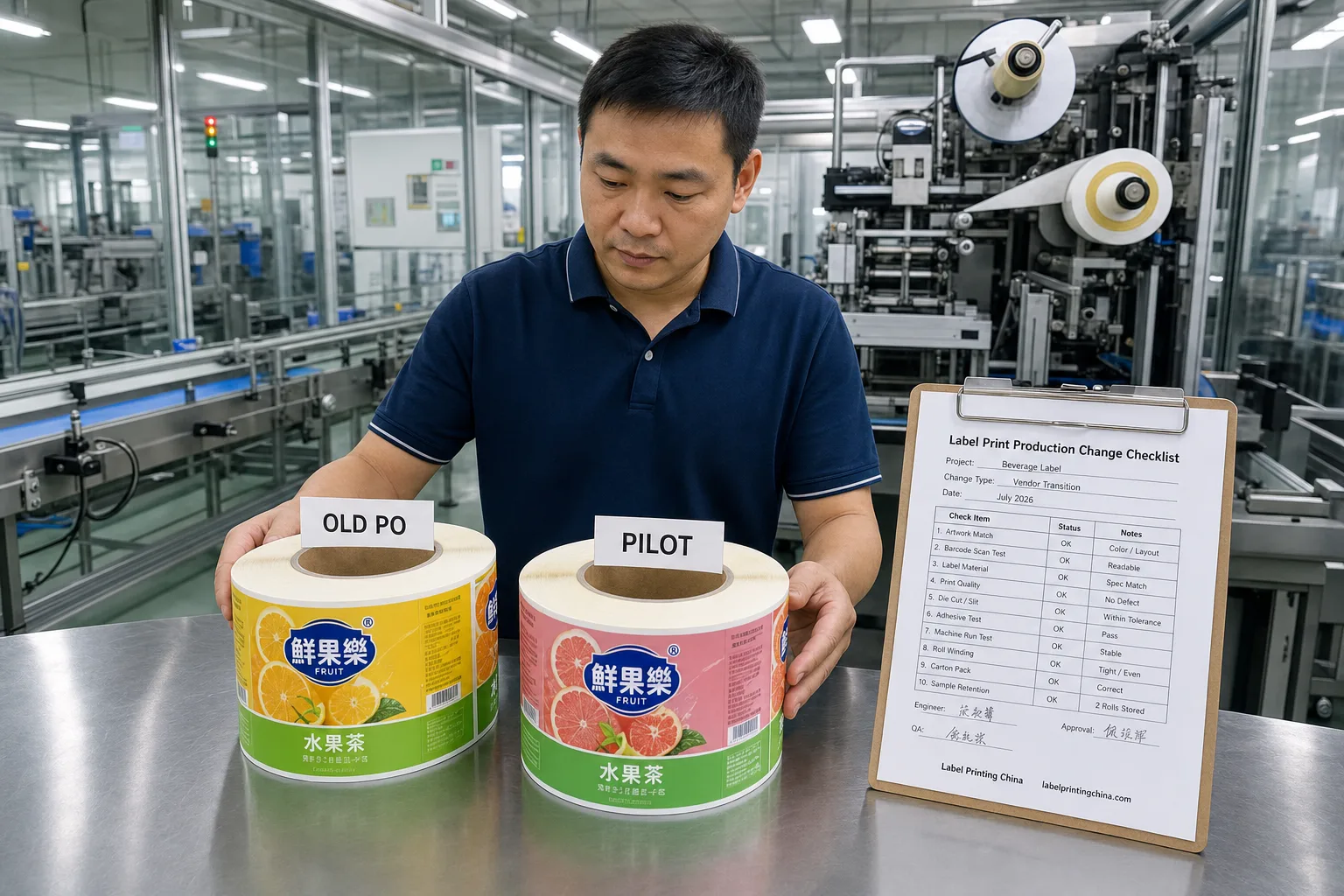
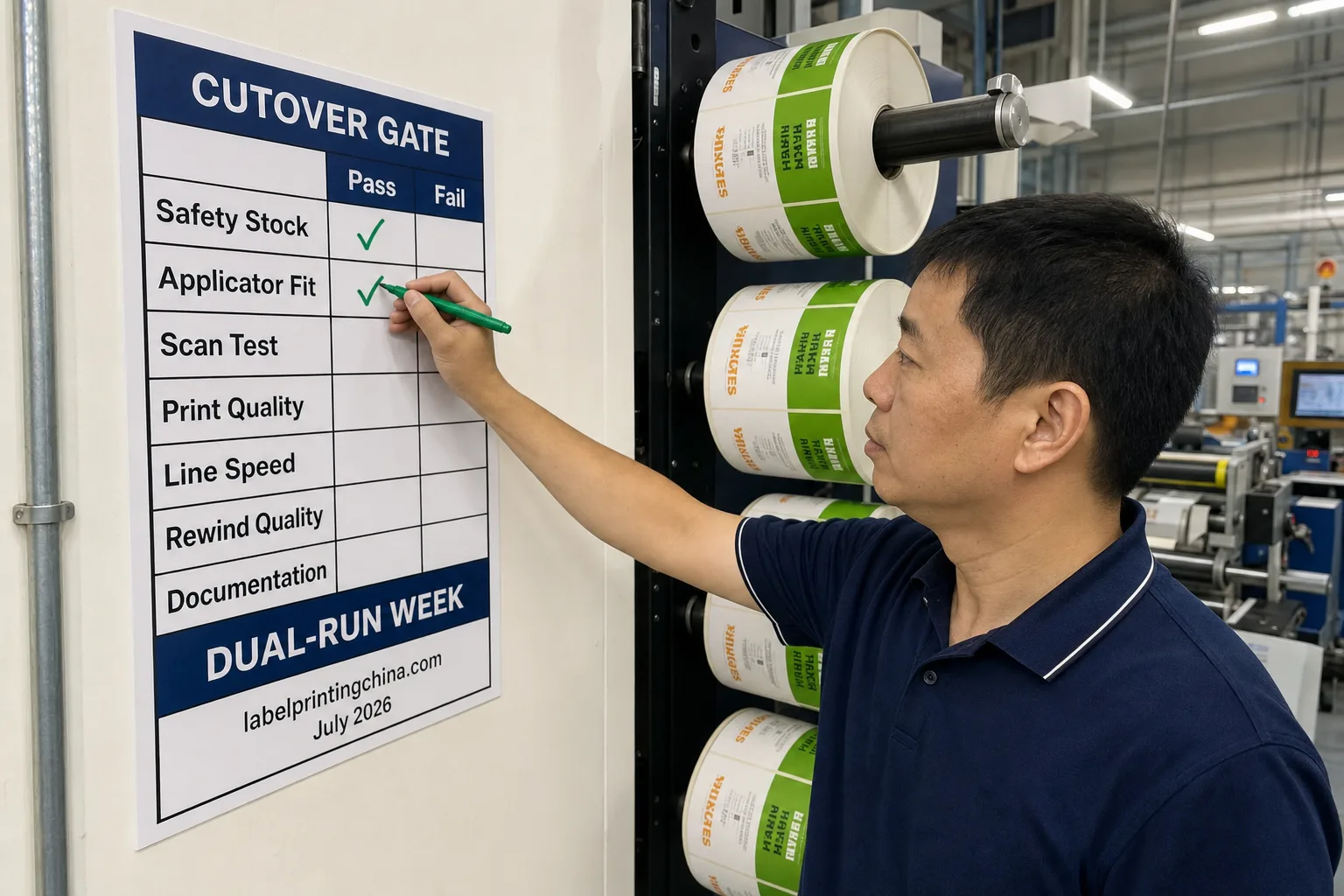
One Pass/Fail pass. Any Fail reopens dual-run; do not “hope through” the week.
Each gate row maps to a line in the 20-metric label sourcing checklist, so acceptance stays measurable from vendor to vendor.
| Check | Pass If | Fail If |
|---|---|---|
| Safety stock | ≥7 days cover after first new-lot receipt | Cover <7 days or airfreight still assumed |
| Applicator fit | Pilot reject rate ≤ historical baseline | New reject mode (teardown, weave, no-read) |
| Colour lock | Production ΔE within written limit vs master | “Visual OK” only; master board missing |
| Lead time | Confirmed capacity for next 2 PO cycles | Capacity “TBD” or shared open slot language |
| Rollback | Incumbent will fill emergency 1× lot in writing | Incumbent already spun down with no bridge PO |
A snack co-packer cleared the Cutover Gate after two pilots failed on barcode quiet zones. Only when scans matched their WMS rate did they cancel the old blanket order—and the line never went dark.
Archive the signed Cutover Gate PDF with the first commercial lot Traveler. Six months later, when someone asks why the incumbent was dropped, you show measurements—not memory.
Common Transition Pitfalls That Stop the Line
- Ending the incumbent PO the day the new quote is signed
- Piloting a low-volume SKU while hero SKUs stay untested
- Accepting “equivalent” film without peel and squeegee tests on oily fill
- Ignoring core and OD limits until the pallet arrives
- Letting middlemen translate die changes without a signed change log
For broader sourcing sequencing once the plant is stable, the labels sourcing playbook covers RFQ hygiene without repeating this cutover gate.
Keep Labelling Moving While the Vendor Changes
Downtime hits when teams treat a supplier switch like a pricing exercise. Treat it like a process cutover: freeze the handover package, lock colour on production stock, pilot the hardest SKU, dual-run with cover stock, then pass the Cutover Gate before you cancel the old PO.
When you are ready to load die lines and unwind into a factory that will work the gate with you, start on our custom roll labels page and ask for a supplier transition plan tied to your next ship window.