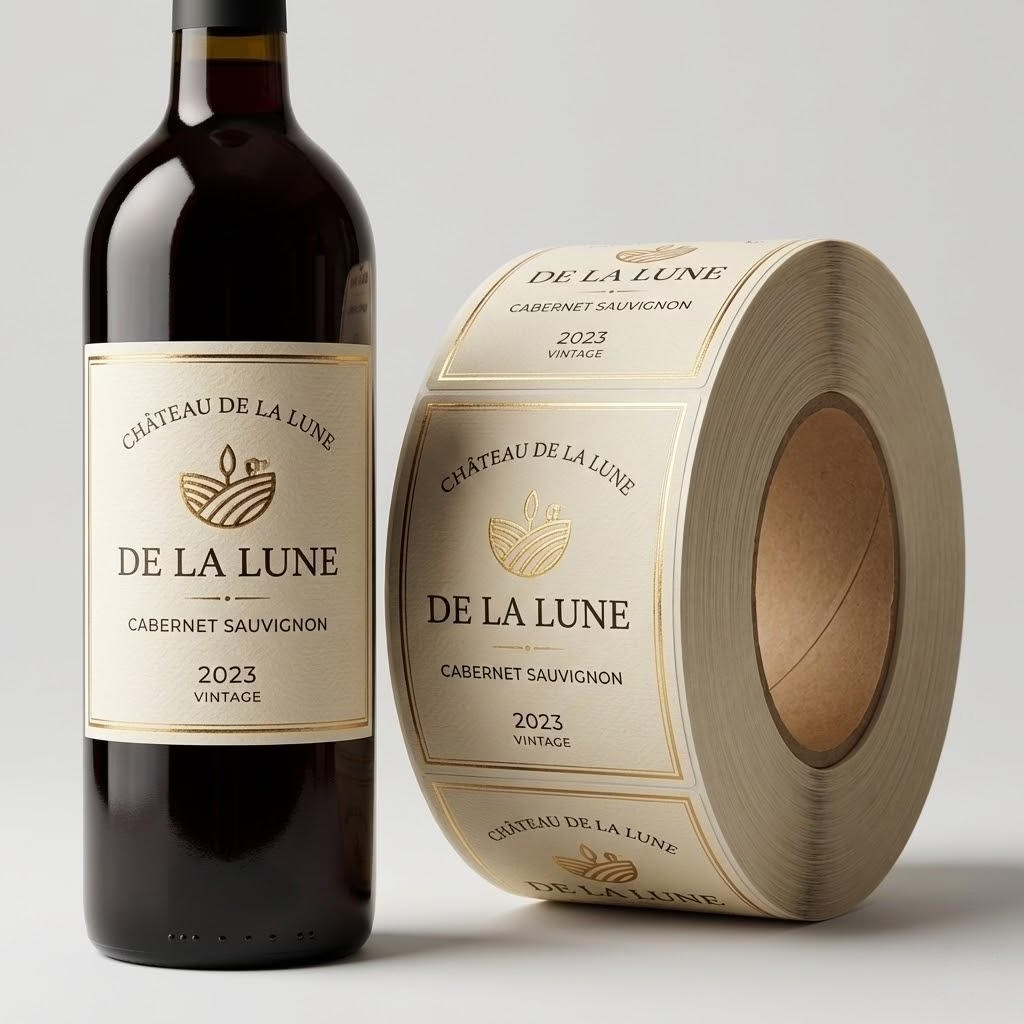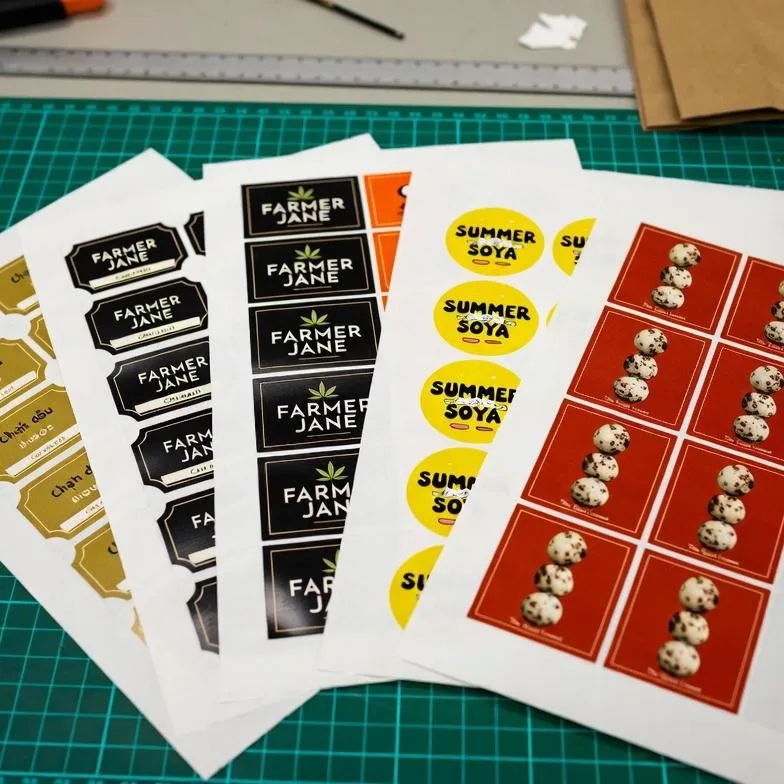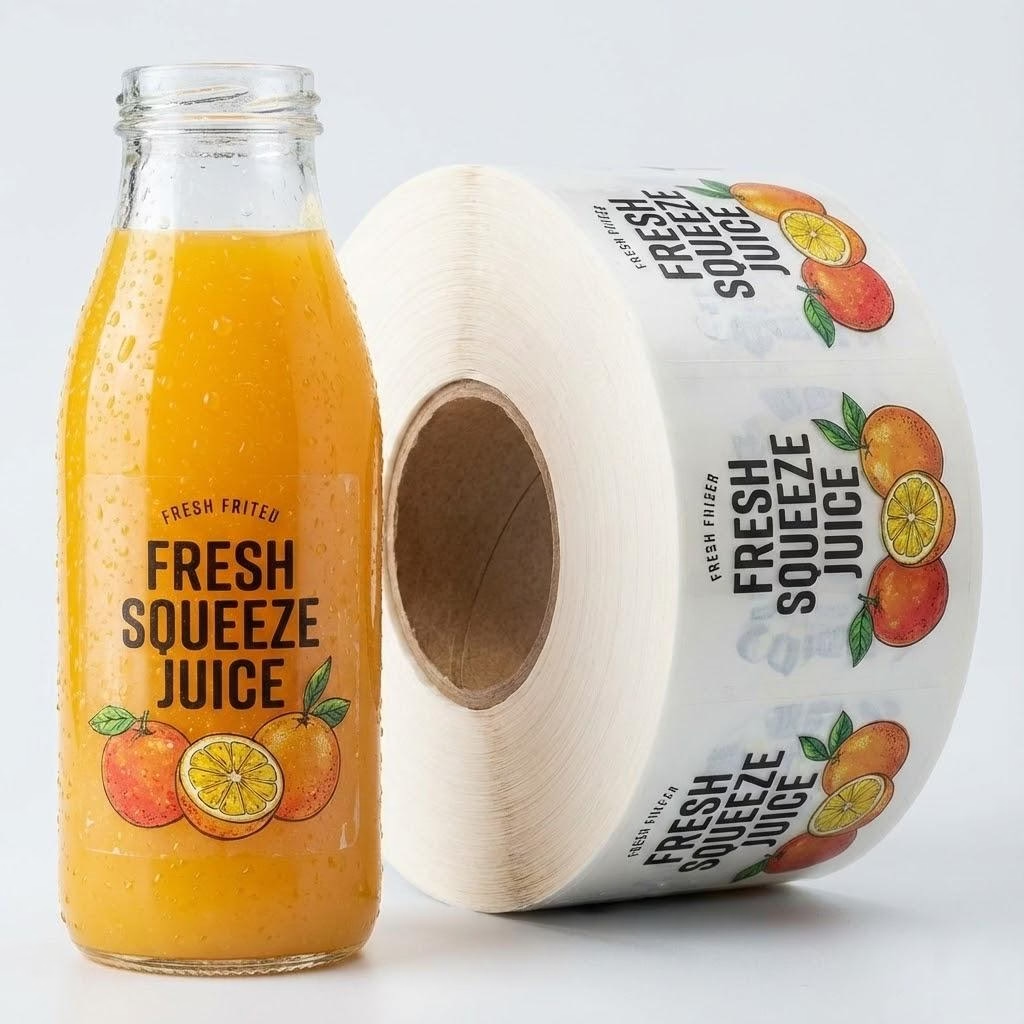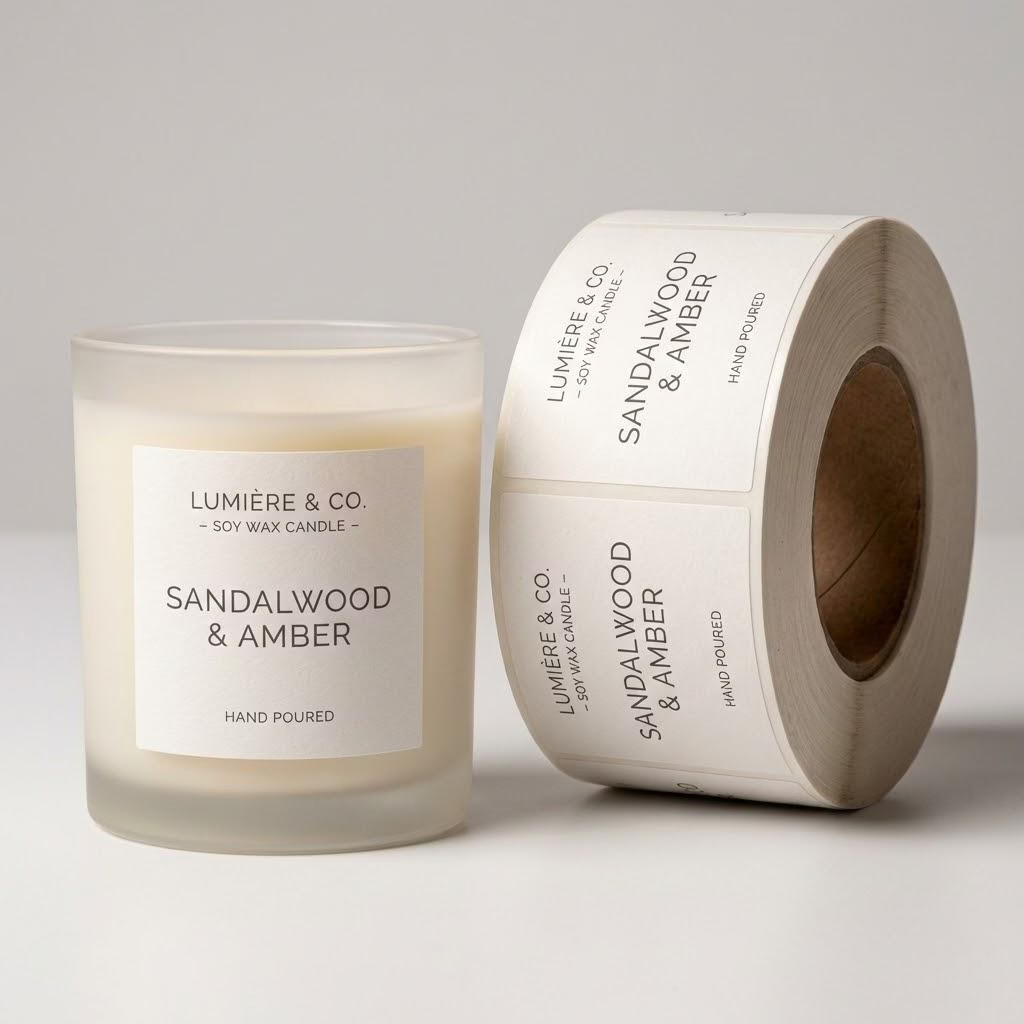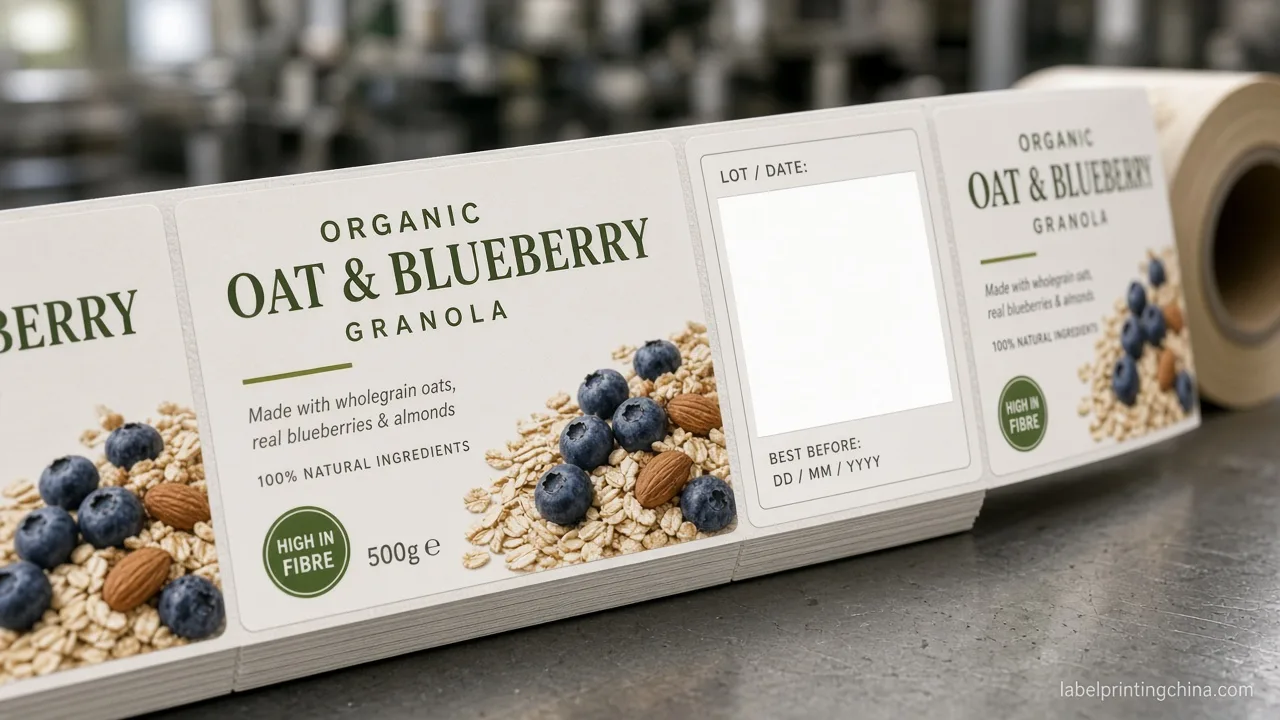
Roll label quotes look simple until you compare two suppliers at $0.08 versus $0.05 per label—then discover one buried a $420 die charge, the other quoted FOB while your warehouse needs DDP, and neither named how laminate grade shifts peel force on your applicator line.
Custom roll label cost per label is driven by face stock, label area, color count, laminate stack, die complexity, and order quantity—and you should normalize every quote to DDP landed cost per thousand before you compare domestic ecommerce tiers against factory-direct volume runs.
Below you will find an auditable cost formula with variable weights, a DDP versus domestic comparison framework, volume tier reference bands for 5K–50K rolls, a Quote Review Checkpoint table with Pass If and Fail If criteria, and a pre-order checklist for what to confirm before you lock volume pricing.
Why Roll Label Unit Price Hides More Than the Calculator Shows
Most roll label quote pages online are product configurators—not procurement guides. They show tiered unit prices from 100 to 100,000 labels but rarely expose how plate amortization, die ownership, or freight assumptions change the number you will actually pay on the first PO.
For a 5K–50K buyer, the calculator answer is a starting point, not a budget. Domestic sites optimize for speed and low MOQ; factory-direct quotes optimize for unit cost at volume but carry tooling lines your spreadsheet may not include.
Before you RFQ, separate three numbers: printed unit cost, one-time tooling, and logistics to your dock. Only the sum tells you whether a $0.04 offshore label beats a $0.11 domestic roll once die and air freight land on the same invoice.
Domestic configurators quote in USD delivered to a US ZIP in days. Factory-direct programs quote in weeks with tooling lines that do not appear in the headline tier table. Neither format is wrong—they answer different buying jobs. Your job is to force both into the same spreadsheet row before procurement recommends a vendor.
Volume buyers at 5K–50K rolls should also confirm whether the quote assumes flexographic plates or a digital hybrid. Plate-based flexo amortizes setup across long runs; digital hybrids trade higher unit cost for faster changeovers on seasonal SKUs. A quote that does not name the press route is not comparable to one that does.
Wind direction, core diameter, and maximum roll OD affect waste on high-speed applicators—and sometimes trigger a re-quote when your line spec arrives after the first PDF. List those machine fields in the RFQ packet on day one so pricing teams do not price a hand-apply roll you cannot run.
The Roll Label Cost Formula: What Actually Moves Unit Price
Printers price rolls with the same underlying formula even when the online UI hides the math. Treat each variable as a lever you can audit on any quote PDF.
| Cost Variable | Typical Weight | What Changes It | Verify on Quote |
|---|---|---|---|
| Face stock (paper vs BOPP) | 25–35% of unit | Film gauge, metallized, clear + white ink | Stock grade and gauge on line item |
| Label area (sq in) | 20–30% of unit | Die size, waste strip width | Die width × height stated |
| Color count + white | 15–25% of unit | CMYK vs spot, flood white on clear | Ink list matches approved art |
| Laminate / varnish | 10–15% of unit | Gloss vs matte, UV vs thermal lam | Micron thickness and finish named |
| Quantity break | Amortizes setup | 5K vs 25K vs 50K same die | Tier table attached for your run qty |
| Unit price with no formula | Unknown | Single line item only | Red flag: request itemized breakdown |
A beverage buyer comparing two 2″ × 3.5″ BOPP quotes at $0.07 and $0.05 stalled when the cheaper line omitted a fifth-color white plate on clear stock—the prepress add-on pushed effective unit cost to $0.062 once quantity held at 10,000 rolls, and running the formula row for color count before PO approval would have surfaced the gap on the first PDF review instead of during finance sign-off.
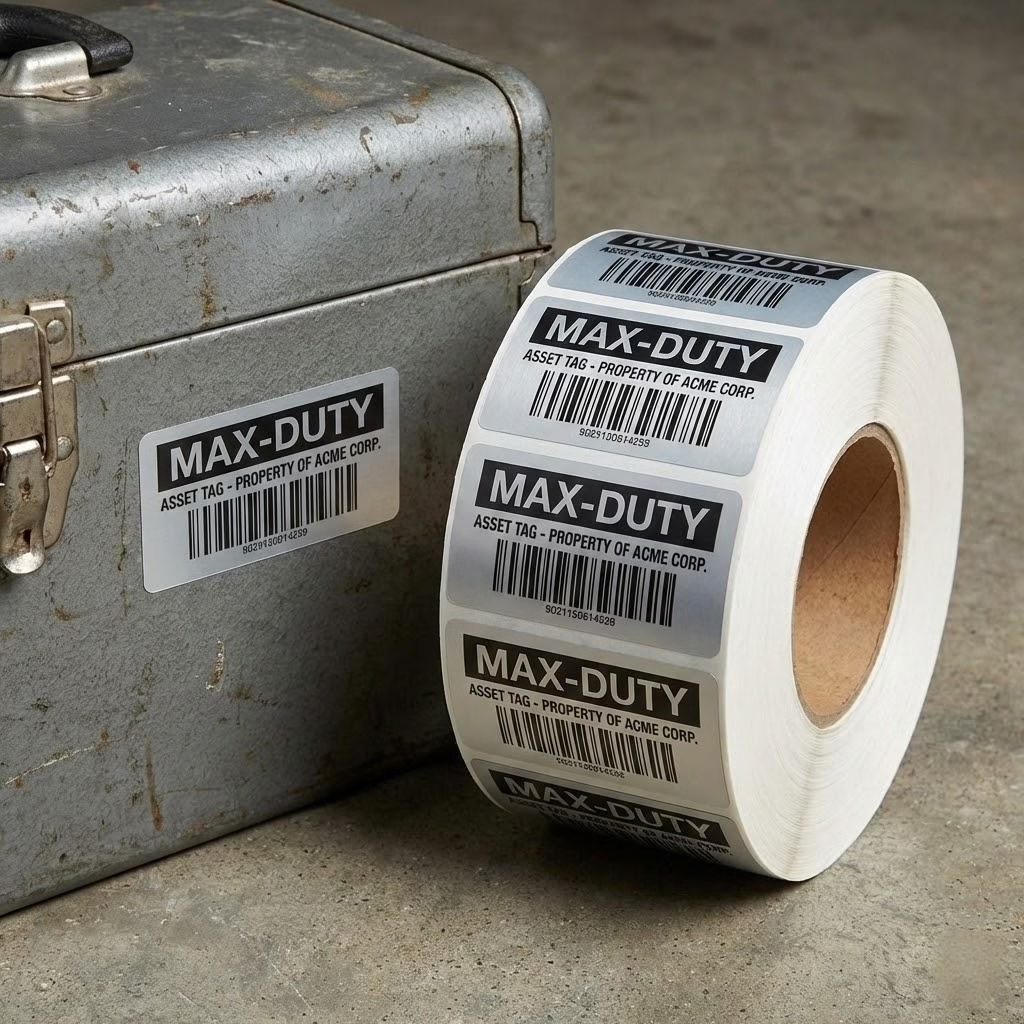
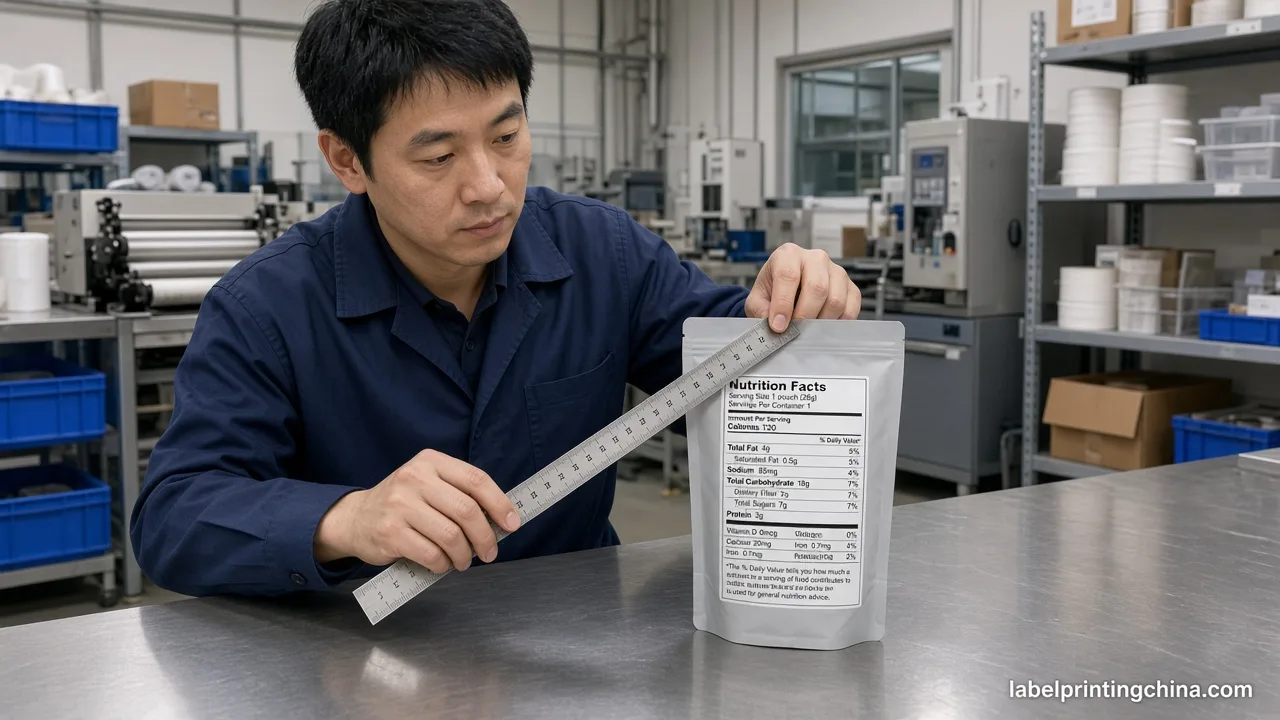
Roll specs for machine apply—core diameter, unwind direction, and overlap—belong in the same RFQ packet as price. See custom roll labels requirements that name those fields before you lock a volume tier.
Material and Finish Variables That Shift Your Quote
Material dropdowns on retail sites collapse dozens of SKUs into marketing names. On the production floor, three layers—face stock, adhesive, and overlaminate—each carry independent price bands.
White paper rolls cost less per square inch than white BOPP but fail faster on chilled or oily surfaces. Clear BOPP with white underprint adds a print pass. Metallized film jumps both stock cost and registration tolerance on press.
Finish choice is not cosmetic: matte laminates can wick at trim on high-speed applicators while gloss films survive condensate better on beverage lines.
For how film substrates behave in flexible packaging lines, review flexible packaging standards before you accept a «weatherproof» bullet without a named micron stack.
Adhesive class is the silent price driver on curved containers: general-purpose permanent acrylic costs less than freezer-grade or removable formulations, but relabeling after edge lift erases any savings within one production week.
| Stack Route | Typical Use | Unit Cost Band* | Choose When |
|---|---|---|---|
| Paper + gloss lam | Dry goods, indoor | Lowest | No moisture, oil, or chill exposure |
| White BOPP + gloss | Beverage, bath | Mid | Condensate or fridge/cold-fill lines |
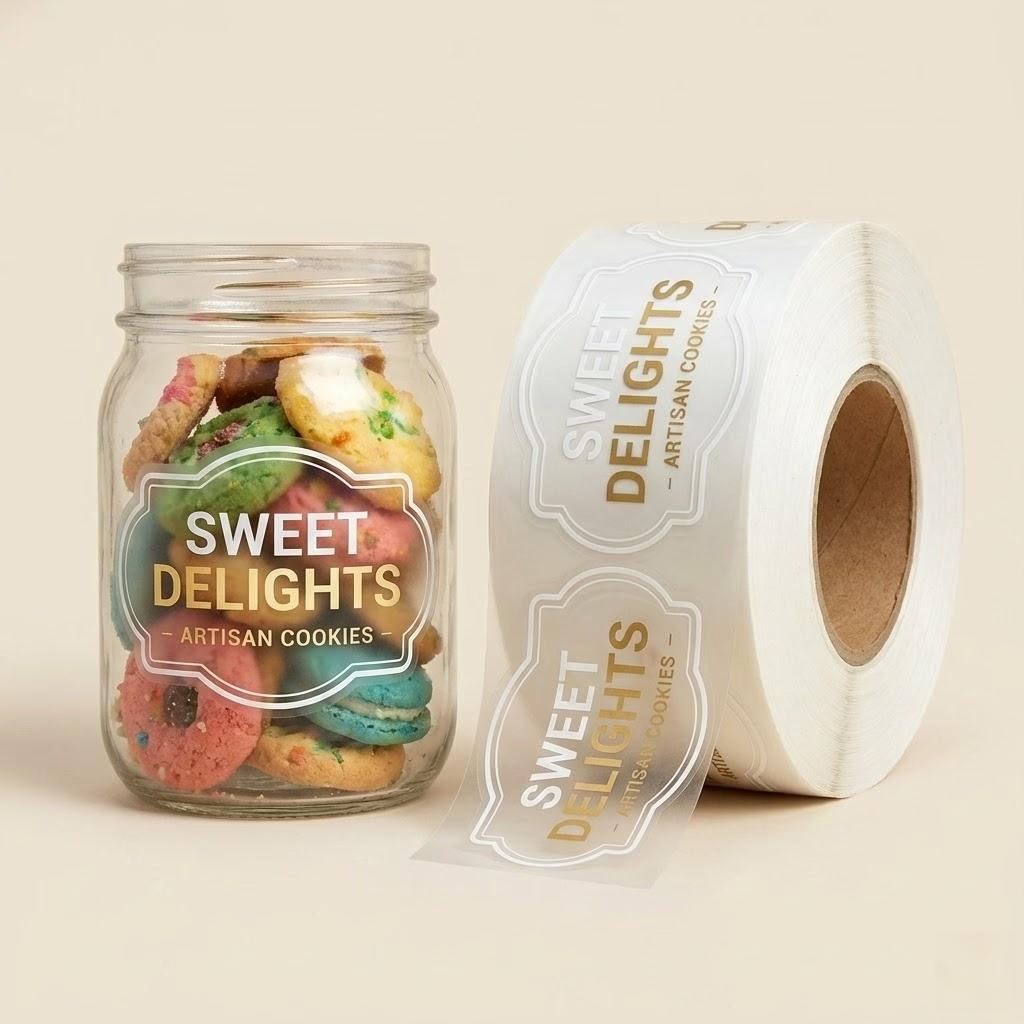
| Clear BOPP + white ink | No-label look jars | Mid-high | Clear container; vector white art ready |
| Metallized BOPP | Premium SKU | Highest | Shelf impact priority; tight register proof |
*Bands are relative at 10K-roll flexo; absolute cents vary by width, color, and region. Use them to sanity-check outliers, not as published price lists.
DDP Landed Cost vs Domestic Unit Quotes
Domestic ecommerce roll label pricing typically includes production and US shipping—not import duty, customs brokerage, or inland delivery from port to your 3PL. Factory-direct quotes may show FOB Shenzhen or EXW unless you ask for DDP explicitly.
Normalize every candidate to landed cost per 1,000 labels using the same Incoterm before you declare a winner on unit price alone.
| Cost Line | Domestic Configurator | Factory-Direct (DDP) | Required for Fair Compare |
|---|---|---|---|
| Printed labels | Shown | Shown | Same qty, size, and material stack |
| Die / plate (one-time) | Often bundled | Line item | Amortize over 12-mo forecast volume |
| Ocean or air freight | N/A | Must be included in DDP | Freight mode named (ocean vs air) |
| Duty + brokerage | N/A | HS code dependent | HTS line on import quote |
| Inland to warehouse | US ground shown | DDP door address | Same delivery ZIP both scenarios |
On a 25,000-roll skincare SKU, a buyer saved 22% on printed unit cost offshore but lost the advantage when air freight replaced ocean in the RFQ revision—DDP modeling on the same delivery window showed domestic roll stock was cheaper for the pilot lot, which is why every import quote should list freight mode, HTS line, and door ZIP on the same row as unit price.
Use a landed cost calculator with your actual HTS line and freight mode before you scale repeat POs.
U.S. import filing rules for printed labels fall under standard merchandise entry; confirm classification with your broker against CBP import basics when you build a DDP comparison sheet.
Buyers who skip the DDP row often approve offshore unit savings in week one and absorb a freight surprise in week four—model both scenarios on the same calendar before procurement circulates a recommendation memo.
Ready to benchmark factory-direct roll label tiers?
Get volume pricing in 24 hours—with die line transparency, DDP options, and tier tables for 5K–50K roll programs.
When you compare factory DDP doors, open the DDP label shipping costs for a 5K-roll worked sheet and quote checklist.
Volume Tier Reference for 5K–50K Rolls
Retail configurators publish tiers down to 100 labels; B2B buyers at 5K–50K need reference bands that include tooling amortization—not just the steepest ecommerce discount curve.
| Quantity (rolls) | Typical Process | Indicative Unit Range* | What Shifts the Band |
|---|---|---|---|
| 5,000 | Short-run flexo / digital hybrid | $0.06–$0.12 / label | New die; hybrid vs flexo routing |
| 10,000 | Flexo, plates amortized | $0.04–$0.09 / label | Plate count vs final art colors |
| 25,000 | Flexo, stable SKU | $0.03–$0.07 / label | Repeat PO discount; same die reuse |
| 50,000 | Dedicated press slot | $0.02–$0.05 / label | SLA, safety stock, narrow web width |
*Ranges assume 2″ × 3″ white BOPP, CMYK, gloss lam, flexo; narrow dies, metallized stock, or rush turnaround sit above band tops.
A condiment brand reviewing three 10,000-roll quotes rejected the lowest per-label line after the Fail If row on die/plate fees flagged a $380 new-die charge with no reuse credit on artwork revision—the mid-tier quote at $0.002 higher per label delivered 12% lower total project cost once tooling amortized over two planned flavor runs, proving that headline unit price is a trap when die ownership stays vague.
Quote Comparison Framework for 5K–50K Buyers
Build a single comparison grid before you negotiate. Every supplier fills the same rows; no one gets to hide fees in prose terms and conditions.
- Label size, shape, and unwind direction (machine apply).
- Face stock, adhesive class, and laminate micron spec.
- Color count including white and varnish hits.
- One-time die, plate, and digital proof fees.
- Unit price at your target quantity plus next break up.
- Incoterm, freight mode, and DDP door ZIP if importing.
- Turnaround, revision rounds included, and defect rework policy.
| Quote Review Checkpoint | Pass If | Fail If |
|---|---|---|
| Die / plate fees | One-time lines split; ownership stated | Buried as generic «setup» |
| Unit price line | Dimensions, material, and qty on same row | Headline $/label only |
| Import vs domestic compare | DDP door ZIP matches domestic delivery | FOB offshore vs DDP domestic total |
| Tier table fit | Break includes your program qty (5K–50K) | Stops at 1,000-label retail tier |
| Prepress gate | Signed proof before full production | No approval step in quote terms |
What this means for your next RFQ: send one master spec sheet and require each vendor to return the same column headers. You will spend less time chasing missing lines and more time negotiating quantity breaks you can actually hit on the applicator floor.
When two quotes land within $0.01 per label, shift the decision to total project cost and revision flexibility. The winner should show die ownership terms, included proof rounds, and a written defect rate cap—not just the lowest sticker on the calculator screenshot.
Finance teams often ask for cost per thousand labels at standard margin. Export your comparison grid with tooling amortized over 12-month forecast volume so the offshore advantage survives internal review even when first-run setup looks higher on the cash calendar.
Pre-Order Checklist Before You Lock Volume Pricing
These checkpoints turn the questions buyers ask before signing a volume PO into fields you can verify on the quote and purchase order—so receiving QC passes on the first shipment.
Minimum order quantity and first-run economics
Factory-direct roll MOQ often starts near 5,000 labels for a new die; domestic sites may quote 100 rolls but at retail multiples. Confirm whether your pilot quantity amortizes die cost or whether a shared-die program exists for standard shapes.
Per-unit cost you can defend internally
Export landed cost per thousand to finance with die and freight lines separated. A $0.03 label with $0.008 freight and $0.004 duty is not the same story as $0.03 all-in domestic—even when the sticker number matches.
Factors you must freeze before re-quote
Artwork version, material stack, color count, and quantity break are locked inputs. Changing any one after quote approval triggers new plates or schedule delays—price the revision path before you promise launch dates to retail buyers.
Final confirmations on the PO face
Core size, roll OD limit, overlap, barcode quiet zone, and golden sample approval signature should appear on the purchase order—not only in email. Missing any one field is how $0.02-per-label savings become a relabeling event after the applicator rejects the first shipment.
Run this checklist against your top two quotes, then place the PO on the quote that meets every Pass If criterion in the Quote Review Checkpoint table—not the line with the lowest headline unit price.
Document the winning quote assumptions in your SKU master file: material stack, die number, plate count, Incoterm, and approved golden sample date. When the next reorder arrives six months later, you will compare against a baseline instead of restarting a calculator search from zero—and that discipline is what keeps roll label pricing predictable across repeat POs.