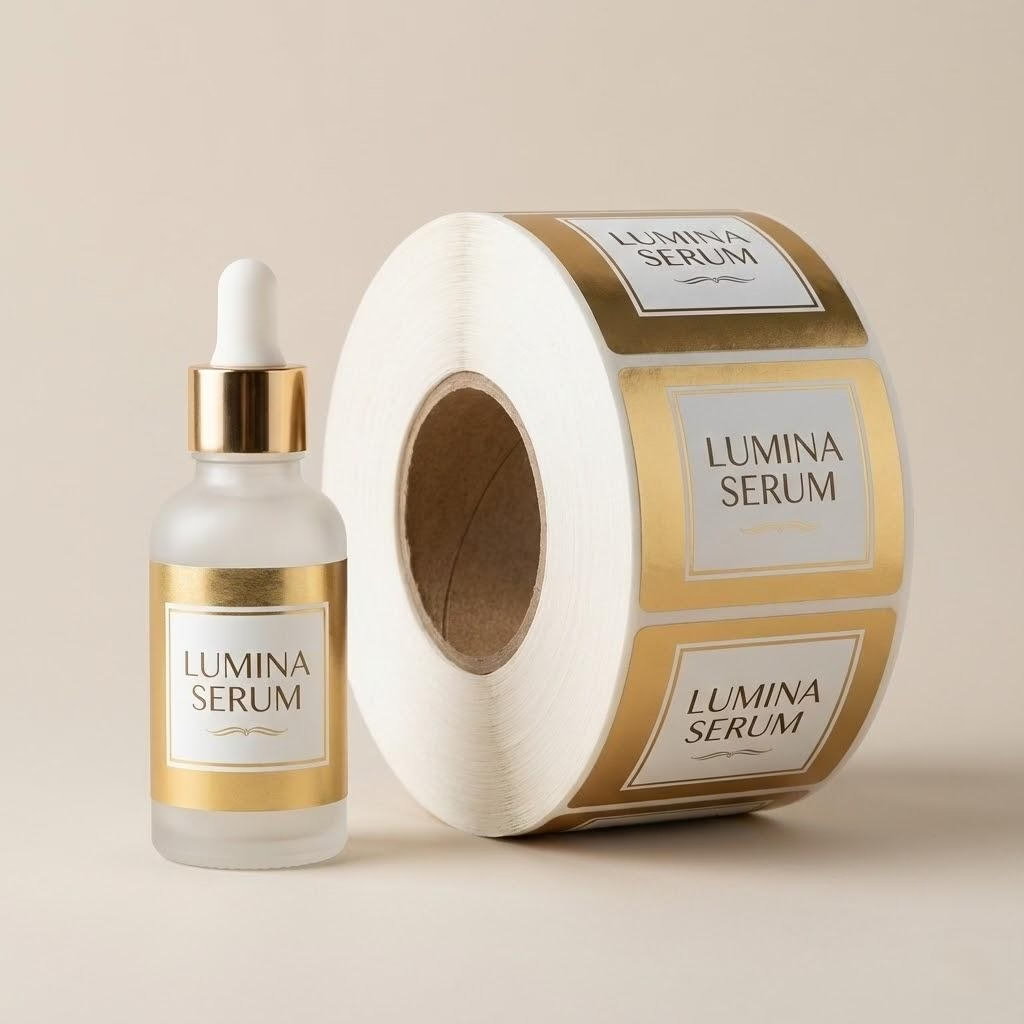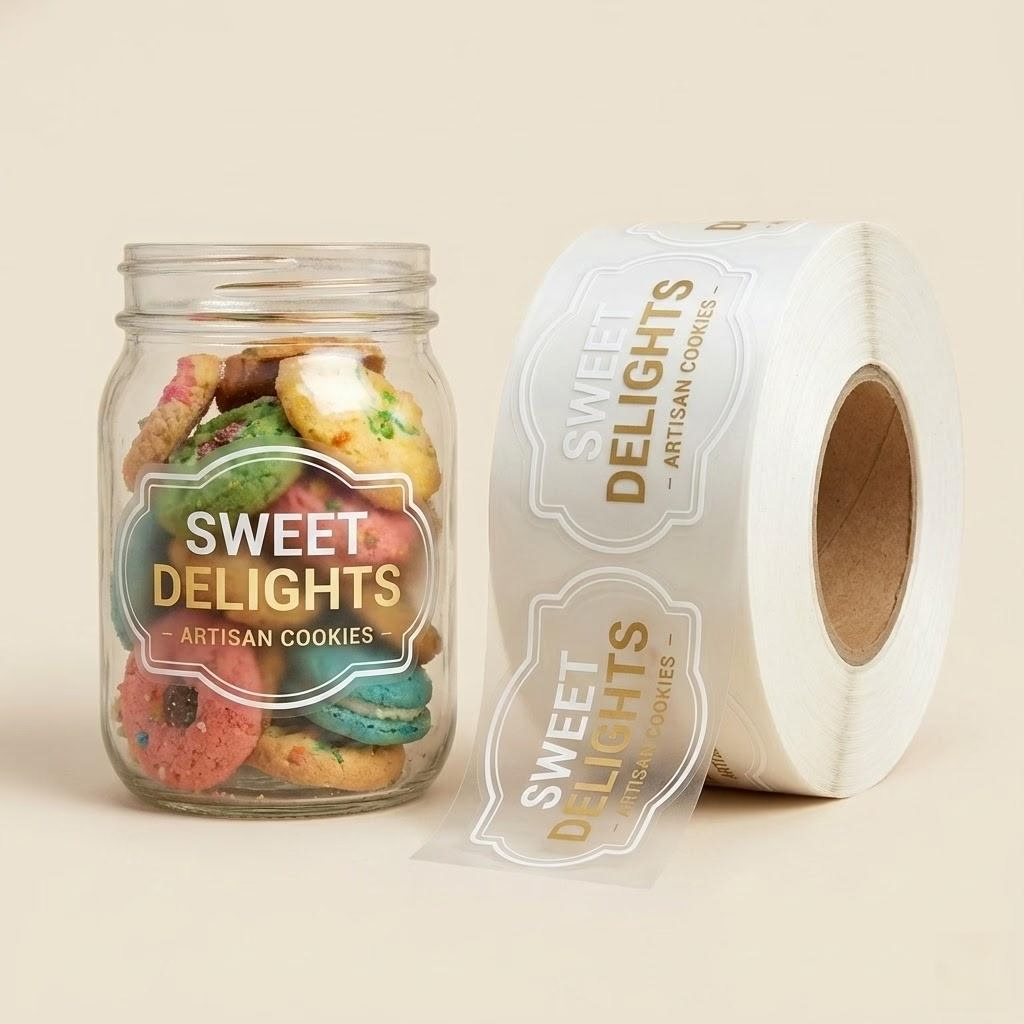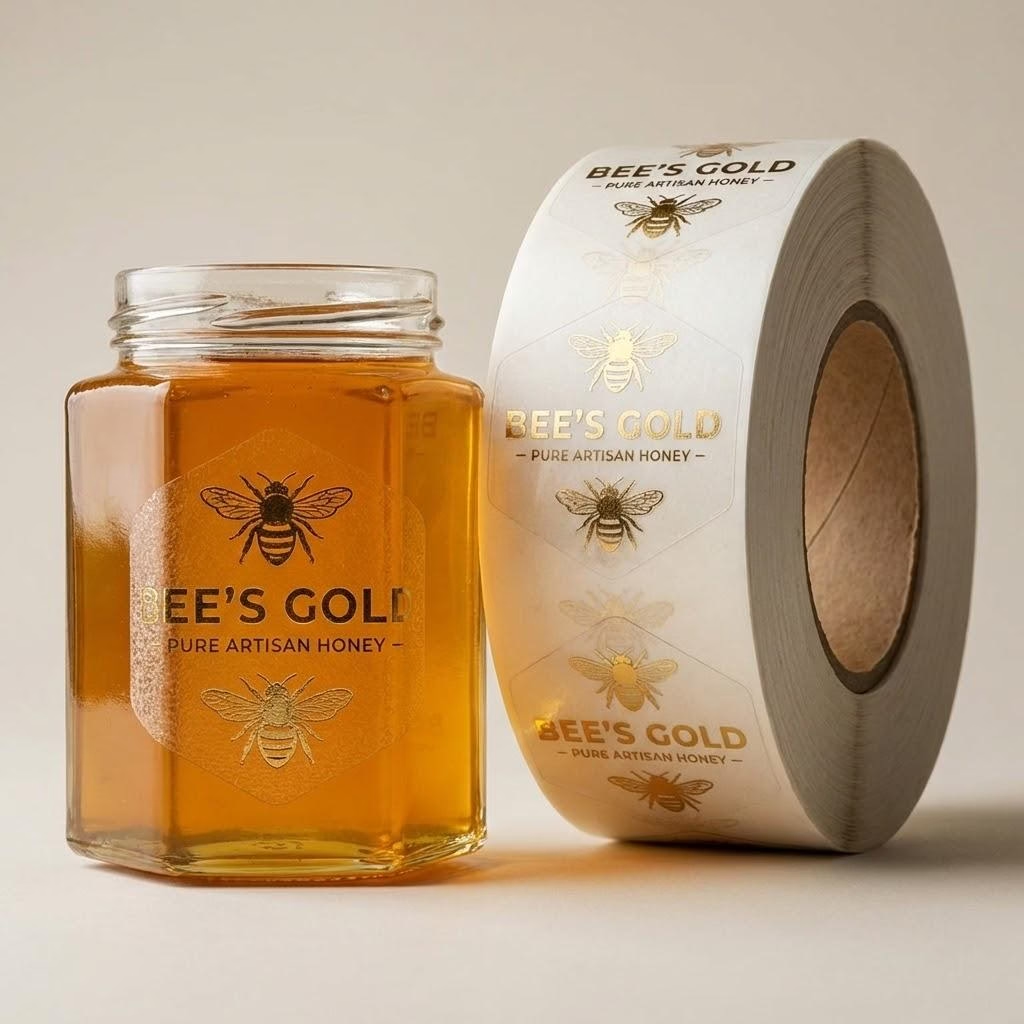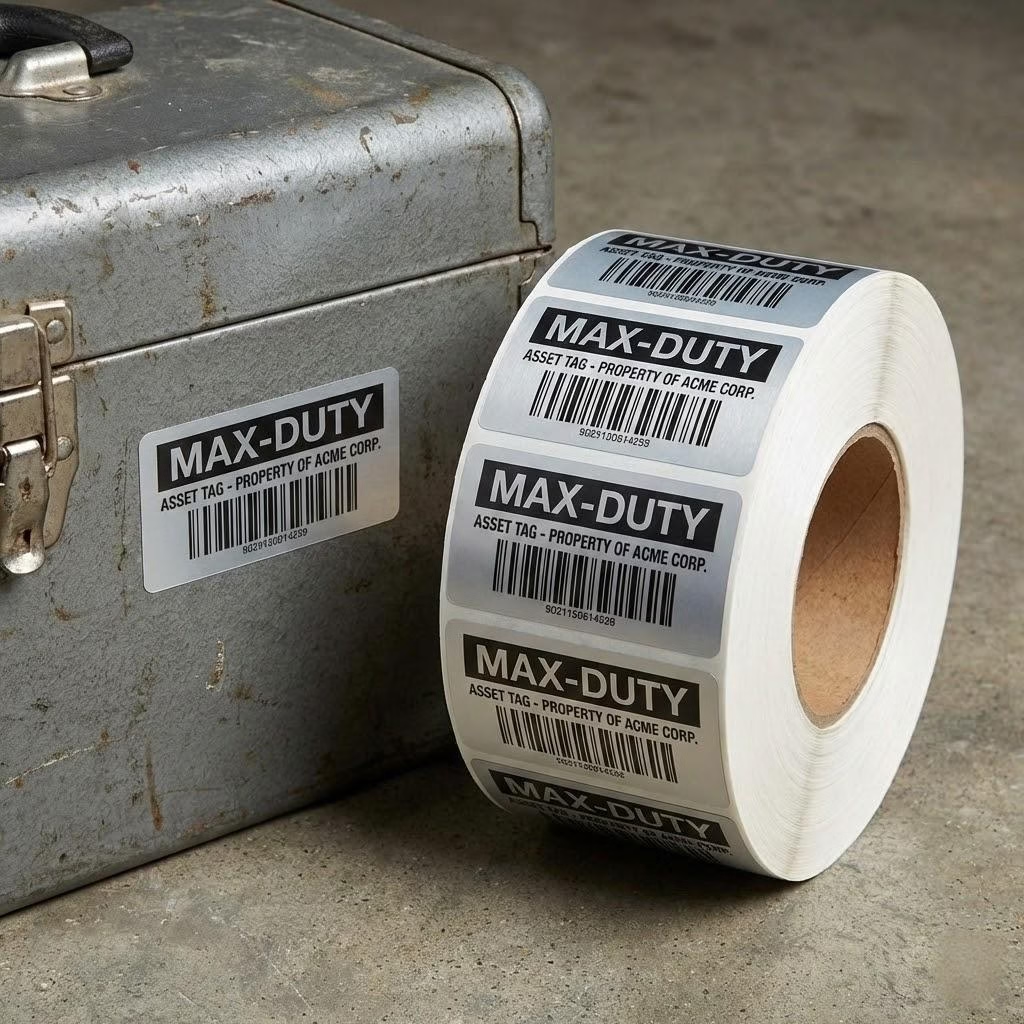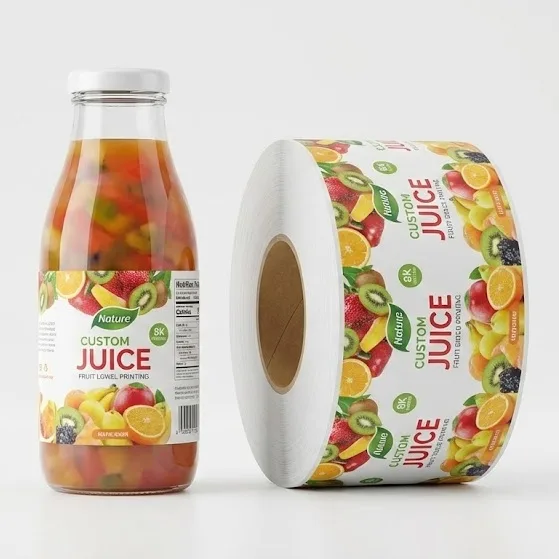
Your labels sell before your product does. On a crowded retail shelf, that small rectangle of adhesive-backed material is the first thing a customer touches, reads, and judges.For a small brand — whether you’re bottling hot sauce in a garage or shipping honey from a farmers’ market stand — getting your labels right is not a design exercise. It’s a sourcing decision that determines whether you can scale from 500 jars to 50,000 without blowing your margin.
This playbook breaks down the exact sourcing strategy that professional purchasing managers use, adapted for small brands at every growth stage. No fluff. No theory. Just the operational playbook — from your first sample order to a retail-ready supply chain.
Your First 500–5,000 Labels — Getting Started Without Getting Burned
The biggest lie in label sourcing: “You need to order 10,000 minimum.”
Most small brands hear this and either over-commit to inventory they can’t sell, or give up on professional labels entirely and stick with DIY print-and-cut jobs that waterproof food labels.
Here’s what actually happens: Chinese label factories have been tightening their MOQs for years, but factory-direct suppliers with flexible production lines can now accommodate orders starting at honey label design.The trick is knowing which factories have invested in short-run capability — and which ones are just telling you what you want to hear to lock in a first order.
When you leave pilot runs for full SKU migration, open the label vendor transition for handover packages, color locks, and a Pass/Fail cutover gate.
What to ask your first supplier:
- “Can you produce 500 labels per design, not per order?” — If they say the MOQ is per order total, not per SKU, you’ll end up with 5,000 of one label when you need 1,000 each of five designs.
- “What’s your sampling process?” — A serious factory offers pre-production samples within 3–5 business days, not “we’ll send you a photo.”
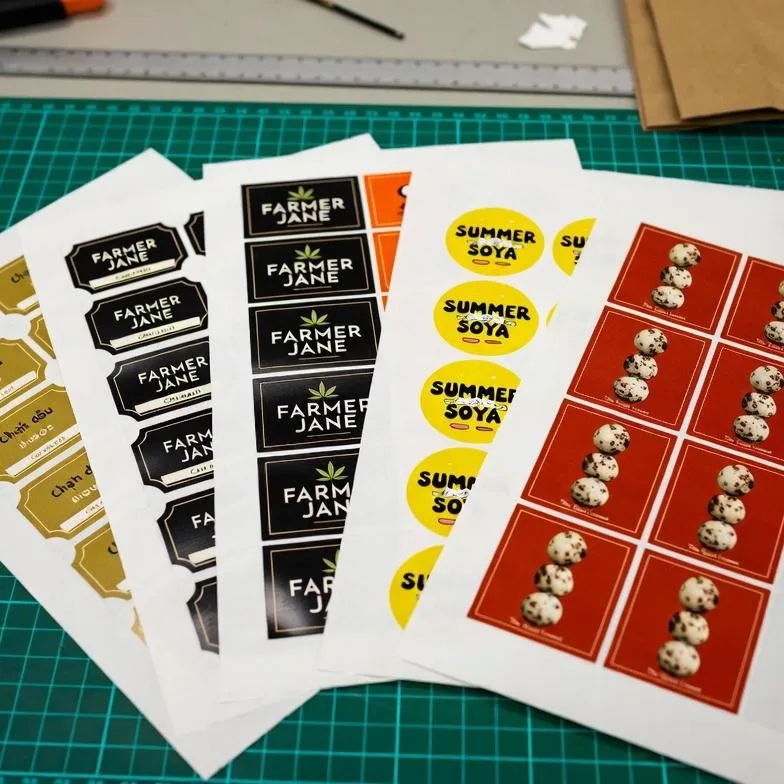
- “small batch food labels” — Roll labels are machine-ready. Sheet labels mean hand-applying every single one. At 500 units, hand-labeling is tolerable. At 5,000, it will destroy your weekend.
The first stage is about de-risking your sourcing. You’re not looking for the cheapest supplier — you’re looking for one that can prove they’re real, respond within 12 hours, and deliver a sample that matches your spec.
5,000–50,000 Labels — When Quality Consistency Becomes Non-Negotiable
Between 5,000 and 50,000 labels, something breaks for most small brands: consistency. The first batch looked perfect. The second batch? The colors shifted. The die-cut is 0.5mm off. The adhesive feels different. Your retailer notices before you do.
This is the stage where you stop treating labels like a commodity and start treating them like a manufactured component — because that’s exactly what they are.
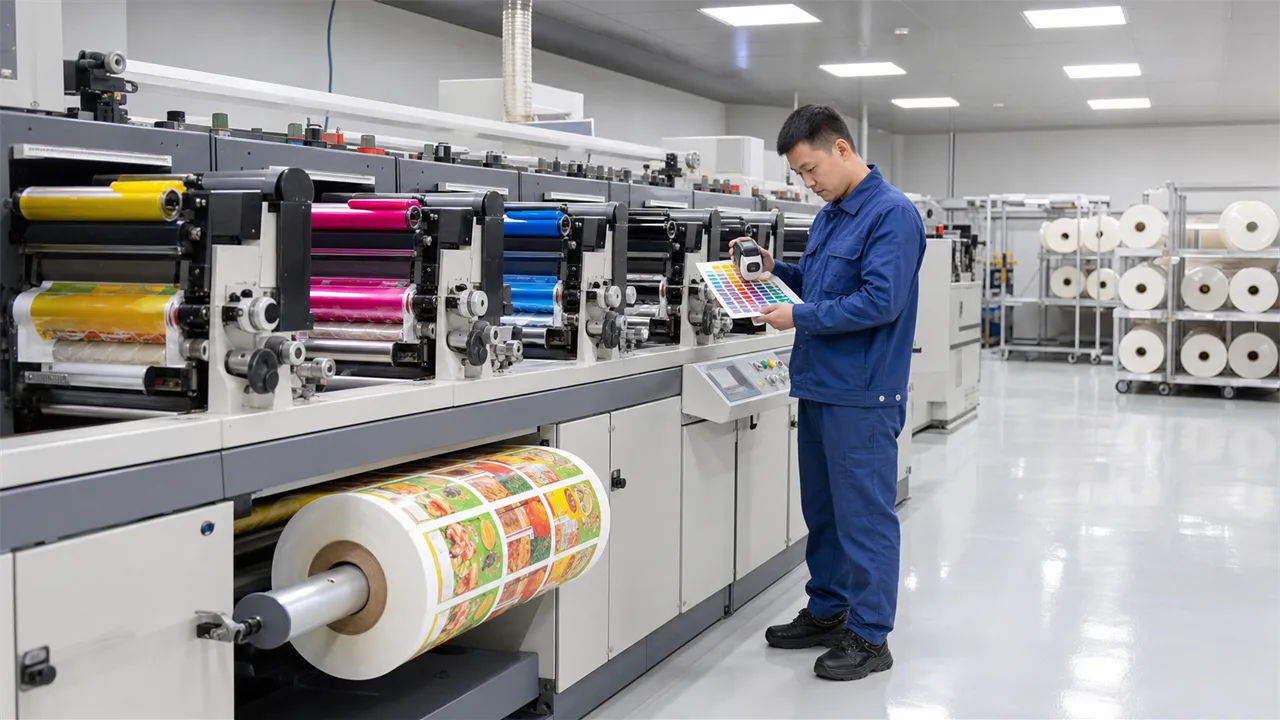
Color consistency is measured in Delta E (ΔE). A ΔE of less than 2.0 is imperceptible to the human eye.Most budget printers operate at ΔE 3–5, which means your brand colors drift noticeably between production runs. A factory with calibrated spectrophotometers and a closed-loop color management system will hold ΔE under 1.5 consistently.
The three questions that separate a real factory from a reseller at this stage:
- “What press do you run?” — Flexographic, digital, or offset. Each has different sweet spots for run length and color accuracy. A factory that only has one press type is a red flag — they’ll push you into their capability, not the right process for your order.
- “Can I get a pre-press proof on the actual substrate?” — If they only show you a digital PDF proof, you’re approving color on a screen, not on the actual material. BOPP, kraft paper, clear film, and metallic substrates all render color differently.
- “What’s your batch-to-batch color tolerance?” — If they can’t give you a number, they don’t measure it. Walk away.
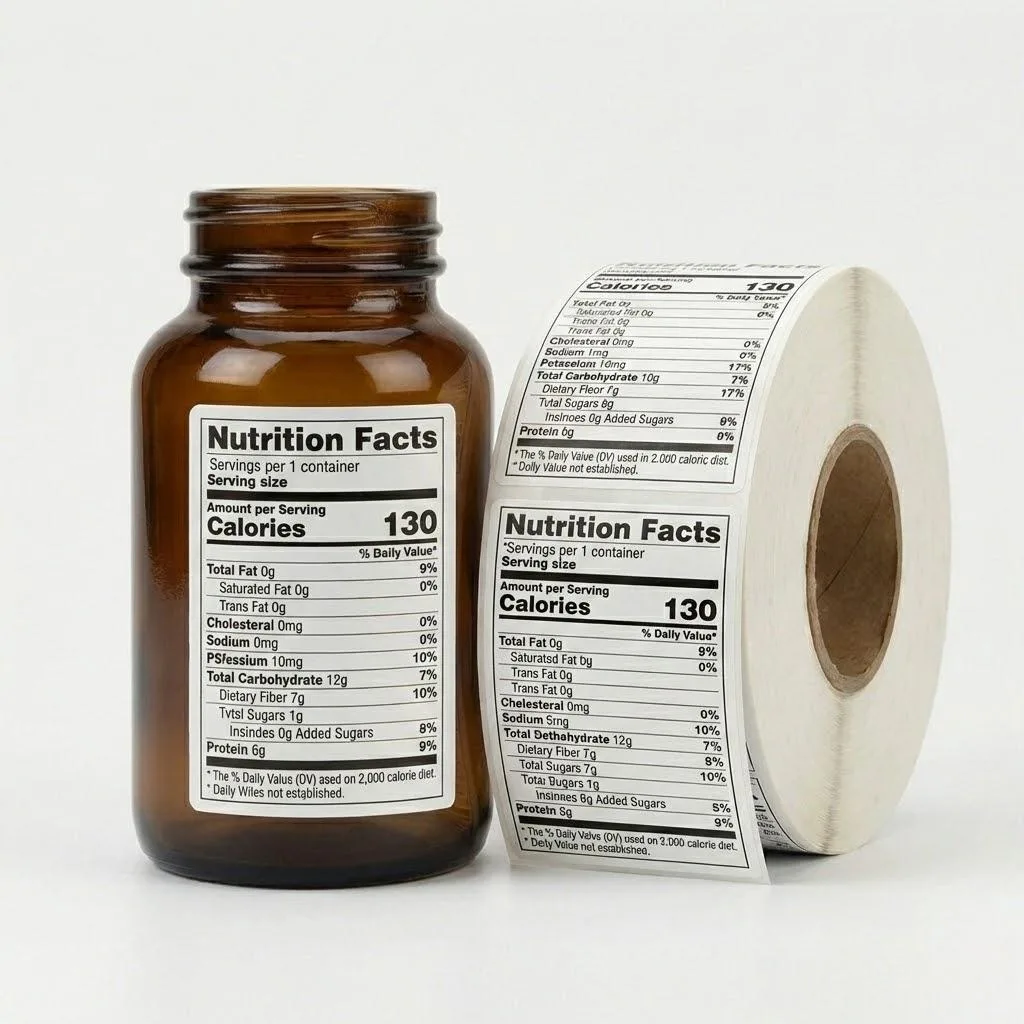
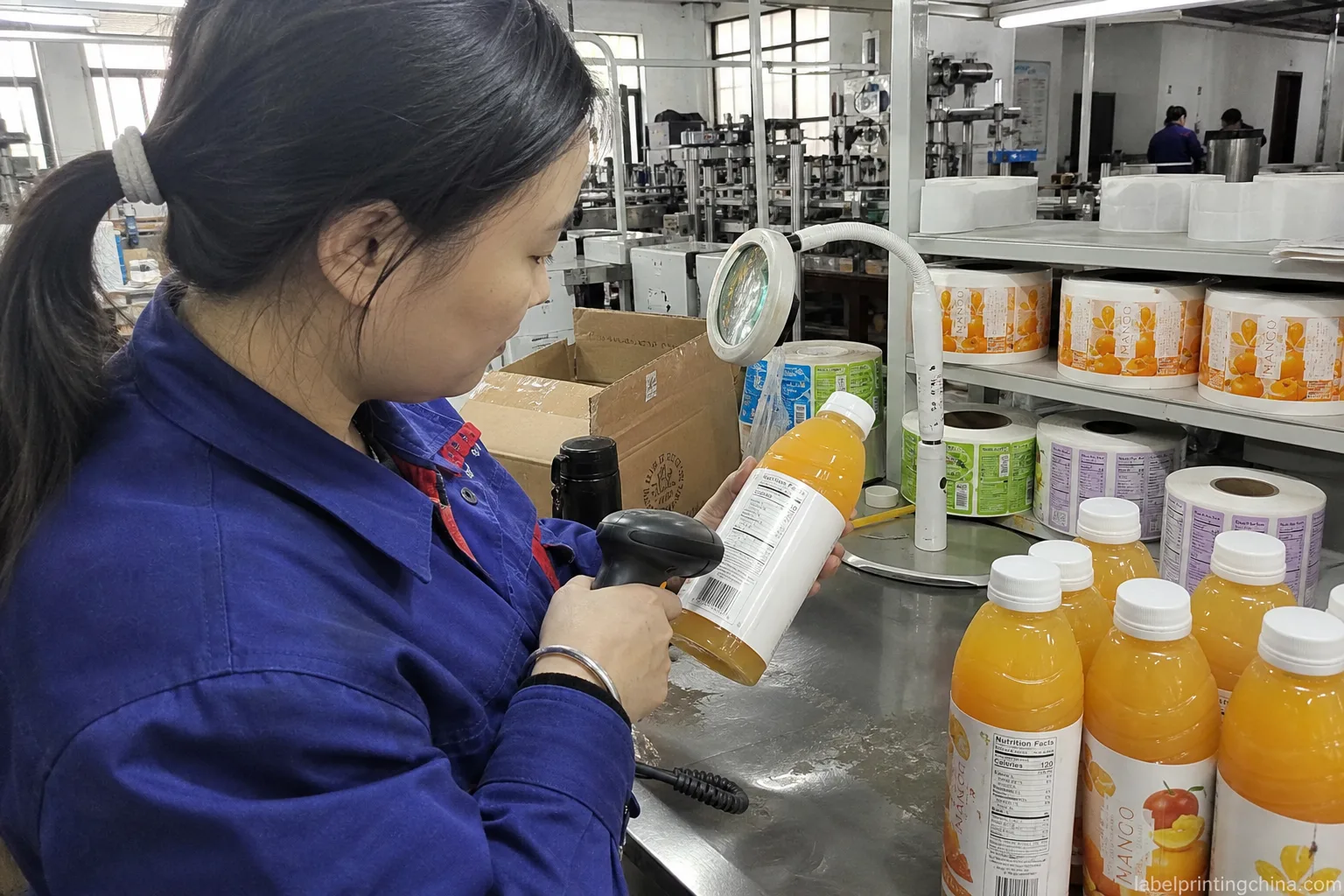
This is also the stage where compliance enters the picture. If you’re selling food products in the US market, your labels must meet FDA requirements for nutrition facts panels, ingredient lists, allergen declarations, and net weight statements.The FDA’s Food Labeling Guide is the authoritative reference — and your label supplier should be able to format print-ready artwork that meets these requirements, or at least not stand in your way.
50,000+ Labels — Retail-Ready Supply Chain Engineering
At 50,000+ labels, you’re no longer a “small brand experimenting.” You’re a scaling operation that needs supply chain reliability. One delayed shipment doesn’t ruin your weekend — it empties retail shelves and costs you slotting fees.
At scale, your label supplier is not a vendor — they’re a production partner. Treat the relationship accordingly.
At this volume, the specifications that mattered less at 5,000 units now determine whether your labels survive automated application:
- Unwind direction — Roll labels must unwind in the correct orientation for your labeling machine. Get this wrong, and labels apply upside down. There are 8 standard unwind directions (#1–#8), and the right one depends on your specific applicator.
- Core size — 3-inch cores are standard for industrial applicators. 1-inch cores are for tabletop machines. Mismatch = labeler jam.
- Maximum roll diameter — If your applicator fits a 12-inch roll and your supplier ships 14-inch rolls, you’re unrolling and re-rolling by hand.
- Label gap tolerance — Automated sensors detect the gap between labels. If the gap varies by more than 0.5mm, the sensor misreads and labels skew.
These aren’t exotic specifications — they’re standard production parameters. But a trading company that has never stood next to a labeling machine won’t know to ask about them. A real factory will ask you what equipment you’re running, because they’ve seen the consequences of getting it wrong.
For brands entering retail distribution, barcode accuracy is equally critical. GS1 standards govern how your UPC codes must be printed — contrast ratio, quiet zone, and minimum size all matter.A comprehensive small business barcode guide covers everything from obtaining your GS1 Company Prefix to ensuring your barcode scans on the first try at any retail checkout.
Before you treat barcode and unwind notes as a checklist only, open our retail sourcing gates guide for buyer sample kits and the sheet-to-roll switch that retail trials actually enforce.
One Table, Zero Guesswork
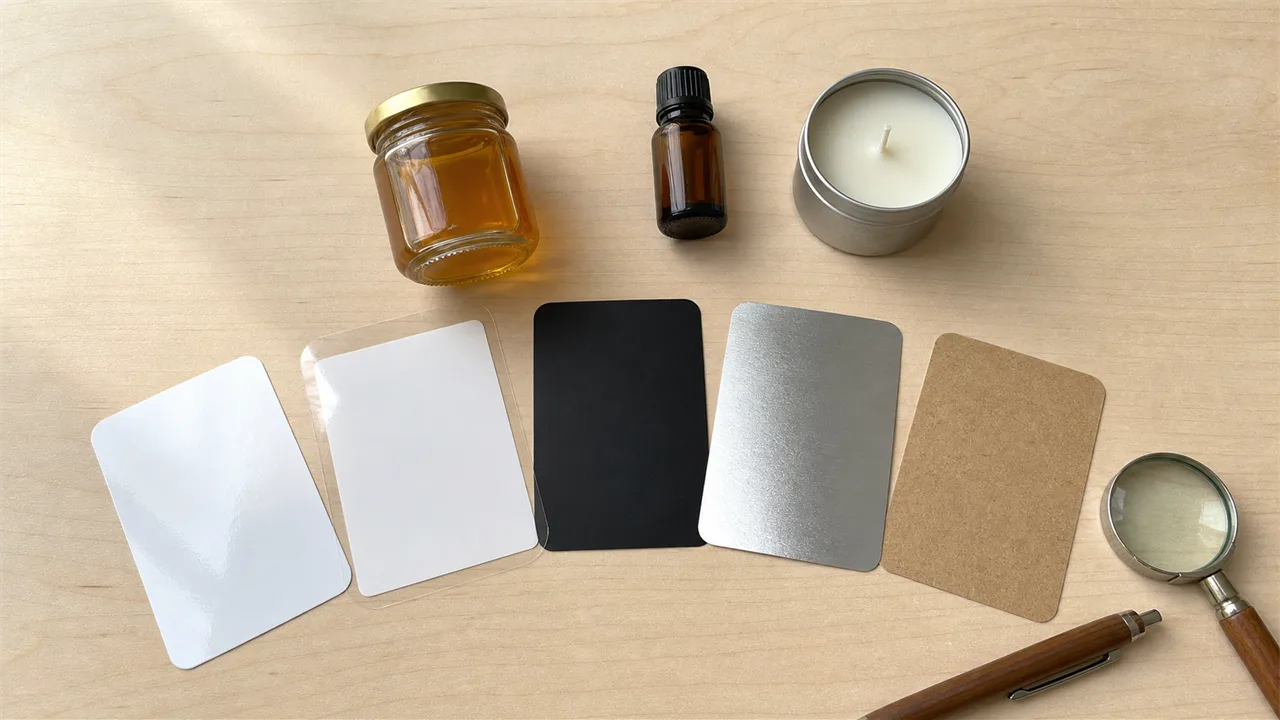
Choosing label material is where most small brands overspend or under-spec. Here’s a decision matrix based on actual product use cases, not marketing copy:
| Product Type | Recommended Material | Why | Cost Tier |
|---|---|---|---|
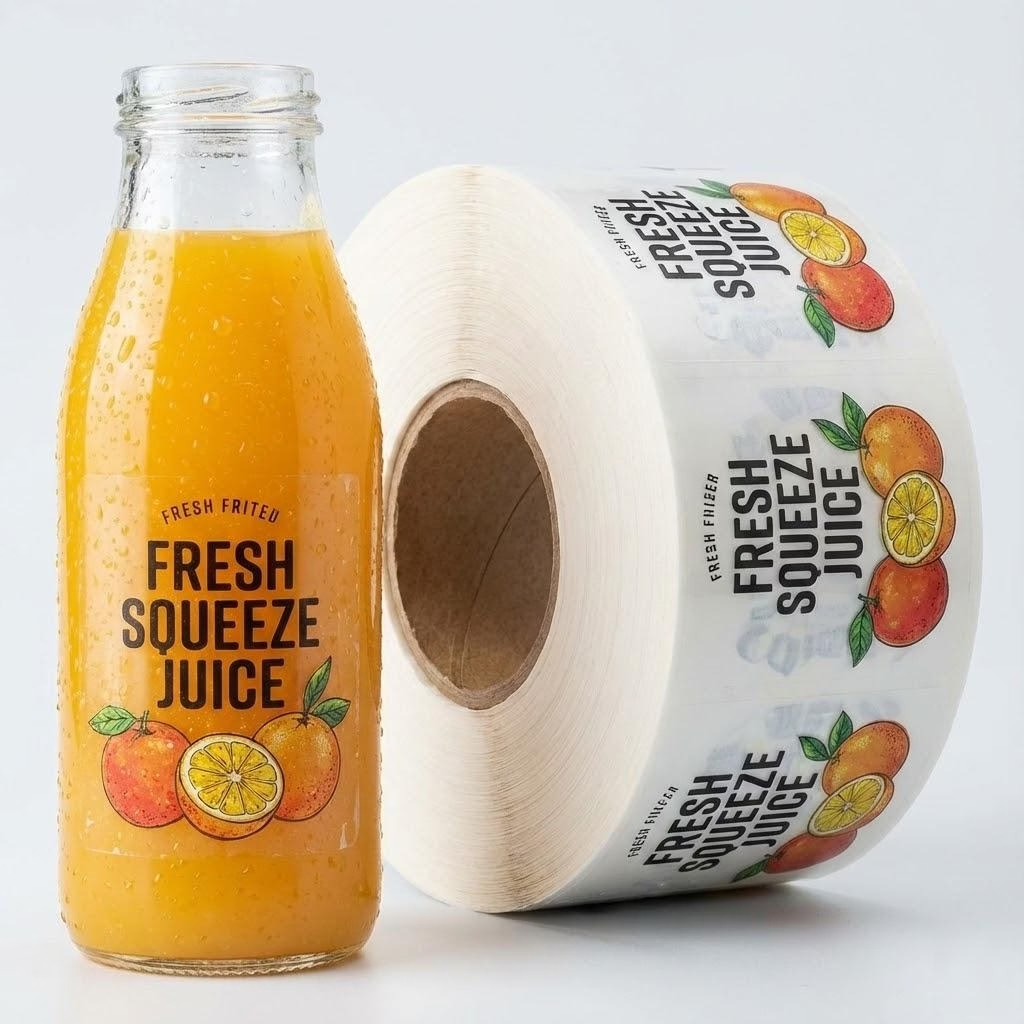
| Honey / Jam / Sauce | White BOPP (Waterproof) | Survives refrigeration, condensation, and handling | $ |
| Essential Oils | Oil-proof BOPP + Metallic Foil | Resists oil seepage; foil adds premium positioning | $$ |
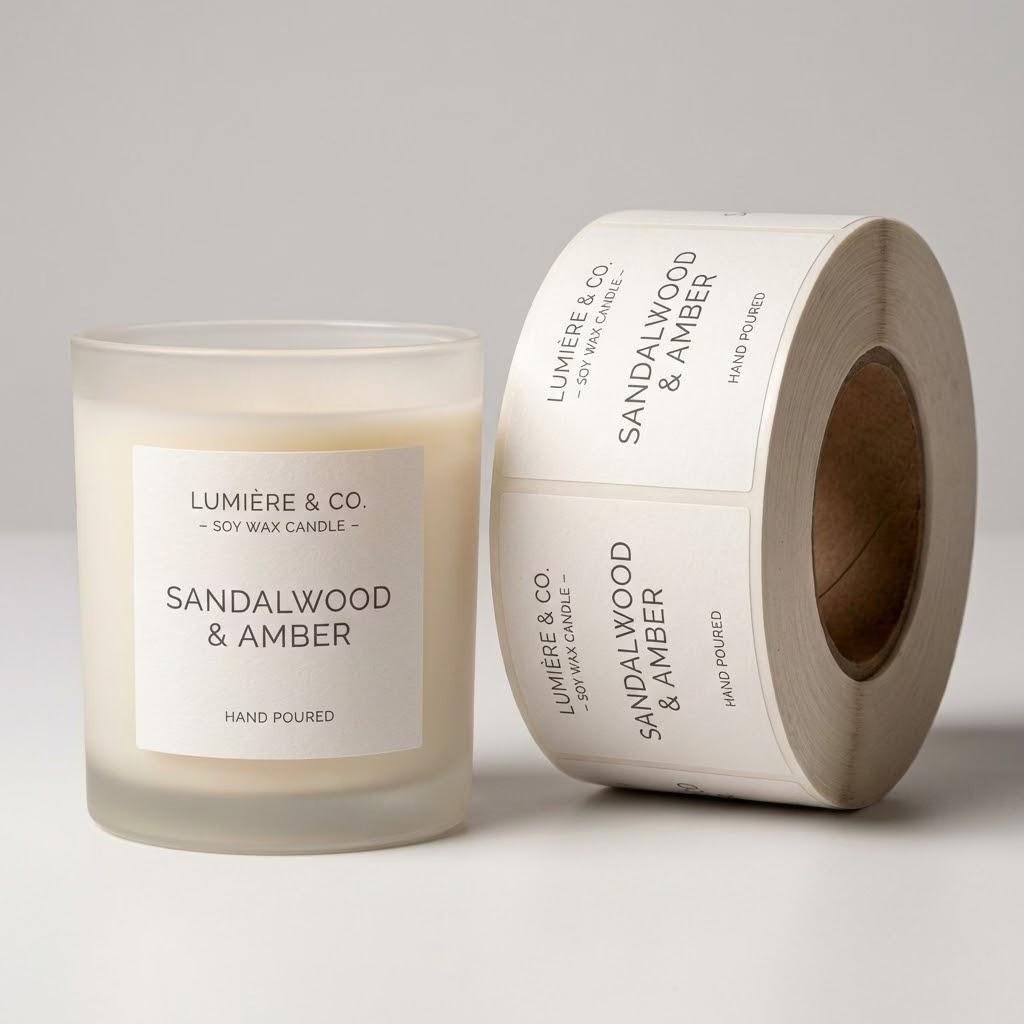
| Candles | Heat-resistant BOPP or Matte Polypropylene | Won’t curl or discolor near heat | $ |
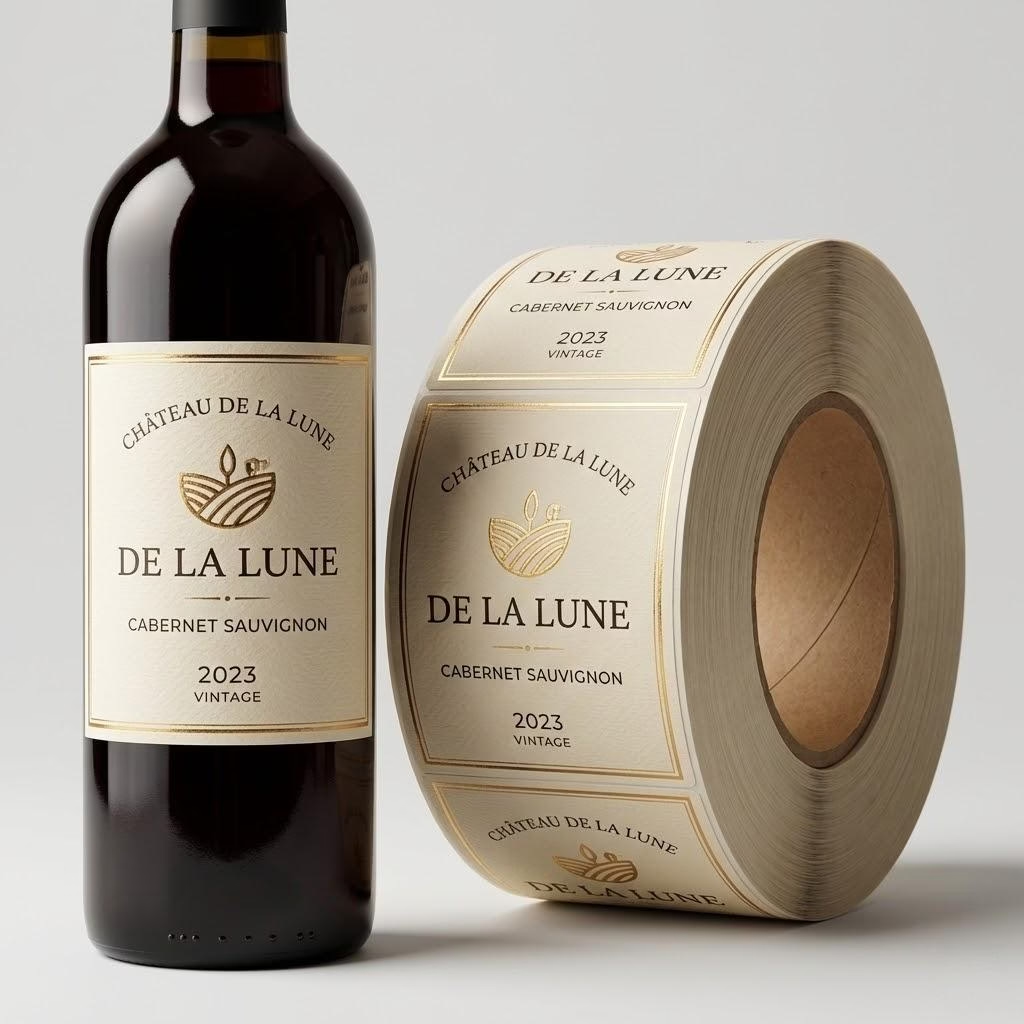
| Craft Spirits / Wine | Textured Art Paper + Wet-Strength Adhesive | Premium tactile feel; survives ice bucket immersion | $$$ |
| Soap / Bath Products | Clear BOPP (No-Label Look) | Waterproof, shows product through label | $$ |
| Coffee / Tea | Kraft Paper or Matte BOPP | Natural aesthetic; durable for bags and tins | $ |
Quick rule of thumb: If your product gets wet, goes in a fridge, or contains oil — you need BOPP. If it sits on a dry shelf and you want a craft aesthetic — kraft paper works. Everything else is a variation of these two.
What You Should Actually Be Paying

Label pricing is opaque by design. Here’s what factory-direct pricing actually looks like for standard custom roll labels (white BOPP, 2″×4″, full color, 3″ core):
| Quantity | Approx. Unit Cost | Total Cost Range | Best For |
|---|---|---|---|
| 500 | $0.08–$0.15 | $40–$75 | First batch, testing market fit |
| 5,000 | $0.03–$0.06 | $150–$300 | Farmers’ market to first retail account |
| 50,000 | $0.01–$0.03 | $500–$1,500 | Multi-store retail distribution |
| 200,000+ | $0.005–$0.015 | $1,000–$3,000 | Regional/national retail chain |
These are factory-direct prices from China, including basic tooling. Add 15–30% if you’re buying through a trading company or domestic reseller.The price difference between 5,000 and 50,000 labels is roughly 60–70% per unit — that’s the scaling leverage that makes sourcing from the right factory a competitive advantage.
According to sourcing industry data, China has over 45,000 label printing and packaging enterprises, offering scalable, cost-effective solutions for global procurement teams. The challenge isn’t finding a supplier — it’s finding the right one for your stage.
10 Non-Negotiables Before You Place a Bulk Order
Before committing to small batch beverage labels, verify every one of these:
- Factory verification — Ask for their business license and cross-check the registered address against their stated factory location. If they don’t match, you’re dealing with a trading company.
- Sample approval — Never approve artwork from a screen. Get a physical sample on the actual substrate.
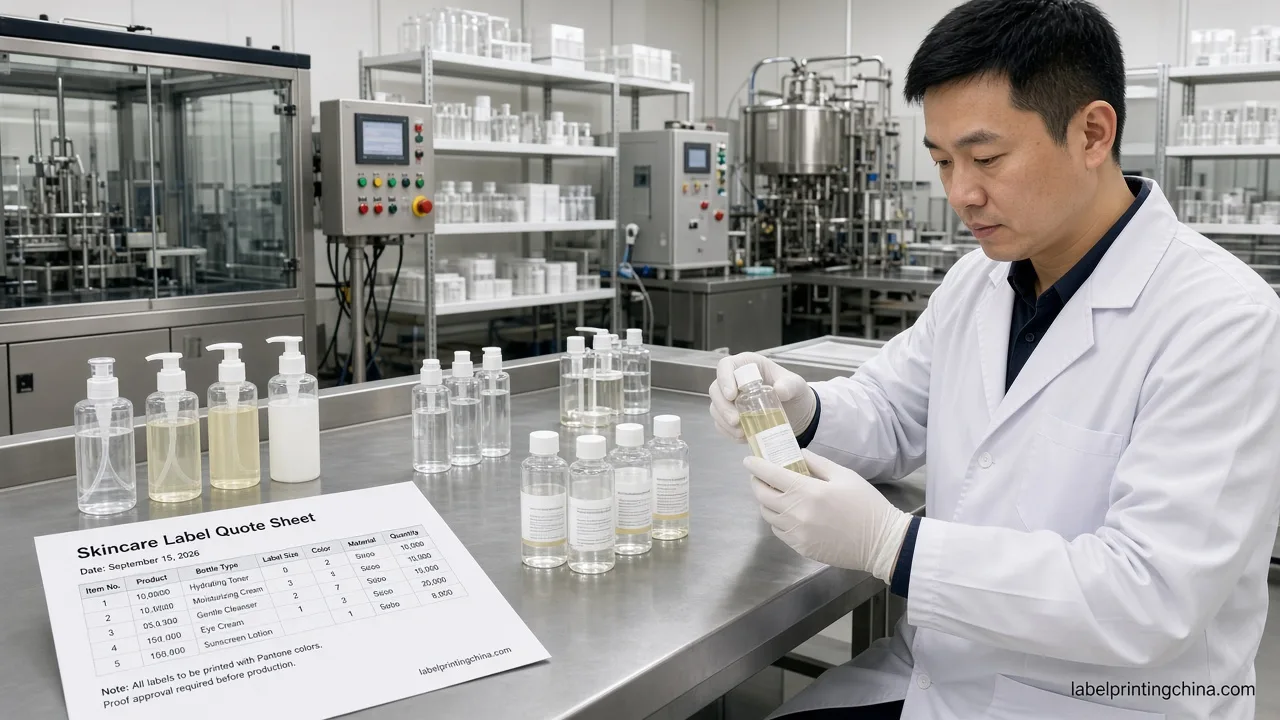
- Color standard — Provide Pantone references and insist on ΔE tolerance under 2.0.
- Adhesive specification — Permanent adhesive for glass and plastic. Removable for temporary applications. Cold-temperature adhesive if your product is refrigerated or frozen.
- Roll specifications — Core size, maximum outer diameter, and unwind direction must match your labeling equipment.
- Material certification — For food products, ask for FDA-compliant material certificates. For cosmetics, ask for RoHS compliance documentation.
- Production timeline — Get it in writing: sampling (3–5 days) + production (7–12 days) + shipping (20–35 days sea, 5–7 days air).
- Quality inspection — Request photos of the finished production run before shipment. Any reputable factory will provide this as standard.
- Payment terms — Standard terms: 30% deposit, 70% before shipment. If they demand 100% upfront, proceed with caution.
- Reorder consistency — Ask how they ensure batch-to-batch consistency. If the answer is “we try our best,” find another supplier.
Your Action Plan
Every small brand’s label journey follows the same arc — the difference between those that scale and those that stall comes down to when they start sourcing like a professional.
Months 1–6 (0–5,000 labels): Focus on finding one reliable factory-direct supplier. Order 500–1,000 labels per SKU. Test adhesion on your actual product containers. Don’t over-invest in materials — standard white BOPP covers 80% of use cases at this stage.
Months 6–18 (5,000–50,000 labels): Lock in your material specs and color standards. Switch from sheet labels to roll labels if you haven’t already. Start tracking batch consistency. Build your reorder cadence around a 6-week lead time.
Months 18+ (50,000+ labels): Formalize your spec sheet — every parameter, from unwind direction to adhesive type to ΔE tolerance. Negotiate annual pricing based on projected volume. Consider dual-sourcing to mitigate supply chain risk.
Ready to move from sampling to scaling? Your labels are the only part of your packaging that every customer reads. Source them like it matters — because it does.