You open a carton after ocean transit and the print face looks hazy, band-marked, or lightly abraded—yet the cores still look round. You freeze the line because you cannot tell whether the finish failed, the pack interface failed, or you are staring at a different failure mode entirely.
Before you feed those rolls, triage face haze versus edge fray versus crush, lock finish × transit path on a Prefer/Avoid sheet, then require pack interfaces that protect the print face—and hold any face-scuffed lot at inbound.
What this means: use the damage-mode table, the Prefer/Avoid finish matrix, the pack-interface checklist, and the Ready/Hold inbound gate below so you can decide tonight without guessing.
What Kind of Label Damage Are You Seeing?
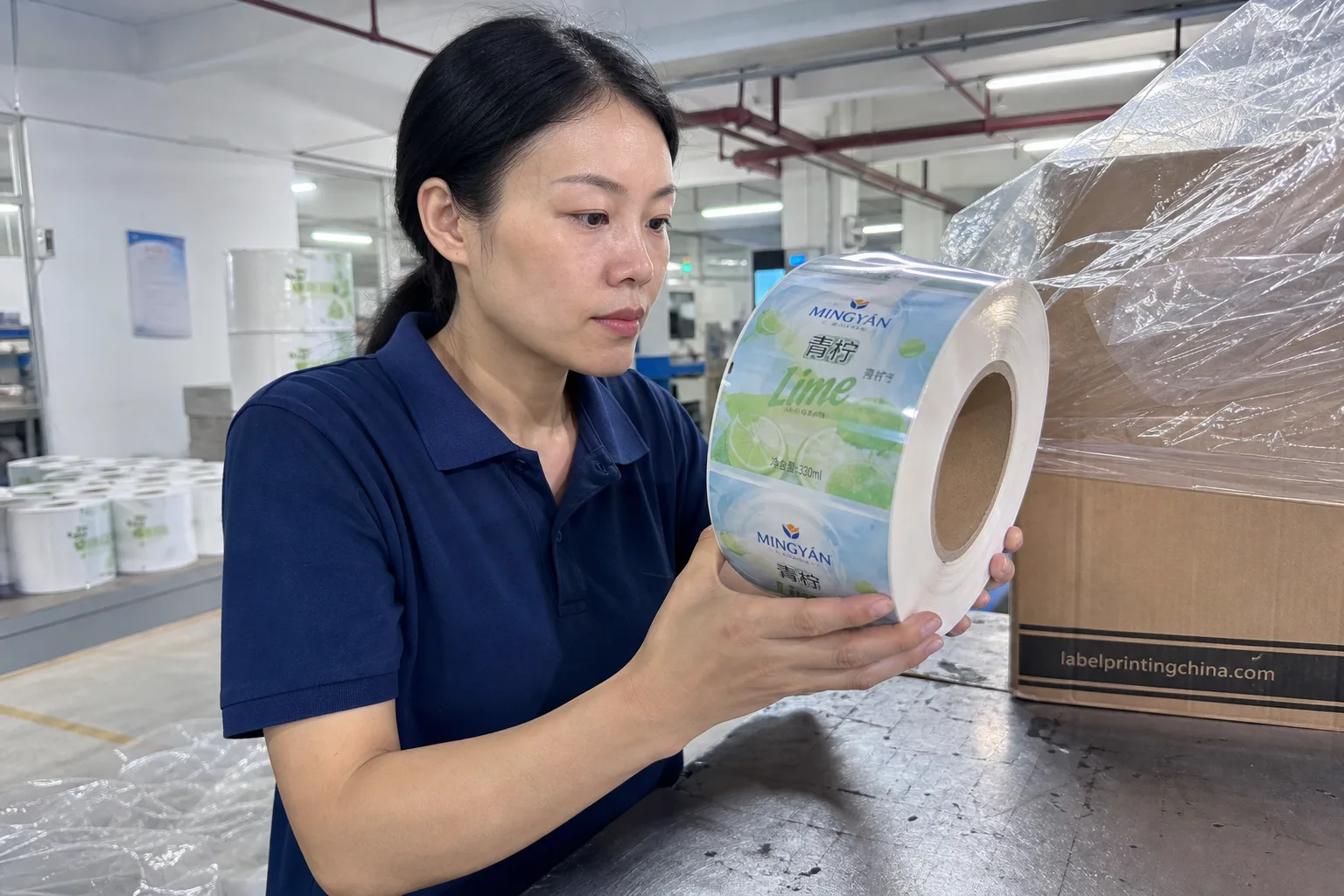
When you only say “the labels are scuffed,” your vendor hears three different jobs. Name the mode first so your next PO remark matches the real failure—and so you stop buying the wrong fix.
| What you see | Likely mode | Your next move |
|---|---|---|
| Dull haze, ink rub, strap shine on the print face | Face scuff | Use this face-scuff path: finish × pack interface + Ready/Hold |
| Frayed die edge, fuzzy gap for the optical eye | Edge fray / layer slide | Use the companion edge scuff transit guide (tension + barrier + plugs) |
| Oval core, crushed corners, accordion carton | Crush / stack load | Follow anti-crush roll packaging (grids + BCT path) |
When you mis-route a face-haze lot into an “add core plugs” ticket, you burn a week and still reload the same abrasion risk. Face damage is print-surface wear; edge and crush are geometry problems.
When you once paid for heavier laminate after a cloudy lot, then repeated the same carton-to-face rub on the next sailing, the finish upgrade alone did not stop the haze.Checkpoint: photograph the print face under side light before you argue materials—if haze sits on the face while edges stay flush, treat it as face scuff first.
If your dock photos show mixed symptoms, split the lot in writing: face haze on outer wraps versus edge fray on die lines. Your remake conversation stays clean when you refuse to bundle three modes into one vague “shipping damage” claim.
Why Print Faces Scuff Inside the Carton
Before you blame ink chemistry alone, map how your rolls actually rub in the box. Ocean vibration keeps faces moving against rough interfaces for weeks—not one drop event.
Safe Load Testing summarizes how sustained transport vibration stresses packs over time; use that as context when you review long lanes in vibration during transport. Your job is still to cut the abrasive interfaces, not to memorize a lab curve.
- Corrugate dust: board grit acts like sandpaper between wrap and print.
- Face-to-face roll rub: stacked rolls without a slip sheet polish high-gloss UV dull.
- Strap / band imprint: PET banding concentrates pressure into shiny stripes on the outer wrap.
- Thin finish on long ocean legs: varnish that survives air freight can haze after 25–35 days at sea.
When you read general mechanical abrasion basics, remember it is surface wear under relative motion. On your label rolls, that motion is mostly carton dust, neighbor rolls, and banding—not a retail shelf finger wipe.
When you see haze only on the outermost wraps, you are usually looking at strap or corrugate contact—not a whole-roll ink cure failure. Segregate those wraps before you condemn the entire SKU.
If your QC only checks cores and edges, you can miss face haze until bottles hit retail lighting. Add one side-light face scan to your dock ritual so you catch dull panels while the pallet is still claimable.
You should also note humidity shocks: soft cartons shed more grit onto wraps. If your inbound photos show dusty PE film, treat dust as an abrasion agent in your next pack audit—not as cosmetic dirt you wipe away.
Prefer or Avoid — Finish × Transit Path
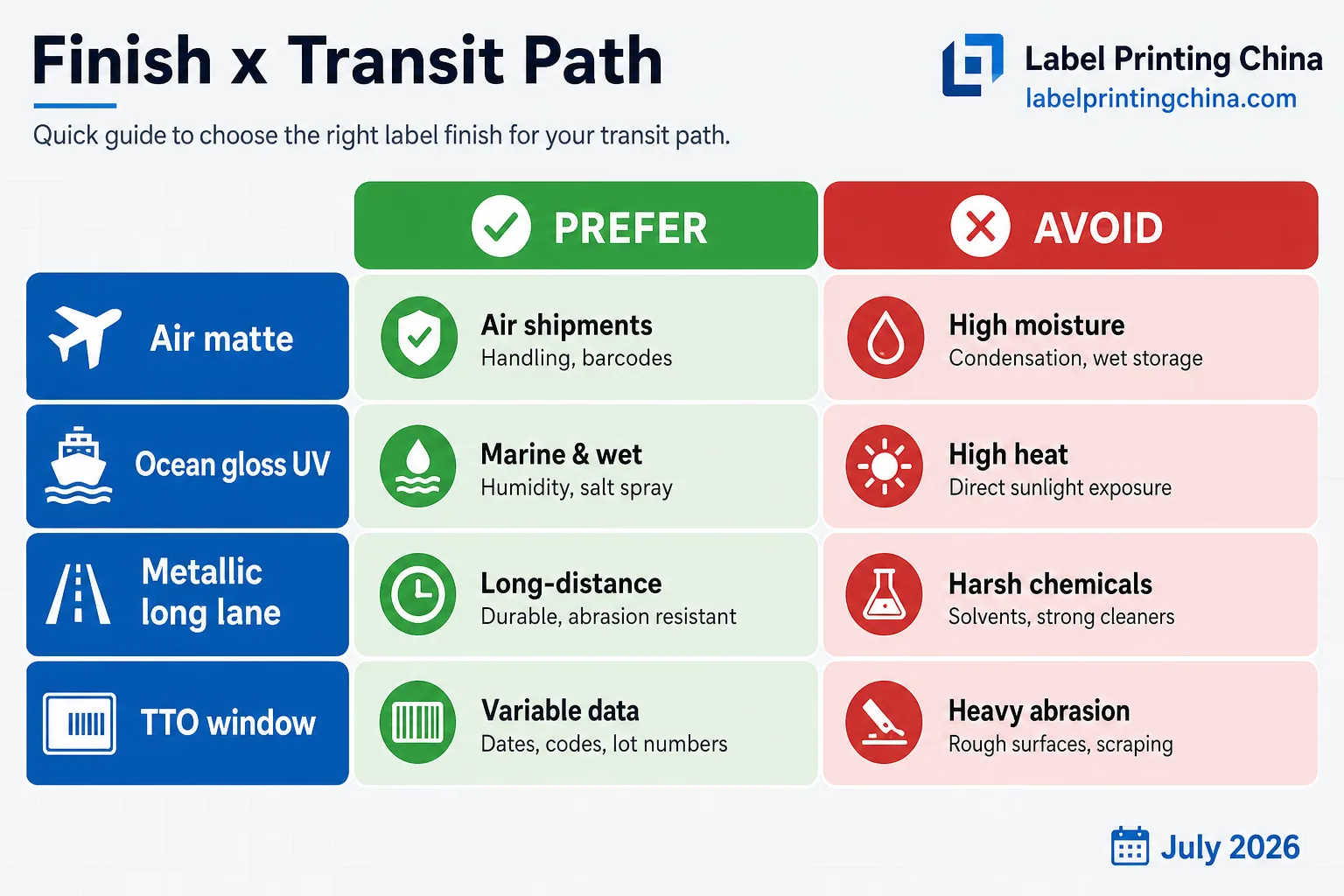
When you only write “add thicker laminate,” you still miss path risk. Match finish to lane length and rub exposure, then confirm chemistry detail in the varnish vs lamination guide.
| Your path / surface | Prefer | Avoid (watch-out) |
|---|---|---|
| Air / ≤10 days, matte paper, low stack | Hard varnish + clean slip sheet | Bare ink face against kraft |
| Ocean 20–35 days, gloss UV / soft-touch | Film laminate + non-abrasive wrap + no strap-on-face | Varnish-only + rolls touching corrugated |
| High ink coverage / metallic + long lane | Laminate over wear zones; protect outer wraps | Spot varnish only on hero panels |
| Need thermal overprint later | Spot protect wear paths; leave TTO window open | Full soft-touch film over the TTO lane |
When you ship soft-touch or high-gloss UV on a long ocean leg without a pack interface upgrade, you usually buy haze—not a “bad ink lot.” Prefer laminate plus a clean wrap when your Prefer/Avoid row says ocean + gloss.
If you previously upgraded only coat weight and kept rolls rubbing corrugated walls, haze returned on the outer wraps. Freeze finish and pack remarks on the same PO line so your vendor cannot “solve” one without the other.
Before you approve artwork, ask which Prefer/Avoid row your lane maps to—and force that row into the quote. If your vendor cannot name wrap type and strap path, you do not yet have a face-safe pack plan.
When you run dual lanes (air samples + ocean bulk), do not copy the air finish onto the ocean PO. Your sample may look perfect after five days aloft while bulk haze appears after a month at sea—same artwork, different Prefer/Avoid row.
Pack Interfaces That Protect the Print Face
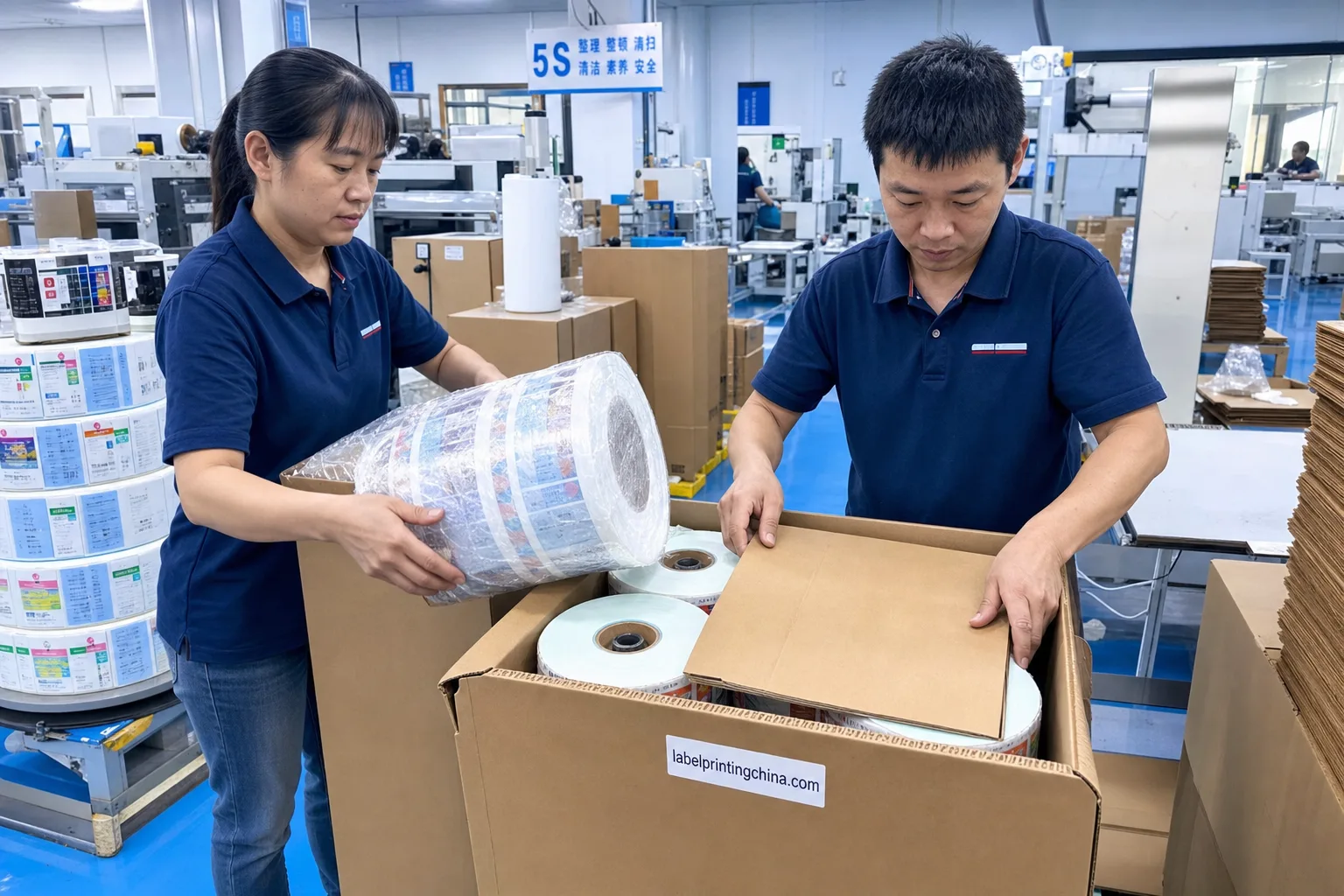
Before you approve the next export pack, force these interfaces into the remarks—finish alone does not stop carton grit.
- Keep printed faces off raw corrugated with a clean PE or non-abrasive wrap.
- Add slip sheets between stacked rolls so faces do not polish each other.
- Route PET straps onto edge boards or outer cartons—never dig into the outer label wrap.
- Photograph outer wraps at packing so you can compare inbound haze later.
- If your lane is ocean + gloss, write “laminate + wrap + no strap-on-face” as one pack sentence, not three optional nice-to-haves.
When you skip the slip sheet on a multi-roll carton, the top and bottom faces become the wear coupons. Fix the interface before you debate another lab rub cycle.
If your packer still drops rolls against kraft partitions “for speed,” you reintroduce corrugate dust even after you paid for laminate. Audit one packing video per first shipment so you confirm the wrap you ordered is the wrap that left the dock.
Copy this sentence into your PO remarks when your Prefer/Avoid row is ocean + gloss: “Film laminate; PE wrap; slip sheets between rolls; straps on edge boards only—no strap contact on print face.” Then your inbound Ready/Hold check has a written baseline.
See Our Packaging Protection Standards
Lock finish + face-safe pack remarks on your next custom roll quote—so you are not arguing haze after the container opens.
Inbound Ready / Hold for Face Scuffs
When you clear a hazy outer wrap into the applicator bay, you risk shelf rejects and barcode grades—not only “ugly rolls.” Run this Ready/Hold gate on the dock before anyone stages the bay.
| Check | Ready if… | Hold if… |
|---|---|---|
| Side-light face scan | No haze / no strap stripe on outer wraps | Visible dulling or ink transfer on print face |
| Barcode / QR spot check | Scans clean on outer and mid samples | Grade drop or no-read after abrasion marks |
| Mode triage | Confirmed face-only; edges flush; core round | Mixed edge fray or oval core—reroute to edge/crush SOP |
| Disposition | Release to line with photo log | Quarantine lot; request remake or segregate outer wraps |
When you Hold, photograph the Prefer/Avoid path you ordered and the pack interface you received. That pair tells your vendor whether to change finish, wrap, or both—before you debate unit price.
On custom roll labels, we treat face-safe pack remarks as part of the machine-ready handoff—so you are not discovering haze only when retail lighting makes dull panels obvious.
If your Hold is face-only on outer wraps, you can sometimes salvage inner rolls after segregation—but only after you document the mode. Do not mix salvage rolls into a claim lot without a written split.
Lock Face Protection on Your Next PO
Before you close this week’s vendor thread, write three lines into the PO: damage mode you will inspect, Prefer/Avoid finish for your lane, and pack interfaces that keep print faces off abrasive board.
If your lot fails Ready/Hold on face haze, do not silently scrap outer wraps into production—Hold, photo, and re-open finish × pack together. That is how you stop label damage during shipping from becoming a recurring dock surprise.
With 18 years of China manufacturing experience on machine-ready rolls, Label Printing China builds face protection into export packing—not as an afterthought sticker on the carton. Ask for the face-safe pack sentence on your next quote so you and the floor share one standard.