Custom Compostable Labels, Printed for Packaging That Actually Composts
Your compostable pouch is ready — the label should not be the plastic part left behind. We print custom compostable labels and stickers on certified-compostable facestock routes, with adhesive, liner, and certification scope confirmed together in your quote.
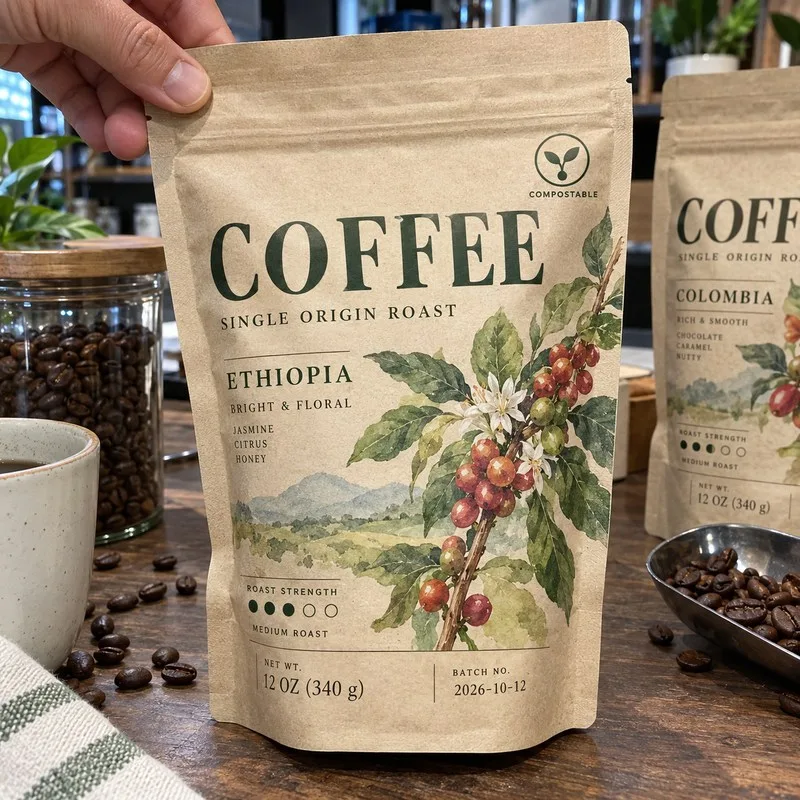
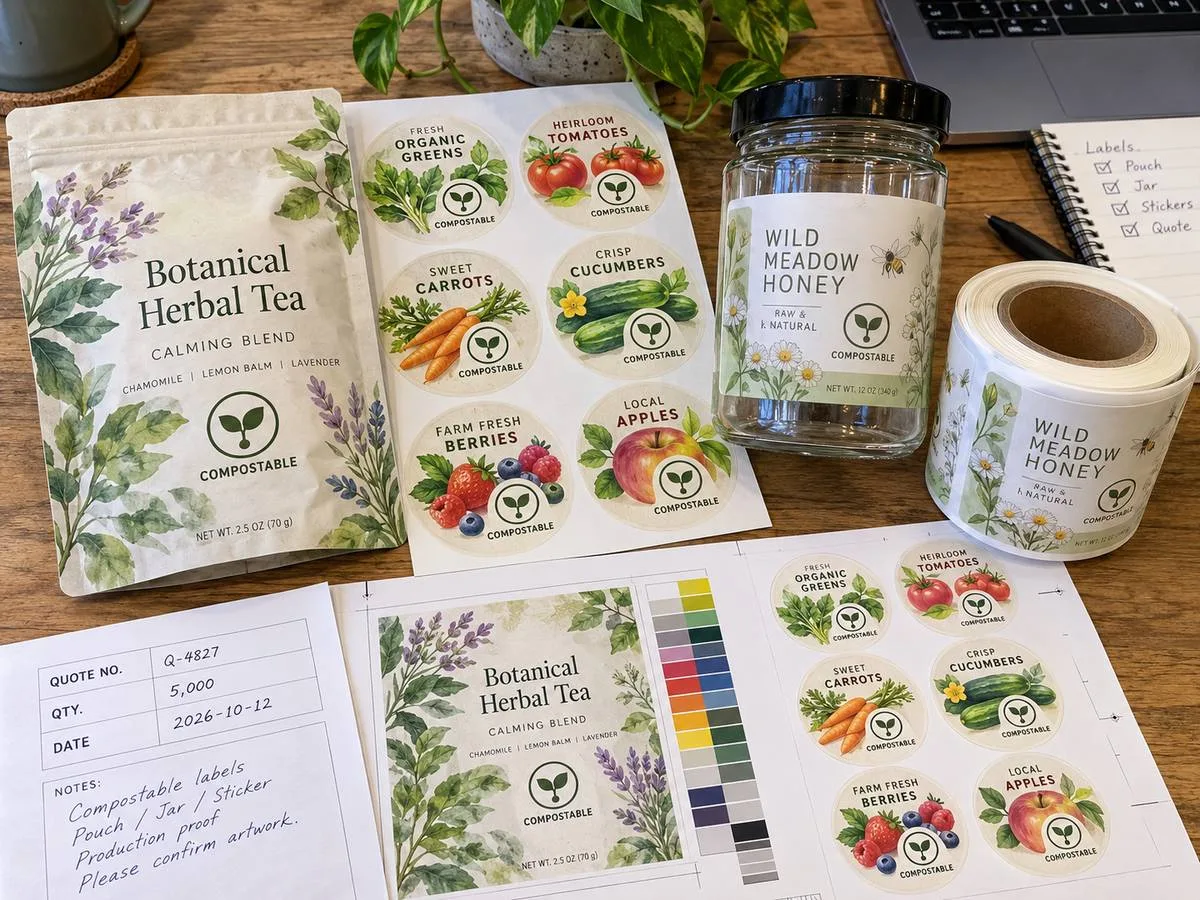
Compostable Pouch Label
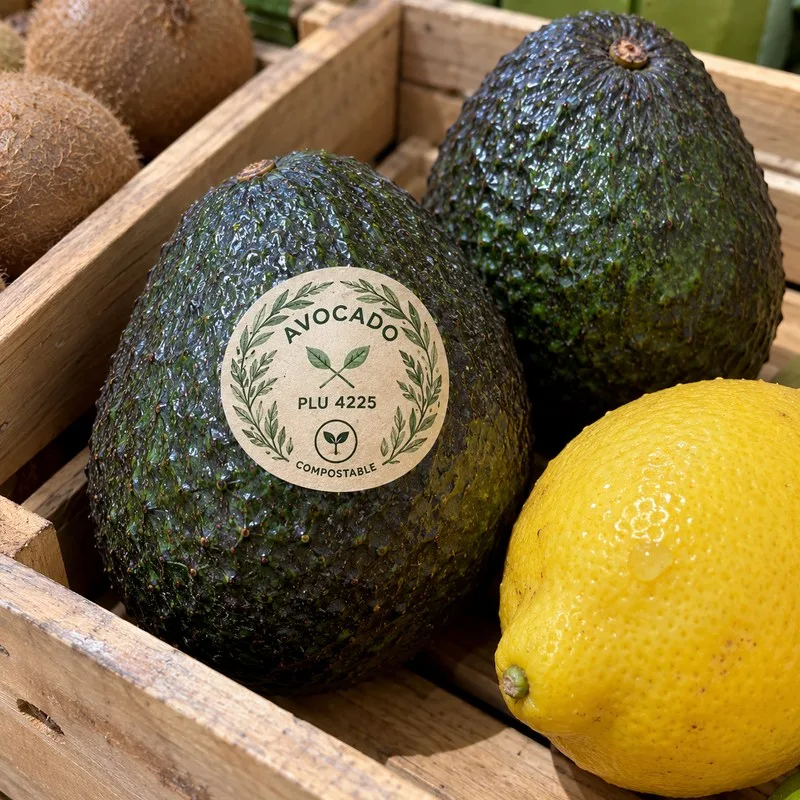
Produce Sticker
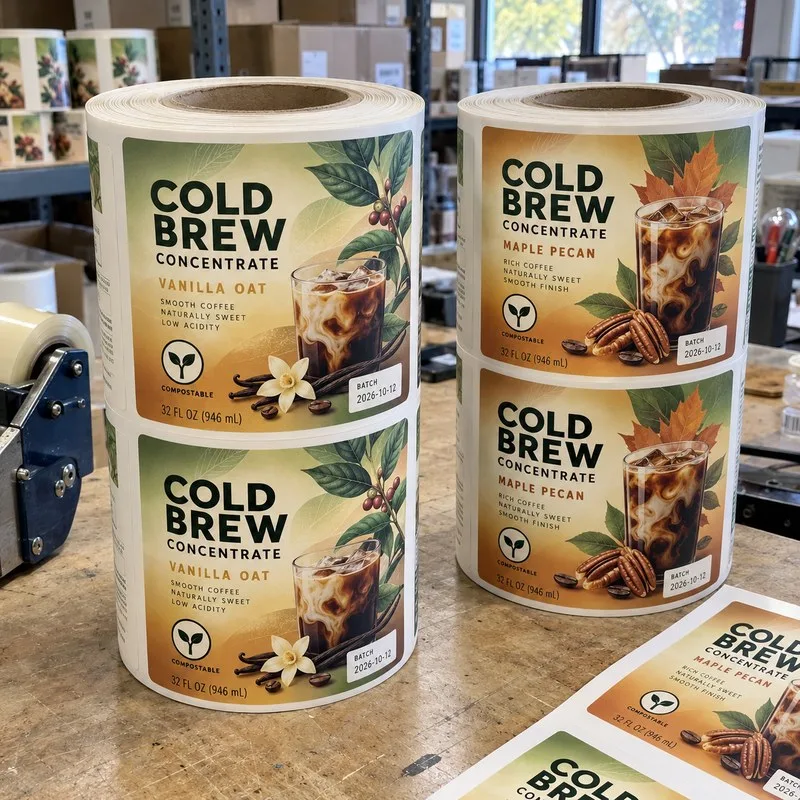
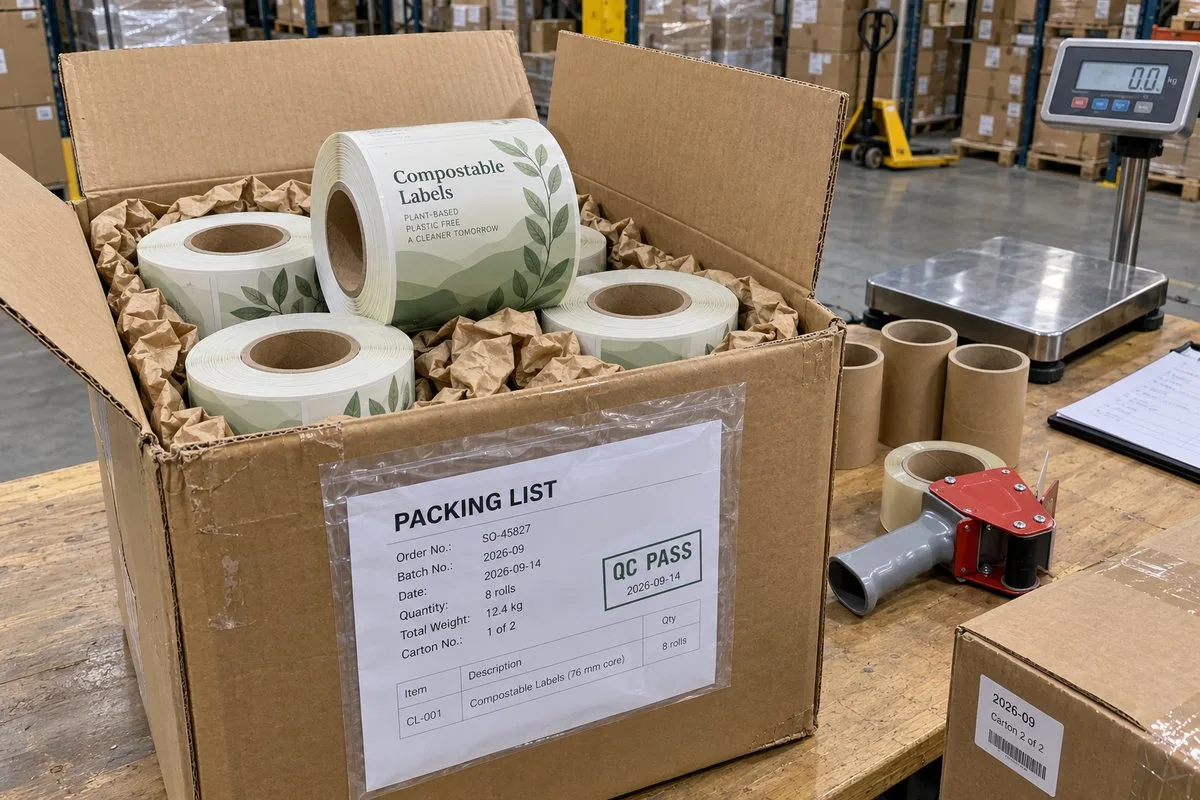
Roll Shipment
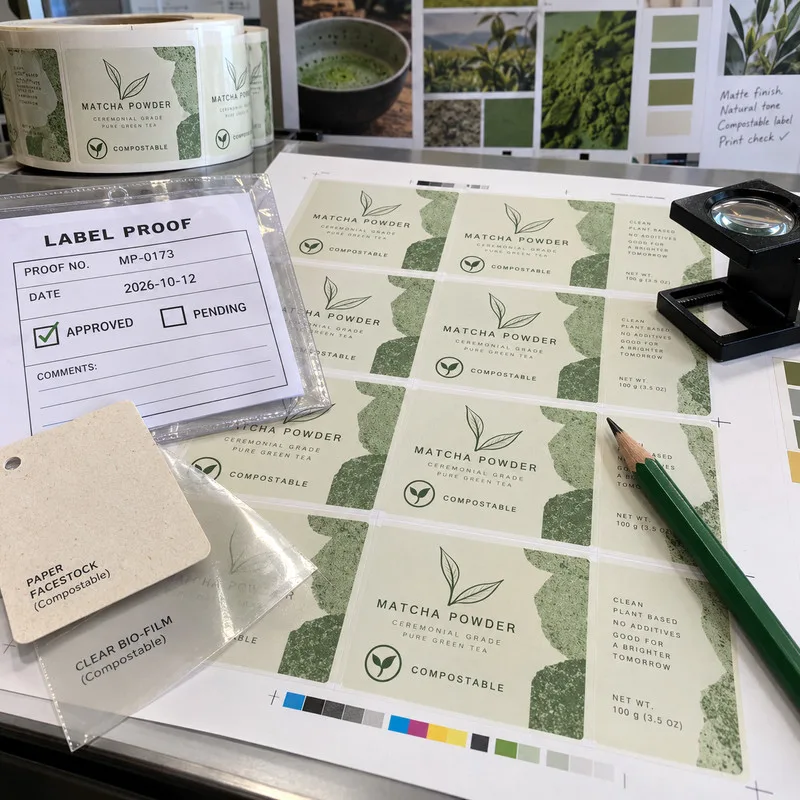
Sample Proof
The Packaging Programs Where Compostable Labels Pay Off
Compostable packaging labels earn their cost where the whole pack enters a composting stream. These are the programs we quote most.
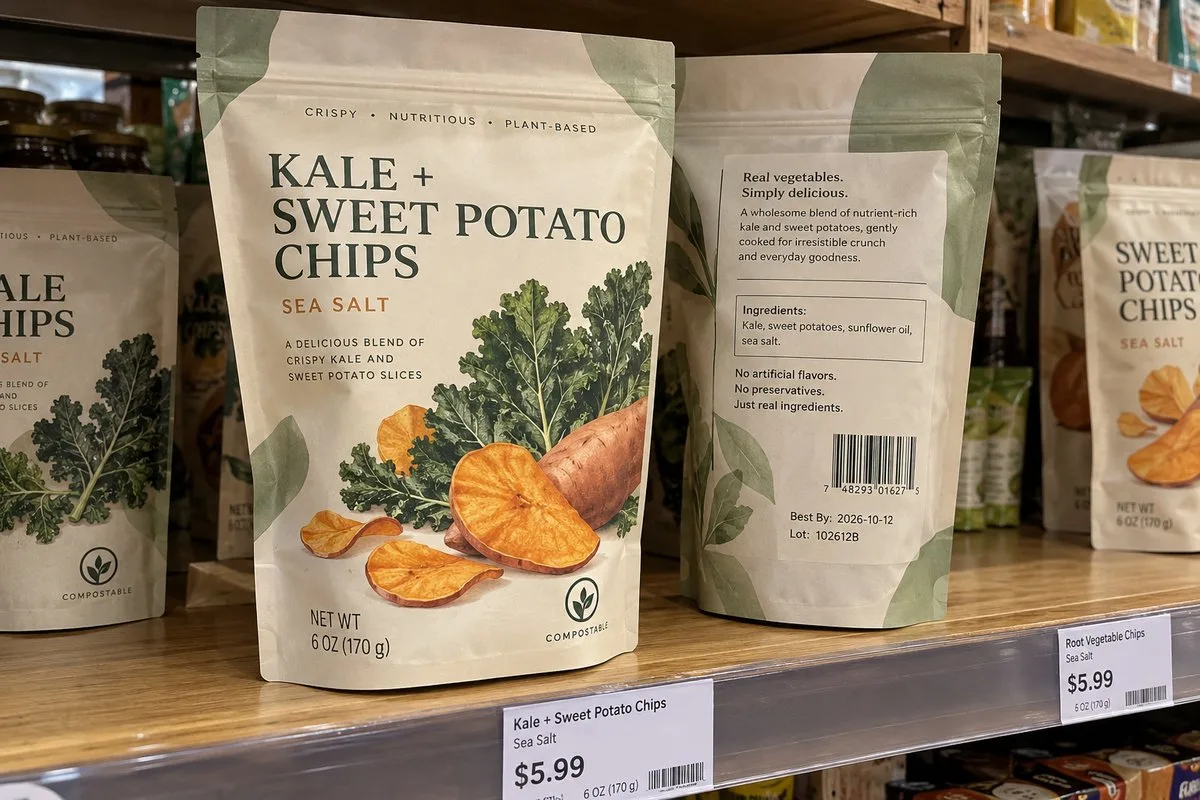
Food & Snack Pouches
Stand-up pouches and kraft bags going to industrial composting — the classic switch where plastic labels used to break the stream. See custom food labels.
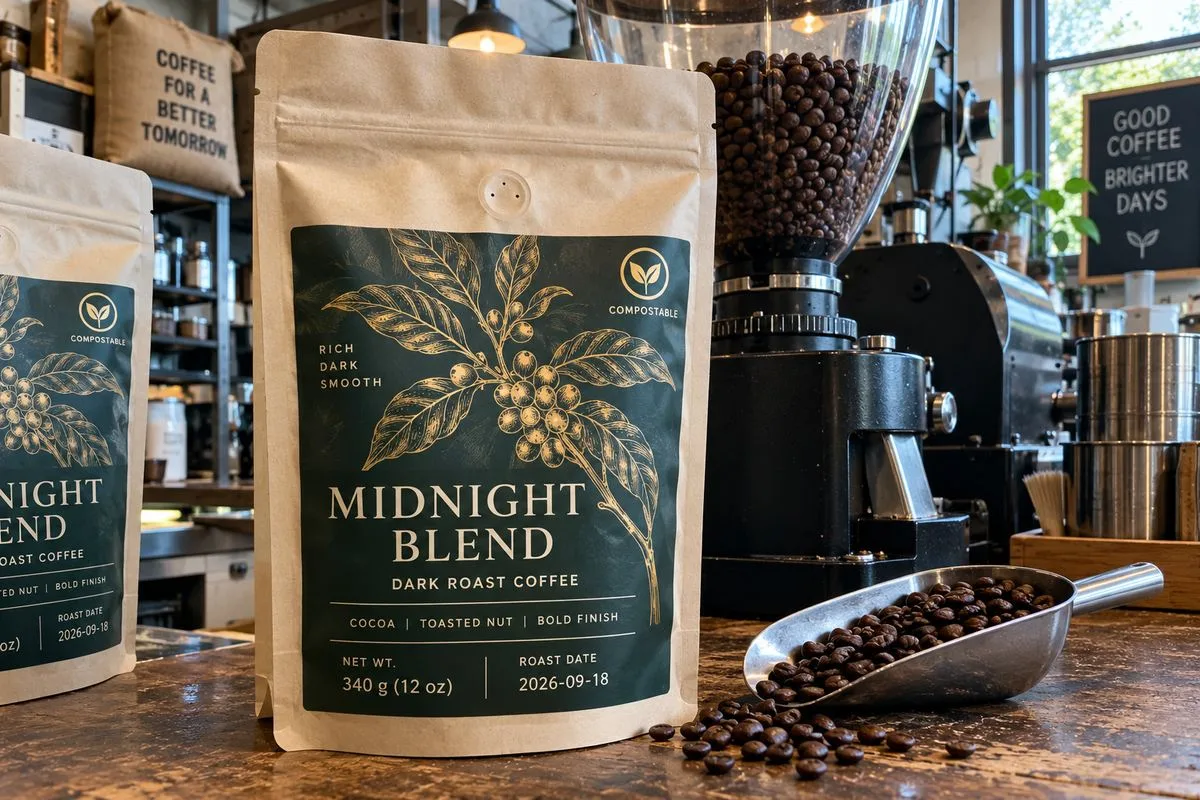
Coffee & Tea Bags
Roasters who already ship compostable bags — the exact buyer stuck on labels. See custom coffee labels.
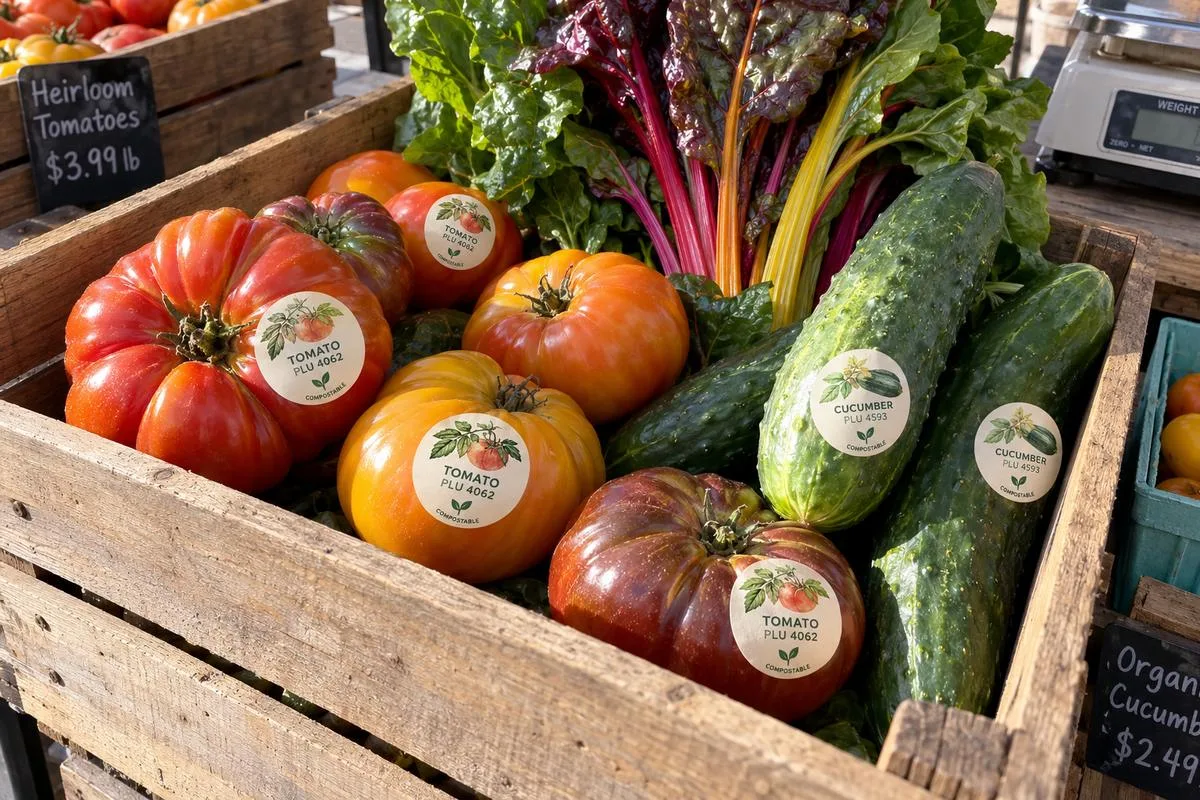
Produce & PLU Stickers
Fruit and vegetable stickers moving to home-compostable rules in export markets — curved surfaces, food contact, certification scope.
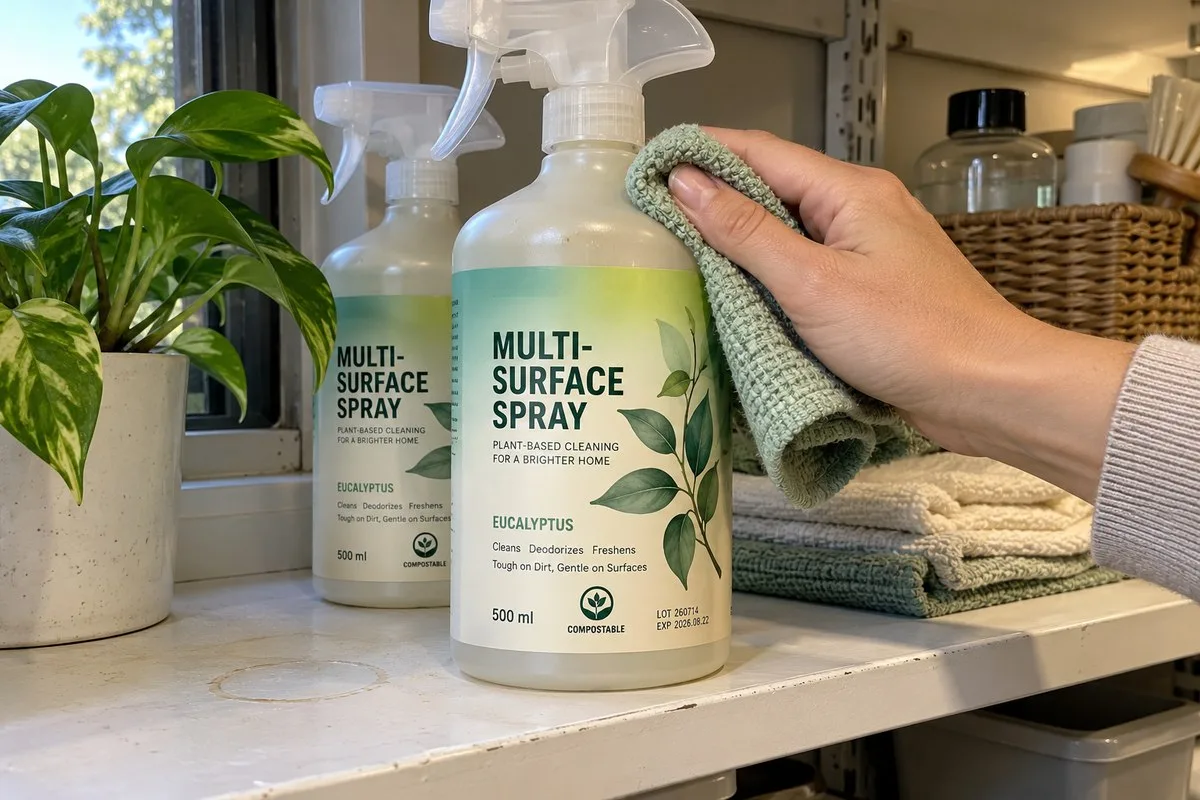
Home & Cleaning Brands
Eco household lines pairing refill or compostable packaging with labels that match the claim. Custom stickers and labels in bulk for multi-SKU launches.
Cosmetic Jars & Tins
Skincare and beauty brands with compostable jars and tins — sticker label formats with texture routes that photograph like the brand. See custom stickers.
Compostable Labels Are a Three-Layer System
A label is not just its facestock. For your packaging to compost as one unit, all three layers — facestock, adhesive, and liner — have to be specified for the same end-of-life system.
Every Compostable Label Is Three Layers
Facestock
The printable surface: paper-based, fiber, or bio-based film. It carries your design and defines the composting route your packaging qualifies for.
Adhesive
The layer most often forgotten — and the one that breaks certification. Compostable adhesive is matched to your packaging surface and temperature window.
Liner
The release backing your applicator peels away. Facestock, adhesive, and liner are written into one material specification — three layers, one system.
Three Material Routes to Choose
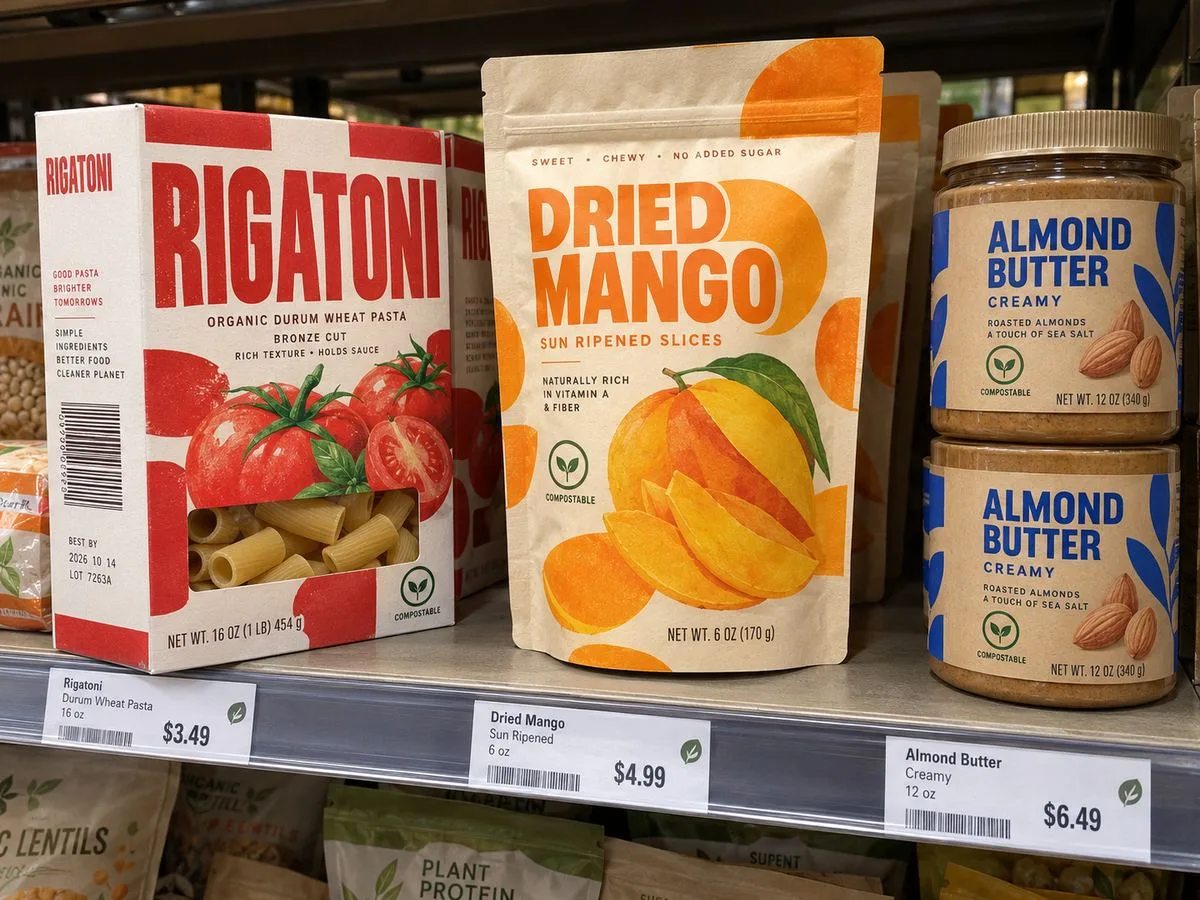
Paper-Based Route
Coated and kraft paper label material with compostable adhesive — the workhorse for pouches, boxes, and jars under industrial composting.
Fits: food pouches · bakery boxes · jars
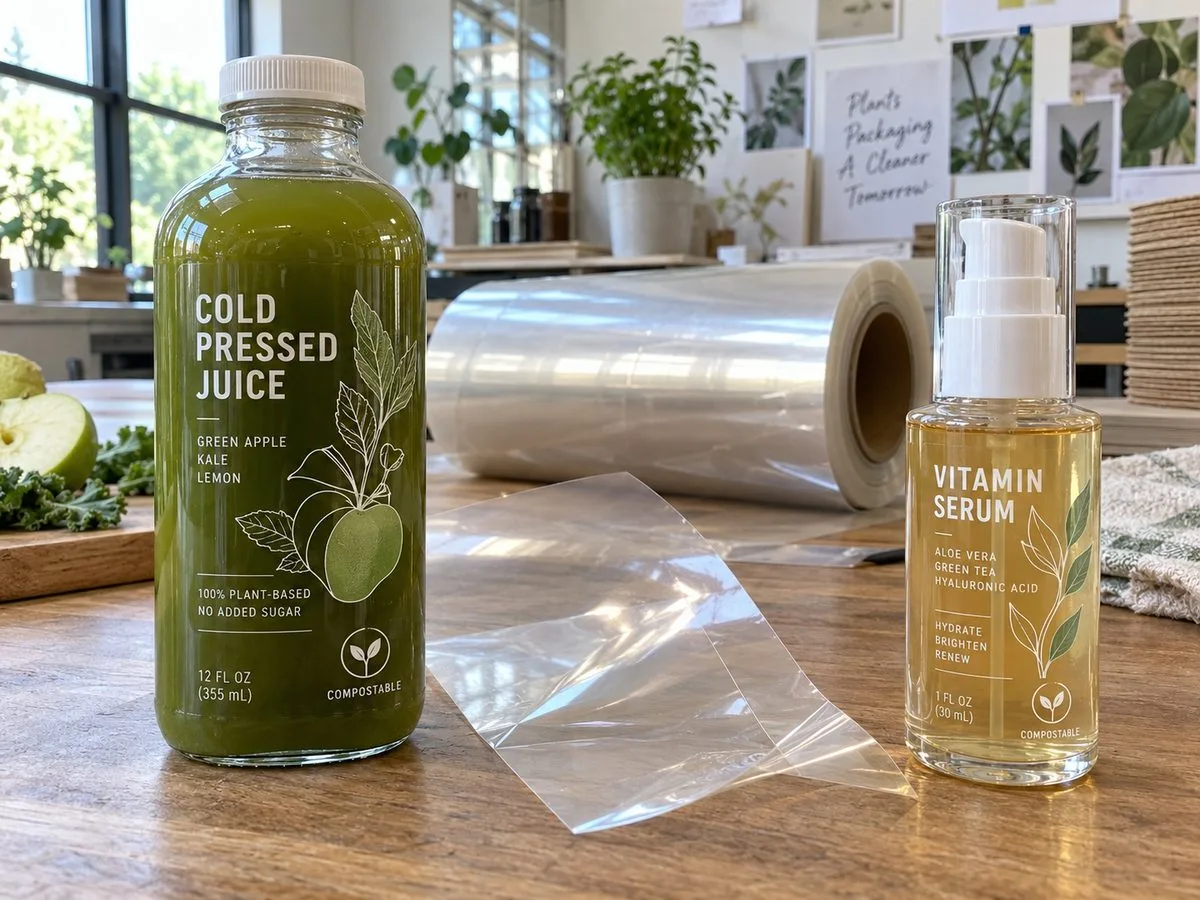
Bio-Based Film Route
Plant-based films (PLA, cellulose) give a clear or gloss look while staying inside the composting system — for brands that want film aesthetics without petro-film.
Fits: clear-on-pack looks · premium SKUs
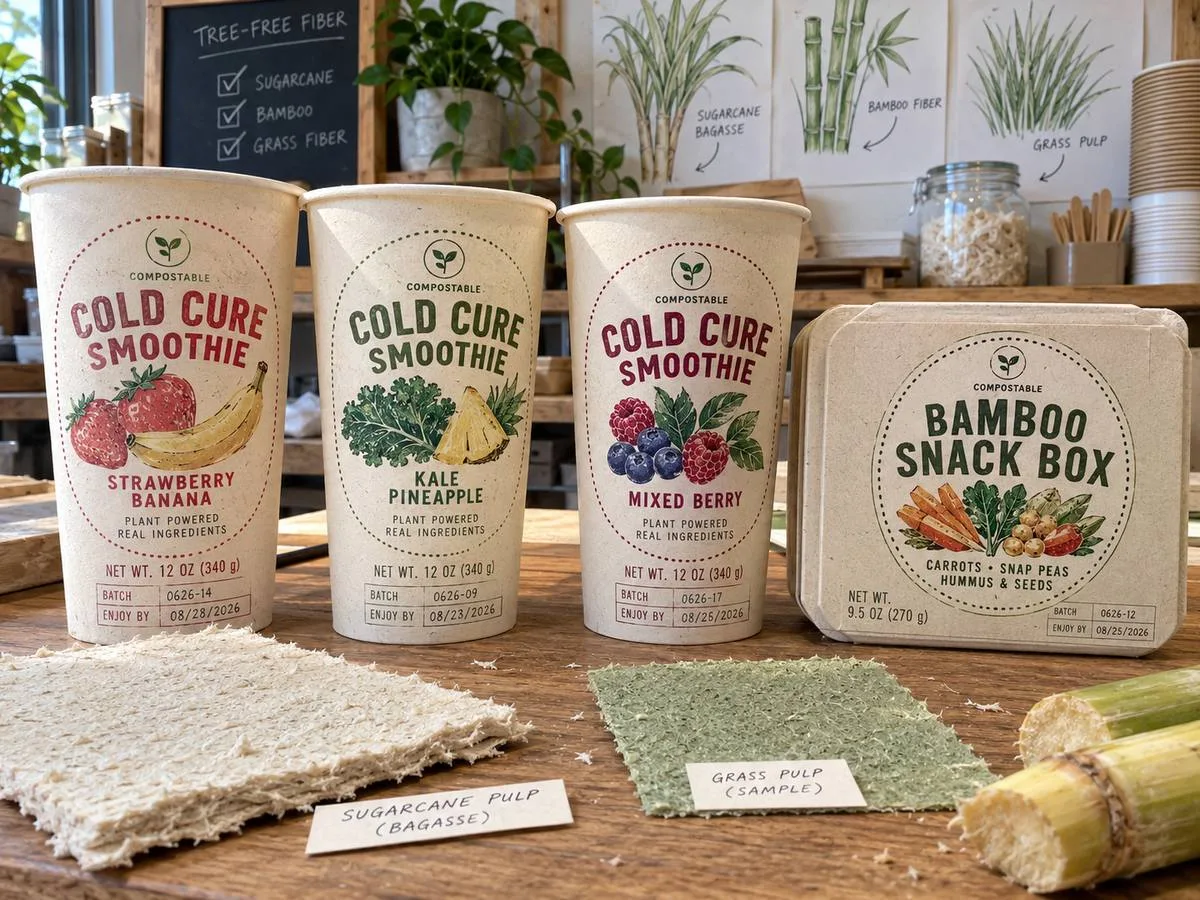
Tree-Free Fiber Route
Sugarcane, bamboo, and grass-fiber papers bring a natural texture and a strong sustainability story for hand-crafted and farm brands.
Fits: farm produce · artisan food · eco SKUs
Choosing between routes comes down to your target composting system and packaging surface — see paper label materials for the paper side of the family, or send your packaging photos and we will recommend a route.
Industrial and Home Composting Set Different Bars
"Compostable" is not one standard. The route you pick must match the system your packaging will actually enter — and the rules your market enforces.
| Dimension | Industrial Composting | Home Composting |
|---|---|---|
| Reference frameworks | EN 13432 and equivalent industrial protocols (seedling / OK compost INDUSTRIAL scope) | Stricter protocols such as OK compost HOME — longer, colder, tougher |
| Conditions | Elevated temperatures in managed facilities; breakdown in roughly twelve weeks | Ambient backyard conditions; the same disintegration intent with a harder window |
| Disintegration check | Screening after composting — no more than a small residue share passes the sieve, plus eco-toxicity checks | Same intent verified under home conditions |
| Where it matters to you | Municipal and commercial compost streams; the default for most packaged goods | Markets moving to home-compostable produce stickers — a direction regulators are already pushing |
Industrial composting standards such as EN 13432 set the temperature, time, and disintegration limits a label system must meet. Certification scopes belong to the facestock system — confirm the exact scope with your quote.
Certification Belongs to the Facestock, Not the Printer
Certified compostable labels are the most misread claim in this market. Here is exactly how certification works — and how we keep your claim clean.
Facestock carries the certificate
Compostability certification is issued to facestock systems by bodies such as BPI and TÜV, not to print shops. The certified product is the material system you print on.
Printing follows your material choice
Your artwork is printed on the material route you select; ink coverage and finishing are checked against that material's composting spec at prepress.
Scope confirmed with your quote
When certification matters to your claim, whether a certified facestock is used, which one, and its certification scope are confirmed together with your quotation — before you commit.
We do not restate facestock certifications as our own — the exact certificate and scope travel with your quotation, so your on-pack claim stays defensible.
Biodegradable and Compostable Are Not Interchangeable
Both words sell — only one of them has a standard behind it. Using them loosely is how brands end up retracting claims.
"Compostable" — a defined claim
- Backed by standards with set conditions: temperature, time, disintegration limits
- Certifiable at the facestock-system level, verifiable in your paperwork
- Safe to put on pack when the certified route is documented
Biodegradable labels and stickers in the strict sense belong here only when they meet a composting standard.
"Biodegradable" — a loose claim
- No single universal standard or time window behind the word
- Everything biodegrades eventually — the claim says little by itself
- Risky on pack in regulated markets without a supporting standard
Buying biodegradable stickers in bulk? Ask which composting standard the material meets — that question filters suppliers fast.
Printing Choices Stay Inside the Composting Spec
Compostable label printing does not mean giving up your design. It means every print variable is checked against the facestock's spec before your artwork goes on press.
| Your design choice | How we keep it inside the spec |
|---|---|
| Full-color CMYK artwork | Standard on all compostable routes; color proofing on the actual facestock before the run |
| Heavy solid coverage or dark panels | Ink load is checked against the material's composting spec at prepress — adjustments are proposed, not discovered after printing |
| Spot colors and brand tints | Matched on the chosen facestock; the same recipe is archived for reorder consistency |
| Varnish / lamination requests | Film overlaminate defeats the purpose — we steer compostable programs to compatible finishes or no overlaminate, confirmed at proofing |
Specifications are confirmed at proofing on the actual material — your artwork is never printed onto a compostable facestock with a finish that disqualifies it.
Machine-Ready Rolls on Compostable Runs
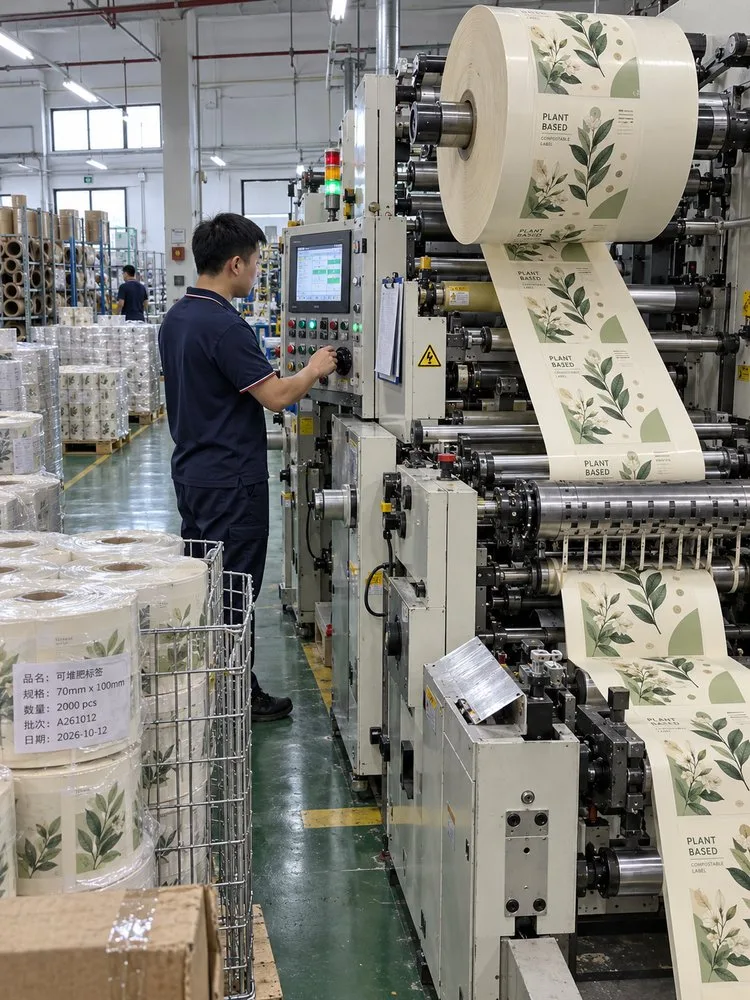
Switching material should not slow your line. Compostable orders ship on the same machine-ready specs your applicators already run.
Applicator profile
127+ applicator profiles on file — send your machine model and compatibility is checked before proofing.
Core options
76 mm (3"), 2", and 1" cores, with large-core reels for Zebra industrial printers.
Unwind direction
Wound to your applicator's requirement — specified on every roll, not assumed.
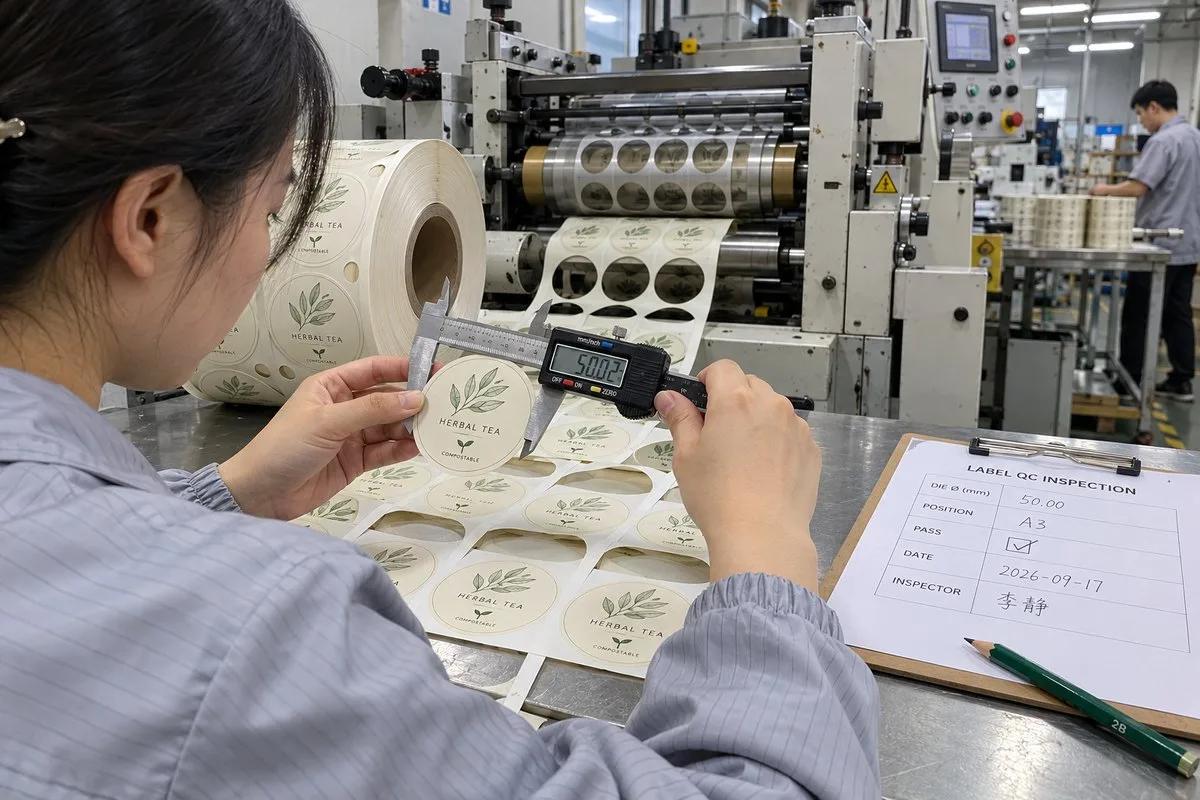
Die-cut tolerance
±0.3 mm die accuracy with maximum roll OD confirmed against your line.
Rolls ship machine-ready against 127+ applicator profiles
Rolls ship machine-ready against 127+ applicator profiles: send your applicator model, core diameter, unwind direction and maximum roll OD, and compatibility is verified before proofing.
Digital runs start at 500 labels per design and switch to 8-color flexo from 5,000+ for lower unit cost. Multi-SKU compostable programs run ganged on one order.
Machine-fit checks apply to rolls; hand-applied sheets are not bound by applicator profiles.
Deep-dive: machine-ready label manufacturing · custom roll labels
Samples First, Then Production
A compostable program has one more variable than a normal label order — the material. So every project passes through your approval before mass production.
Share your packaging
Photos or specs of the pack, target composting system, rough quantities.
Material route proposal
We recommend facestock, adhesive, and liner as one system, with certification scope where it matters.
Printed samples you approve
You hold the actual printed sample on the actual material before anything ships.
Production & QC
Run to spec with checks at printing, die-cutting, and roll winding; sample lead time quoted per project.
Sample and production timing are quoted with your order — no guesswork, no stock-answer lead times.
Compliance and Export Credentials
These are the documents your first-round vetting and customs clearance actually ask for — the ones we can show.
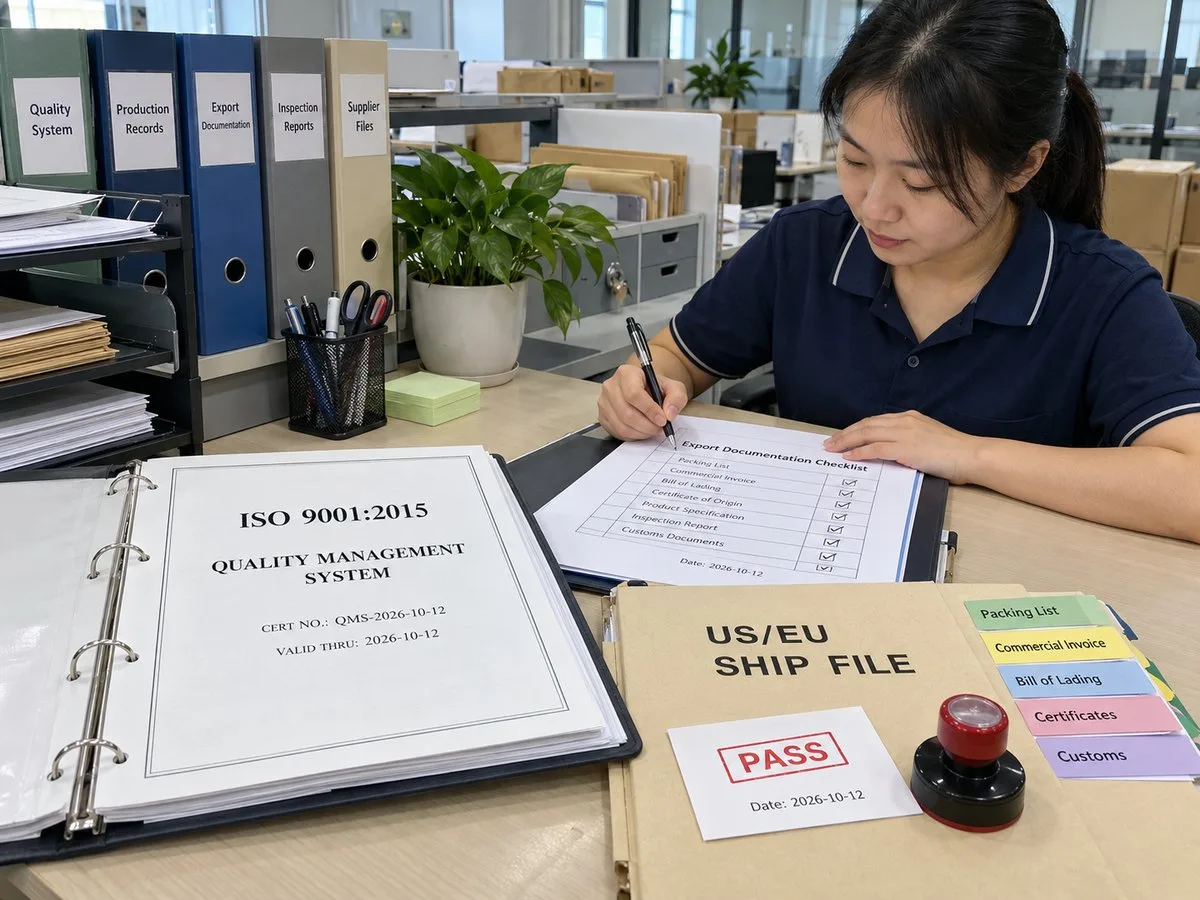
- ISO 9001 quality systemThe baseline most brand supplier-vetting forms ask for first — quality checks at printing, die-cutting, and winding.
- US & EU export experienceDocumentation packed for customs on both sides of the water, DDP terms on request.
- Material specs with your quoteFacestock, adhesive, and liner details travel with the quotation you approve — nothing vague in writing.
- Repeat-run consistencyColor recipes and specs are archived, so reorder labels match the first run.
Compostability certificates themselves live with the facestock system — see the certification section above for how scope is confirmed with your quote.
One Factory Runs Your Sustainable Program
No broker chain between your artwork and the press — a single factory accountable for material, print, and delivery.
For 18 years this Shenzhen factory has printed export labels for food, beverage, and household brands.
- Direct-from-factory programs — eco-friendly label lines run with the same production discipline as our standard lines.
- One accountable partner for material sourcing, printing, and export delivery.
- Built for brands that need factory-level support on sustainable packaging.
Doing your supplier homework? This guide on vetting a China label factory lists what to ask any factory — including us.
Compostable Label Questions, Answered
The eight questions brand teams ask before their first compostable run.
Start Your Compostable Label Quote
Send what you know about the packaging — we return a material route recommendation, pricing, certification scope where it matters, and a sample plan.
What to prepare:
- Your packaging (photos or a description — pouch, jar, bottle, produce)
- Target composting system, if you know it (industrial or home)
- Quantity range and how many SKUs or designs
- Applicator model and roll specs, if labels run on a machine
Not sure which route fits?
Describe the packaging in plain words. We will come back with the facestock route, adhesive system, and a sample plan.
Get a Quote