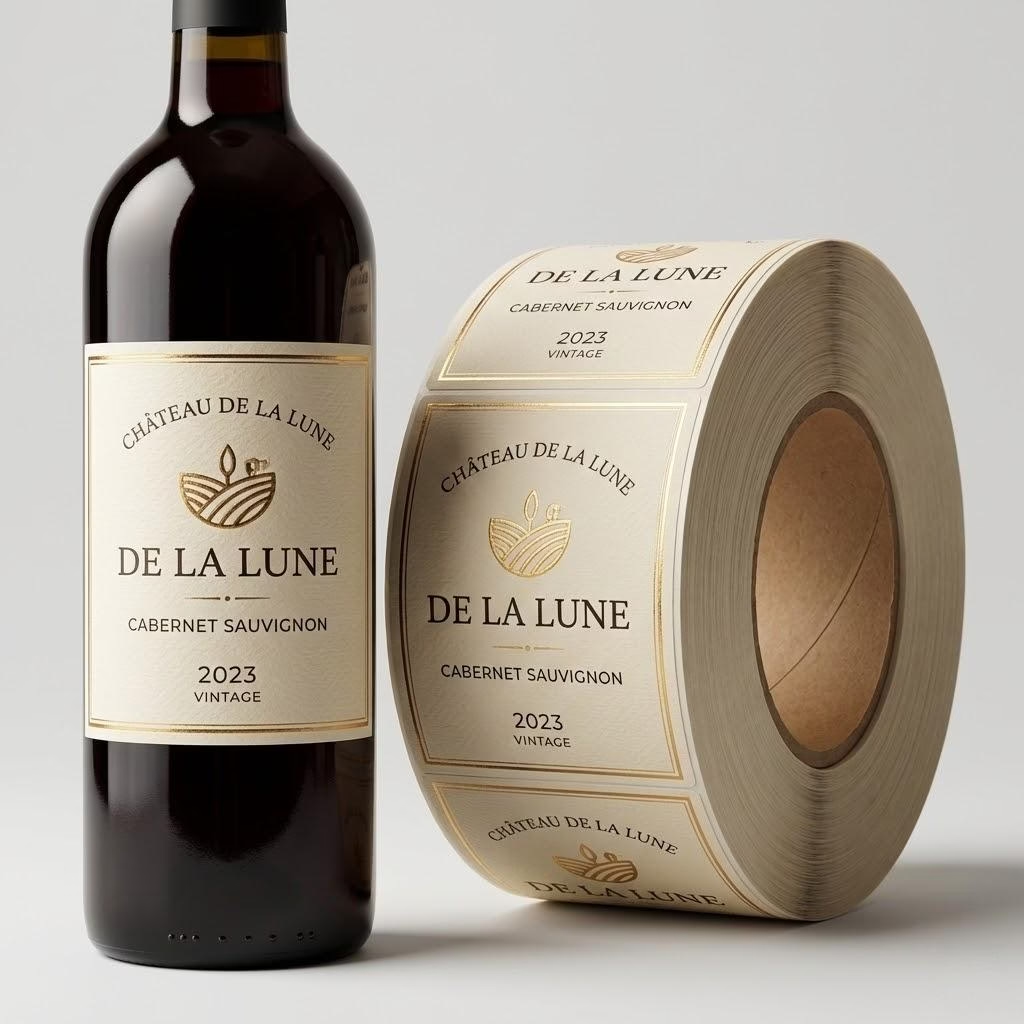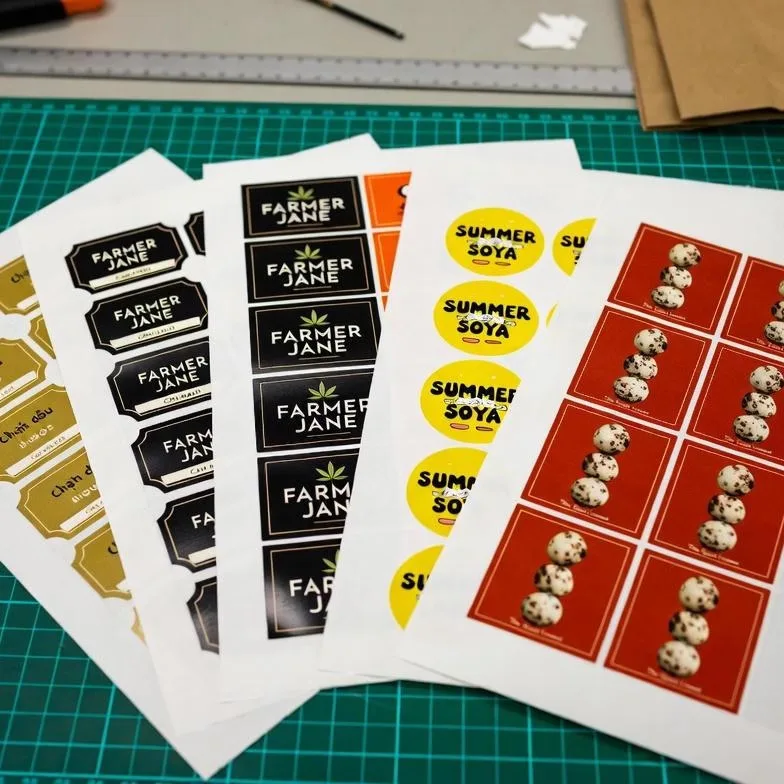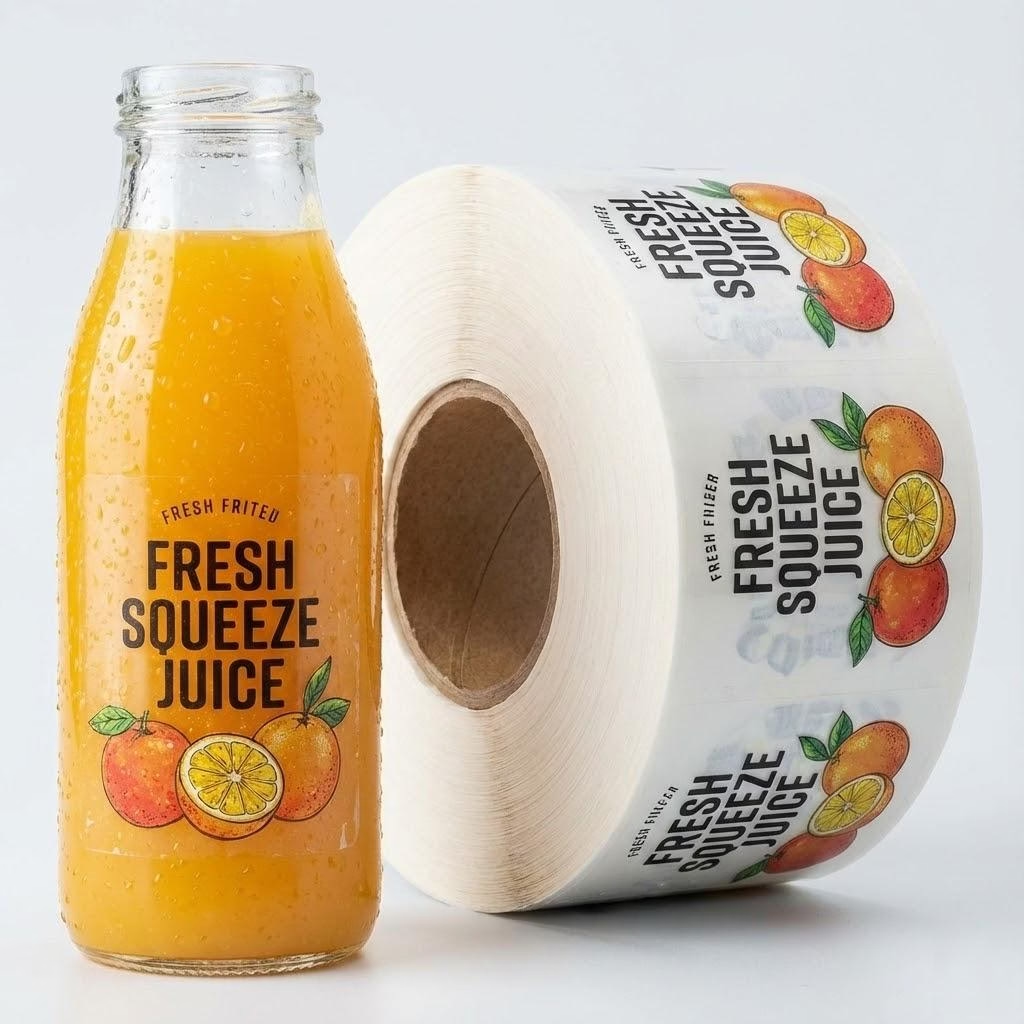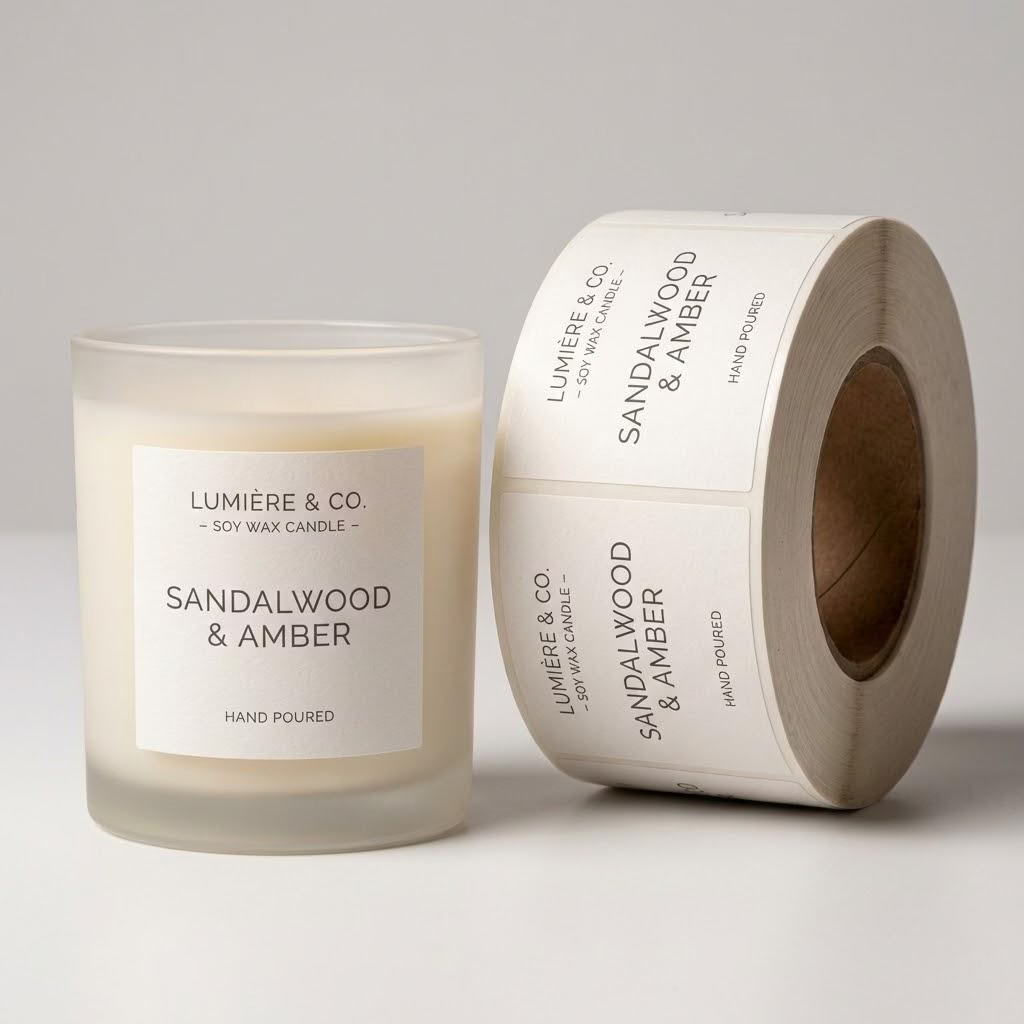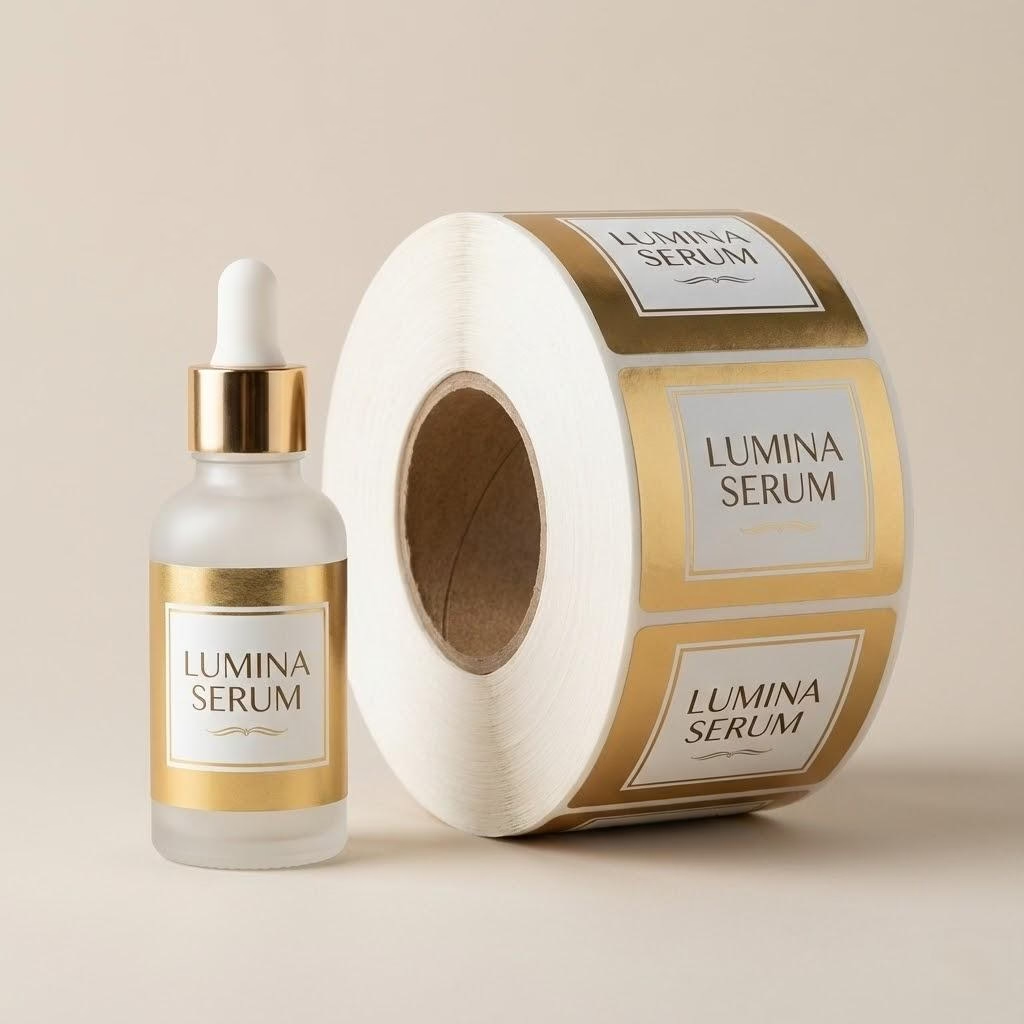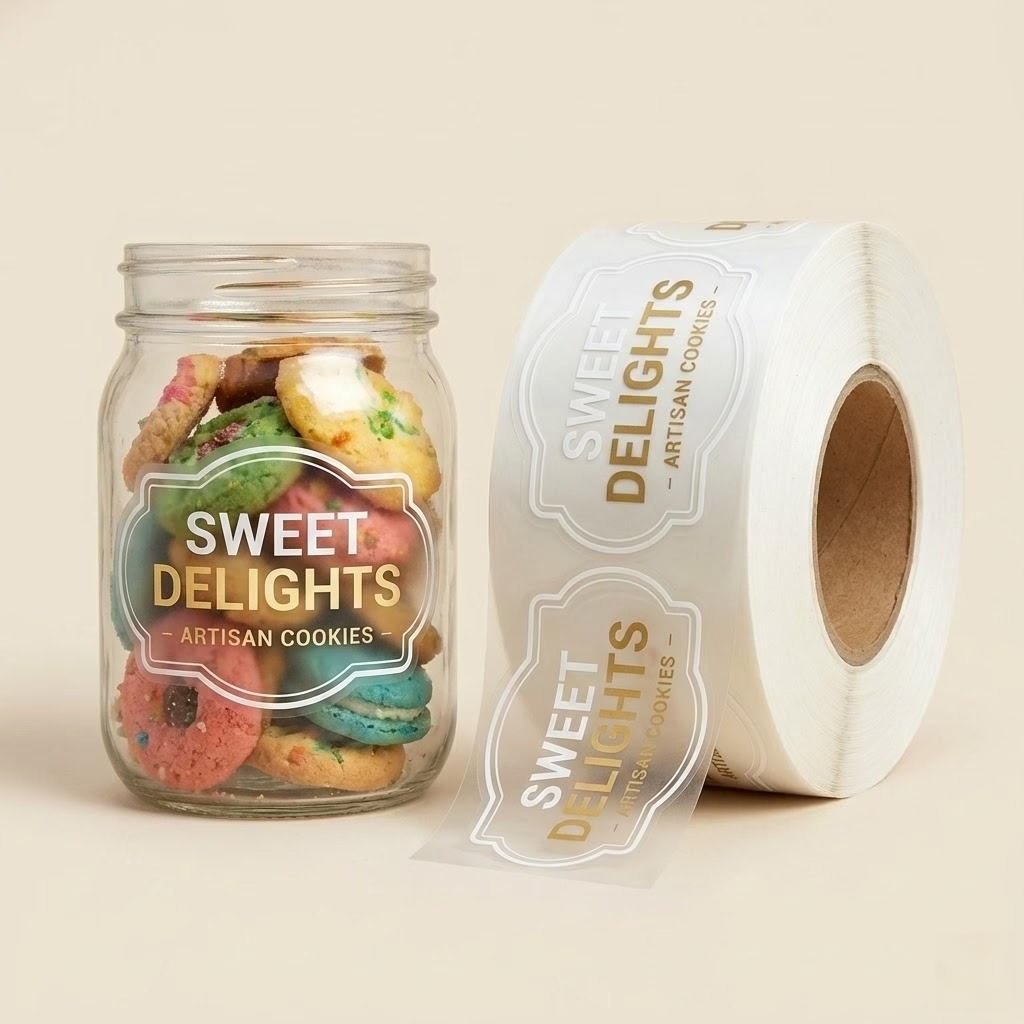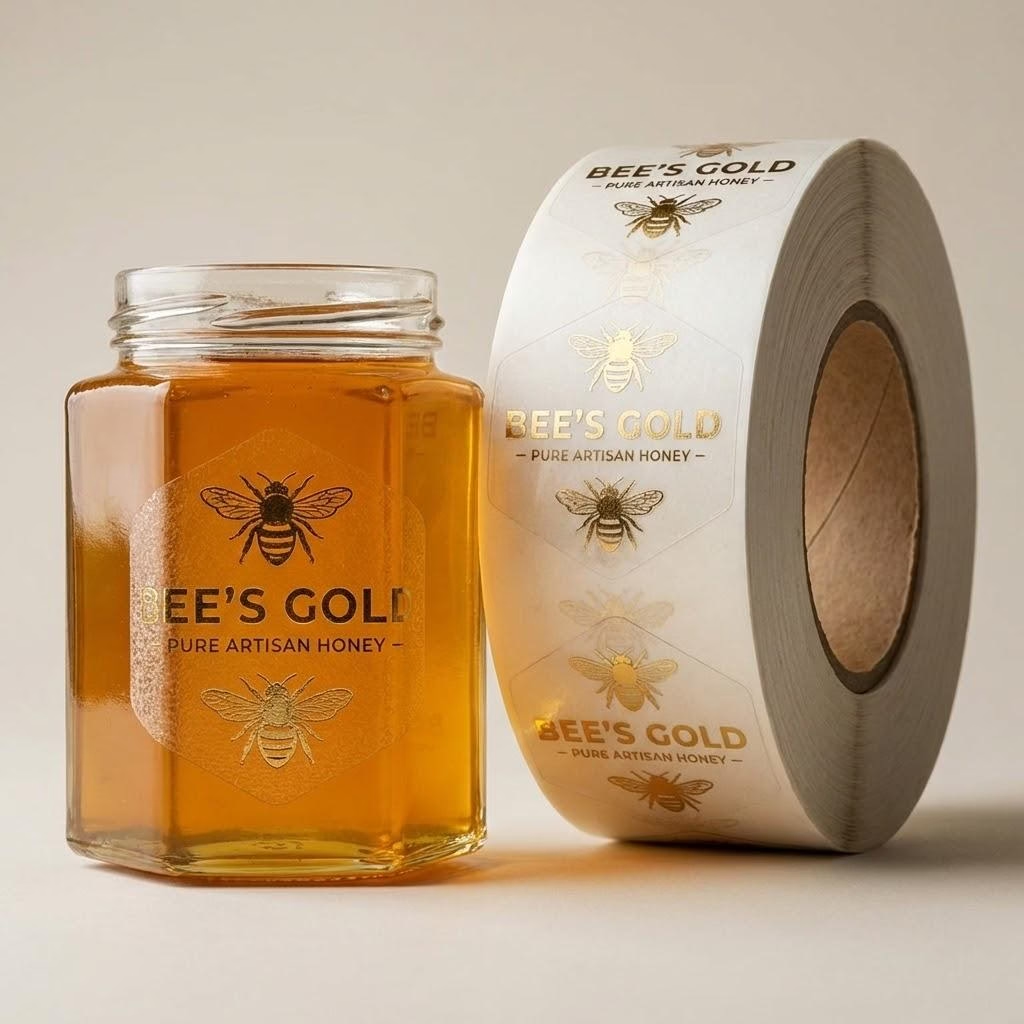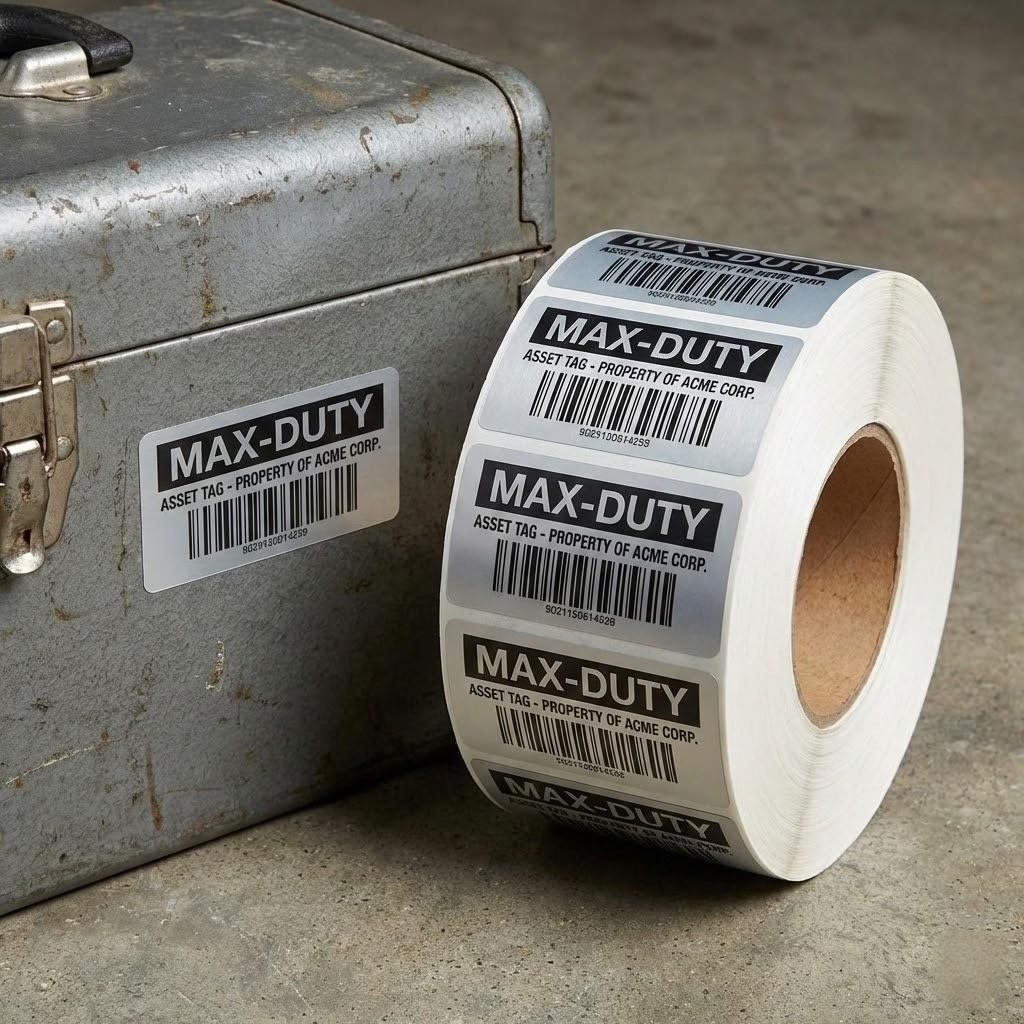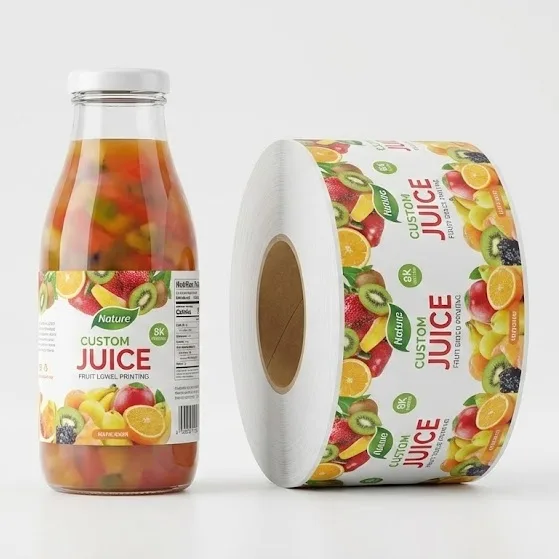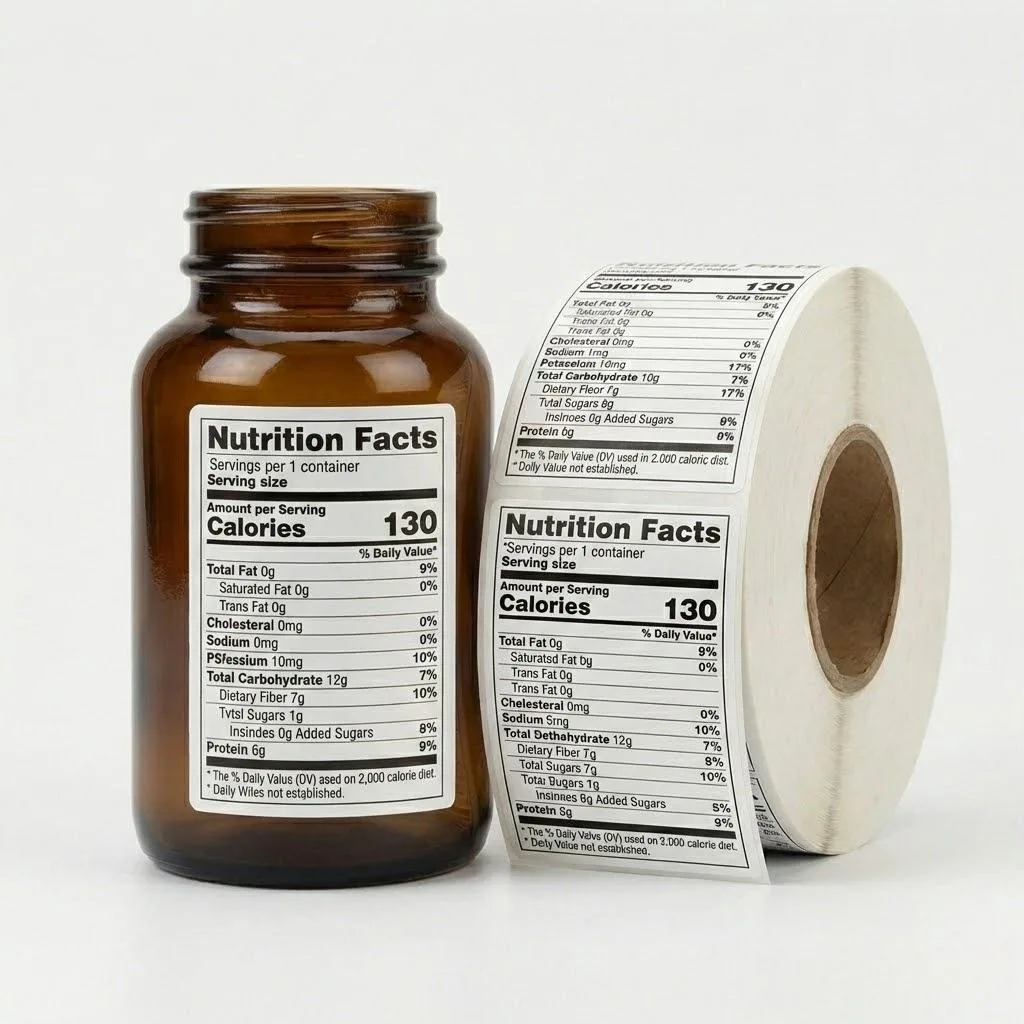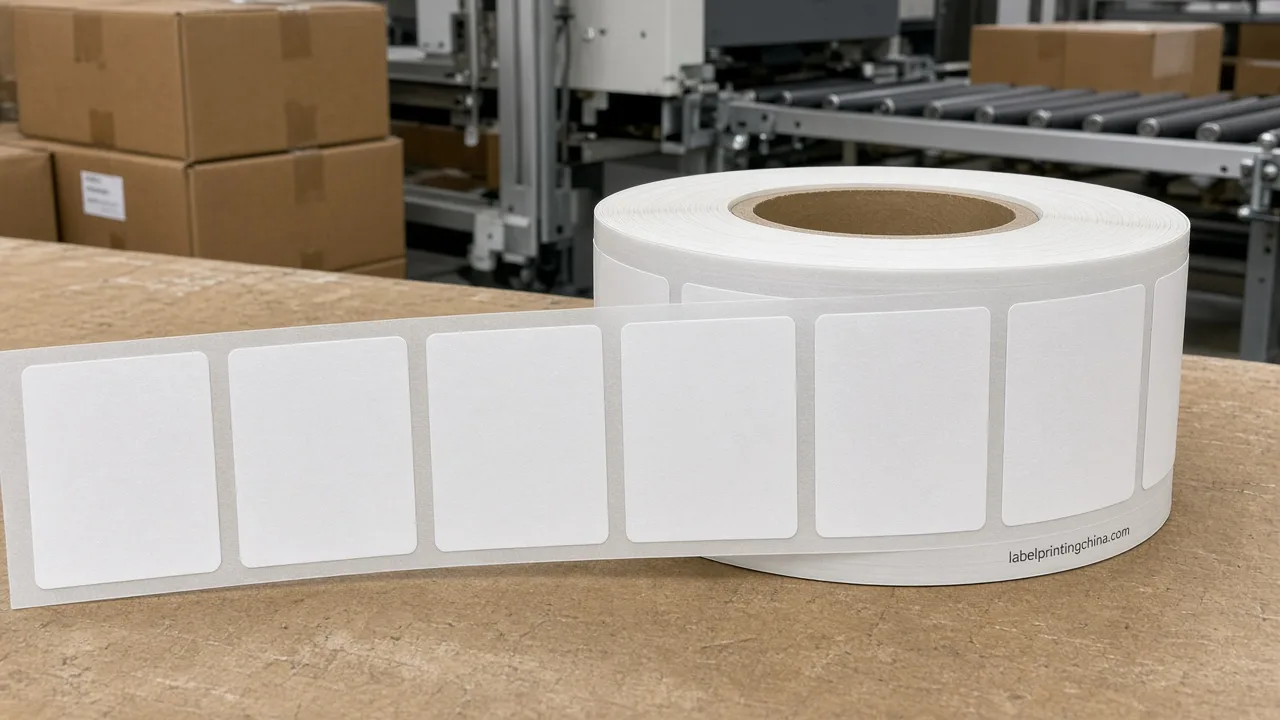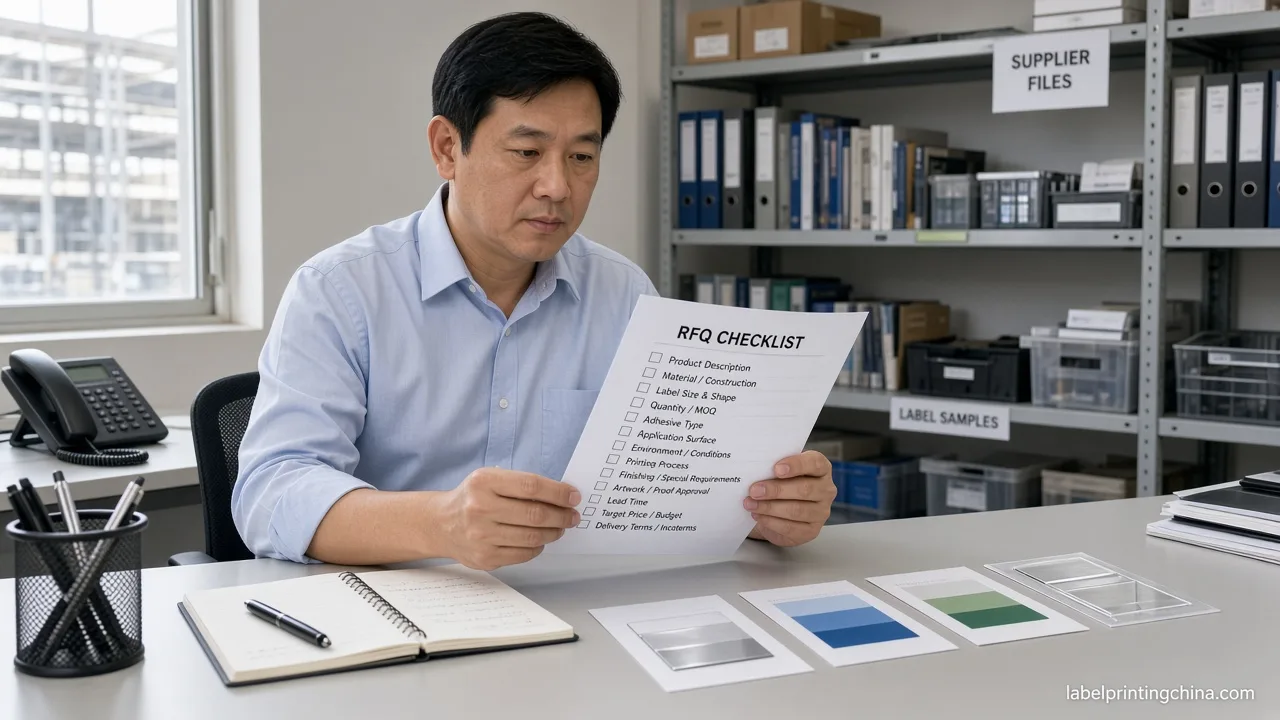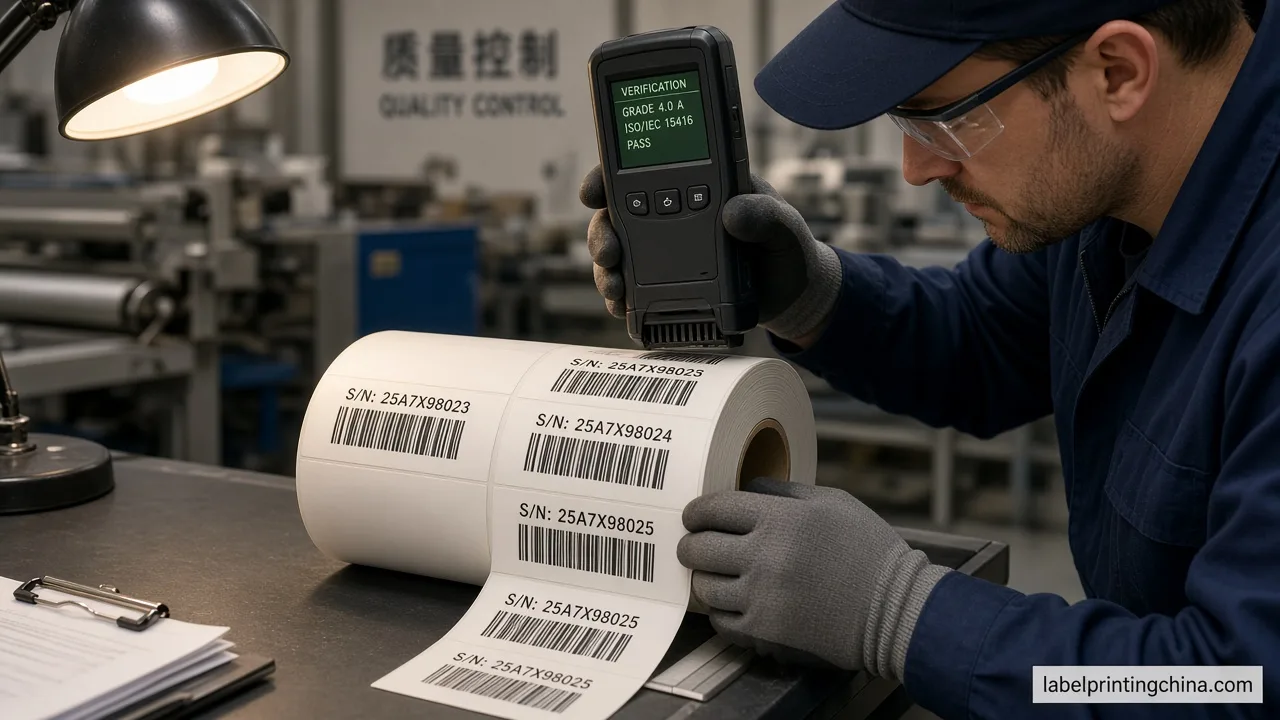
When a brand team asks for “the MOQ” on custom labels, the honest answer is rarely one sticker number. Setup, facestock, dies, finishes, waste buffers, and how many artworks share the run all move the floor—even when the money page publishes a clear digital starting point.
Custom label MOQ is a production floor set by setup, materials, dies, finishes, and quantity per SKU—not a single fixed count for every job—so you plan the published digital 500-piece start, then send material, finish, and SKU splits before you lock a quote.
This guide shows how those levers stack, how to avoid blended totals that break estimates, and how to read Label Printing China’s published scale ladder without over-claiming a universal minimum.
Why Press Setup and QC Stay Costly at Small Runs
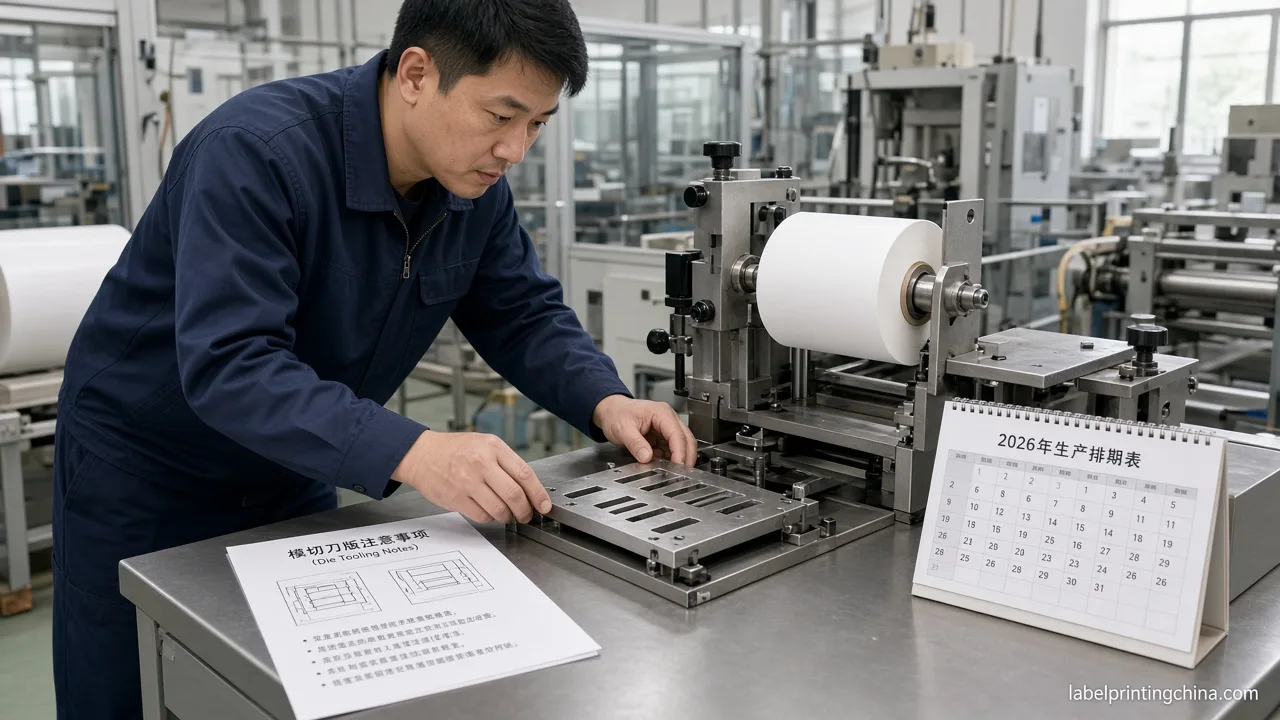
Press preparation, material setup, colour calibration, die configuration, QC checks, finishing and packaging stay similar whether the run is small or large.Use when explaining why setup-heavy label jobs resist very small MOQs. Summit’s ~250 labels per SKU and ~$350 minimum order value are competitor-only examples—not Label Printing China policy.
That is why a “just 100 labels” ask can still carry a full make-ready bill: the press still has to be cleaned, the facestock still has to be mounted, and the first meters still go to colour and register checks.Industry write-ups such as Summit Labels’ MOQ explainer make the same point about efficiency and waste; they do not rewrite our published floors.
Material choice sits inside that same setup stack. Paper for dry goods, white or clear BOPP for wet bottles, vinyl or PET for rough outdoor use—each change remounts the web and often the adhesive story.When buyers only send a brand colour and skip the use conditions, estimators still have to invent a facestock, and the MOQ that comes back is really a guess about durability, not a locked floor.
Check three ticket lines before you argue the count down:
- Which setup steps are unavoidable on this material and die
- Whether colour or finish needs a dedicated make-ready
- Whether a short digital path can absorb the test without pretending flexo economics apply
Food brands that need freezer or jar routing should open the sibling small batch food labels MOQ guide for lane choices; this page stays on the cross-category cost structure.
List Quantity Per SKU Before You Blend Totals
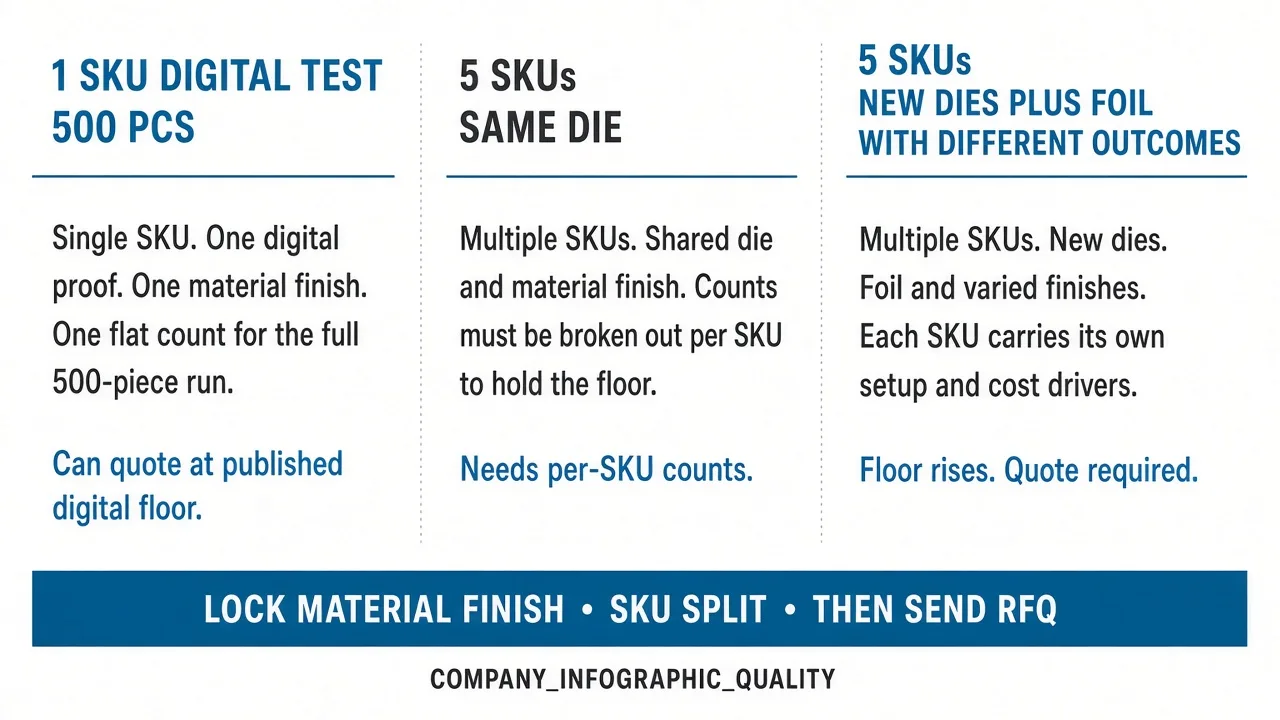
Multi-SKU / multi-artwork in one small order needs explicit grouping conditions; quote quantity may be per component, per set, or combined. State each SKU row.Use when buyers split totals across designs (e.g., 500 total across five designs). The number 100 in ZFU’s historical URL is an example, not a standing supply promise for Label Printing China.
Buyer RFQs often land as “500 labels, five designs, 100 of each”—a structure we see in real quote threads—and that split is the decision, not a blended headline.Front, back, and neck pieces are separate components even when they share a brand name, so the estimator needs the count per artwork and per panel—the same planning discipline outlined in ZFU’s trial-allocation note (their “100” URL example is not our MOQ).
Use this table when the RFQ still shows one total:
| What you wrote | What to send instead |
|---|---|
| “500 labels, five flavors” | 100 per flavor (or the real per-SKU count) plus size and finish |
| “One SKU, front + back” | Quantity for each component, or a clear “per set” definition |
| “Trial for photos and launch” | Separate counts for setup checks, retained proofs, and saleable packs |
Red flags on a multi-SKU MOQ ask: one blended total, no component map, and five artworks sharing a die that was never confirmed.
Need an MOQ recommendation for this split?
Send your material, finish, SKU split, quantity, and artwork so we can route digital versus flexo without guessing the floor.
How Dies, Finishes, and Waste Buffers Move the Floor

After the SKU map is clear, dies and finishes usually move the floor next. A shared rectangular kiss-cut can ride an existing tool; a contour die or a new size often adds tooling and waste that a tiny run cannot amortize.Foil, emboss, spot UV, and soft-touch laminate each add make-ready and inspection, so the efficient batch size rises even when the artwork looks “simple.”
Verify waste buffers the same way. New dies, special finishes, and setup/QC/finishing waste commonly require over/under tolerance planning—often up to about 10% industry-side—not a promise of unlimited extras.Press setup, colour pulls, and finishing scrap mean shipped counts may sit inside that band—plan a little headroom for line tests instead of reordering “just fifty more” at full setup cost. Measure once against the real applicator and carton, because a second make-ready for a shortfall is still a real cost event.
When the finish stack is heavy and the SKU count is high, consolidating sizes or finishes often does more for MOQ than shaving fifty labels off one line.
Read Label Printing China’s Published Scale Ladder Without Over-Claiming
Our MOQ starts at 500 pieces for digitally die cut stickers — small batch label printing that lets new brands test a product before committing to volume. Flexographic runs become economical from around 10,000 pieces upward.Applies to the published digital die-cut sticker / small-batch path and flexographic economy framing on the custom label printing money page—not every material, finish, or multi-SKU split without a quote review. Do not state one fixed MOQ for all formats, finishes, or SKU splits; route-specific pages may differ.
The published scale ladder on custom label printing reads 500 for a new-product digital test, 1K–5K while the brand is still flexing, 10K+ for established volume, and 100K+ when distribution widens—same factory and colour standard as you step up. Start at 500 to validate, then move up only when the SKU map and finish stack stay stable.
Inspect the quote against those published rungs, then confirm roll versus sheet, unwind, and finish on the same ticket. That is how custom label MOQ stays comparable across printers without pretending every route shares one number.
Lock the Spec Before You Chase a Lower Minimum
Custom label budgets hold when material, finish, die reality, and quantity per SKU move together.Lock those fields first, read the published digital 500-piece start and the flexo economy note as published framing—not as a promise that every foil-and-contour job begins there—and send the split for an MOQ recommendation before you negotiate a lone unit sticker.
If the artwork is still shifting, keep the first batch on the digital rung, mark the SKU map once, and reuse it when you step toward flexo. That is how custom label MOQ stays honest across reorders.