Sick of dealing with damaged shipments and costly auto-applicator downtime? If you want to know exactly how to prevent label rolls from being crushed during cross-border transit, you are in the right place. I am going to show you the industrial packaging standards that eliminate edge-crush for good.
To prevent label rolls from being crushed, use K=K 5-ply double-wall corrugated cartons equipped with custom rigid grid partitions. This transfers weight to the outer box. Additionally, inserting anti-telescoping core plugs prevents internal shifting, ensuring rolls arrive machine-ready.
Want to see exactly how these physical load-bearing structures work in the real world? Keep reading. I will break down the hidden logistics costs and give you a bulletproof vendor audit checklist to use today.
The Physics of Load-Bearing vs. The Illusion of Cushioning
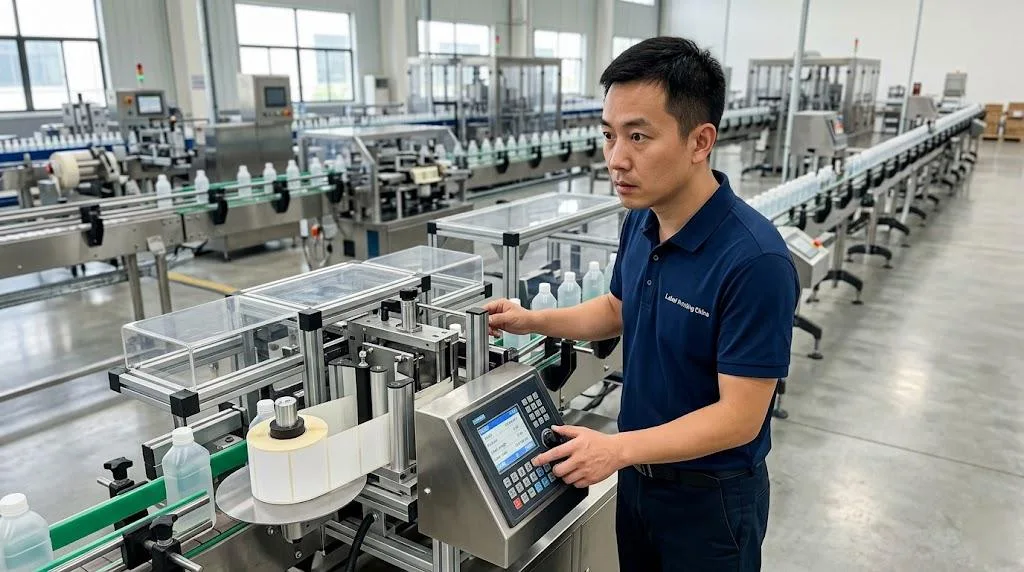
When auditing a new vendor, the most common reassurance you will hear is that they use “plenty of bubble wrap” and “heavy-duty boxes.” This D2C e-commerce logic is entirely inadequate for industrial manufacturing procurement.
Bubble wrap absorbs kinetic energy through physical compression. However, at the bottom tier of a fully loaded shipping container, cartons are not just bouncing around; they are enduring continuous static gravity—often hundreds of kilograms of downward pressure.
Under this immense, sustained weight, soft plastic fillers inevitably flatten, creating a structural vacuum inside the carton. Once that void forms, the outer box collapses inward, transferring the entire vertical load directly onto the fragile adhesive edges of your sticker rolls.
The definitive engineering solution requires transitioning from a “cushioning” mindset to a “structural transfer” mindset, an essential strategy for bulk label packaging.
This involves the implementation of K=K 5-ply double wall corrugated cartons engineered specifically with custom grid partitions.
Structural Protection Metrics Comparison
| Metric | The Amateur Standard (B2C Logic) | The Industrial Precision Standard |
|---|---|---|
| Primary Material | Standard cartons + Air pillows/Bubble wrap | K=K 5-Ply Cartons + Rigid Corrugated Grid Partitions |
| Load-Bearing Transfer | Force is absorbed by the product itself | Force is routed to the carton’s physical skeleton |
| Static Weight Tolerance | Fails under prolonged pallet stacking | Sustains >70 kg of top-down static pressure per unit |
| End Result on Arrival | High risk of micro-crushing at roll edges | 100% Machine-Ready with zero edge compression |
Quick Guide: If your priority is cross-border structural safety, avoid soft padding and mandate rigid internal skeletons.
By placing each roll in an independent, rigid chamber, external force is redirected away from the label edges and absorbed entirely by the carton’s outer corrugated skeleton. To prove this capability, competent vendors use the McKee Formula to calculate the Box Compression Test (BCT) value:
$$BCT = 5.874 \times ECT \times \sqrt{T \times Z}$$
*(Where $T$ is board thickness, $Z$ is the carton perimeter, and ECT is the Edge Crush Test rating, which must hit **44-48 lbs/in** for cross-border transit).* If a vendor cannot provide documentation showing how their internal partition structure achieves optimal load-bearing metrics, they are putting your production floor in immediate danger.
“True packaging sustainability and cost-efficiency are not achieved by simply adding more layers of material, but by engineering packaging systems that precisely match the specific hazards of their distribution environment. A protective packaging system must act as a structural extension of the product itself to guarantee functional delivery.” — General ISTA Principles
Last year, an emergency intervention was required for an East Coast cosmetics contract manufacturer.Their previous supplier shipped highly sensitive 50-micron BOPP labels using thick boxes heavily stuffed with air cushions. During a 28-day ocean transit, the static pressure caused the internal cushioning to fail completely.
The subsequent edge deformation was barely visible to the naked eye. However, it completely disrupted the stripping tension on their high-speed applicators running at 200 bottles per minute. The machines experienced continuous sensor faults and web breaks, costing thousands of dollars in daily downtime.
The structural intervention deployed by our Master Printing Engineer did not involve adding more foam. We completely eliminated soft fillers, deploying bespoke K=K grid partitions.By suspending the rolls within independent physical chambers, edge-crush risk dropped to zero, instantly stabilizing their automated lines upon the next delivery.
Defeating Ocean Freight Vibration and Telescoping
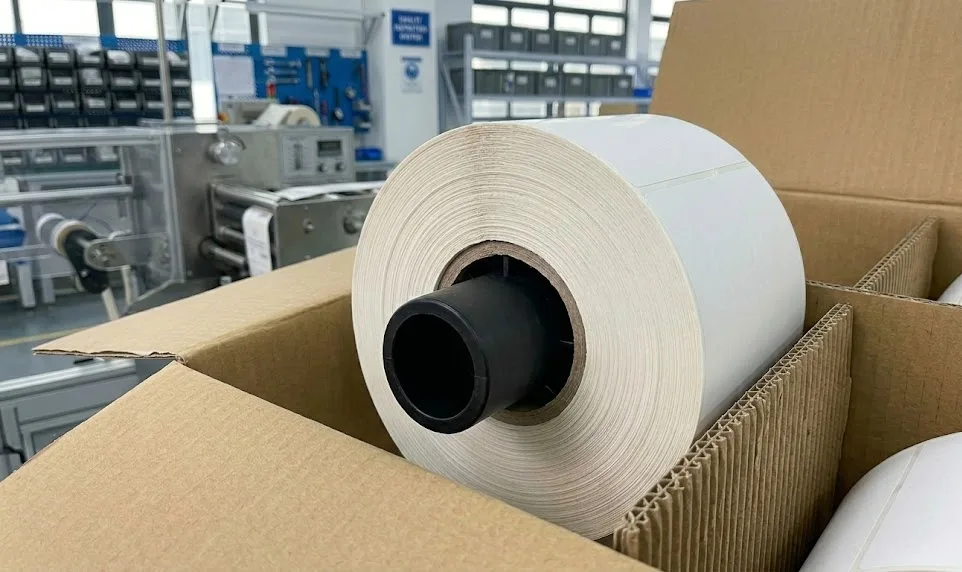
While external load-bearing is crucial, many procurement managers overlook the most silent destroyer of adhesive roll integrity: internal shifting. A carton may arrive at your facility looking pristine on the outside, yet the rolls inside immediately snap the web tension on the applicator.
This mechanical failure, known in the industry as telescoping, is the direct result of prolonged ocean freight vibration and a primary focus of comprehensive custom roll protection strategies.
During a multi-week transit, maritime vessels generate a continuous, low-frequency kinetic energy—typically between 1 to 10 Hz. Standard padding is scientifically incapable of mitigating this deep resonance.
“In long-haul and maritime logistics, it is rarely the sudden drops that compromise rolled or tightly wound materials; rather, it is the prolonged, low-frequency vibrations spanning days or weeks. This continuous kinetic energy causes severe internal shifting and structural fatigue, phenomena that traditional cushioning is entirely unequipped to mitigate.” — Dr. S. Paul Singh, Professor Emeritus, School of Packaging, Michigan State University.
If the 3-inch label core shifts by even a marginal 2.0 mm due to this vibration, the roll’s balance is irrevocably altered. When that compromised unit is loaded onto the production line, the uneven tension causes instant peeling issues, backing paper snaps, and continuous applicator jams.
Mitigating this internal threat requires a strict two-fold mechanical defense managed at the factory level:
- Tension-Decay Rewinding: Rewinding machinery must be calibrated with a precise tension-decay curve to ensure internal stress is perfectly uniform from the core to the outer edge of the roll.
- Anti-Telescoping Core Plugs: The Master Printing Engineer must mandate the insertion of customized rigid polymer core plugs into both ends of every roll before packing.
These physical plugs lock the core securely against the outer corrugated partitions, deadlocking the physical tolerance at an absolute zero millimeter shift. When auditing a vendor, do not merely ask about carton thickness. You must demand proof of how they lock their core placement against maritime vibration.
Eliminating the Last-Mile “Responsibility Vacuum”
The final, and often most frustrating, vulnerability in cross-border procurement lies in the responsibility vacuum of the last mile.When LTL (Less Than Truckload) carriers or automated port sorters damage a shipment, existing vendors quickly point to the logistics company as an “act of god,” while the carrier points back to inadequate packaging.
Attempting to bridge this gap with bright red “Fragile” stickers is a dangerous placebo. Forklift operators rushing to meet port quotas and automated conveyor belts simply do not read warning labels.
“Supply chain disruptions are no longer just logistical inconveniences; they are direct hits to the manufacturing floor’s operational continuity. The hidden cost of receiving compromised components often eclipses the initial procurement savings, as production downtime ripples instantly into lost revenue.” — Dr. Yossi Sheffi, Director, MIT Center for Transportation & Logistics.
To secure your supply chain and protect your cost transparency, the focus must elevate from microscopic carton defense to macroscopic global logistics execution.
Ready to Secure Machine-Ready Production?
Stop letting damaged packaging compromise your automated lines. Get precision-engineered, crush-proof labels that safeguard your operational uptime.
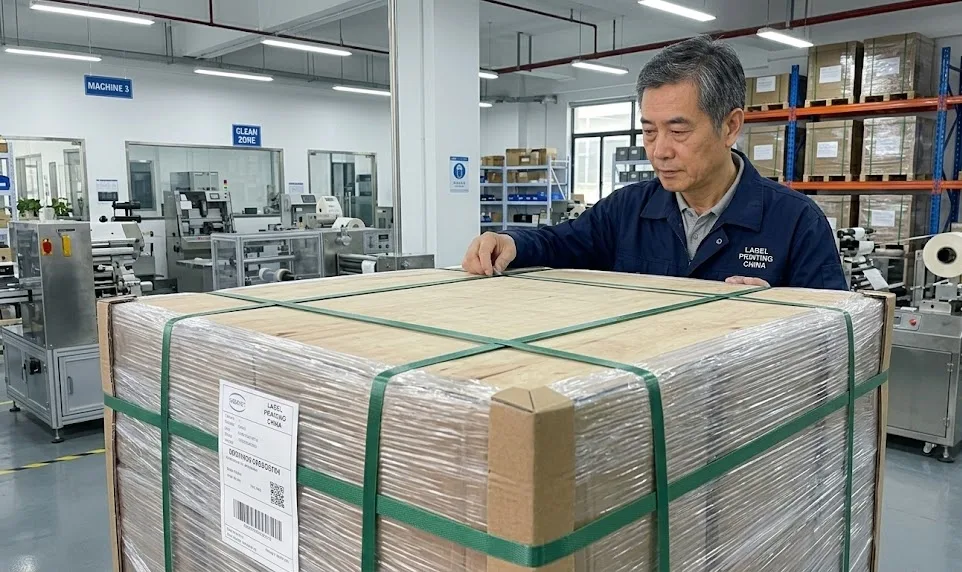
True macro-level protection—referred to as Pallet Armor—includes the following non-negotiable components:
- Rigid Edge-Guards: Wrapping the four vertical pillars of the pallet with industrial-grade edge protectors (minimum 5mm thickness) to absorb lateral impacts from aggressive forklift maneuvering.
- Load-Bearing Top Plates: Securing a wooden board across the top tier to evenly distribute weight if logistics providers recklessly stack other pallets on top of your shipment.
- High-Tension PET Strapping: Locking down the entire structure using cross-hatched PET strapping engineered with a breaking strength exceeding 300 kg.
- Moisture Barrier Sealing: Wrapping the entire palletized unit in heavy-duty stretch film to combat the severe humidity shocks (often fluctuating by 40% in 24 hours) experienced during equatorial ocean crossings.
This system completely neutralizes the deformation risk during the last mile, wiping out unforeseen damage claims and ending the era of vendor excuses.
The true cost of damaged label edges is never just the material asset loss; it is the comprehensive operational halt of your primary packing asset.
The Financial Reality of Hidden Downtime
For Supply Chain Directors, fixing the packaging is ultimately about protecting the balance sheet. Quality industrial printing completes only half the equation; the remaining half is guaranteeing that the product survives the journey to optimize your Total Cost of Ownership (TCO).
Consider the actual financial hemorrhage caused by inadequate vendor packaging. The true cost of damaged label edges is not the cost of replacing a few rolls. It is dictated by the downtime equation:
$$Cost_{downtime} = (T_{down} \times C_{op}) + M_{loss} + L_{rework}$$
*(Where $T_{down}$ is downtime minutes, $C_{op}$ is operational cost per minute, $M_{loss}$ is material waste, and $L_{rework}$ is the labor cost of recalibration).*
In a high-volume FMCG (Fast-Moving Consumer Goods) packaging facility, a single 30-minute stoppage caused by a crushed label roll breaking the web tension can easily inflict **$1,500 to $3,000** in comprehensive operational losses.
By demanding K=K grid partitions and anti-telescoping core engineering, you are not paying a premium for boxes. You are purchasing an insurance policy against catastrophic operational halts, ensuring that your mandate to calculate label landed costs effectively lands securely on the company’s bottom line.
The Floor Manager’s Inbound Inspection SOP
To fully execute your vendor audit and align procurement strategy with the production floor’s needs, implement this rapid, hardcore three-step inbound inspection standard. Do this before any newly arrived material is allowed near your auto-applicators:
- Visual Pallet Verification: Inspect the shipment’s macro structural integrity upon dock arrival. If the rigid edge-guards are warped, missing, or if the 5-ply cartons show accordion-style compression creases along their base, the external load-bearing mechanics have failed. Document this immediately.
- Tactile Edge Testing: Remove a roll and run your bare hand firmly along the physical adhesive edge. The surface must be perfectly flush and smooth. Any microscopic indentation or wave indicates that external pressure has bypassed the internal partitions. This signals an immediate risk of web tension loss on the line.
After you clear edge crush, add a side-light face scan—see the label face scuff guide for Ready/Hold on print-face haze.
- The Flatness Core Test: Lay the label roll flat on a calibrated inspection table. If the 3-inch central core protrudes more than 1.0 mm beyond the paper edge, telescoping has occurred due to unmitigated max roll diameter structural failures. Reject the roll; it is no longer machine-ready and will invariably cause applicator jams.
Buyer Takeaway
Preventing crushed rolls requires a defined pack-out and a receiving decision. A roll is not ready to release simply because its outer carton looks intact.
Label-Roll Transit Release Checklist
Use this record with the RFQ, sample approval and production release. It is a decision aid, not a replacement for the technical checks explained above.
| Control point | Specify before shipment | Verify on receipt |
|---|---|---|
| Core and roll support | Core size, maximum stack/load and internal protection | No crushed core or telescoping |
| Carton geometry | Orientation marks, edge protection and pallet pattern | Carton remains square and dry |
| Freight handling | No-clamp / no-top-load instructions where required | Damage photos before unpacking |
| Release | Sampling method and escalation contact | Rolls pass unwind and visual checks |
Approval and Handoff Checklist
- Photograph carton condition before moving damaged freight.
- Quarantine a suspect pallet before the rolls enter the applicator area.
- Match the receiving sample to the same failure modes that matter on the line: core deformation, telescoping and edge damage.
Frequently Asked Questions
Is cushioning enough to protect label rolls?
Cushioning helps with shock, but the load path, core support, carton geometry and handling instructions must also be specified.
When should a damaged shipment be escalated?
Escalate before broad unpacking when carton collapse, moisture, crushed cores or telescoping could affect usable roll quality.
Securing Your Production Continuity
Stop allowing amateur packaging to dictate your production schedule and inflate your total cost of ownership.When you align your procurement strategy with a manufacturer rooted in 18 years of technical expertise, you are not merely purchasing printed materials—you are procuring an engineered, heavily armored defense system against supply chain disruption.
Elevate your vendor standards. Demand physical load-bearing partitions, insist on core-locking mechanisms, and require comprehensive pallet armor.Connect with our engineering and logistics teams today to see exactly how our industrial precision standards guarantee your next global shipment arrives machine-ready label manufacturing verified, helping you Save 30% & 100% Machine-Ready.