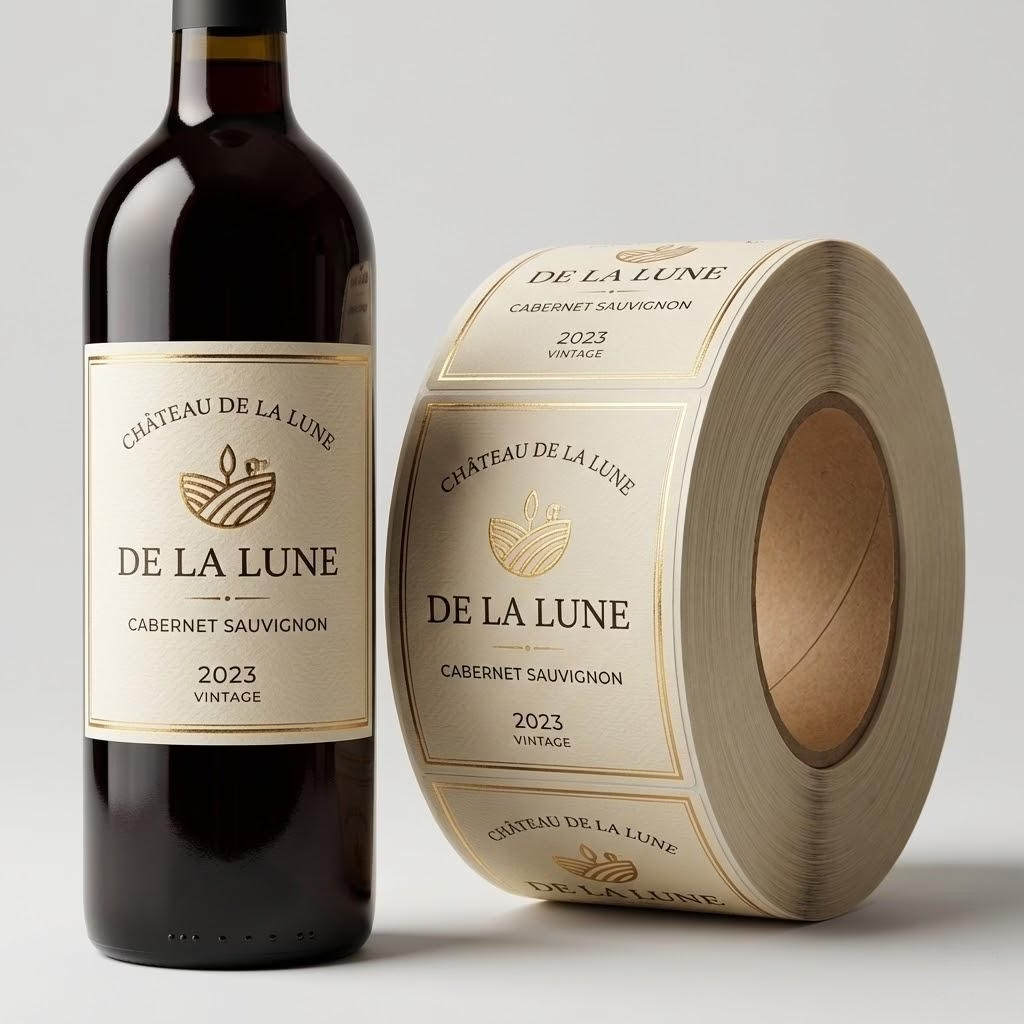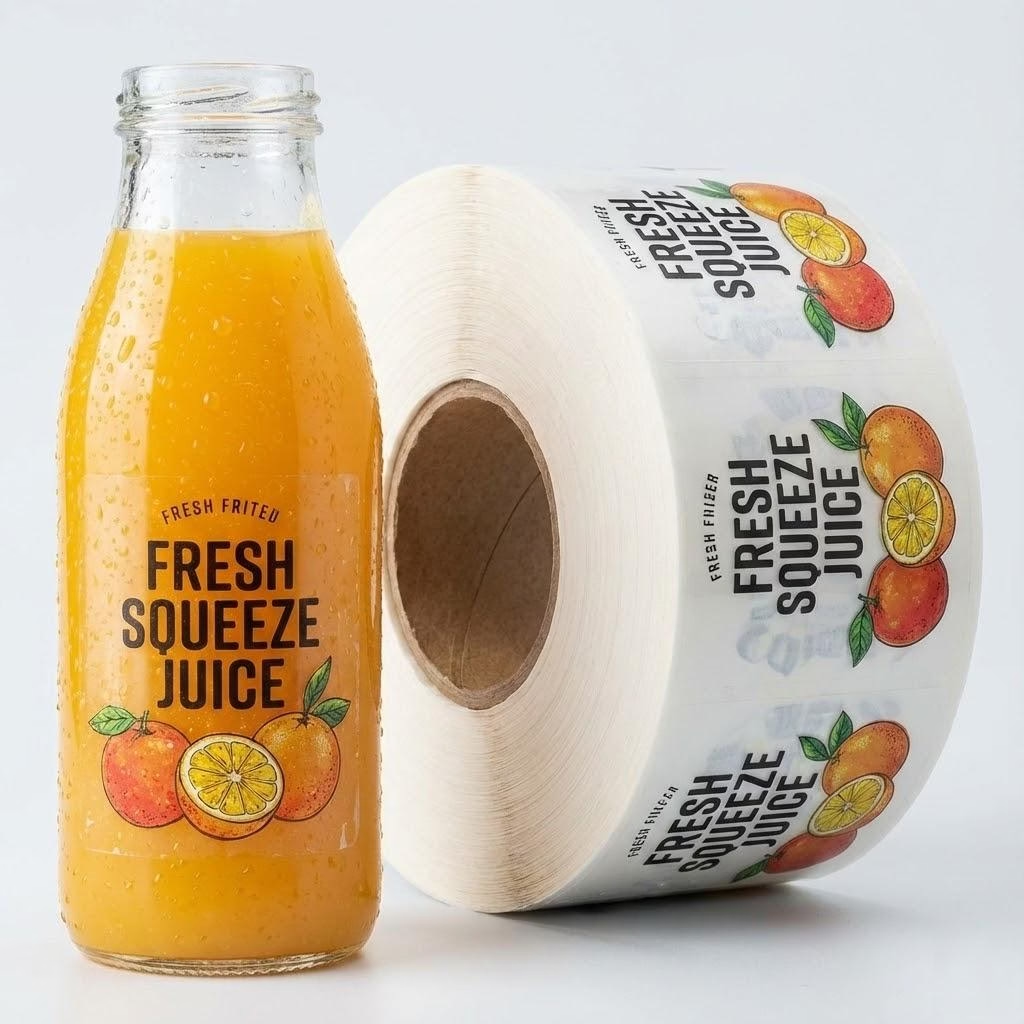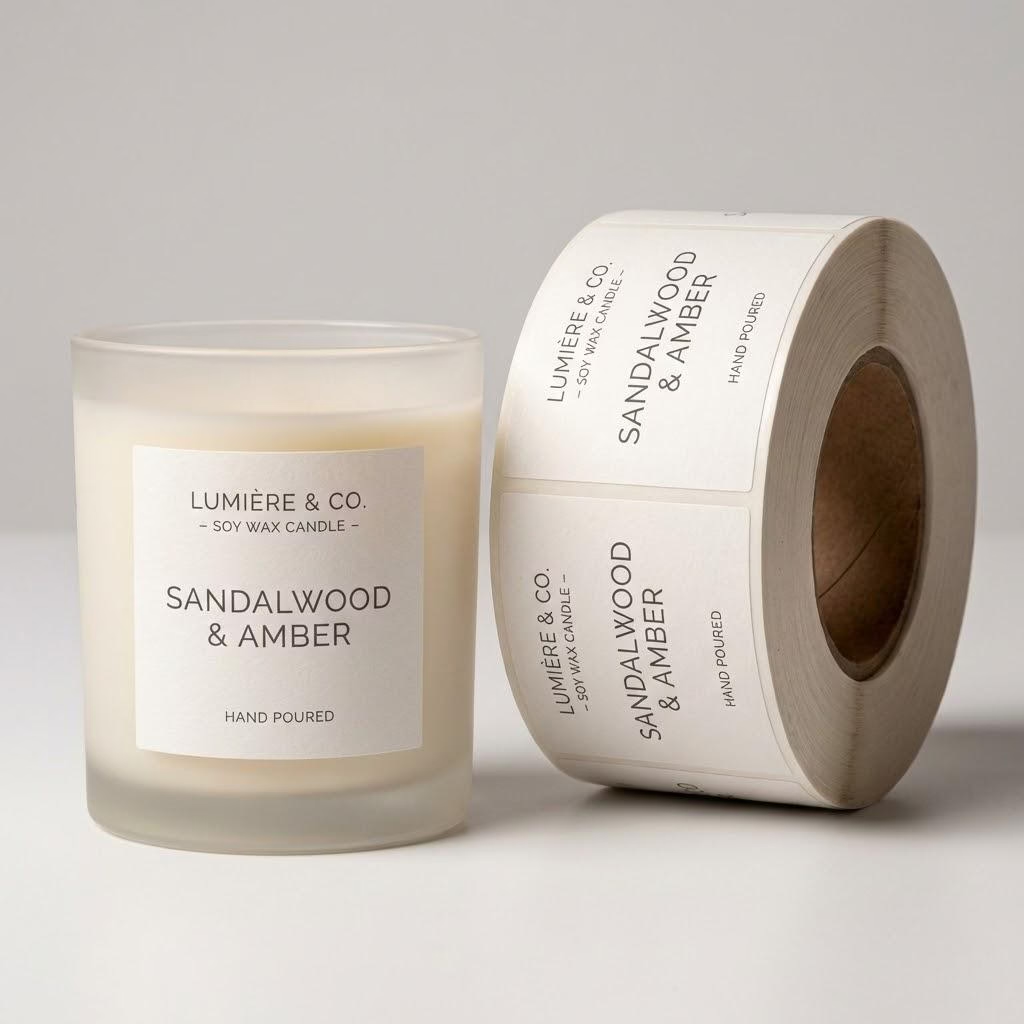
Selecting the wrong core size for your labeling operation is not just a minor technical oversight—it is a fast track to production downtime and wasted capital. Based on 18 years of technical expertise, we provide the industrial precision and cost transparency needed to ensure your rolls are perfectly calibrated for your machinery the moment they hit the factory floor.
Whether you choose a 1-inch vs. 3-inch core depends on your hardware and volume: 1-inch cores (25.4mm) are designed for low-volume desktop printers (e.g., Zebra ZD, Rollo), while 3-inch cores (76.2mm) are the industrial standard for high-speed auto-applicators and industrial workhorses (e.g., Zebra ZT series). The 3-inch format supports larger outer diameters (up to 12 inches), significantly reducing changeovers and maximizing production security for automated lines.
Beyond simple dimensions, achieving a 100% Machine-Ready supply chain requires mastering tension dynamics and moisture-proof packaging. Discover how our “Tight Inner, Loose Outer” winding model and rigid 76.2mm tolerance standards can save you 30% in total operational costs today.
Why “Standard” Is Not a Specification
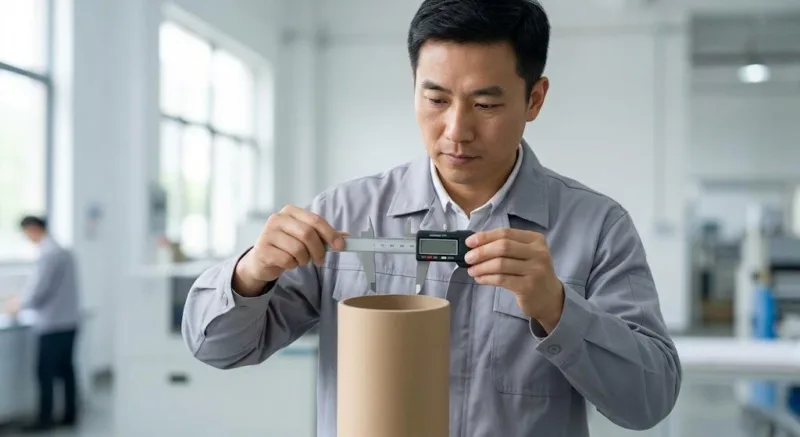
In the high-stakes world of global supply chain management, ambiguity is the enemy of efficiency. If your procurement team simply requests “rolls of labels” without defining the core engineering, you are essentially gambling with your OEE (Overall Equipment Effectiveness). At Label Printing China, we view the core not as a cardboard tube, but as the foundation of your Machine-Ready Label Manufacturing process.
Core Dimension & Performance Benchmarks
| Technical Metric | 1-Inch Core (25.4mm) | 3-Inch Core (76.2mm) |
|---|---|---|
| Primary Hardware | Desktop / Small Office | Industrial / Auto-Applicators |
| Max Outer Diameter | 4″ – 5″ (127mm) | 8″ – 12″ (304.8mm) |
| Winding Capacity | Low (Manual application) | High (Automated assembly) |
| Production Speed | < 150 labels per minute | 300+ labels per minute |
| Changeover Frequency | High (Every 1k-2k labels) | Low (Every 5k-15k+ labels) |
Quick Guide: If your priority is desktop agility for small offices, choose 1-inch cores; if you face high-speed automation demands, invest in 3-inch cores.
“Every time your line stops to change a roll, you aren’t just losing 3 minutes of labor; you are losing the momentum of your entire packaging ecosystem. Moving to 3-inch cores is the single most effective way to reclaim 75% of that lost time.” — Leo, Director.
Defending Against “Moisture Shock”
The most common failure in international label sourcing is treating the “3-inch” label core as a nominal value rather than a precision metric. If your factory in China doesn’t understand the physics of label material science, your 100% machine-ready goal is dead on arrival.
Cardboard is hygroscopic. In our extensive experience, we have identified a phenomenon known as moisture shock. During 35 days of sea freight, container humidity can spike to 90%, which causes standard cardboard cores to absorb moisture and undergo physical contraction.
A core manufactured at 76.0mm can shrink to 75.3mm. The result is that the roll will not fit onto your applicator’s 76mm air-expanding shaft. We enforce a manufacturing standard of 76.2mm $\pm 0.2mm$ and utilize vacuum-sealed polymer shrink-wrapping to lock dimensions at the point of origin.
Packaging machinery is only as reliable as the materials fed into it. A core that is out-of-tolerance by even 0.5mm can cause micro-stops that devastate your brand equity. This is why when Managing Different Labels Printers, consistency in the core’s physical properties is paramount.
Preventing “Adhesive Bleeding” in Industrial Rolls
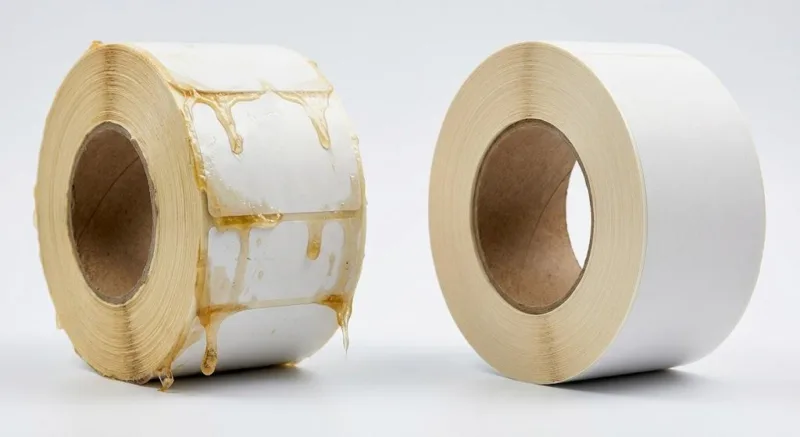
As you transition to 3-inch cores to support 8-inch or 12-inch Max OD rolls, you introduce a new variable: radial pressure. Industrial rolls are heavy, often exceeding 5kg per roll, and if the winding tension is uniform from the core to the outer edge, the weight of the outer layers exerts a crushing force on the labels closest to the core.
This pressure leads to adhesive bleeding (oozing), where the adhesive is physically squeezed out the sides. This sticky residue builds up on sensors, causing alarms and permanent damage to expensive printheads. It remains a primary factor in Why Your Labeler Keeps Jamming during high-speed production cycles.
Ready to Achieve Zero-Downtime Production?
Our technical audit ensures your 3-inch core rolls are perfectly calibrated for your specific applicator model. Eliminate adhesive oozing and core shrinkage before your next big run.
The Tension Gradient Model
At Label Printing China, our Master Printing Engineer utilizes a “Tight Inner, Loose Outer” model. We dynamically adjust the torque of our slitting machines: first, with high tension to ensure the roll doesn’t slip on the cardboard; second, with a linear reduction in torque as the roll diameter increases.
The result is zero oozing and perfectly flush side-walls. This specialized approach prevents the physical degradation of the material, ensuring that Strategies to Protect Your Label Budget are actually effective on the production floor.
Calculating OEE and Landed Costs
A 3-inch core isn’t just a physical component; it is a financial lever. To understand How to Calculate Label Landed Costs, you must look at the total throughput. A 3-inch core format reclamation can save nearly 2 hours of production time per shift, directly contributing to a 30% savings target in labor overhead.
When protecting your label budget, precision in roll diameter is key. We calculate your roll length relative to your applicator’s maximum capacity using the OD formula:
$OD = \sqrt{\frac{4 \times L \times T}{\pi} + ID^2}$, where $L$ is length, $T$ is thickness, and $ID$ is the inner diameter of 76.2mm.
Preparing Your PO for 100% Accuracy
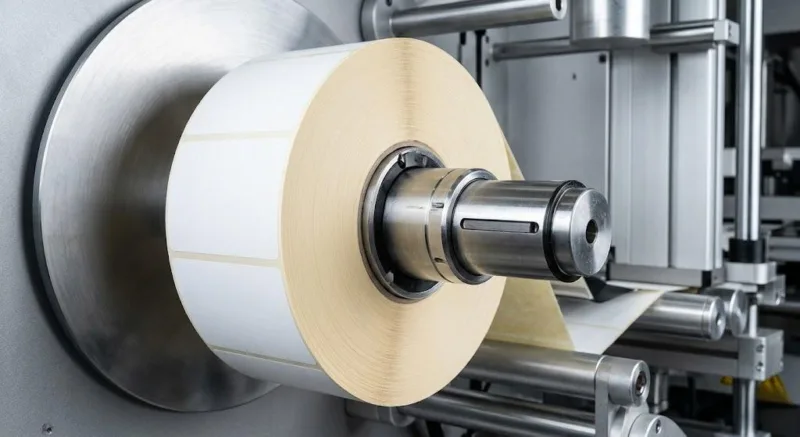
Before you sign off on your next Custom Roll Labels order, ensure your specifications address these 2026 industrial standards:
- Inner Diameter: Specified as 76.2mm (not just “3 inch”) to ensure precise machine fit.
- Max Outer Diameter: Confirmed to fit your machine’s safety housing and avoid mechanical interference.
- Unwind Direction: Selected from the correct #1-#8 directions to match your applicator’s sensor path.
- Core Material: High-density cardboard or ABS plastic, especially for beverage environments.
- Packaging: Vacuum-sealed with desiccant to prevent moisture-induced shrinkage and maintain ISPM-15 standards for international compliance.
Solving Your Industrial Labeling Jams
Can I use a 1-inch core roll in an industrial printer?
Not directly. Most industrial printers have spindles designed for 3-inch cores. While adapters exist, they often cause core slip during high-speed acceleration, leading to registration errors and wasted material.
Why are my labels peeling off the core?
This usually indicates an issue with the initial wrap tension. If the first three wraps are too loose, the entire roll will lose structural integrity, leading to flagging or peeling before the roll is fully utilized.
What is the best core for clear labels?
For the “No-Label Look,” we recommend plastic cores. Cardboard cores can generate dust that gets trapped under the clear film, resulting in visible white specs that ruin the luxury aesthetic.
Engineering Your Way to Save 30%
The choice between a 1-inch vs. 3-inch core is the foundation of your production line’s ROI. For small-scale manual application, 1-inch cores are a practical choice. However, for any brand aiming for retail scale, the 3-inch core is the only professional path to production security.
At Label Printing China, we eliminate the guesswork. From vetting the factory to final DDP delivery, we ensure every roll is a precision instrument. Protect your brand equity and your professional reputation today by ensuring your labels are machine-ready the moment they hit the floor.
The persistent problem of production downtime often stems from these invisible technical gaps. By bridging them with industrial precision, you transform a simple consumable into a competitive advantage. Every decision, from the core diameter to the winding tension, should be an intentional step toward 100% machine-ready operations.