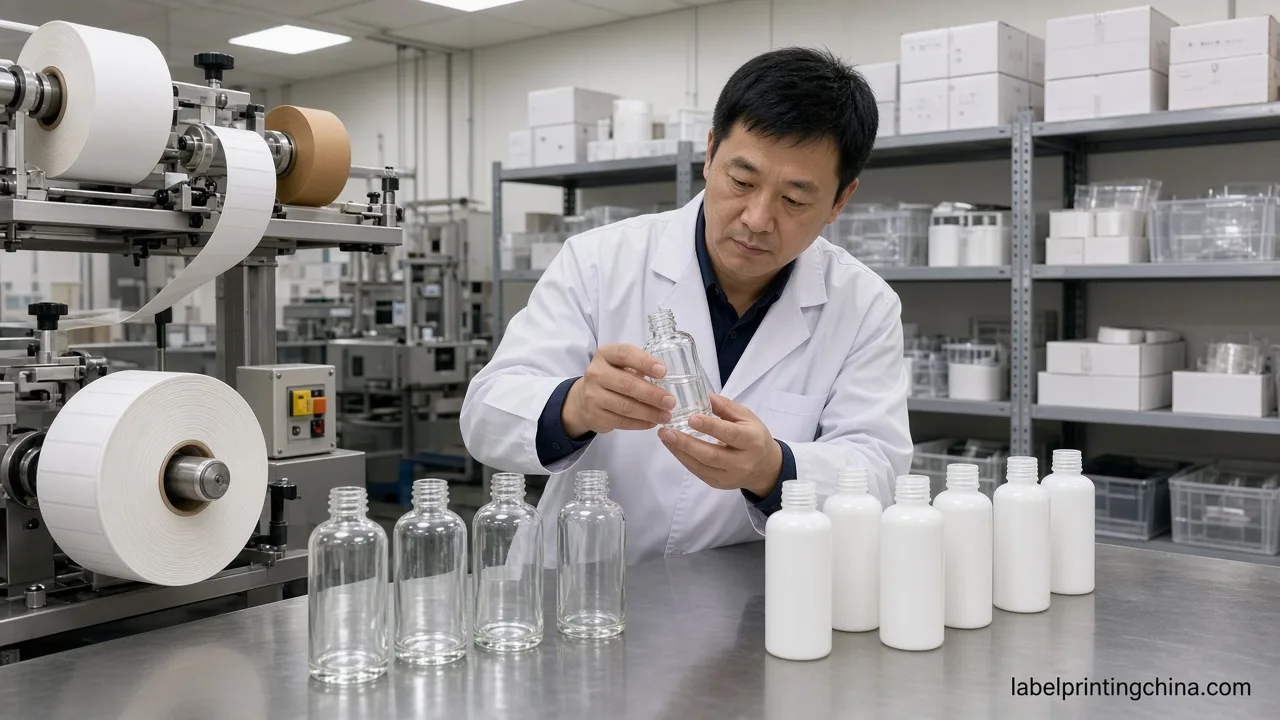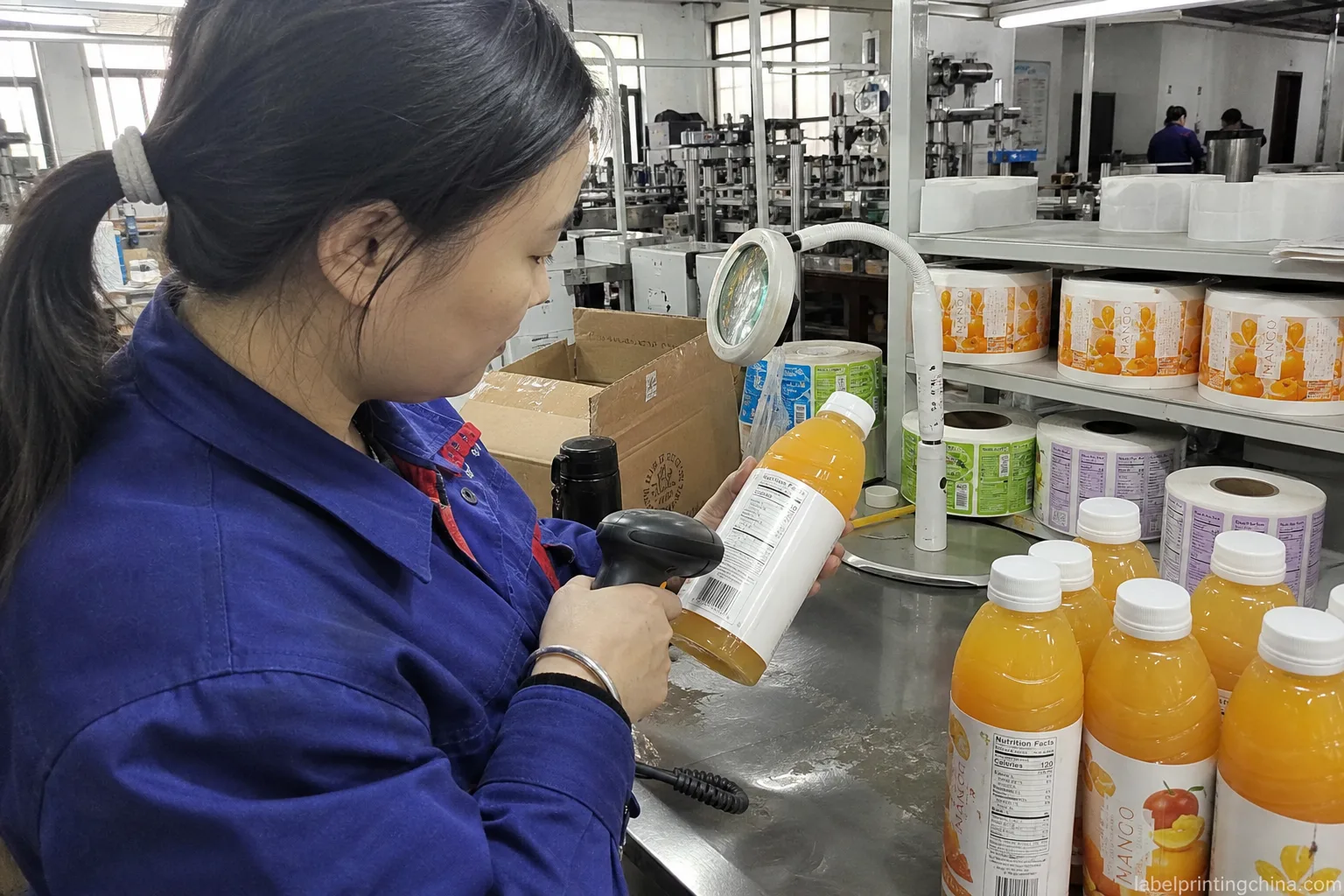
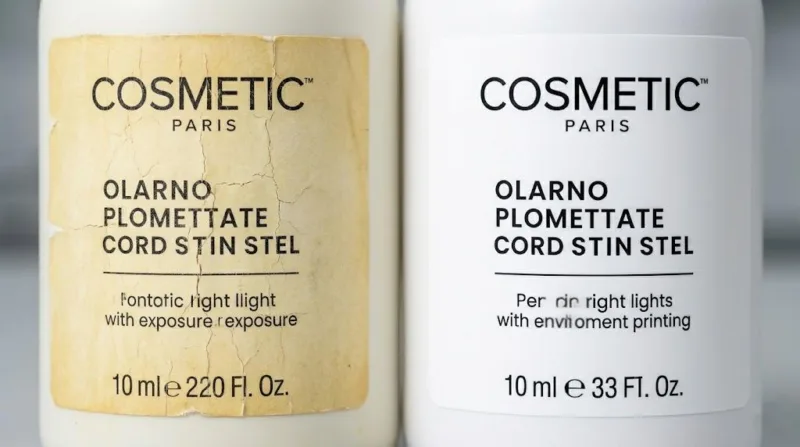
Are high-end boutique spotlights turning your premium packaging yellow and brittle? You are not alone, and the fix does not require paying a massive premium for thick outdoor-grade laminates.
To keep labels looking new under harsh retail lighting, replace standard dye inks with UV-resistant pigment inks. Then, apply a micro-thin clear varnish infused with Hindered Amine Light Stabilizers (HALS) to neutralize UV-A radiation from LED spotlights without adding heavy laminates.
Want the exact physical parameters to make this work? Read on to see how this simple chemical swap can save your factory from catastrophic machine downtimes and cut your packaging procurement costs by an immediate 30%.
Why High-End Boutique Lighting Destroys Standard Labels
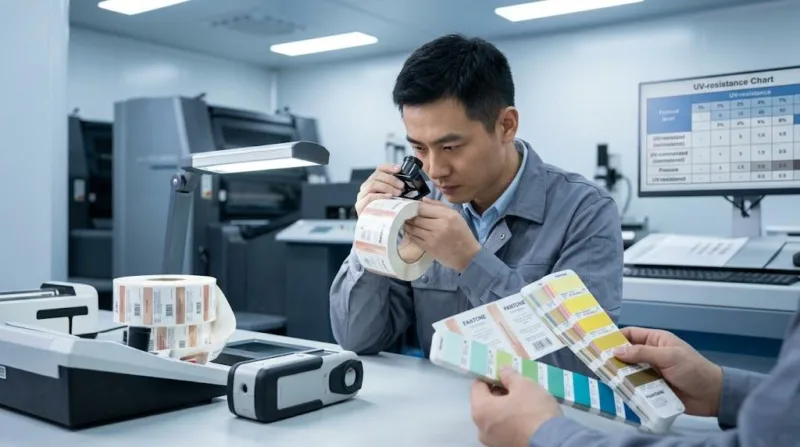
Most local distributors confuse outdoor weatherproofing with indoor retail environments, leading to fundamentally flawed packaging decisions. To solve the problem, you must first define the specific environmental stressor.
High-end boutiques do not use standard fluorescent tubes. To maximize visual merchandising, they utilize high-CRI (Color Rendering Index > 90) LED and halogen spotlights. These specific fixtures operate continuously and emit intense near-ultraviolet radiation (380-400nm) alongside high-energy short-wave blue light from just inches away from your product.
This specific light spectrum triggers aggressive photo-oxidation. It is not a matter of the label simply “getting dirty”—it is a violent chemical reaction occurring on the surface of your product.
“The degradation of packaging polymers and colorants under prolonged light exposure is driven by photo-oxidation. Ultraviolet radiation and high-energy visible light carry sufficient photon energy to cleave chemical bonds within the material’s molecular structure. This continuous photo-oxidative process is what fundamentally manifests as surface yellowing, loss of mechanical strength, and the fading of dyes.” — Dr. Anthony L. Andrady, Adjunct Professor of Chemical and Biomolecular Engineering, North Carolina State University.
Standard dye-based inks and untreated BOPP labels score a mere 1 to 3 on the Blue Wool Scale. This means their chemical bonds shatter within three to four weeks under halogen spotlights.
To survive boutique lighting without degradation, your packaging requires:
- A Blue Wool Scale Rating of 7 to 8: Ensuring no visible color shift for 18 to 24 months.
- QUV Accelerated Weathering Validation: 100 hours of specialized QUV testing mapped directly to 6 to 8 months of intense retail shelf exposure.
- Substrate Structural Integrity: Base materials that do not become brittle or shrink as photon energy attacks the polymer chains. This is particularly vital for UV-Proof Outdoor Labels which face even harsher conditions.
Why Thick “Fadeproof” Labels Jam Your Production Lines
The standard search engine advice—and the immediate reaction of most domestic print brokers—dictates applying a heavy-duty UV laminate over your substrate. This is a lethal trap for your supply chain.
Solving a chemical problem (fading) by introducing a blunt physical barrier (thick plastic) ignores the reality of modern manufacturing. Your labels are not just static stickers; they are dynamic components in an automated assembly line.
In late 2024, an East Coast fragrance brand suffered a catastrophic production halt because they followed generic internet advice. To combat halogen fading, their domestic supplier applied a rigid 3-mil outdoor-grade laminate to their existing BOPP material.
The labels stopped yellowing, but the disaster transferred to the factory floor. The added thickness radically altered the material’s Flexural Modulus (its resistance to bending). When applied by a 120-bottle-per-minute rotary labeling machine to small-radius glass bottles, the stiff material caused immediate edge flagging.
Worse, the supplier failed to recalibrate the release liner tension. The heavy laminate disrupted the peel resistance. The web snapped entirely at the dispensing plate every 40 minutes, and the production line was forced to halt for three days, generating penalty fees that vastly exceeded the entire annual label budget.
Based on our extensive experience with global supply chains, resolving this requires industrial precision. When you alter the topcoat, you must simultaneously re-engineer the entire physical structure of the roll. This is why we emphasize Machine-Ready Label Manufacturing as a non-negotiable standard.
Critical Physical Parameters for Automated Labeling
| Crucial Physical Parameter | The “Thick Laminate” Trap | The 100% Machine-Ready Standard | Operational Impact |
|---|---|---|---|
| Die-Cutting Tolerance | Varies; often scores liner. | Strictly locked to ±0.1mm | Prevents oozing and snapping. |
| Release Force | Uncalibrated; high tension. | Calibrated to 15-25g/inch | Ensures smooth dispensing. |
| Flexural Modulus | Rigid; “memory effect” lifting. | Engineered Pliability | Eliminates edge flagging. |
Quick Guide: If your priority is long-term shelf aesthetics, choose pigment inks; if you face line stoppages, invest in calibrated release tension.
The ultimate takeaway for procurement: Never authorize a chemical coating change without securing a guarantee on physical dispensing parameters. Incorrect unwind directions or thickness can cost you thousands in lost OEE.
The Master Printing Engineer’s Guide to Ink Chemistry
You do not need rigid, over-engineered armor to protect your brand identity. You need intelligent chemistry. Our Master Printing Engineers tackle high-frequency retail spectrums at the formulation level, eliminating the need for bulk.
Step 1: The Eradication of Dye Inks
Standard digital and flexographic printers default to dye inks because they are cheap and offer a wide color gamut. However, dye molecules are microscopic and highly susceptible to bond cleavage from UV-A light.
We exclusively deploy Industrial Pigment Inks for retail-ready packaging. Pigment particles are physically larger and feature robust crystalline structures. Instead of absorbing destructive photon energy, they scatter and reflect it. This single switch dramatically increases lightfastness.
This is a critical step when managing Pantone batch variance.
Step 2: Deploying HALS (Hindered Amine Light Stabilizers)
For environments with extreme halogen exposure, standard clear coats fail. Instead of relying on thick physical barriers, we utilize advanced chemical engineering. The most effective weapon against indoor photo-oxidation is a micro-thin coating infused with Hindered Amine Light Stabilizers (HALS).
When retail lighting hits the label, it creates destructive “free radicals” that eat away at the ink. HALS molecules do not block light; instead, they actively hunt down and neutralize these free radicals before they can degrade the pigments.
Because this is a chemical reaction rather than a physical barrier, a 1.2-mil HALS-infused varnish or lamination provides the exact same fading protection as a bulky 3-mil outdoor laminate. You achieve complete optical clarity, total color fastness, and zero interference with your automated labeling machines.
Ready to Achieve 100% Machine-Ready Perfection?
Don’t let your labels yellow on the shelf or jam on the line. Get a factory-direct technical audit to ensure your packaging is engineered for both aesthetics and automation.
Stop Paying the “45% Fade-Proof Tax”
American packaging buyers are frequently trapped in a cycle of over-engineering. Local distributors weaponize your fear of brand devaluation. They will gladly sell you five-year weatherproof vinyl designed for car bumpers to wrap a seasonal cosmetic product that will be discarded in four months.
This results in a hidden “fade-proof tax” that inflates your unit costs. True cost analysis requires strictly aligning material specifications with the actual lifecycle of your product.
Lifecycle-Based Material Selection Matrix
| Product Category | The Trap (Avoid) | The Factory Solution | Financial Impact |
|---|---|---|---|
| High-Turnover FMCG | 3-mil Vinyl + Heavy Laminate | BOPP + Pigment + UV Varnish | Maximum protection, minimal cost. |
| Luxury Skincare | Outdoor Film + High Markup | White PET + HALS Varnish | Perfect white-point; 30% savings. |
| Slow-Moving Spirits | Broker-Sourced Over-spec | Optical-Grade PET + Pigment | Flawless 24-month shelf life. |
Quick Guide: If your product has a shelf life under 6 months, skip the expensive lamination and opt for HALS-infused varnish to save up to 25%.
When you report to your CFO, you must prove that shifting to a specialized China manufacturing partner is not just about a cheaper unit price—it is a systemic reduction in the Landed Cost.
The real math of supply chain optimization looks like this: TCO = (Direct Unit Price + DDP Logistics) + (Risk of Machine Downtime × Hourly Factory Burn Rate) + (Defective Label Waste). By stripping out redundant material specifications and managing the logistics directly, we drive the right side of that equation down to zero.
The Ultimate Supplier Audit Checklist for Anti-Yellowing Labels
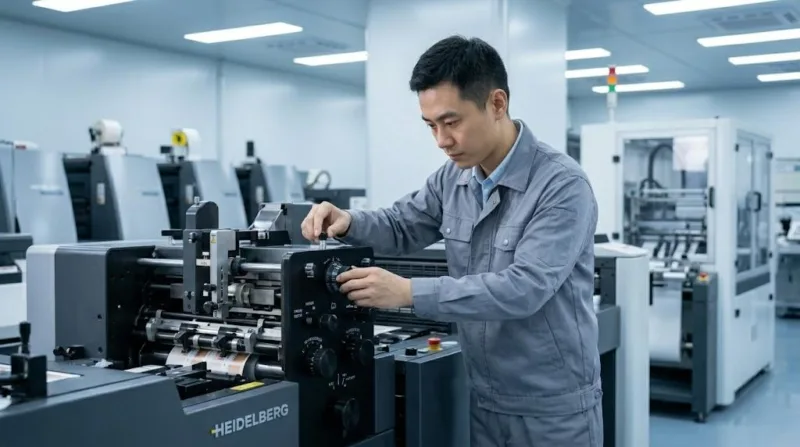
As a senior procurement manager, your job is to mitigate risk. You cannot afford to take a sales rep’s word that a label is “fade-proof.” To protect your brand equity, force your vendors to answer these specific engineering questions.
If they stumble on any of these, they are a red flag:
- The Spectrum Test: “Can you provide QUV accelerated weathering test data specifically calibrated for high-CRI retail LED and halogen spectrums?”
- The Die-Cut Guarantee: “Will you explicitly guarantee in writing that your rotary die-cutting depth will not score the silicone liner?”
- The Applicator Audit: “Before quoting, what data do you need regarding our facility’s 300+ BPM PET vs Glassine liner requirements?”
If a supplier provides a quote without asking you about your labeling machinery, they are simply selling you tape. They are not manufacturing industrial packaging.
Seamless Global Delivery (DDP) With Zero Friction
Securing high-authority industrial manufacturing should never introduce logistics anxiety or hidden freight costs. Upgrading your labels to defeat harsh retail lighting requires complete supply chain certainty.
This process begins with rigorous technical alignment—auditing your current materials and testing tension thresholds against your facility’s specific machinery. It concludes with seamless DDP (Delivered Duty Paid) global shipping. All customs clearances, import tariffs, and trans-Pacific freight logistics are managed entirely on our end. You receive pristine, tension-tested inventory landed directly on your facility floor.
Do not let boutique lighting ruin your brand equity, and do not let thick, generic laminates destroy your production efficiency. Transition to a strategic manufacturing partner that understands the chemistry of light and the physics of automation.