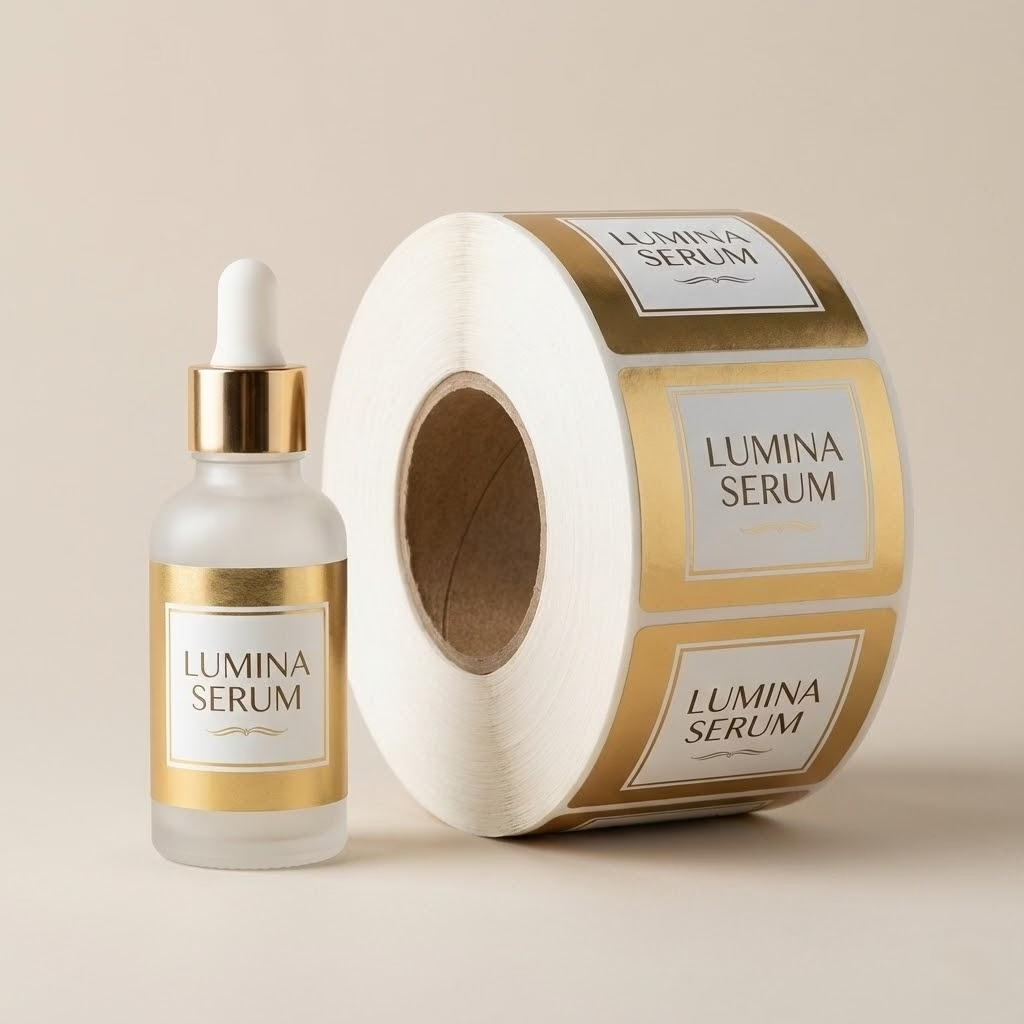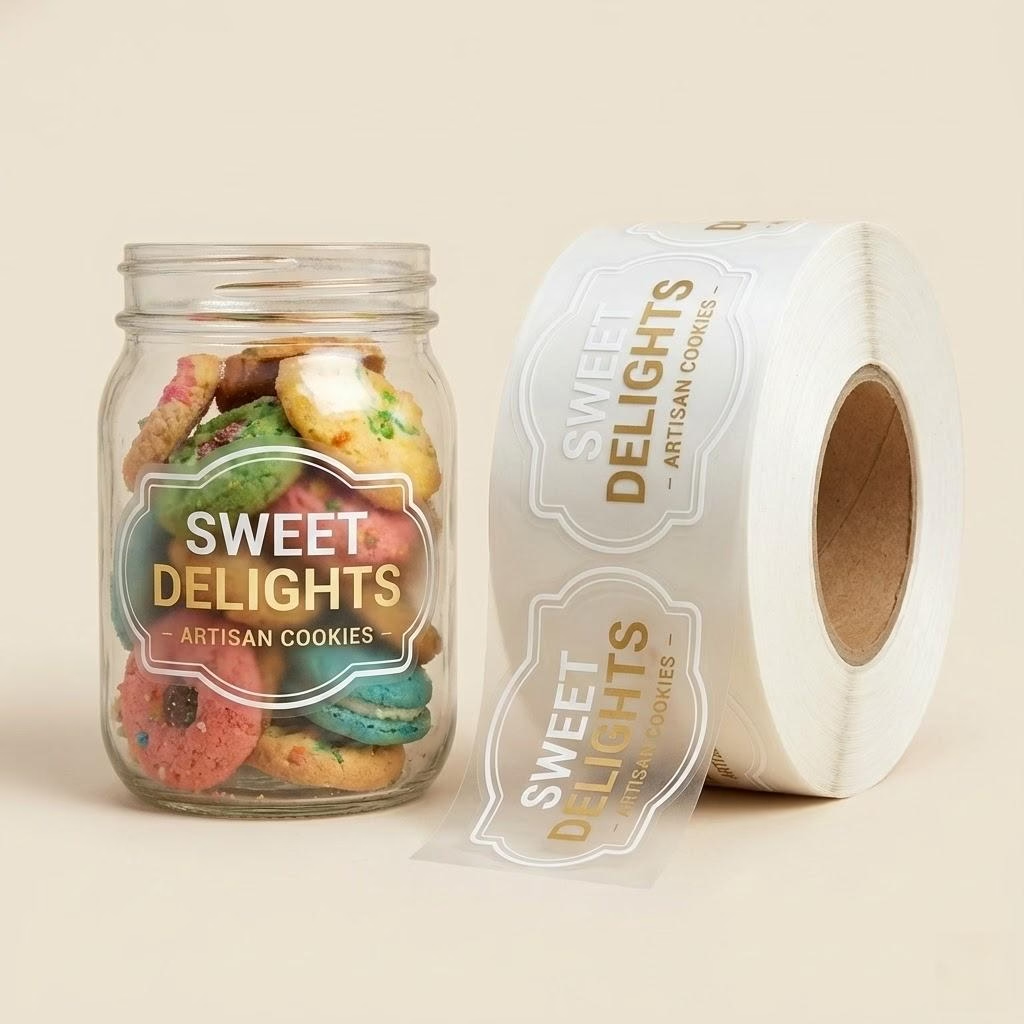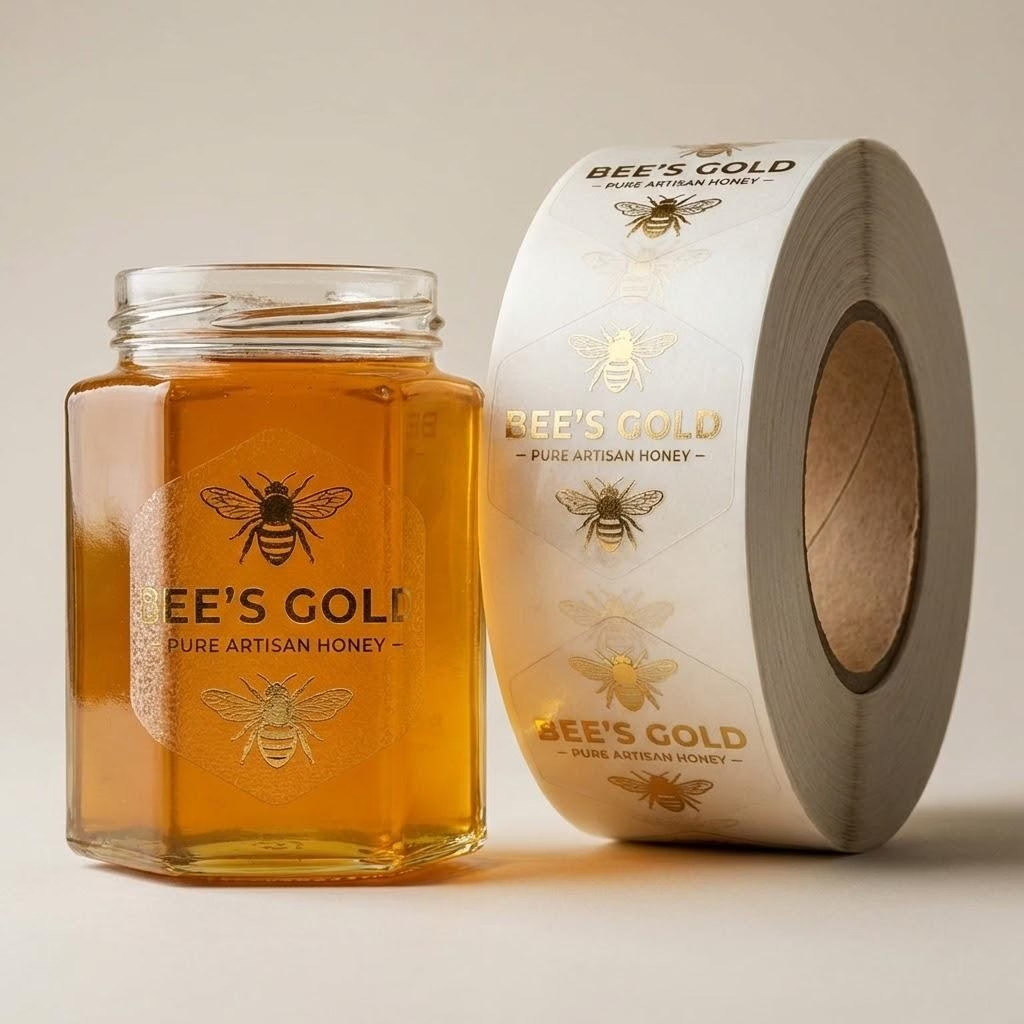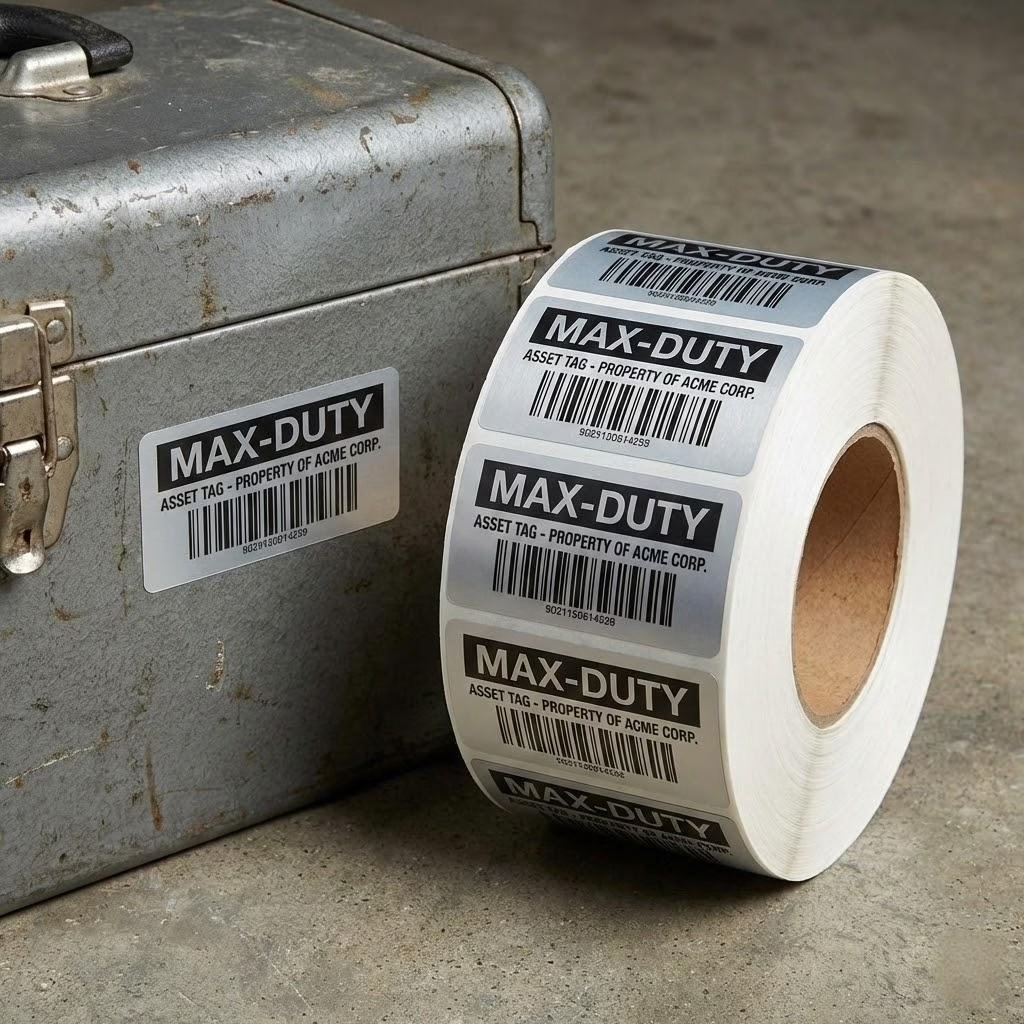
Choosing between digital and physical proofs can make or break your custom bulk labels order. In this guide, I’ll show you exactly how to navigate the prepress workflow to eliminate costly color shifts and guarantee zero-defect production.
Digital proofing uses electronic PDF files to verify layout, text accuracy, and barcode placement on a computer screen. Physical proofing involves printing actual CMYK ink on your chosen production substrate to guarantee accurate color matching, tactile finishes, and physical die-cut tolerances.
Want to know the exact hybrid verification protocol top procurement managers use to eliminate manufacturing risks? Keep reading to discover the hidden substrate traps that digital screens completely miss.
Why Digital Proofing is Only Half the Job
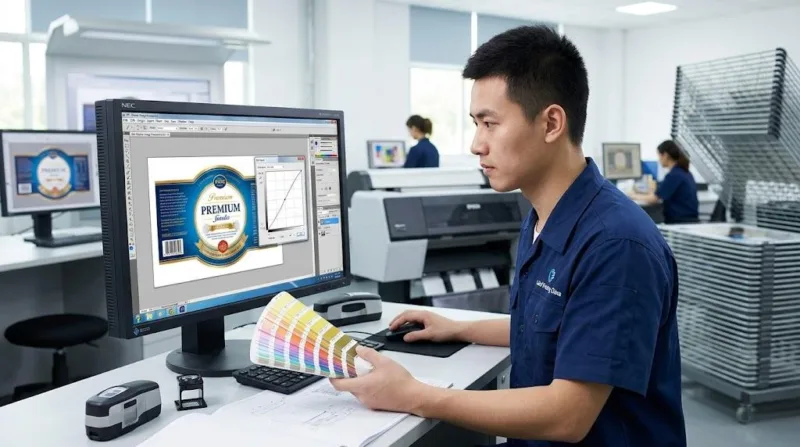
Digital proofs—often referred to within the prepress workflow as soft proofs or PDF proofs—are strictly utility tools. When a supplier sends you a digital file, it has typically passed through their RIP (Raster Image Processor) software.
At this juncture, your procurement and design teams should be focused entirely on structural and semantic verification.
What Digital Proofs Are Actually Built For:
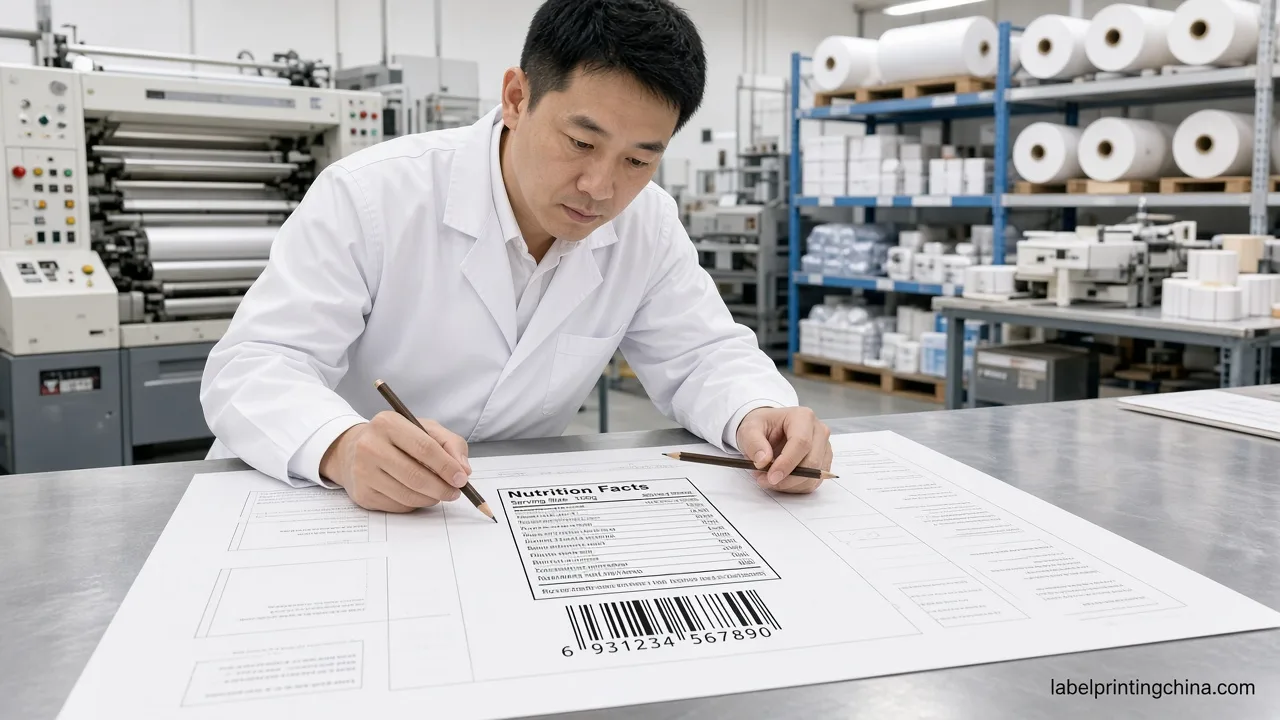
- Typographical Audits: Catching spelling errors, verifying ingredient lists, and ensuring regulatory compliance text is perfectly legible.
- Barcode Verification: Confirming quiet zones and ensuring UPC/EAN scan-ability.
- Mechanical Alignment: Checking that artwork bleed margins align perfectly with the vector die-lines.
However, utilizing a backlit digital file to approve final color on a bulk label order is a critical operational error. Your monitor emits light in RGB.
For stamped whisky gold, approve metal on stock under store light using our whisky foil proofing guide.
For cold wet beverage packs, fold color, condensation, barcode, and roll checks into our beverage label approval checklist.
The flexographic or industrial digital printing press applies physical ink layers in CMYK, spot Pantone (PMS) colors, or expanded gamut formats.
This mechanical translation involves dot gain, ink opacity, and drying characteristics—key label color variance factors—that a screen simply cannot simulate.
The Technical Disconnect: ΔE (Delta E) Variance
According to strict color management standards, a visually acceptable brand color match requires a ΔE variance of less than 2.0. No office monitor—even a high-end, color-calibrated display—can guarantee that tolerance against physical ink absorbing into a specialized paper stock. Approving a soft proof for color verification strips your procurement team of any contractual leverage if the bulk delivery arrives looking muddy, washed out, or entirely misaligned with your brand identity.
More importantly, digital proofing completely ignores substrate interference. A PDF background is pure, untextured, illuminated white. If your custom bulk labels are being manufactured on uncoated kraft paper, metallic BOPP, or a textured estate face stock, the base material will fundamentally alter the ink’s final chromatic appearance.
The Non-Negotiable Reality Check
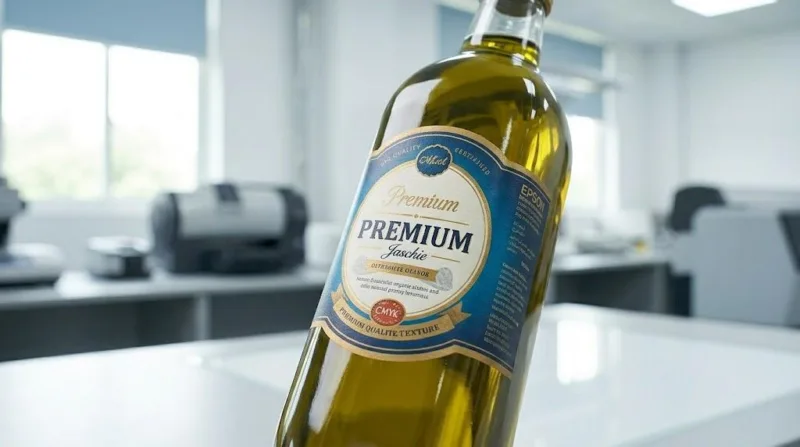
To secure your supply chain, physical proofing—specifically a press proof or a calibrated hard proof produced on the actual production substrate—must be your definitive standard for bulk approval. This is where theoretical design meetsphysical manufacturing constraints.
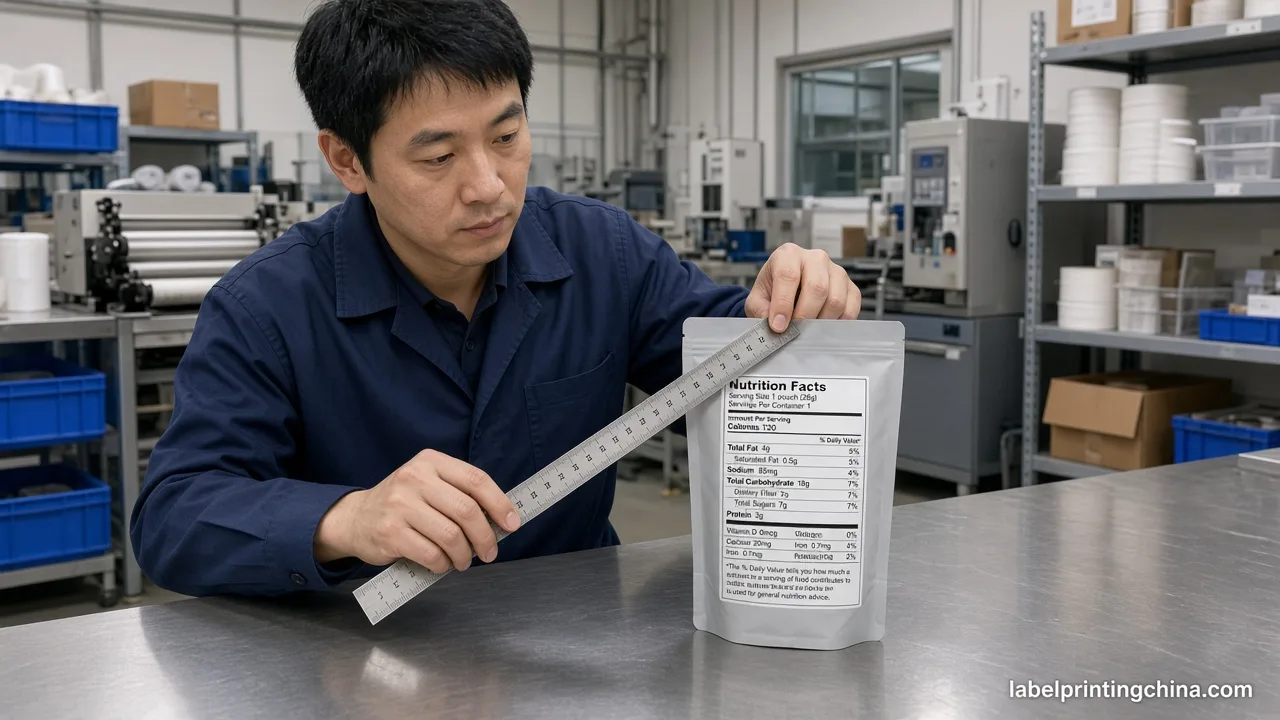
A physical proof is the only mechanism that allows your team to evaluate tactile finishes, spot UV varnish registration, metallic foil flaking, and the precise mechanical tolerances of your die-cuts.
REAL EXPERIENCE: The 80gsm Substrate Trap
The most catastrophic procurement failures occur when buyers treat paper weight (GSM) as the sole physical variable. Recently, we audited a failed project from a brand that bypassed physical press proofs.
They approved a high-res inkjet hard proof, verified the 80gsm weight, but completely ignored the paper’s grain direction and the factory’s ± 0.1mm die-cutting tolerance.
Because the paper grain on the bulk run was oriented parallel to the curve of their cylindrical bottles, the labels “flagged” (peeled away at the edges) within 48 hours of application. A digital file cannot simulate fiber memory or material stiffness.
A true physical press proof exposes this structural flaw immediately, allowing you to rotate the die-cut orientation before mass production begins.
Ready to Eliminate Color Risk?
Avoid costly recalls by requesting a substrate-accurate physical proof. Our team ensures your labels are 100% Machine-Ready before the mass production starts.
Digital vs. Physical Verification
| Verification Target | Digital Proof Capability | Physical Proof Capability | Risk if Bypassed |
|---|---|---|---|
| Copy & Layout Accuracy | Immediate & Exact | Exact | Low (Can be caught on screen) |
| Die-Line & Bleed | Theoretical | Exact (± 0.1mm verified) | High (Artwork cut off) |
| Color Accuracy (ΔE) | Unreliable (RGB Emitted) | Contractual Match (Ink on Substrate) | Severe (Brand identity failure) |
| Substrate Opacity | Impossible to judge | Tangible & Testable | High (Bottles showing through label) |
| Tactile Finishes (Emboss/Foil) | Cannot simulate | Fully verifiable | Moderate (Poor shelf appeal) |
Environmental & Supply Chain Realities (The Invisible Variables)
Beyond aesthetics, physical proofing is fundamentally about functional survival. If your custom labels require specific environmental compliance—such as UV-resistant inks for outdoor exposure, cryogenic adhesives for frozen food, or wash-off adhesives for strict PET recycling compliance—a physical prototype is the only way to conduct real-world stress tests.
You simply cannot test adhesion strength, scuff resistance, or true environmental degradation on a PDF.
“Inconsistent color matching and material failure across different print runs remain the primary drivers of packaging waste and supply chain delays.”
— Smithers, Global Authority on Packaging, Paper, and Print Industry Data.Note: This metric drops to near zero when rigorous physical sampling protocols are mandated at the procurement level.
Why Bypassing Physical Proofs is a “False Economy”
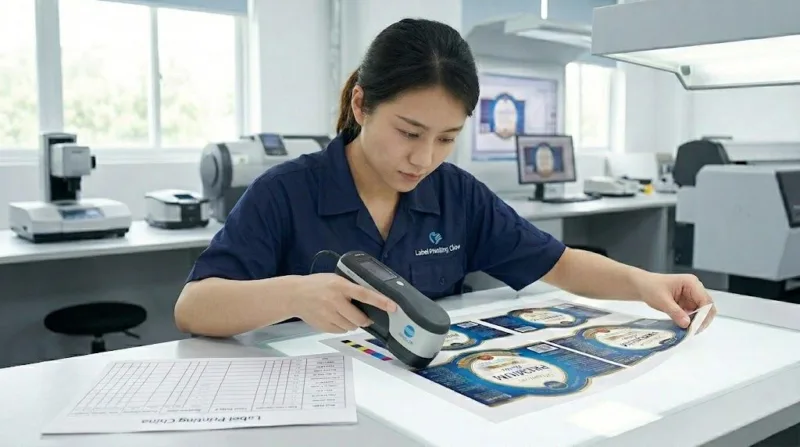
For US-based buyers managing aggressive retail rollout windows, lead-time compression is the primary reason physical proofs are dangerously bypassed. A buyer will skip the physical proof to save $150 and shave three days off the transit time.
This is a classic false economy. You must proactively engineer your macro supply chain schedule to absorb a mandatory 5-to-7-day window strictly forphysical color and material validation.
Cost-Risk Analysis: The True Price of Speed
| Scenario | Upfront Cost | Time Investment | Potential Financial Liability |
|---|---|---|---|
| Digital Proof Only | $0 | 24 Hours | $15,000+ (Full inventory scrap, missed launch, relabeling labor) |
| Physical Press Proof | $100 – $300 | 5 – 7 Days | $0 (Liability remains with the manufacturer) |
If you skip the physical verification step to expedite a delivery, you immediately transfer the financial liability for any color shifts, adhesive failures, or prepress anomalies from the manufacturer directly onto your own balance sheet.
Demanding a physical proof shifts the liability squarely back onto the printer. It serves as an ironclad insurance policy for your bulk label order.
Your 4-Step Action Plan
Rather than viewing the process as an either-or proposition, sophisticated procurement teams implement a strict hybrid protocol. This strategy leverages the speed of digital iterations while retaining the absolute liability protection of physical sampling.
Implement this standard operating procedure (SOP) for your next vendor:
- Step 1: Execute Digital Iterations. Use digital proofs exclusively during the preliminary prepress phases. Iterate your layout, verify barcode scan-ability, and finalize regulatory copy entirely via PDF. Keep turnaround times tight here.
- Step 2: Freeze the Artwork. Once the internal stakeholders (Marketing, Legal, Procurement) approve the digital file, freeze the artwork. No further structural changes are permitted.
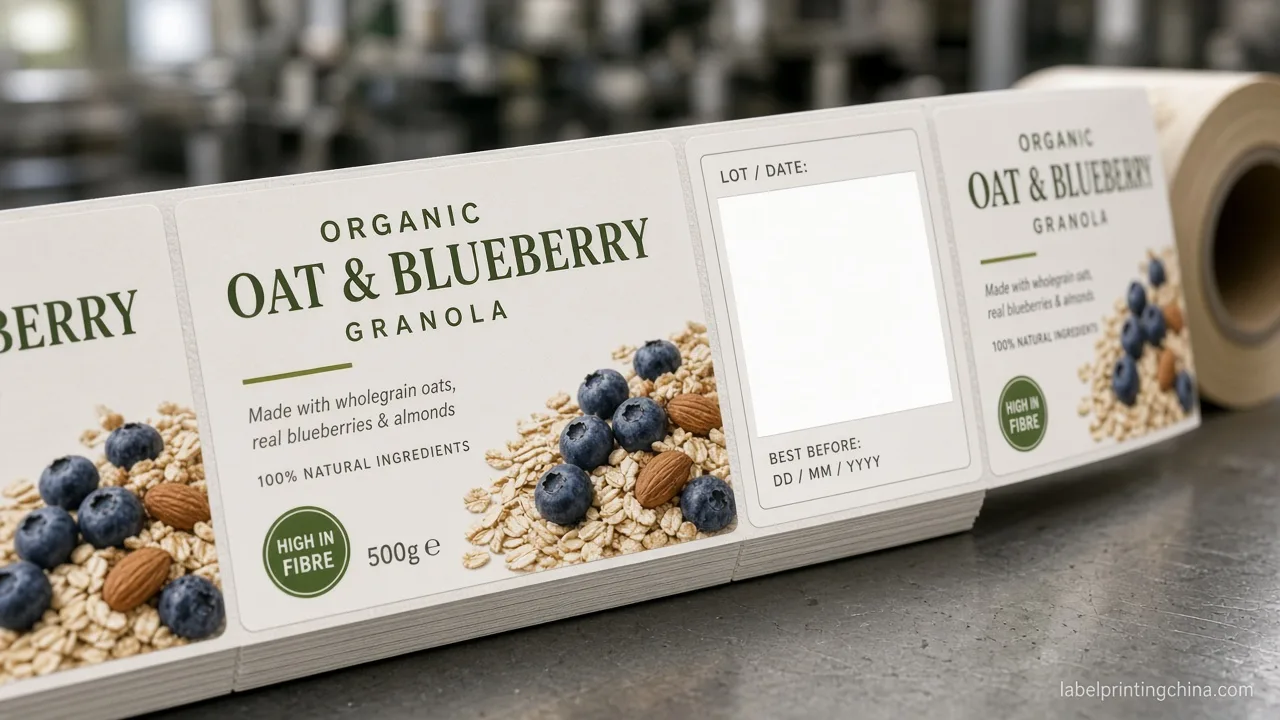
- Step 3: Mandate the Substrate-Specific Hard Proof. Require a physical proof printed on the exact BOPP, Estate Paper, or Kraft material specified in your PO. Do not accept a proof printed on generic glossy photo paper.
- Step 4: Conduct Real-World Stress Tests. Once the physical proof arrives, do not just look at it under fluorescent office lights. Apply the proof to your actual physical product (bottle, jar, or box). Test the adhesive memory. Check for edge flagging. Evaluate the ΔE color match under natural sunlight and retail LED lighting.
Final Verdict:
Procurement is not just about negotiating unit prices; it is about mitigating risk. By understanding the mechanical limitations of digital displays and enforcing strict physical proofing standards, you permanently insulate your budget against costly reprints.
Do not let a glowing screen dictate the reality of physical manufacturing. Establish your hybrid verification protocol, demand substrate-accurate physical proofs, and guarantee that your custom bulk labels arrive exactly as engineered.