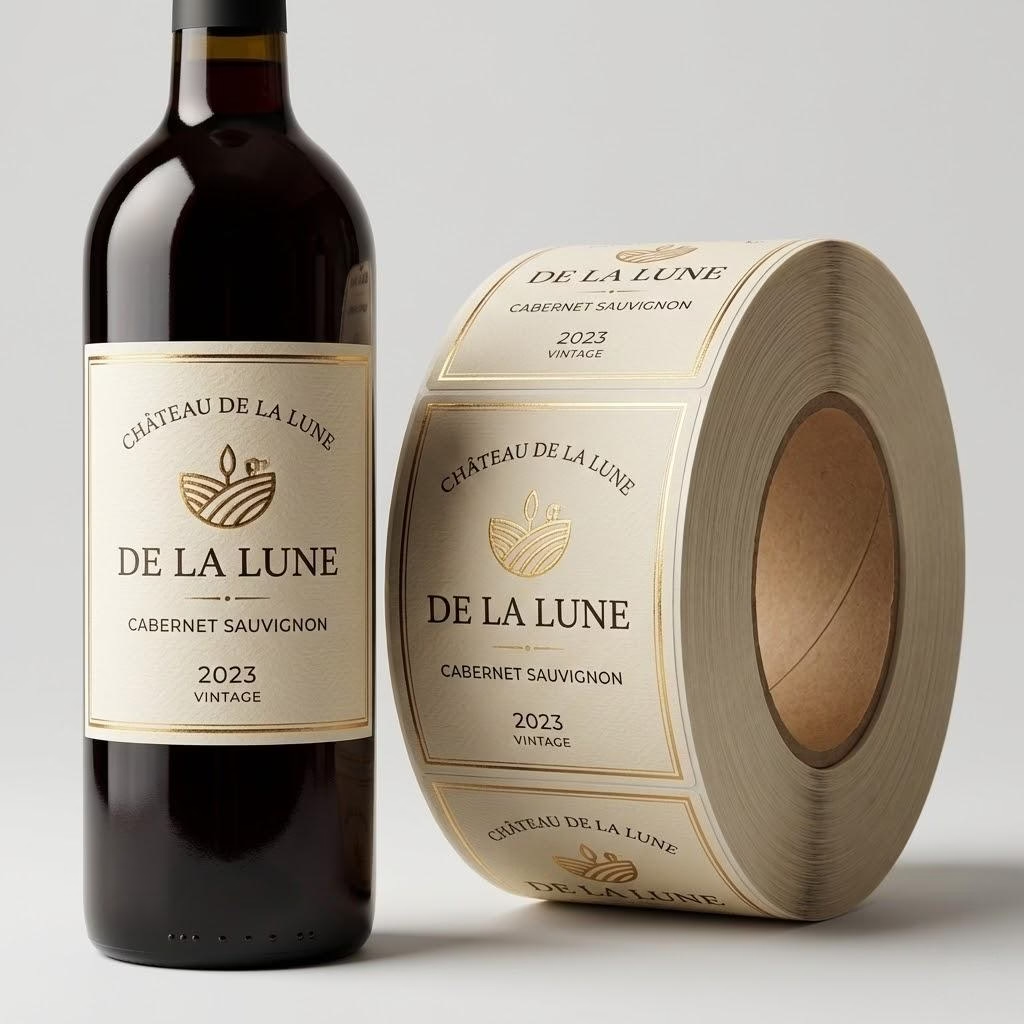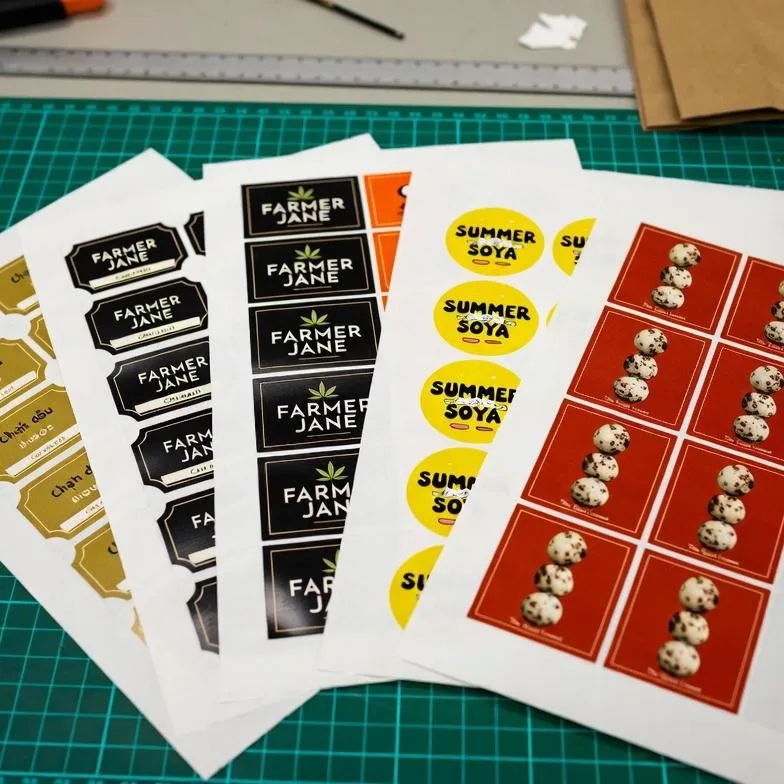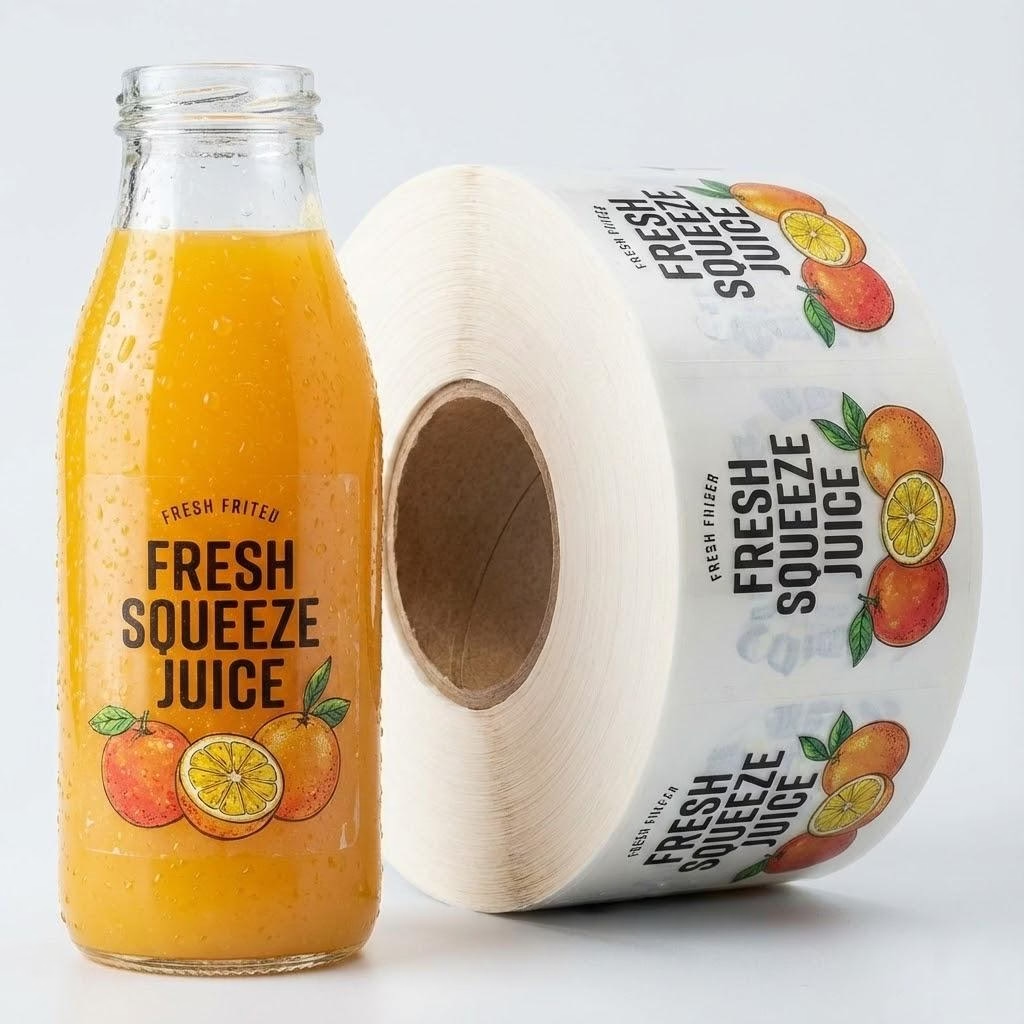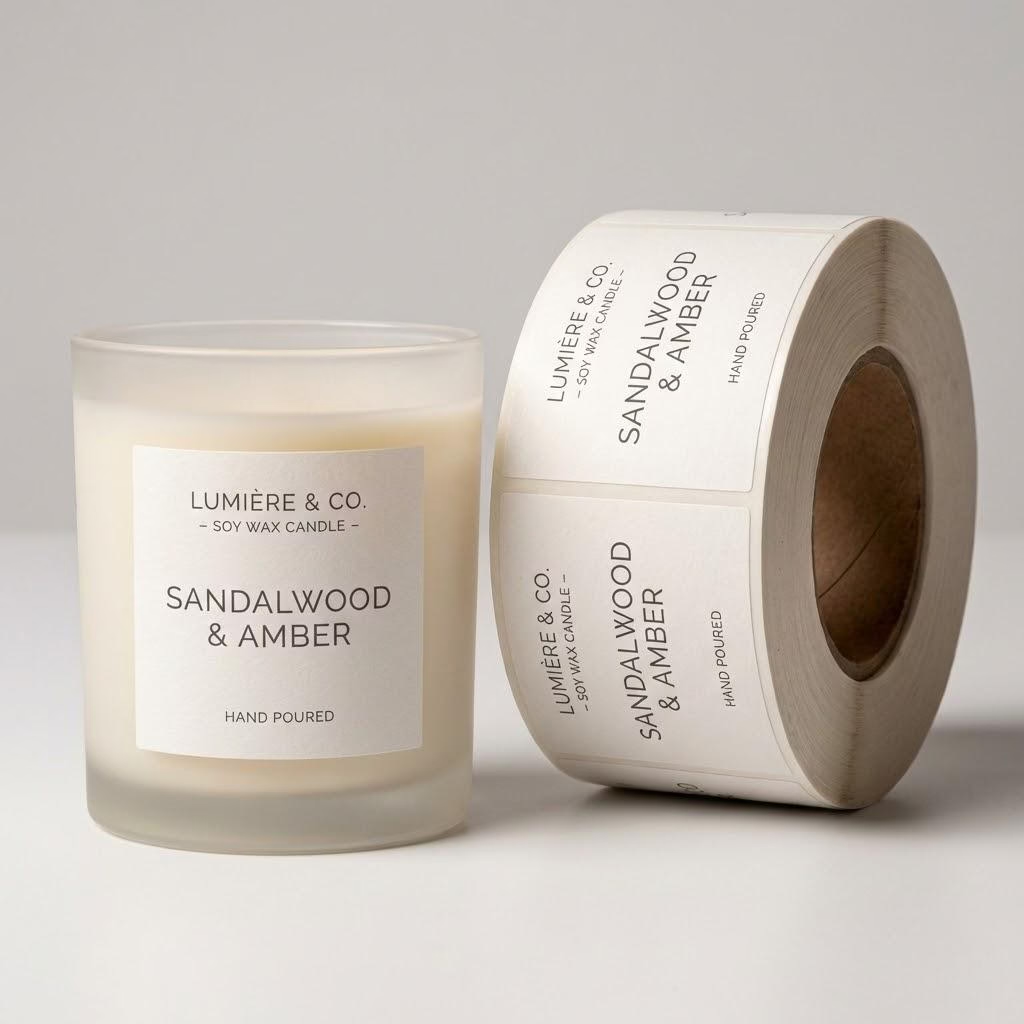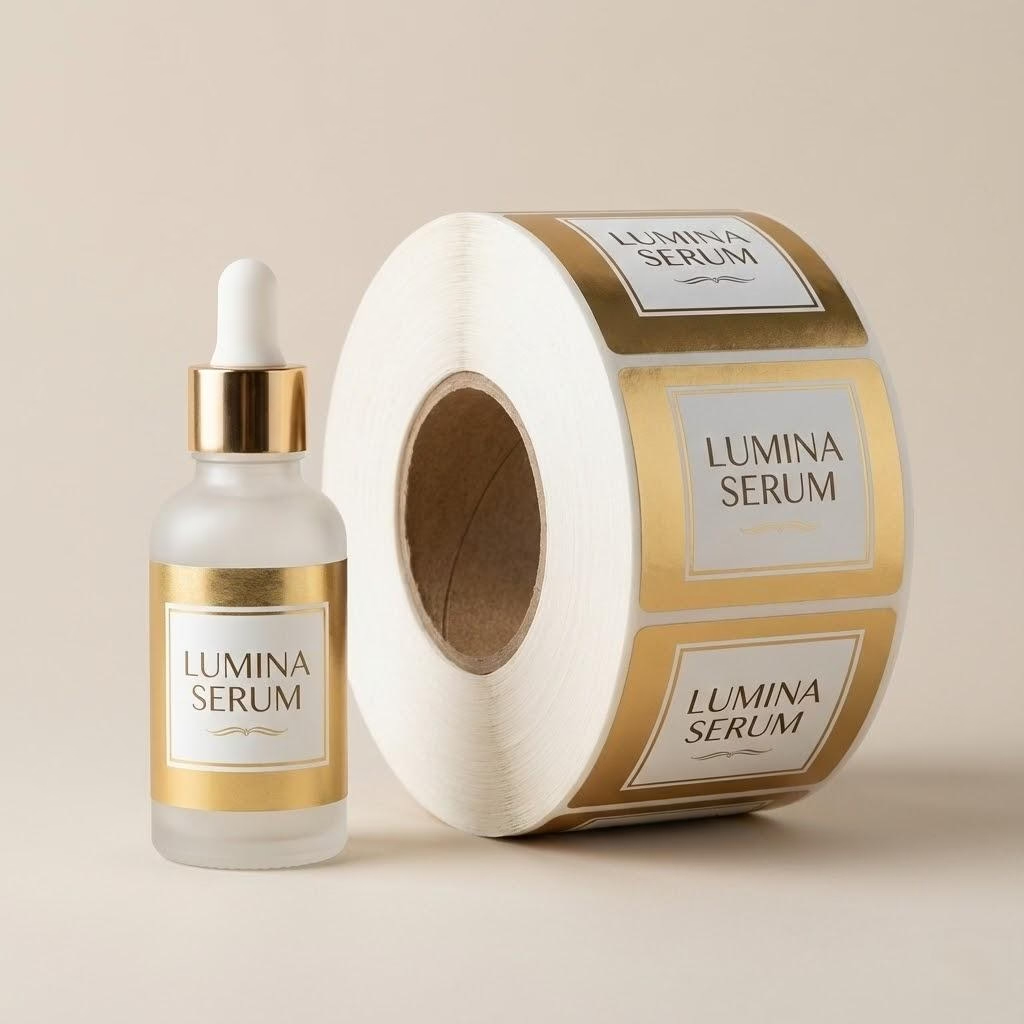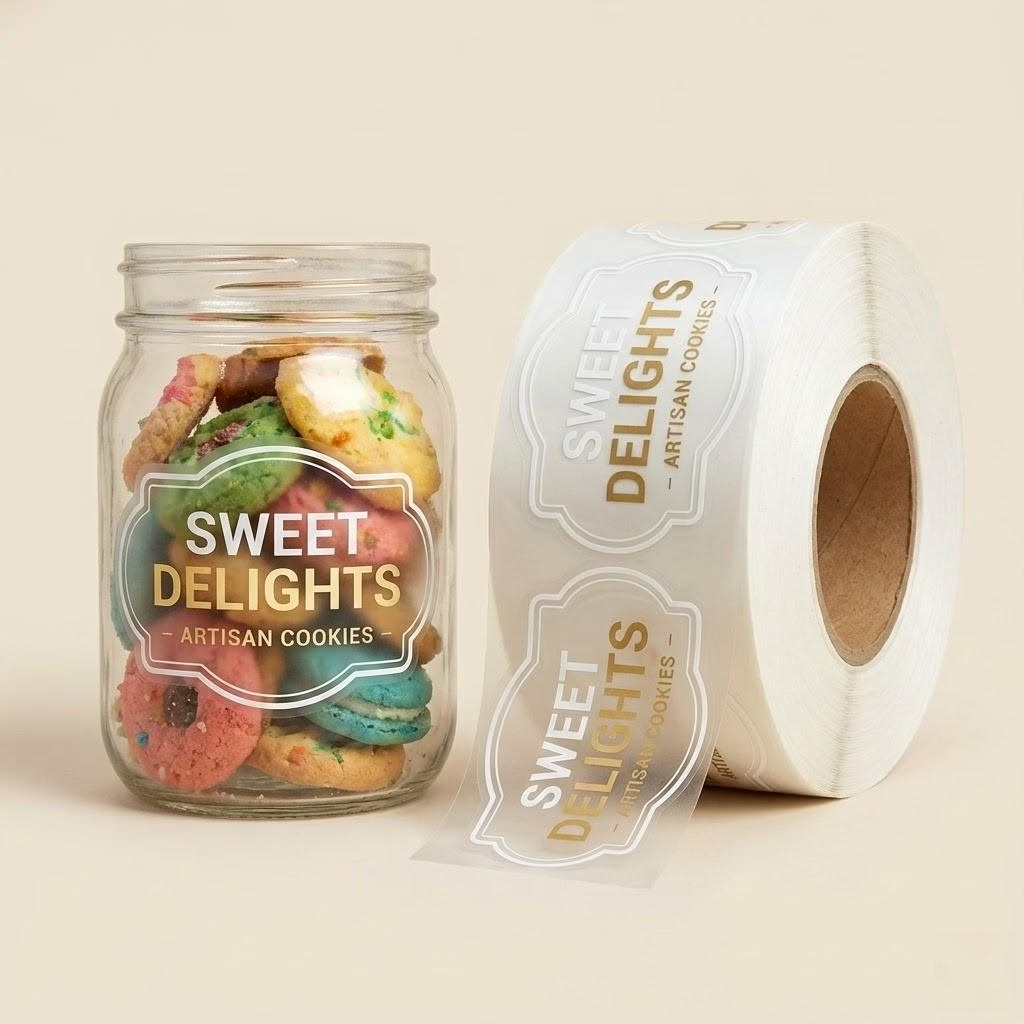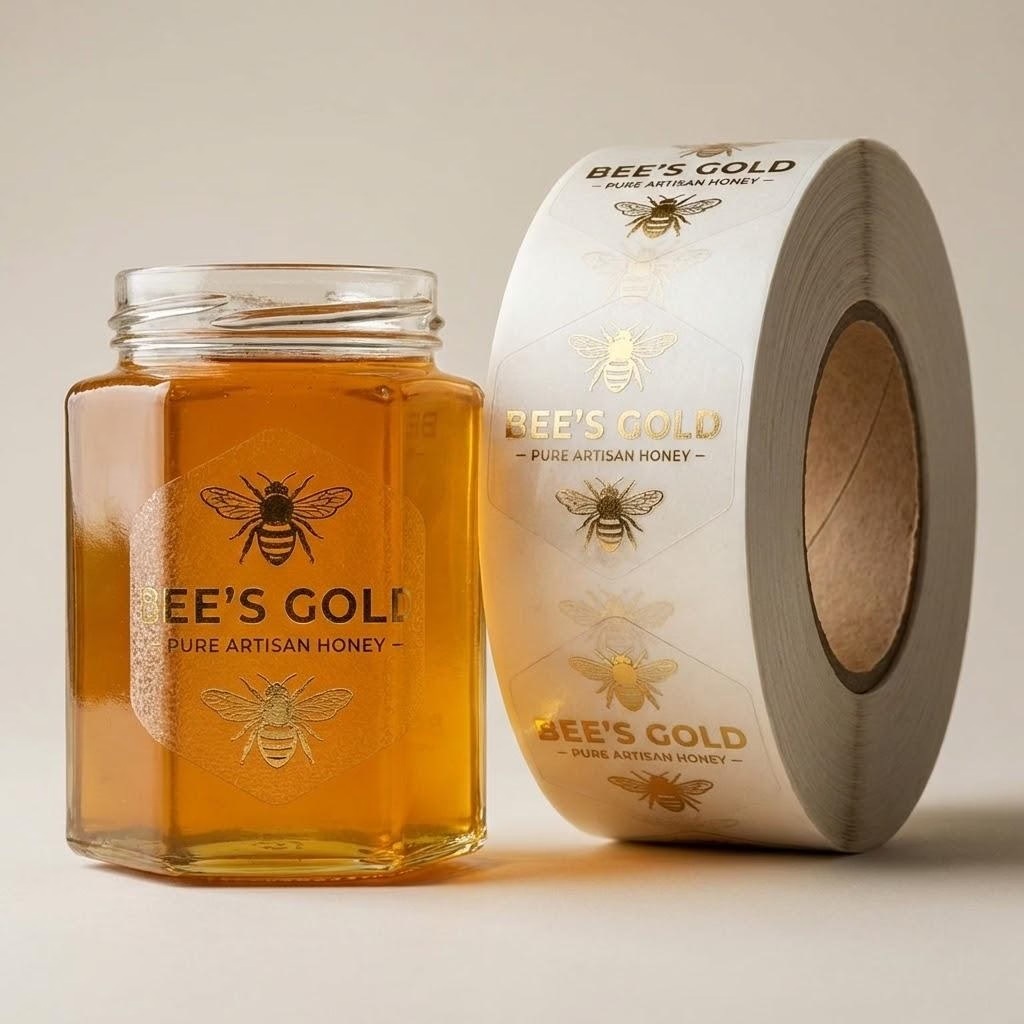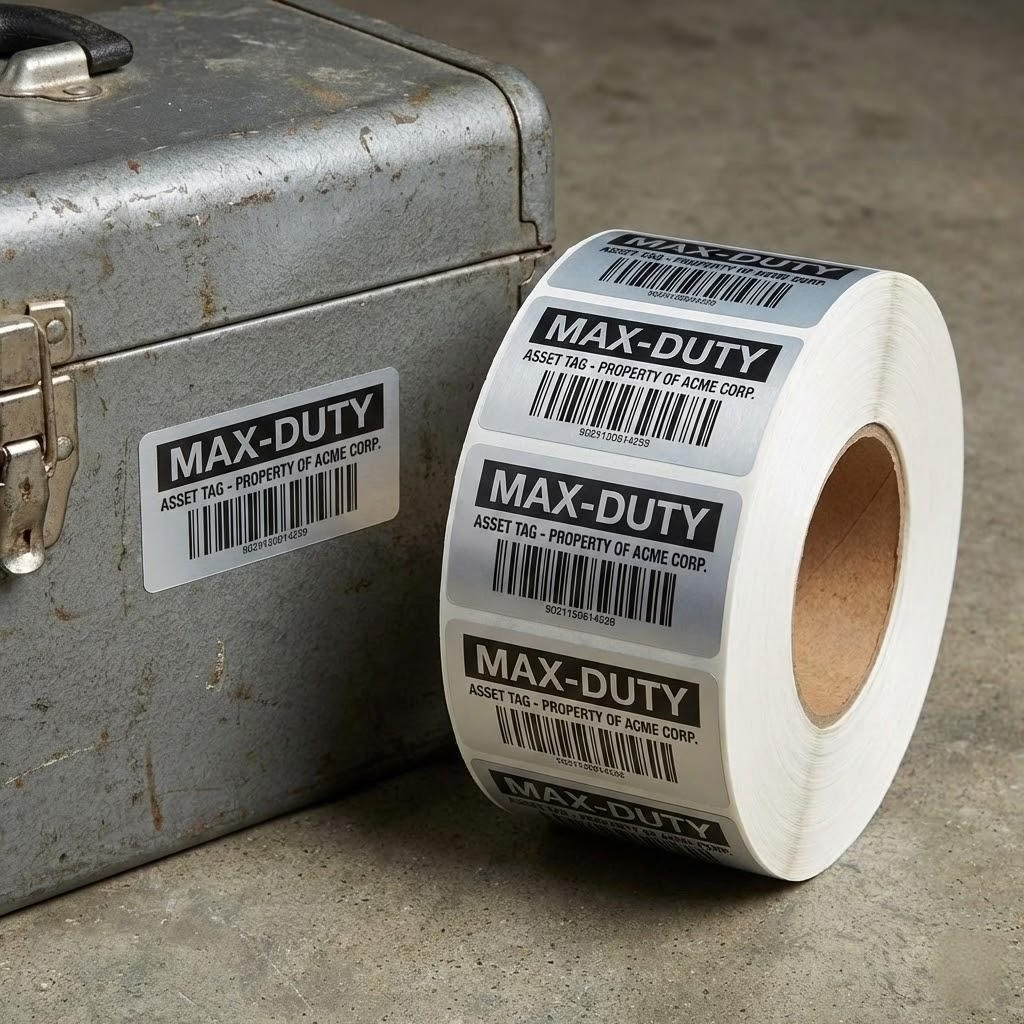
Struggling to get your custom labels to perfectly match your existing bottles and cartons? You are not alone. Here is the exact engineering process to eliminate color shift and achieve flawless packaging match labels across multiple vendors.
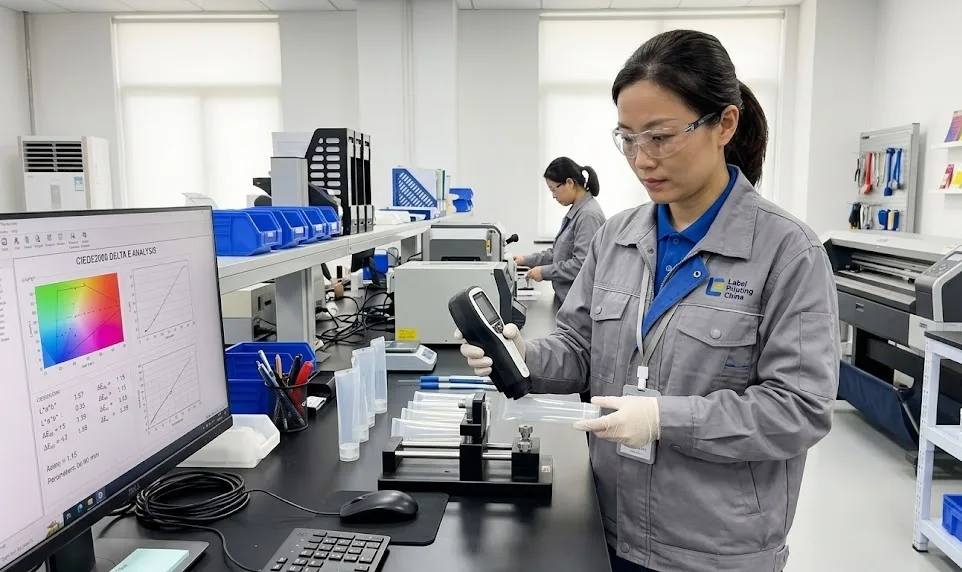
To match labels to existing packaging, manufacturers must use a spectrophotometer to extract the exact physical reflectance data of the container. By applying a 95% opacity white ink under-layer and utilizing the CIEDE2000 Delta E formula, printers completely eliminate substrate color bleed.
But getting the color right is only half the battle. Read on to discover the exact adhesive and film specifications required to ensure your labels survive high-speed automated filling lines without peeling or jamming.
Buyer Takeaway: Match the Label to the Package Shape First
Packaging match is not just a visual decision. Tub, tube, and box labels behave differently under curves, squeeze pressure, moisture, friction, and retail handling.
- Start with the container: confirm surface energy, curve radius, squeeze behavior, and storage condition.
- Then choose material and adhesive: paper, film, finish, and glue should match the real package environment.
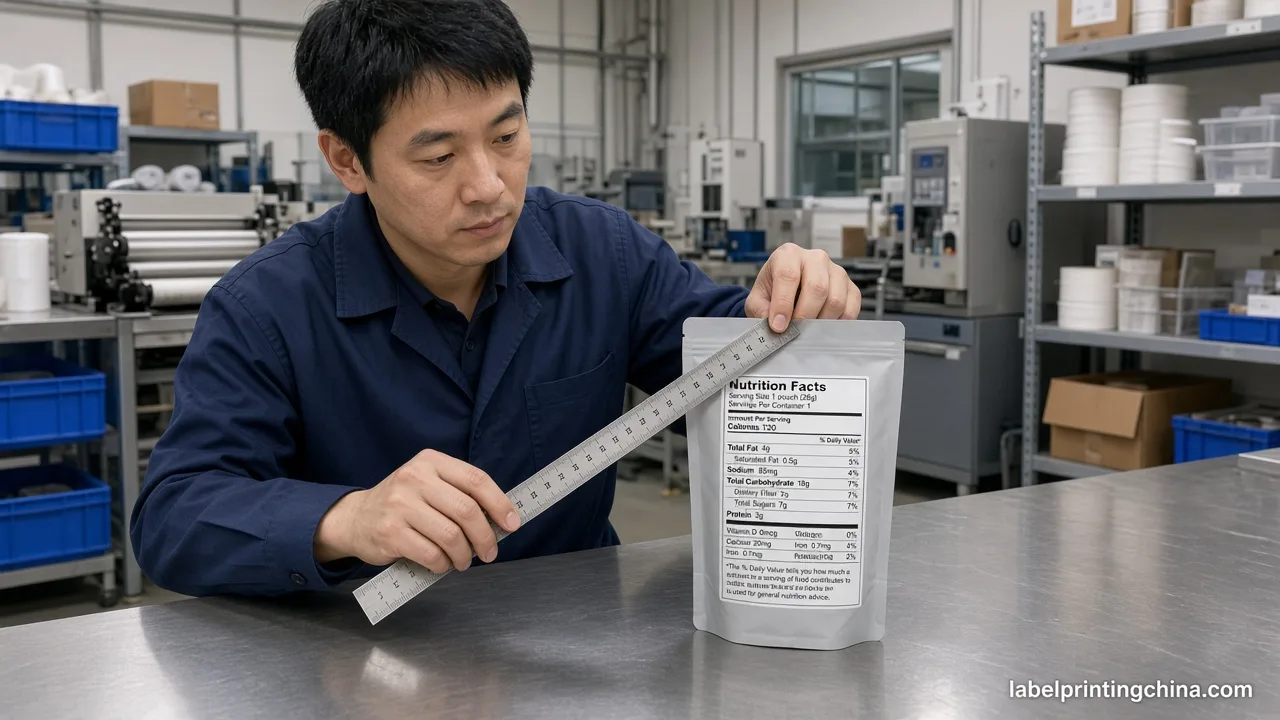
- Approve samples on the actual package: flat proofs cannot reveal edge lift, wrinkles, or color shifts on the final container.
Why Your CMYK Values Fail on Different Substrates
In a typical cross-border procurement scenario, a Senior Procurement Manager is caught in a high-pressure dilemma. The Chief Marketing Officer demands a 30% reduction in packaging costs, but the brand’s visual identity must remain absolutely flawless across every SKU. To achieve this cost reduction, you decouple the packaging procurement: sourcing the containers from one factory and the custom labels from another.
The trap is set the moment you email the exact same design file to both vendors. When the final goods arrive at your automated filling facility, the disaster becomes apparent. The label applied to the cosmetic tube looks muddy and dark, while the exact same color printed on the paper carton looks vibrant and crisp.
When confronted, the bottle manufacturer blames the label printer’s ink quality, and the label printer blames the bottle’s reflective surface. You are left holding the liability. This siloed accountability breeds immense supply chain friction, putting your product launch timeline at extreme risk.
The Hidden Costs of Multi-Vendor Color Mismatches
| Failure Point | Direct Consequence | Financial Impact |
|---|---|---|
| Optical Metamerism | Colors match under office lights but clash entirely under retail store lighting. | Complete retail recall and brand equity damage. |
| Substrate Bleed-Through | The color of the liquid product inside the tube alters the external label color. | 100% rejection rate at the quality assurance (QA) checkpoint. |
| Siloed Accountability | Suppliers blame each other for the discrepancy, refusing to issue refunds. | You absorb the cost of re-printing and expedited air freight. |
Quick Guide: If your priority is eliminating multi-vendor blame, execute a physical color matching protocol; if you face strict budget constraints, consolidate your print specifications through a centralized industrial facility.
To break this cycle, you must stop treating labels as flat graphics and start treating them as engineered physical components.
When the pack is a soft PE cosmetic tube, use the squeeze tube label guide to lock PE/PO film, overlap, and squeeze-zone edges before artwork freezes.
Substrate Opacity and $\Delta E$ Control
If you print a specific brand green on a solid white paper box, the white background reflects light back through the ink, delivering the true intended color. Print that exact same CMYK formula on a frosted glass bottle or a transparent cosmetic tube, and the underlying material absorbs or alters the light transmission. The product inside that tube—whether it is a yellowish retinol serum or a pure white cream—will bleed through the label material, fundamentally shifting the optical result.
In packaging, the substrate is essentially your foundation. You cannot expect a brand color to look identical on a folding carton and a transparent polyethylene tube without adjusting the ink formulation. Brands must move from subjective visual evaluation to digital spectral data to communicate color expectations seamlessly across different materials. — Cindy Cooperman, Vice President, Global Brand & Retail at X-Rite Pantone
To block this underlying substrate interference, industrial precision dictates strict opacity compensation. When applying custom labels to clear, frosted, or colored containers, a standard CMYK print will fail. Instead, the process must begin with a high-density “first-down white” layer, typically applied via rotary screen printing.
This specialized white underpinning must achieve an opacity level of **95% to 98%**. The calculation for this optical barrier is strictly mathematical:
$$ Opacity = \left( \frac{Y_b}{Y_w} \right) \times 100 $$
*(Where $Y_b$ represents the light reflectance over a black backing, and $Y_w$ represents the light reflectance over a white backing).*
By applying a 200% to 300% density layer of specialized white ink, the underlying substrate interference is zeroed out. This creates an impenetrable optical shield, providing a pure, standardized canvas for your core brand colors to be printed on top, regardless of whether the bottle is glass, PET, or PE. Moving away from visual guessing to digital spectral data is non-negotiable for cross-vendor consistency.
Once the substrate is neutralized, visual guessing must be entirely removed from the procurement equation. Elite color matching is governed strictly by the CIEDE2000 ($\Delta E_{00}$) measurement.
Visual color matching is inherently flawed due to metamerism and human subjectivity. For strict industrial applications, packaging professionals must utilize the CIEDE2000 ($\Delta E_{00}$) equation. Establishing a definitive Delta E tolerance in a procurement contract—rather than just asking a printer to ‘match this box’—is the only way to objectively guarantee cross-media color fidelity. — Dr. Abhay Sharma, Professor, Toronto Metropolitan University
While a standard commercial printer might settle for a visual match that equates to a $\Delta E$ of 3.0 or higher, rigorous cross-media matching demands that you lock the tolerance for your core brand colors at $\Delta E_{00} \le 1.5$. This transforms color consistency from a subjective argument into a measurable, enforceable physical standard. To implement this standard successfully, factories often utilize the G7 methodology to calibrate print systems across different materials.
Ready to Achieve Flawless Color Matching?
Don’t let multi-vendor material variances ruin your retail presence. Our team specializes in reverse-engineering oil-proof, machine-ready label solutions that guarantee a Delta E under 1.5 on your existing containers while cutting your costs by up to 30%.
The 15mm PE Tube Edge Lift Crisis
The Trap: When Flat Proofs Fail on Curves
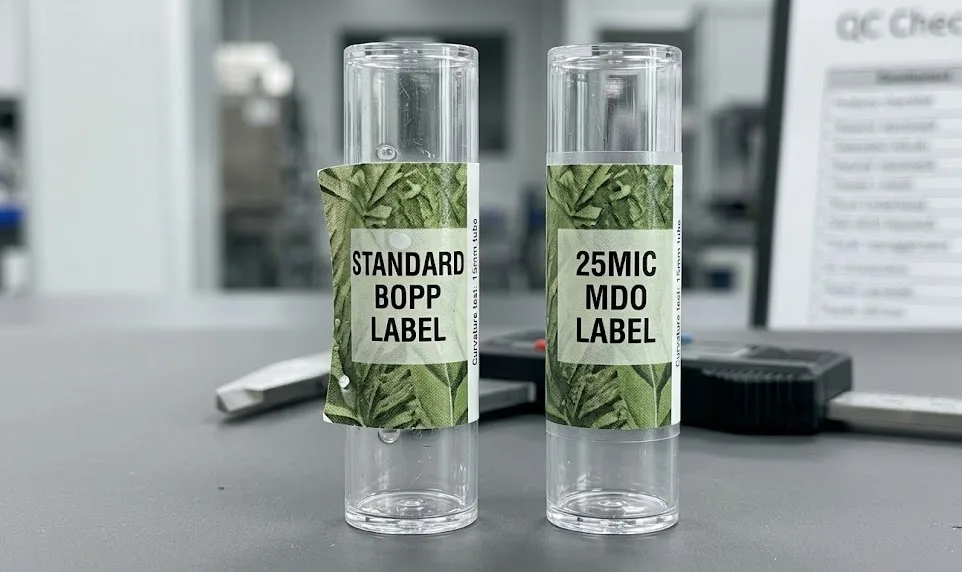
A US skincare brand ordered standard 50$\mu\text{m}$ clear BOPP labels for a 15mm transparent PE eye cream tube, strictly matching CMYK values. While flat physical samples looked pristine, high-speed automated application triggered immediate failures.
The Catastrophe:
The yellowish eye cream bled through the clear film, warping the signature green into a muddy mess with a severe $\Delta E > 4.8$ discrepancy. Simultaneously, the aggressive 15mm curvature triggered a heavy material “memory effect.” Within 48 hours, 30% of the rigid labels suffered severe edge lift (flagging), paralyzing the production line.
The Industrial Engineering Solution:
Leveraging 18 years of technical expertise, our Master Printing Engineer resolved the crisis through physical reverse-engineering:
- Optical Correction: Boosted the tube’s surface tension from 34 to 42 dynes/cm via inline corona treatment. Applied a 98% opacity rotary screen white underpinning to block the cream’s color bleed, bringing the final variance down to $\Delta E = 1.2$.
- Mechanical Overhaul: Replaced the rigid BOPP with a conformable 25$\mu\text{m}$ MDO film to absorb rotational stress, paired with a heavy $22\text{g}/m^2$ acrylic pressure-sensitive adhesive to eliminate flagging permanently.
Never accept flat PDF proofs for cylindrical or semi-transparent containers. You must enforce a physical Substrate Mandrel & Opacity Test to guarantee performance before mass production begins.
Engineering 100% Machine-Ready Labels for Automated Lines
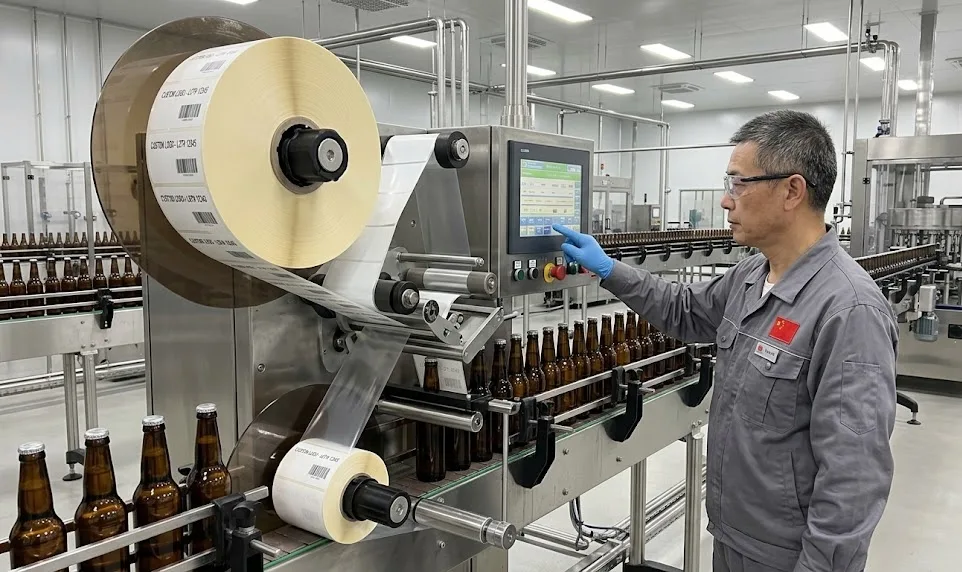
Perfectly matched packaging labels are a massive financial liability if they fail on your contract manufacturer’s automated filling lines. In US facilities where application speeds frequently run between 300 to 500 bottles per minute, a visually flawless label that causes machine downtime or application defects instantly destroys your profit margins.
You must engineer the label specifically for the mechanical realities of the label applicator machine. The peeler plate on a high-speed line requires precise tension. If the release liner is too weak, it snaps. If the adhesive release force is too low, the labels pre-dispense inside the machine, causing catastrophic jams. To prevent these mechanical line stops, brands should look into machine-ready label manufacturing protocols during the early procurement phases.
To guarantee your custom packaging labels are 100% Machine-Ready, you must strictly define the physical tolerances on your purchase orders. Selecting the wrong base film will completely compromise line efficiency. For a deep understanding of structural film behavior on flexible packaging, review the technical comparison of MDO film vs. standard BOPP labels before releasing purchase orders.
Standard Commercial Labels vs. 100% Machine-Ready Engineering
| Physical Failure Point | Standard Commercial Parameter | 100% Machine-Ready Engineering |
|---|---|---|
| Edge Lift on Small Tubes | Rigid 50$\mu\text{m}$ BOPP film | Conformable 25$\mu\text{m}$ MDO film |
| Ink Adhesion Failure | Surface energy $< 36 \text{ dynes/cm}$ | Inline corona treatment to $38 – 42 \text{ dynes/cm}$ |
| Web Breakage (Snapping) | Standard paper glassine liner | High-tensile $23\mu\text{m} – 30\mu\text{m}$ PET liner |
| Applicator Jamming | Inconsistent release tension | Strictly controlled $10\text{g} – 15\text{g}/25\text{mm}$ release force |
| Roll Alignment Errors | Generic 1-inch or variable cores | Standardized 3-inch cores with specific unwind direction |
Quick Guide: For high-speed lines running above 300 BPM, invest in PET release liners to eliminate snap breaks; for rigid small-diameter containers, enforce MDO film structural specifications to completely stop flagging.
A 3-Step Risk-Free SOP to Reverse-Engineer Your Labels
To buy out the risk of multi-vendor supply chains, you must stop relying on digital communication and enforce a physical testing protocol. The following Standard Operating Procedure (SOP) ensures complete technical alignment.
- Physical Asset Ingest (The Supply Chain Audit): Do not simply email digital design files and hope for the best. You must physically ship three to five samples of your existing empty tubs, transparent tubes, and folding cartons directly to the manufacturing facility via DHL or FedEx. The factory cannot compensate for a substrate they cannot physically test.
- Spectral Fingerprinting & Ink Reformation: Upon receipt, the engineering team must use a spectrophotometer to extract the exact surface reflectivity data of your provided containers. The ink formulation is then reverse-engineered specifically for that exact material. This mathematical adjustment guarantees your brand color meets the strict $\Delta E_{00} \le 1.5$ standard on the final product, regardless of the underlying opacity or material density. For an analytical breakdown of how factories process reorders to protect brand equity, consult our guide on how to solve Pantone batch variance across fragmented runs.
- 72-Hour Mandrel & Environmental Stress Test: Demand a physical prototype applied directly to your supplied containers. This prototype must be subjected to a 72-hour environmental stress test, cycling through temperature and humidity extremes. This verifies a 0% edge lift failure rate and confirms that the adhesive chemistry is perfectly matched to the surface tension of your specific packaging. Following this protocol strictly reduces the risk of encountering common labels peel off bottles failures post-delivery.
Drafting a Bulletproof Procurement Specification
To protect yourself internally and hold your suppliers accountable, you must upgrade your procurement documentation. A highly professional Senior Project Manager knows that vague requests lead to tangible losses. When issuing your next Purchase Order for packaging labels, mandate the following criteria:
- Color Acceptance Criteria: Explicitly state: *”Target brand color must measure $\Delta E_{00} \le 1.5$ when measured on the final curved substrate.”*
- Illuminant Standardization: Specify that all physical color evaluations will be conducted under D50 (Daylight 5000K) standard lighting conditions to prevent metamerism disputes.
- Machine Applicator Specs: Define your contract packager’s exact requirements: *”Labels must be supplied on 3-inch cores, Unwind Direction #4 (Left Out), with a PET release liner capable of 400 bottles/minute without web breakage.”* For a complete visual layout of mechanical feeding mechanics, reference the comprehensive breakdown of the eight standard unwind directions used in automated lines.
By embedding these industrial precision standards directly into your procurement contracts, you remove all ambiguity and force your suppliers to operate at the highest technical level.
Achieving Quality and Cost Transparency
Navigating a multi-vendor strategy should not force you to choose between strict cost control and flawless visual consistency. When you mandate technical alignment between your existing packaging and your label manufacturer through reverse engineering, you eliminate the hidden costs of scrapped materials, machine downtime, and launch delays.
By conducting the physical reverse-engineering loop upfront, you avoid the sunk costs of abandoning your current container molds or consolidating all printing with one expensive local vendor.
From a strategic project management perspective, the ultimate objective is global supply chain certainty. You keep your existing box and bottle suppliers while utilizing seamless DDP (Delivered Duty Paid) logistics to get perfectly matched labels shipped directly to your automated filling lines. This rigorous technical leverage allows procurement managers to confidently secure a **30% reduction in overall packaging costs** while maintaining absolute production security.
When sourcing your next high-volume batch of labels, remember that true industrial precision is never about matching a digital swatch on a monitor. It is about engineering a physical component that integrates flawlessly into your existing physical supply chain. By mastering substrate opacity, $\Delta E$ tolerances, and machine-ready mechanics, you transform a fragile multi-vendor puzzle into a unified, high-performance manufacturing strategy.
Packaging Substrate Matching Matrix
Use this matrix when deciding whether one label spec can serve tubs, tubes, and boxes.
| Package type | Main label risk | Recommended check |
|---|---|---|
| Tubs and jars | Curved walls, condensation, and edge lift. | Test film or coated paper options from jar labels when moisture is present. |
| Tubes | Squeeze distortion, low surface energy, and adhesive stress. | Test flexible film and adhesive hold after repeated squeeze cycles. |
| Boxes | Abrasion, corner alignment, and color consistency across panels. | Check scuff resistance and dieline alignment. |
| Mixed packaging family | One design may behave differently across surfaces. | Approve samples on every container type before full production. |
Color Delta and Sample Approval Workflow
Packaging families often fail because colors look different on different materials and shapes.
| Approval step | What to compare | Pass signal |
|---|---|---|
| Digital proof | Layout, copy, barcode, and dieline. | No content or trim conflict remains. |
| Material sample | Paper, film, adhesive, and finish on the actual package. | No lift, wrinkle, glare, or scuff issue. |
| Color check | Brand color across tub, tube, and box surfaces. | Visual match is acceptable under retail lighting. |
| Production proof | Final material, finish, and application method. | Buyer approves a real printed sample before mass run. |
Sample Approval Checklist
Before approving a packaging-match order, inspect the real label on the real package.
| Checklist item | Inspect for | Why it matters |
|---|---|---|
| Edge hold | Lifting at seams, curves, and squeeze points. | Prevents retail shelf failure. |
| Barcode and text | Readability after application and finish. | Protects scanning and compliance. |
| Finish behavior | Glare, scratches, moisture, and hand feel. | Affects shelf presentation and durability. |
| Application fit | Roll direction, label gap, and operator handling. | Important for automatic roll-label application. |
FAQ
Can one label material work on tubs, tubes, and boxes?
Sometimes, but it should be tested. Different surfaces, curves, squeeze pressure, and storage conditions can require different facestock, adhesive, or finish choices.
Why do labels lift on curved packaging?
Edge lift can come from tight curves, low surface energy, wrong adhesive, moisture, or a material that is too stiff for the container.
How should buyers approve packaging-match labels?
Approve printed samples on the actual package, checking edge hold, color, barcode readability, finish behavior, and application fit before mass production.