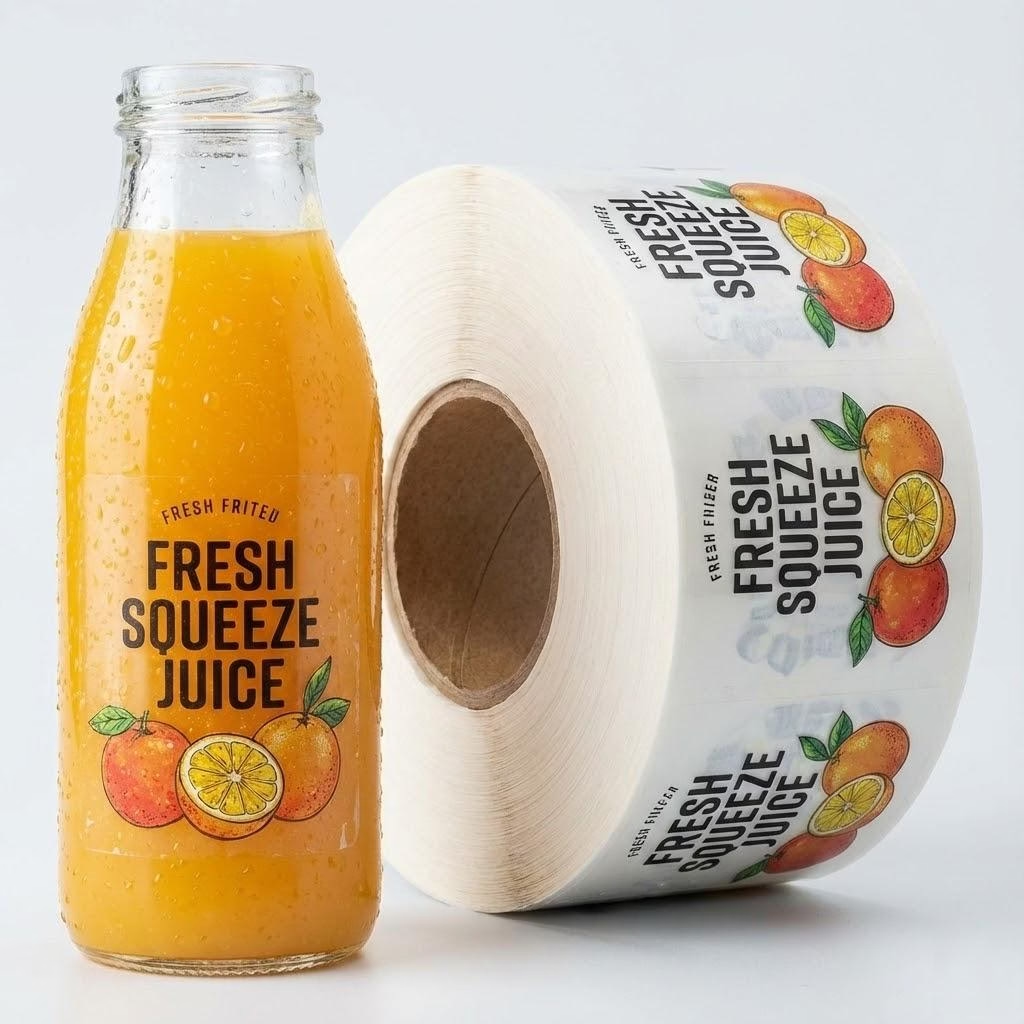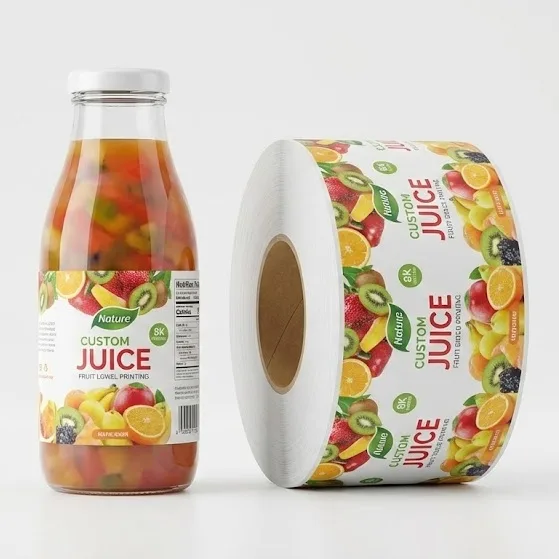
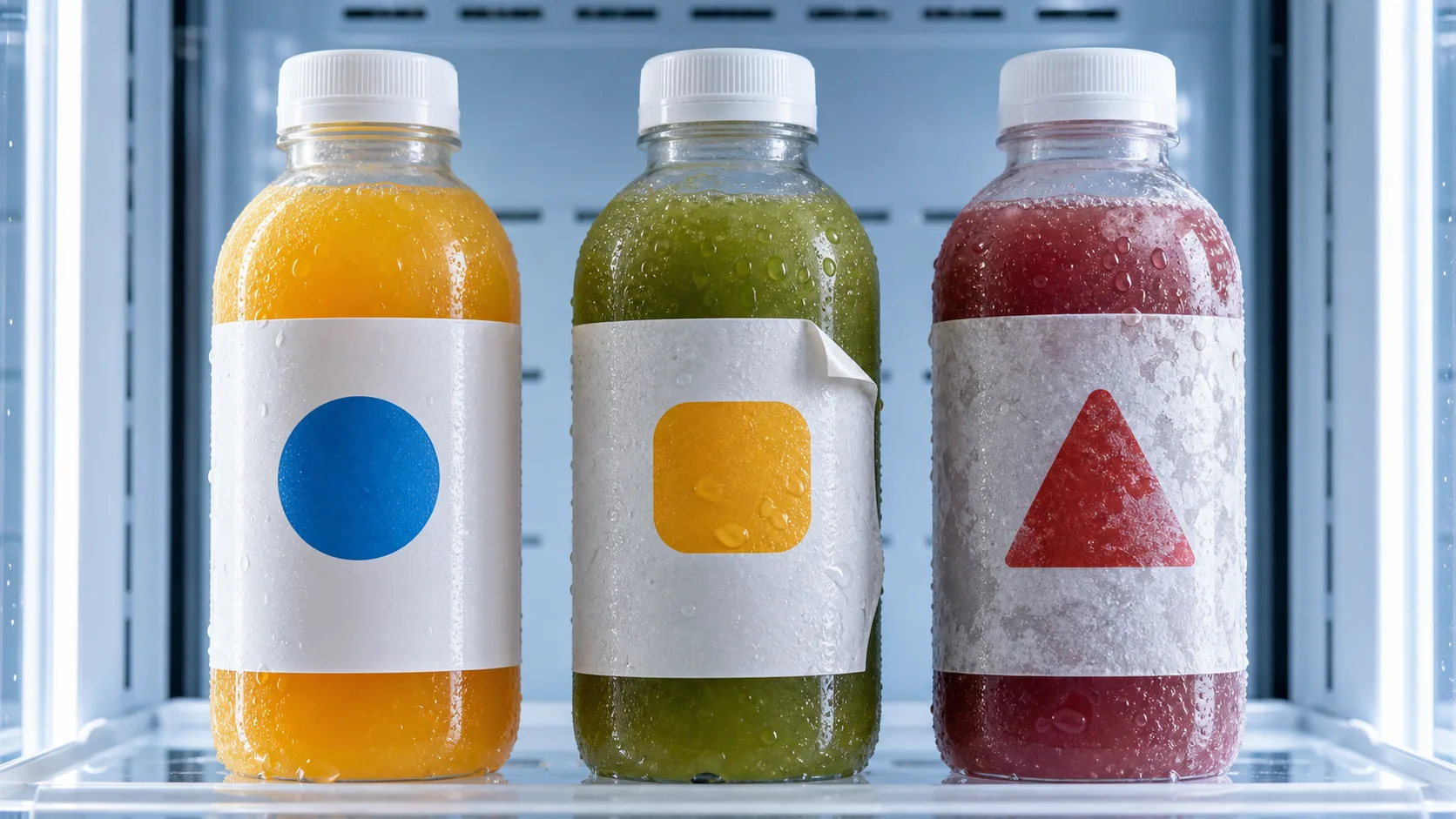
The safest waterproof juice bottle labels are usually white BOPP with a beverage-grade permanent adhesive. Choose PET when the bottle will face freezer storage, rough cold-chain handling, or returnable logistics. Use paper with lamination only when the brand needs a natural premium look and the label passes a real condensation test on the actual bottle.
Juice packaging is harder on labels than many buyers expect. A bottle may be filled cold, wiped quickly, packed into cartons, stored in a refrigerator, moved through delivery, then placed in a display case where warm air creates condensation. If the label material, adhesive, ink system, and application timing do not match that journey, the result is familiar: edge lift, wrinkled paper, ink rub, cloudy film, or a label that looks cheap beside a fresh product.
This guide gives you a practical way to specify juice bottle labels before production. It compares BOPP, PET, and laminated paper, then turns the decision into a test checklist you can use before mass printing. If you are already sourcing custom beverage labels or planning custom juice bottle labels, the goal is simple: make the label survive the same wet, cold, and handling conditions as the drink itself.
Why Juice Bottle Labels Fail in Refrigerated Displays
A juice label fails when one part of the label construction is weaker than the environment. The failure may start at the surface, inside the paper fibers, at the adhesive layer, or at the bottle surface. Refrigerated drinks often combine all four pressures at once.
Condensation is the main trigger. When a cold bottle moves into warmer air, water forms on the surface. If the label was applied before the bottle was fully dry, moisture can sit between the adhesive and the bottle. If the face material absorbs water, the label can swell and curl. If the ink or varnish has low rub resistance, the front panel can smear while shoppers handle the bottle.
If your SKU is iced coffee plastic cups rather than juice bottles, freeze the wet-cup stack with our cold plastic cup labels.
Application timing also matters. Pressure-sensitive adhesives need contact pressure and time to wet out. If labels are applied and the bottles are immediately refrigerated, the adhesive may not develop full peel adhesion before cold storage slows the process. This is why a label that looks fine at the labeling line can begin lifting after one night in the fridge.
For deeper troubleshooting, the internal guide on fridge condensation label failure is useful when the problem is already visible. For new sourcing, start one step earlier: define the bottle, filling temperature, storage time, and display environment before choosing material.
Once that bottle body is named, freeze printable wrap height and seam mode using our juice label size guide.
BOPP vs PET vs Laminated Paper for Juice Bottles
The best material is not the most expensive one. It is the construction that matches your bottle, filling line, and brand position without overbuilding the specification. A small cold-pressed juice brand may value a tactile paper look. A factory producing 30,000 bottles for retail may value speed, consistency, and fewer rejected bottles.
When your line runs HPP PET instead of paper, use our cold pressed juice labels to lock batch zones and cold-chain gates before print.
| Material | Best Use | Condensation Behavior | Buyer Risk |
|---|---|---|---|
| White BOPP | Most refrigerated juice, smoothie, and functional drink bottles | Good water resistance, clean print surface, stable for daily cold display | Needs the right adhesive and enough wet-out time |
| Clear BOPP | No-label look on clear PET or glass bottles | Resists water but may show bubbles or bottle surface marks | Requires cleaner bottle surface and stronger artwork contrast |
| PET film | Freezer exposure, rough shipping, returnable bottles, premium durability | Very stable against moisture and handling stress | Higher material cost than BOPP |
| Paper plus lamination | Premium organic, craft, or small-batch juice brands | Can survive light condensation if protected, but edges remain sensitive | Needs physical approval, not only design approval |
For most buyers, white BOPP is the practical starting point for waterproof juice labels. It gives good moisture resistance, efficient printing, and a smooth retail finish. PET becomes attractive when the label is exposed to harsher handling, such as frozen storage, export cartons, or repeated ice-water contact.
Turn that contrast requirement into a clear-versus-white film call with our clear juice bottle labels.
Laminated paper is a brand decision. It can look warmer and more natural, but it should not be treated as automatically waterproof. If you choose it, ask for wet-strength paper, protected ink, a sealed edge design where possible, and an approval test that includes real condensation. Do not approve it only on a dry desk.
How to Test Waterproof Juice Labels Before Mass Production
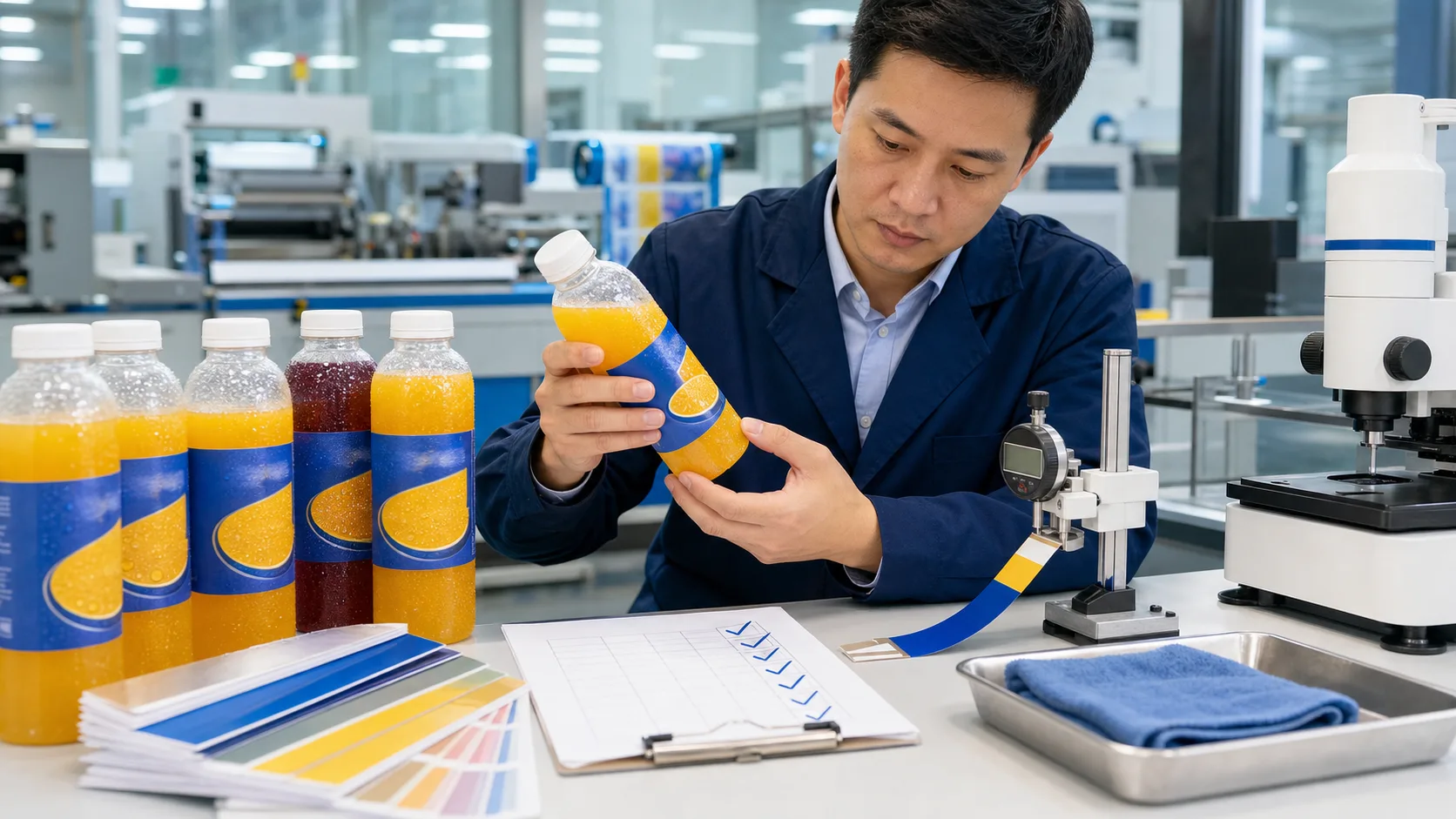
A good sample is not just a pretty print. It is a prediction of what will happen after filling, chilling, delivery, and retail handling. Before approving a label order, test the printed sample on the same bottle material and bottle shape you plan to use in production.
Use this simple acceptance sequence:
- Apply labels to clean, dry bottles with firm pressure, using the same label position and curvature as production.
- Leave the bottles at room temperature long enough for adhesive wet-out. Twenty-four hours is a useful baseline when your schedule allows it.
- Refrigerate the bottles, then move them into warmer air to create visible condensation.
- Inspect label edges, shoulders, seams, and tight curves for lift or whitening.
- Rub the printed surface with a damp finger or soft cloth to check ink and varnish resistance.
- Place bottles in cartons or trays to check scuffing during transport.
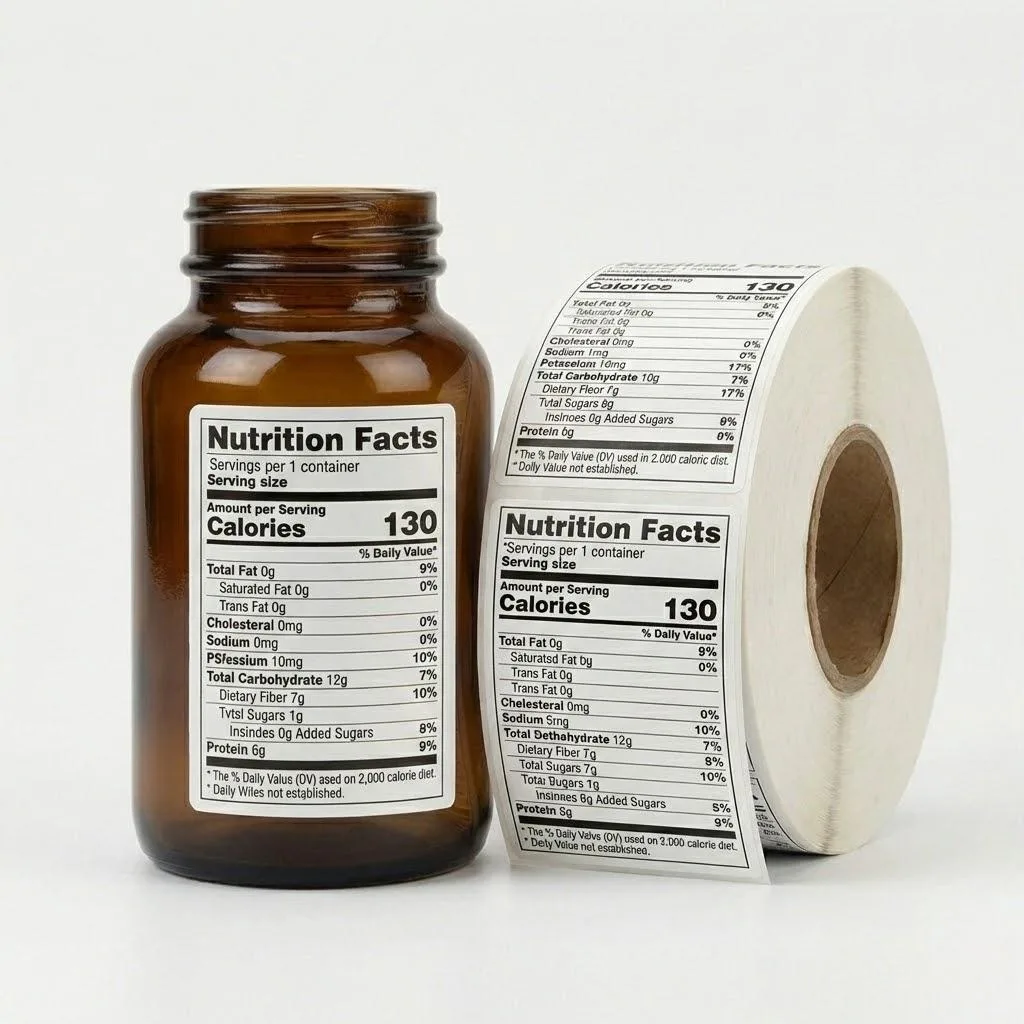
- Run roll labels through your applicator or hand-labeling workflow to confirm direction, unwind, and core size.
If the sample fails, do not only ask for “stronger glue.” The issue may be material absorption, varnish choice, bottle moisture, curve stress, or refrigeration too soon after labeling. The existing guide on labels peel off bottles can help separate adhesive problems from process problems.
For machine labeling, also confirm the roll specification. Most production lines need consistent die-cutting, liner release, roll direction, and core size. A 76 mm (3″) core is common for industrial label applicators, while smaller desktop systems may need 1″ or 2″ cores. This is why a sourcing request should cover both label performance and roll converting, especially for custom roll labels.
Adhesive Wet-Out and Cold-Chain Timing
The adhesive layer is often invisible in artwork discussions, but it controls whether the label stays on the bottle. Peel adhesion depends on bottle surface energy, surface cleanliness, application pressure, storage temperature, and time before refrigeration.
Cold-fill and refrigerated beverage workflows create a specific risk: the label may be applied to a bottle that is already cool or slightly damp. If the adhesive cannot make close contact with the surface, it will not develop full strength. Once the bottle enters cold storage, adhesive flow slows down. The label may look acceptable at first and then lift after temperature cycling.
A practical rule is to separate three moments in your process: application, wet-out, and refrigeration. If you can label dry bottles before filling, the risk is usually lower. If you label after filling, include drying or air-knife control before labeling. If bottles must be refrigerated soon after labeling, ask the label supplier to recommend a cold-friendly permanent adhesive and test it under your timeline.
Do not evaluate adhesive only by touching the label corner. Instead, record the failure type. If adhesive remains on the bottle while the face stock lifts, the material or lamination may be the weak point. If the label removes cleanly with little adhesive transfer, peel adhesion may be too low for the bottle surface or application condition.
Food Packaging Compliance Points to Confirm
Juice labels are not usually in direct contact with the drink, but they are still part of the food packaging system. Buyers should confirm that inks, adhesives, coatings, and liners are appropriate for the packaging use case and destination market.
The FDA explains that food packaging components can include packaging materials and substances such as adhesives and colorants when they may become part of food-contact articles. The eCFR also includes adhesive compliance rules for adhesives used as components of articles intended for packaging or holding food. Your actual requirement depends on country, bottle design, label position, and whether any material can migrate or contact the product.
For a normal outer bottle label, request a practical compliance packet rather than a vague promise. Ask for material data, adhesive description, ink system, and any available declarations relevant to your sales market. If the label will be near the cap, mouth area, ice bucket water, or condensation runoff, be more conservative with ink protection and adhesive selection.
Some material suppliers also publish guidance on cold application labels, including refrigeration, moisture, and curved bottle challenges. Treat those references as a starting point, then confirm with printed samples from your actual supplier.
RFQ Checklist for Condensation-Proof Juice Labels
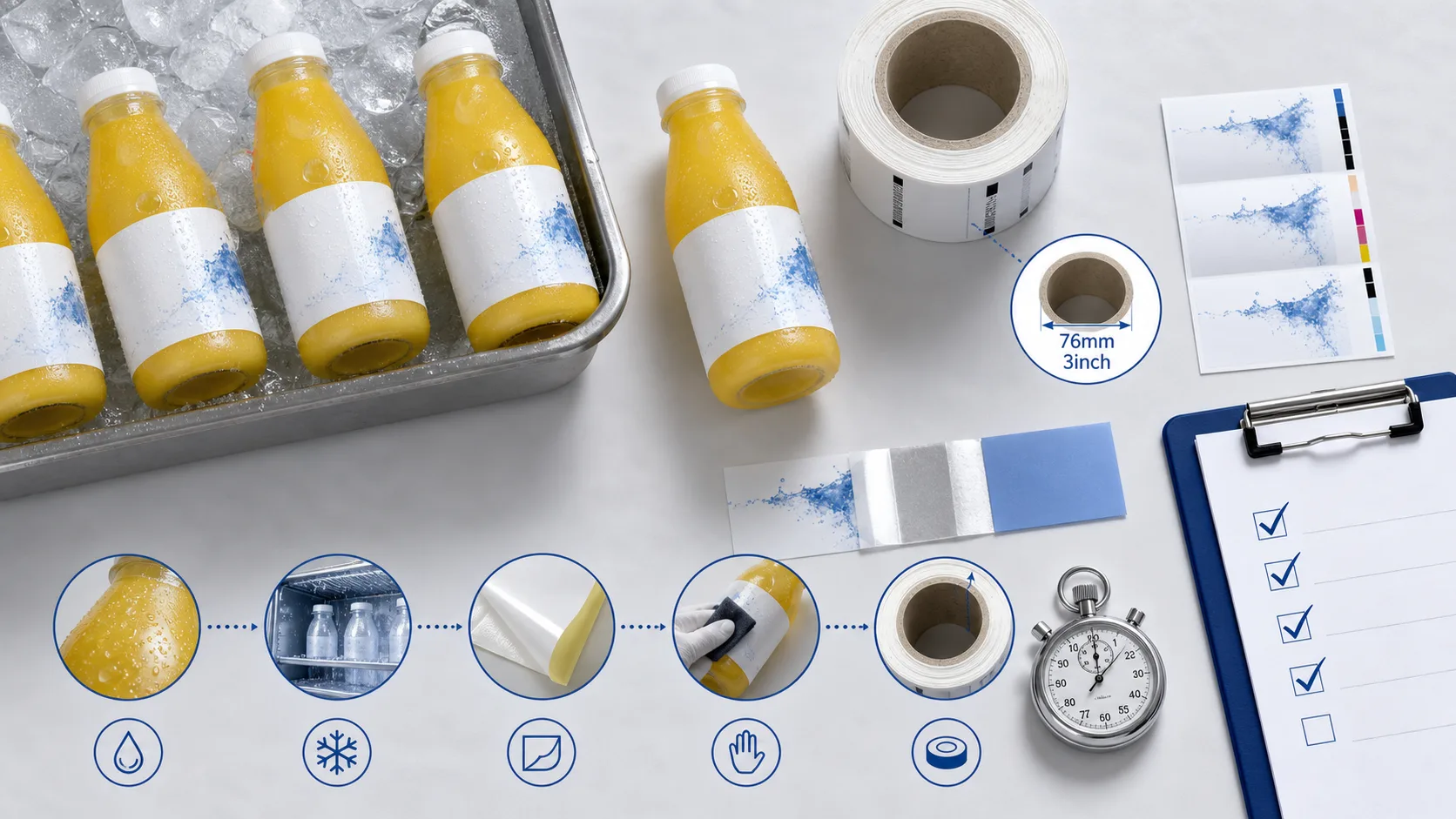
A clear RFQ reduces both delay and rework. It also helps your supplier choose the right construction instead of guessing from the artwork file. When sending a request, include the following information:
| RFQ Item | What to Provide | Why It Matters |
|---|---|---|
| Bottle material | PET, glass, HDPE, surface texture, bottle photos | Adhesive performance changes by surface |
| Filling and storage | Cold fill, room-temperature fill, fridge, freezer, ice bucket | Controls face stock and adhesive choice |
| Order quantity | Pilot run, 5,000 bottles, 30,000 bottles, recurring orders | Affects print method, tooling, and QC plan |
| Application method | Hand labeling, semi-auto, automatic line, roll direction, core size | Prevents applicator jams and wrong unwind direction |
| Finish preference | Gloss, matte, soft-touch, clear no-label look, paper texture | Balances brand look with moisture resistance |
Buyer takeaway: approve the label as a packaging component, not as a flat printed sticker. The correct sample test should answer three questions: does it stay flat, does it stay readable, and does it run correctly on your labeling method?
If you want a faster path, send bottle photos, label size, order quantity, filling temperature, storage condition, and artwork direction. The production team can then recommend BOPP, PET, or laminated paper with an adhesive and finish suitable for your use case.
Request a Free Beverage Label Sample
FAQ About Waterproof Juice Bottle Labels
What is the best material for waterproof juice bottle labels?
White BOPP is the most common starting point because it resists water, prints cleanly, and works well for refrigerated retail bottles. PET is better when the label needs extra durability for freezer storage, export handling, or returnable bottles.
Can paper juice bottle labels survive condensation?
Yes, but only under controlled conditions. Use wet-strength paper, protective varnish or lamination, and a physical cold test. Paper is less forgiving than film when bottles sit in wet trays or move through repeated condensation cycles.
Why do juice bottle labels peel after refrigeration?
The most common reasons are damp application, low peel adhesion on the bottle surface, insufficient adhesive wet-out before refrigeration, sharp bottle curves, or a face material that absorbs moisture and pulls against the adhesive.
Should juice labels be gloss or matte?
Gloss is practical for bright fruit graphics and easy rub resistance. Matte can look premium, but it should be tested for scuffing and moisture marks. The finish should be chosen after the material and adhesive are correct.
How many samples should a beverage brand test?
Test at least several labeled bottles from the same bottle batch you will use in production. For a larger run, test across storage positions: fridge shelf, carton, transport tray, and room-temperature display after chilling.