Managing urgent label orders during overseas holidays can feel like a supply chain nightmare. This guide reveals the “Master Roll” protocol and industrial secrets we’ve used for 18 years to ensure 100% machine-ready labels even when vendors go dark.
Managing urgent label orders requires a “Machine-Ready” protocol using Master Roll pre-printing to compress lead times by 60%, VMI for material security, and DDP logistics. This strategy ensures industrial-grade labels that prevent applicator downtime during high-stakes overseas factory closures.
But speed is a trap if you don’t understand the “physical degradation” of rushed adhesives. Stick with me to see the exact 3-step audit I use to vet emergency suppliers and save 30% on costs.
Buyer Takeaway: Rush Orders Need Scope Control, Not Just Speed
An urgent label order can still be controlled if the buyer locks artwork, material, production priority, and shipping assumptions early.
- Separate urgent from impossible: identify which variables are fixed and which can be simplified.
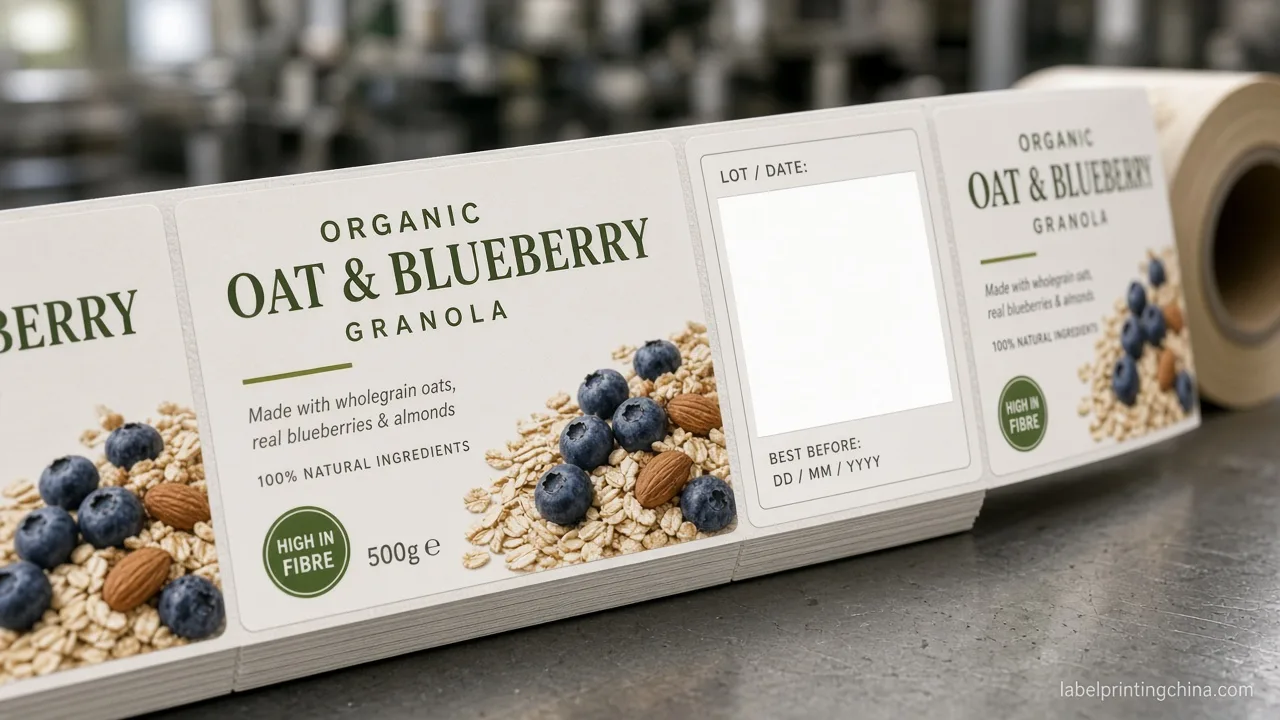
- Lock artwork and material: rush orders fail when copy, dieline, adhesive, or finish keeps changing.
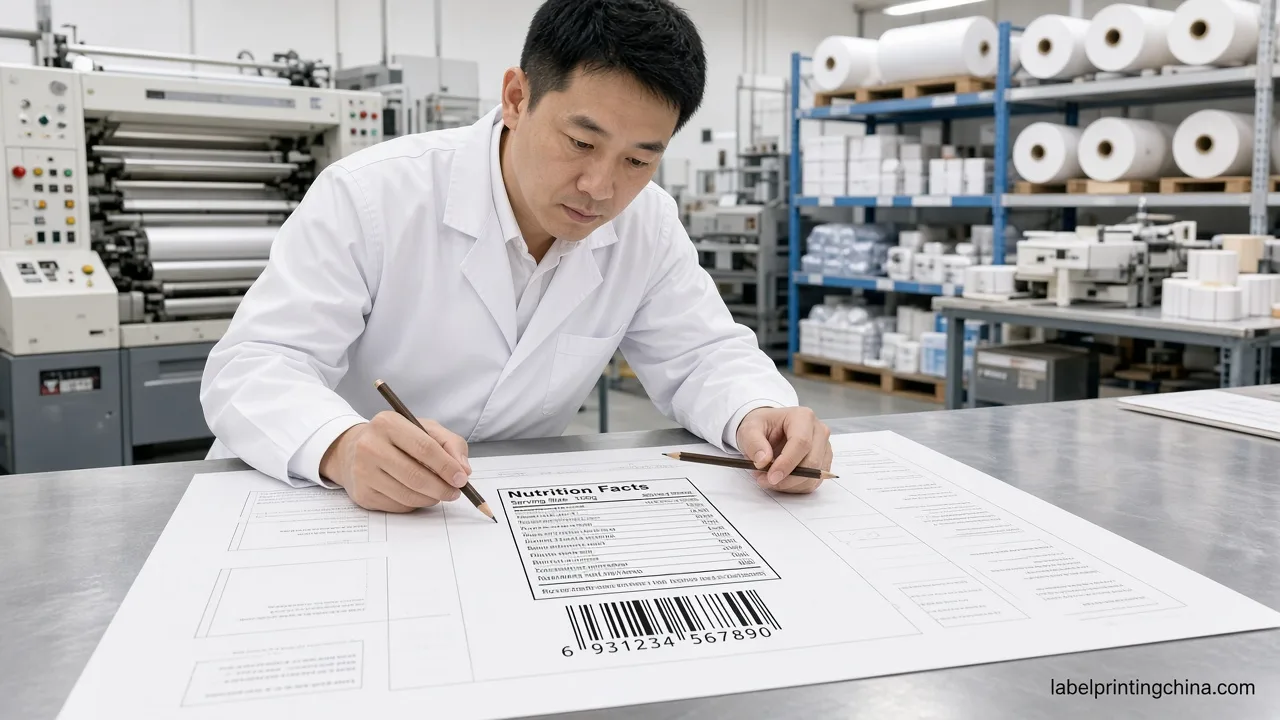
- Use a supplier with prepress discipline: a fast quote is not enough if the files are not production-ready.
Why Expedited Labels Fail on the Applicator
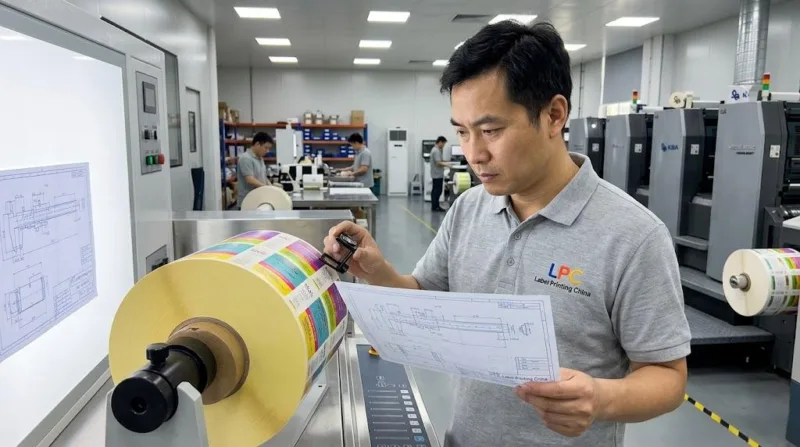
It is 4:00 PM on a Friday. The production line supervisor just notified you of a severe matrix break issue with the current batch of custom packaging labels.
Your safety stock is depleted, and the Chinese New Year factory closures are only days away. You email your primary supplier, only to receive an automated “Out of Office” reply. The production director needs to know if the automated labeling systems will run on Monday.
At this critical juncture, managing urgent label orders transitions from a routine procurement task to a high-stakes effort in mitigating supply chain risks.
Your immediate instinct might be to find any manufacturer willing to promise a 48-hour turnaround and pay the massive expedite shipping costs.
Yet, 18 years of China manufacturing experience reveals that simply throwing money at a compressed timeline often leads to catastrophic physical degradation on the applicator line.
Securing an emergency label supply requires an industrial-grade contingency system and a rigorous understanding of production physics, not just a panicked reliance on rush fees.
When a holiday supply planning crisis hits, the industry default is to demand speed. You push the vendor, pay the rush fees, and expect the pallets to arrive via air freight. However, forcing an accelerated label printing cycle often triggers severe physical degradation that manifests precisely when the rolls hit your applicator.
Consider a scenario involving a critical order of 50-micron white BOPP labels matched with a 30-micron PET liner. Facing an imminent Golden Week factory closure, a buyer secured a 48-hour turnaround from an unvetted facility.
To meet this unnatural deadline, the operators bypassed the mandatory resting period required for the UV ink cross-linking to achieve complete cross-linking. Simultaneously, they pushed the rotary die-cutting equipment beyond its optimal capacity.
Holding a strict ± 0.1mm tolerance at maximum speed is practically impossible; the blade caused micro-fractures deep into the silicone release layer of the thin PET liner.
The True Cost of a Line-Stop
| Metric | Standard Operation | Emergency Failure (Rush Job) |
|---|---|---|
| Applicator Speed | 300 – 500 units/min | 0 units/min (Down) |
| Labor Cost | Optimized | Idle / Overtime |
| Revenue Loss | $0 | $1,500 – $3,000 / Hour |
Quick Guide: If your priority is long-term stability, follow standard timelines; if you face an emergency, only trust vendors with a proven machine-ready protocol to avoid the $3,000/hr downtime trap.
The aftermath was inevitable. Trapped in the fluctuating temperatures of an air cargo hold, the uncured varnish caused slight offsetting. Worse, when loaded onto the client’s automated labeling systems running at 300 units per minute, the compromised liner yielded a matrix break every five minutes.
In this scenario, the true cost of applicator downtime instantly neutralized any perceived time savings. True industrial precision dictates that even under extreme pressure, you never compromise the 100% machine-ready standard.
Proactive Defense Before the Holiday Vacuum
When facing a Chinese New Year factory closure, standard industry advice dictates padding your safety stock calculation. However, aggressively inflating inventory ties up working capital and exposes you to dead stock if packaging dimensions change.
The genuine bottleneck during overseas holidays is rarely printing capacity; it is the industry-wide depletion of base materials and custom label adhesives. Even with an unlimited budget, you cannot expedite materials that simply do not exist.
Strategic supply chain resilience requires moving beyond reactive purchasing. Drawing on 18 years of technical expertise, our director, Leo, champions the Master Roll pre-printing protocol as a proactive defense mechanism.
For high-volume CPG and chemical brands, the facility acquires premium BOPP or PET materials during off-peak seasons.
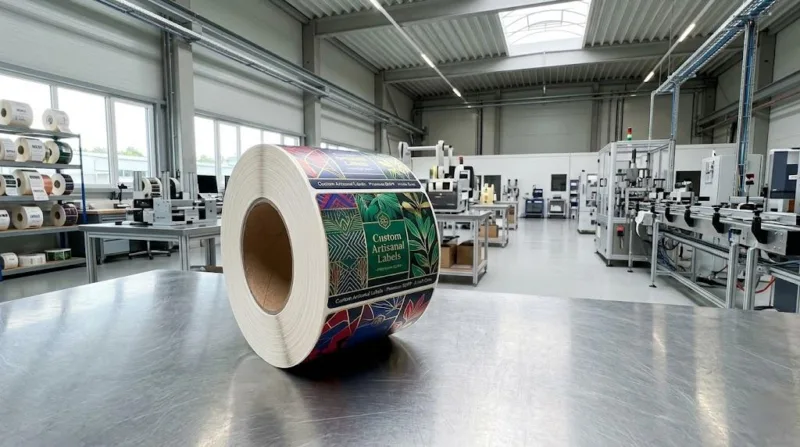
The engineering team executes the foundational coating and base-color printing, retaining these semi-finished master rolls in climate-controlled warehouses under a precise Vendor Managed Inventory (VMI) agreement for custom industrial labels.
When a sudden supply chain disruption or holiday vacuum hits, these pre-printed rolls are immediately deployed for agile digital overprinting and low-speed, high-precision die-cutting. This methodology physically compresses the custom label lead time from a standard 15 days down to just 3 to 5 days—a massive 66% reduction in production time.
It completely neutralizes the risk of raw material shortages while strictly adhering to cost transparency principles. You maintain absolute production security without being subjected to extortionate peak-season rush fees, actively securing a Save 30% advantage on your total cost of ownership while eliminating the panic of emergency procurement.
DDP Certainty: Surviving the Holiday Freight Crash
Even if your emergency label supply is manufactured flawlessly, navigating cross-border logistics during the pre-holiday rush is a brutal endeavor.
In the two to three weeks leading up to Chinese New Year, the rolled cargo rate for air freight routinely spikes to between 30% and 40%.
The standard industry advice is to simply book expedited air freight and hope for the best. However, relying on traditional FOB terms during this volatile window is a critical error. It transfers the entire burden of import customs delays and clearance friction directly onto your shoulders.
In our extensive experience executing DDP logistics for time-critical label supply, certainty is the ultimate metric.
Our Senior Project Manager, Jack Wu, orchestrates these emergency operations by actively bypassing the chaos of last-minute consolidated shipments.
By utilizing Delivered Duty Paid (DDP) terms and leveraging established international express freight routes, the customs clearance protocol is strictly front-loaded by the supplier. This strategic shift transforms a vague tracking number into a legally binding door-to-door arrival date for your 3-inch core and max roll diameter specifications.
It proves that a reliable industrial label manufacturer absorbs the logistical friction, ensuring your automated lines never starve for materials.
Ready to Secure Your Holiday Supply Chain?
Don’t let overseas holidays stop your production. Get a technical audit of your labeling needs and discover how our Master Roll protocol can save you 30% while guaranteeing delivery.
Tools for Supply Chain Resilience
Evaluating a label supplier’s emergency preparedness requires objective metrics, not verbal assurances. To actively mitigate the risks of line-stops in automated labeling, procurement teams must implement rigorous operational frameworks before the crisis hits.
The primary mechanism is the Holiday-Adjusted Safety Stock Formula. Forecasting label demand based on standard lead times will inevitably cause stockouts during overseas holidays.
Safety Stock = (Max Daily Usage × Max Lead Time) – (Avg Daily Usage × Avg Lead Time)
When calculating this liability and learning how to calculate label landed costs during Golden week supply chain disruptions or CNY closures, you must adjust the maximum lead time parameter to account for an additional 14 to 21 days of absolute logistical paralysis.
The secondary mechanism is the Emergency Audit Protocol. You must pressure-test your current vendors by demanding technical accountability.
- Ask them directly how they adjust rotary die-cutting tension to prevent liner damage when custom label lead times are compressed to 48 hours.
- Require them to specify their procedures for ensuring fast-curing UV adhesives will not offset during high-temperature transit.
- Audit their capacity to establish VMI label printing agreements and hold pre-printed master roll reserves.
A vendor incapable of answering these hardcore technical questions is a severe liability for your machine-ready label manufacturing requirements.
365-Day Certainty in a Volatile World
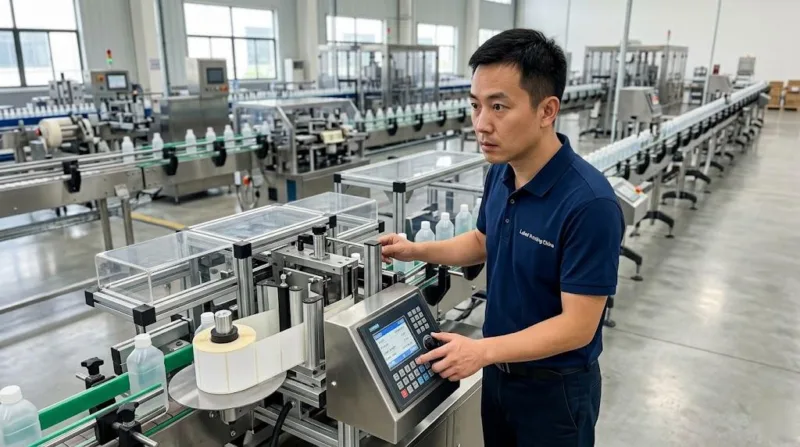
Managing urgent label orders during overseas holidays should never be a high-stakes gamble; it must be the execution of a precisely engineered contingency plan.
Whether it is overcoming severe capacity constraints or navigating chaotic freight bottlenecks, survival demands an agile manufacturing process grounded in uncompromising industrial precision.
As Dr. Hau L. Lee from Stanford GSB notes in The Triple-A Supply Chain, agility and alignment are what separate leaders from those suffering through disruptions.
With over a decade of factory ownership and 18 years of technical expertise, the mandate is clear: our printing presses might pause for a national holiday, but your global supply chain cannot afford a single second of downtime.
By demanding 100% machine-ready labels and integrating robust VMI strategies at least 45 days before the holiday season, you completely eliminate the panic and secure an unbreakable operational advantage.
Rush-Order Triage Table
Use this triage table before asking a supplier to accelerate production.
| Urgency level | Buyer situation | Recommended action |
|---|---|---|
| Recoverable | Artwork is final, material is standard, and quantity is realistic. | Send files for immediate prepress review and quote through custom label printing. |
| Risky but possible | Artwork is nearly final, but material, roll spec, or packing is not locked. | Freeze the spec within 24 hours before production is booked. |
| High risk | Artwork, size, material, and delivery terms are all changing. | Reduce scope or split urgent labels from the full reorder. |
| Not suitable for rush | Compliance copy, barcode, or retailer approval is unresolved. | Do not print until required approvals are controlled. |
Holiday Production Timeline
Holiday windows compress decisions. A practical timeline helps avoid last-minute rework.
| Stage | Rush-order task | Risk if skipped |
|---|---|---|
| Day 0 | Submit final artwork, dieline, quantity, material, and delivery target. | Supplier quotes a vague scope. |
| Day 1 | Prepress review, barcode check, material confirmation, and proof approval. | Artwork errors reach production. |
| Production window | Print, finish, die cut, inspect, and pack by priority. | Line time is lost to unresolved details. |
| Before shipment | Confirm carton marks, roll direction, packing method, and shipping terms. | Labels arrive late or unusable. |
Artwork and Material Lock Checklist
Rush production should not start until these details are locked.
| Lock item | What to freeze | Owner |
|---|---|---|
| Artwork | Final PDF/AI, barcode, batch-code area, bleed, and safe zone. | Buyer/designer |
| Material | Facestock, adhesive, liner, finish, and storage condition. | Buyer and supplier |
| Roll setup | Core size, roll direction, labels per roll, and packing. | Supplier and production team |
| Shipping | Address, incoterm, contact, carton marks, and deadline. | Buyer/logistics |
RFQ Urgency Fields
Add these fields to the urgent RFQ so the supplier can judge feasibility quickly.
| RFQ field | Example detail | Why it matters |
|---|---|---|
| Deadline type | Event date, retailer launch, line restart, or holiday closure. | Defines what cannot move. |
| Acceptable tradeoff | Partial shipment, standard material, simplified finish, or fewer SKUs. | Creates a realistic recovery path. |
| Approval owner | One person authorized to approve proof and changes. | Prevents decision delay. |
| Risk acceptance | What happens if express freight or material substitution is required. | Avoids surprise cost disputes. |
FAQ
What makes an urgent label order realistic?
A realistic rush order has final artwork, standard material, clear quantity, fixed roll specs, and one approval owner who can respond quickly.
Should buyers change material during a rush order?
Changing material during a rush order increases risk. If possible, use a proven material and finish that already matches the container and storage condition.
What should be included in an urgent label RFQ?
Include final artwork, label size, quantity, material, finish, roll direction, core size, delivery deadline, shipping address, and any acceptable tradeoffs.