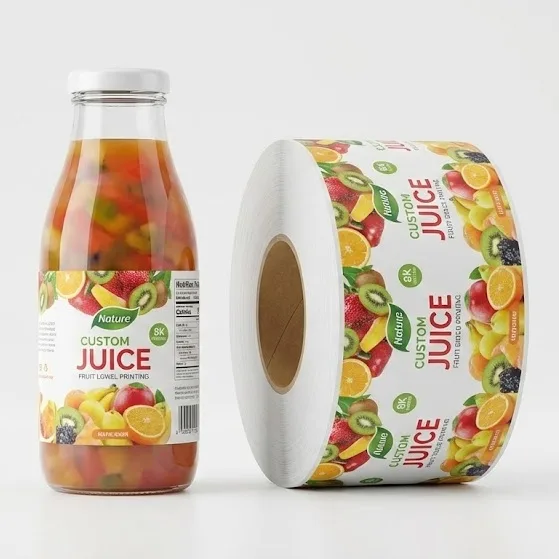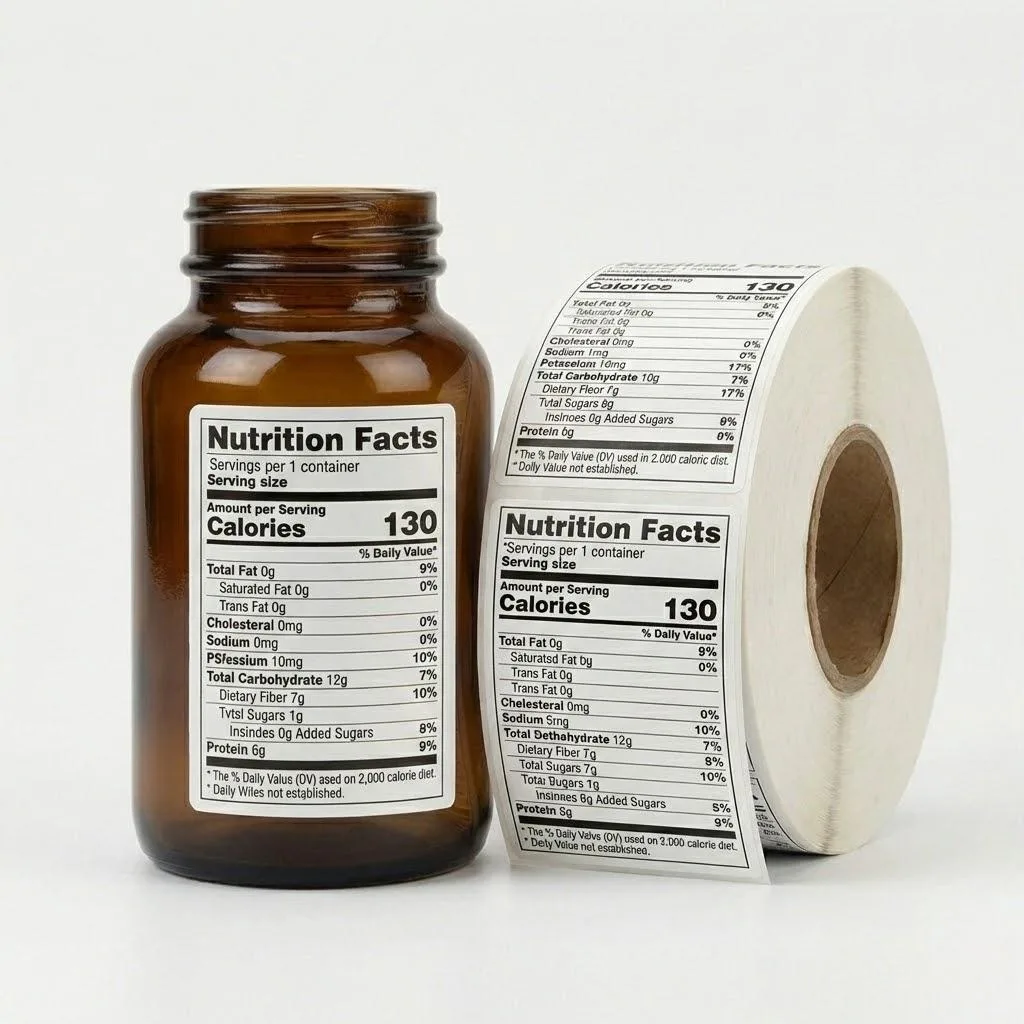
Sauce bottle labels fail in predictable ways—ink turns charcoal-gray under cap-line grease, laminate edges lift after the third wipe-down, and barcode quiet zones blur when oil wicks under a «waterproof» film that was never matched to your fill temperature. Spirits share the same oil-and-moisture logic — see custom spirit bottle labels for distillery-ready premium finishes.
Oil-proof food labels for sauce bottles need a film face stock plus grease-barrier laminate and oil-resistant flexo ink as one locked stack—route clear PET or white BOPP with gloss overlaminate, specify 72-hour vegetable-oil soak with zero edge darkening, and reject any quote that lists oil-resistant without a named ink chemistry and peel test method.
Below you will see how oil creep darkens standard labels, how oil-proof differs from oil-resistant in pass/fail terms, a triple-layer routing table for face stock, laminate, and ink, grease-tolerance testing on real jars, and MOQ checks for 500-roll artisan runs.
How Oil Creep Darkens and Lifts Sauce Bottle Labels
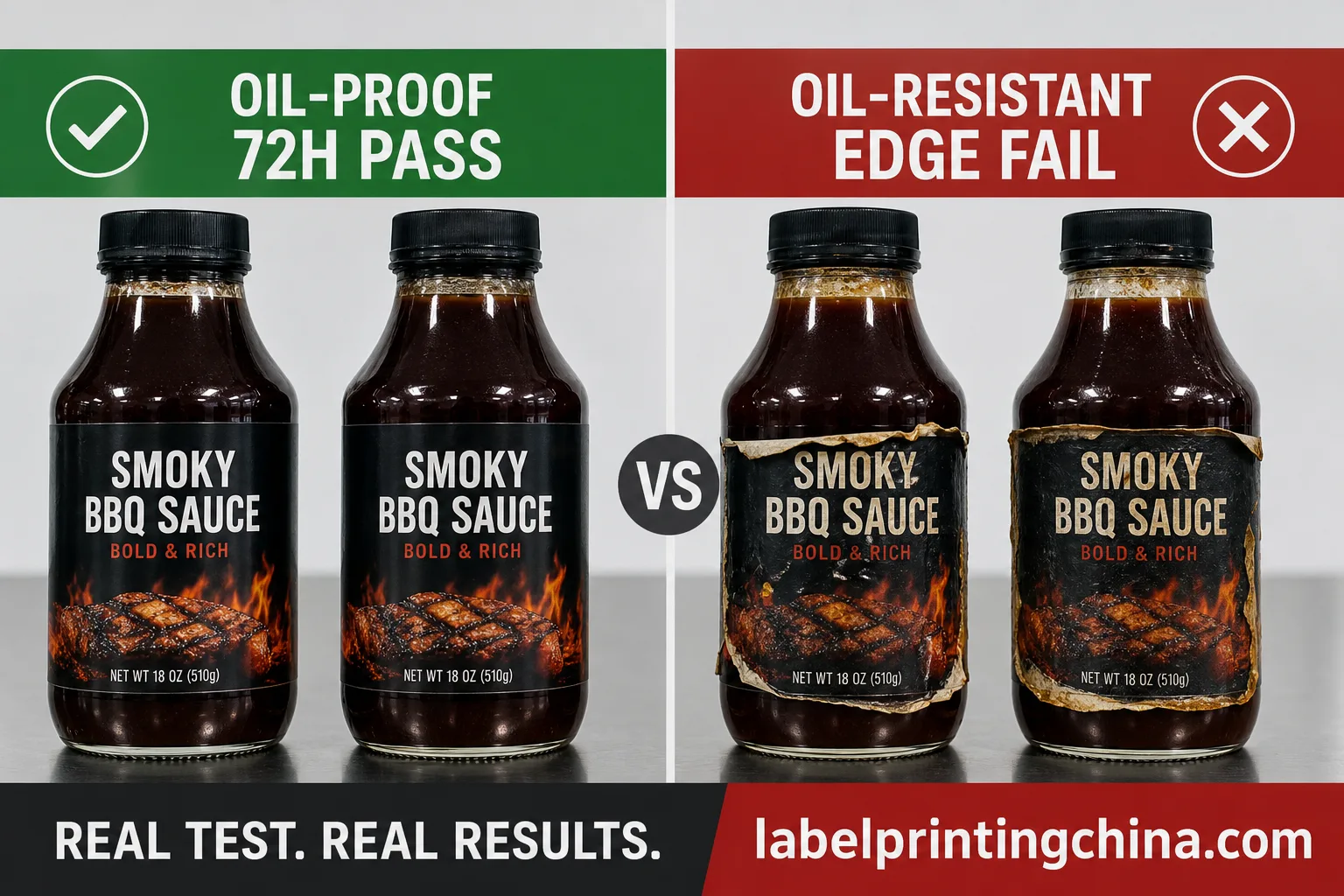
Cap-line drips and shoulder smears deposit a thin lipid film on the label face. Standard water-based flexo inks absorb those triglycerides, the pigment phase separates, and fine type reads as a permanent gray shadow within 48 hours on retail shelves.
For an actual sauce-bottle project, use oil-resistant sauce labels to align the container, oil exposure, refrigeration needs, and application method before requesting a quote.
Even film face stocks survive longer than paper—but only when the overlaminate seals the trim line and the adhesive resists plasticizer migration from PET squeeze bottles. A «waterproof» SKU without grease-barrier laminate still fails when oil tracks under the edge during hand apply on a warm fill line.
Run a quick diagnostic before you blame artwork: wipe three labeled bottles with a dry cloth after 24h at 35°C shelf simulation, then hold at 45° and inspect the cap band under raking light. Labels that looked crisp at room temperature often show micro-lift where oil pooled against the shoulder radius.
| Failure Signal | Likely Cause | Pass / Fail |
|---|---|---|
| Ink darkens under cap band | Non-oil-resistant ink + lipid soak | Fail → swap ink system |
| Edge lift after oily wipe | Matte laminate wicks at trim | Fail → gloss barrier laminate |
| Uniform haze on PET bottles | Plasticizer attack on acrylic | Fail → oil-tolerant adhesive |
| No darkening after 72h oil soak | Locked oil-proof stack | Pass → approve golden sample |
For the full decision tree on when a protective coating upgrades a borderline oil-resistant spec, see the guide on oil proof sauce labels and how ink blackening differs from laminate edge creep on hot-fill SKUs.
Oil-Proof vs Oil-Resistant Face Stacks Compared
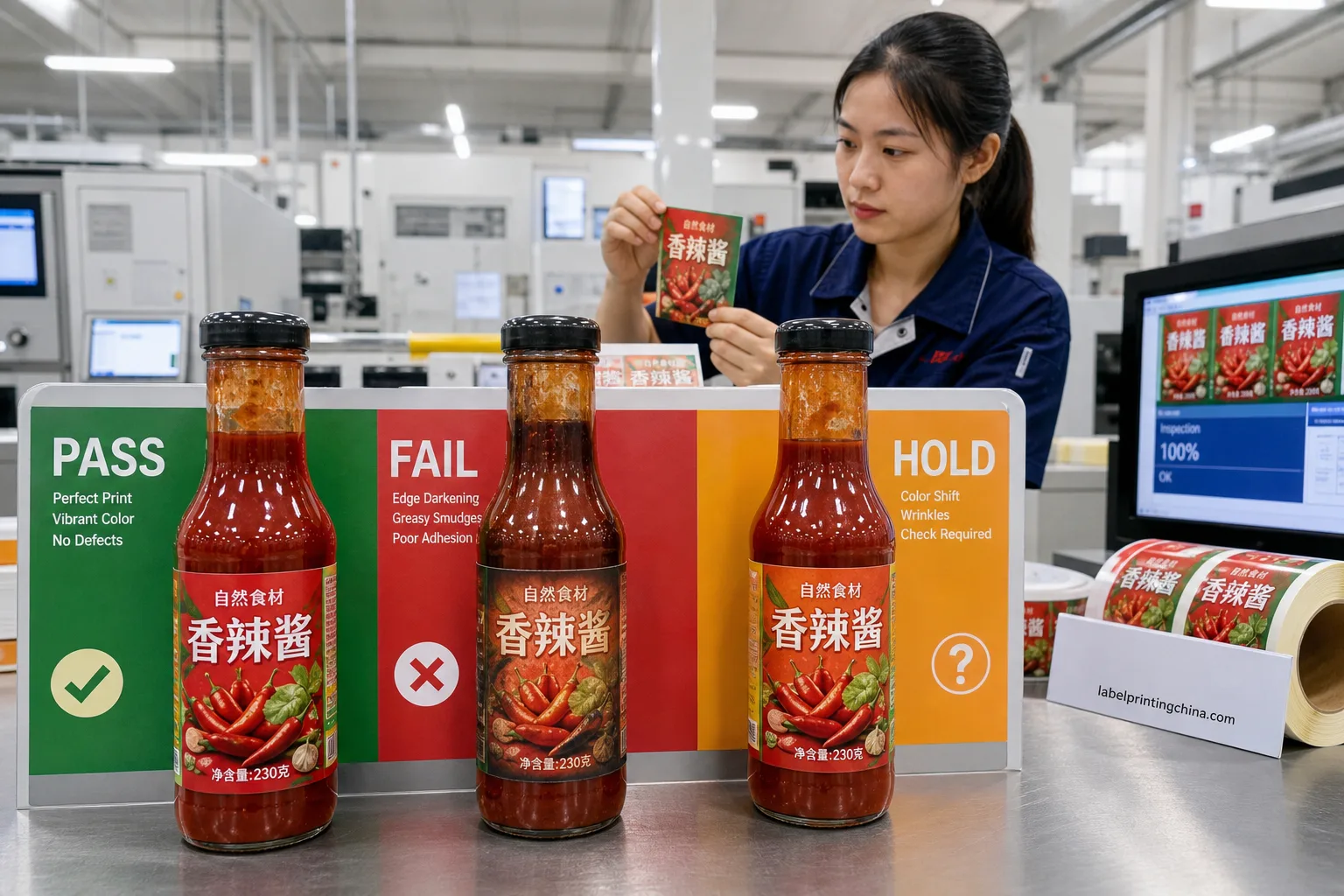
Suppliers mix these terms on the same quote line. Oil-resistant means surface grease can be wiped without immediate smear—but edges and barcode zones may still fail after repeated contact.Oil-proof means zero visible ink migration and no trim lift after a defined soak protocol, typically 72 hours in vegetable oil at 40°C.
Match the term to your fill and handling reality. Artisan jars wiped once at a farmers market need a lower bar than hot-sauce SKUs that sit cap-down in a warm case for two distribution legs.
| Stack Claim | Test Method | Typical Use | Pass / Fail |
|---|---|---|---|
| Oil-resistant BOPP + matte | Single dry wipe, 23°C | Dry pantry, low grease | Fail on hot-fill sauce |
| Oil-resistant + UV ink | 24h cap-band oil drip | BBQ sauce, mild oils | Pass if edge sealed |
| Oil-proof PET + gloss laminate | 72h vegetable-oil soak | Hot fill, oily condiments | Pass → lock in PO |
| Paper + flood laminate | Any oil contact | Gift sets, dry apply only | Fail on sauce bottles |
Red flags that signal a quote is marketing-only:
- «Oil proof» with no named soak temperature, duration, or oil type
- Film face stock listed without laminate grade (gloss vs matte changes wicking)
- Ink system omitted—UV, solvent, or water-based flexo behave differently under lipids
- No golden sample hold tied to your actual bottle alloy and fill temperature
Curved glass and PET jars with compound shoulders need extra radius compensation on custom labels for jars so oil pools at the trim line instead of running under a flat die designed for cylinders.
Face, Laminate, and Ink Chemistry
A single «oil-resistant film» SKU hides three independent choices. Face stock sets stiffness and barrier. Laminate sets edge seal and wipe behavior. Ink chemistry sets whether cap-line grease turns your brand color into sludge.
Route all three in one RFQ line—changing ink after plates are made without re-running soak tests is the fastest path to a mid-season reprint on chili oil and sesame dressing SKUs.
| Layer | Oil-Proof Route | Fail Mode | Pass / Fail |
|---|---|---|---|
| Face stock | White BOPP 2.4mil or clear PET 2.0mil | Paper swell under oil | Pass → film only |
| Laminate | Gloss 12µ grease-barrier overlam | Matte wicks at trim | Pass → seal edge band |
| Ink | Oil-tolerant UV or solvent flexo | Water-based pigment migration | Pass → 72h soak report |
| Adhesive | Permanent acrylic, oil-tolerant grade | Plasticizer creep on PET | Pass → peel 18–22 N/25mm |
Based on 18 years of technical expertise exporting food labels from China, Label Printing China archives the ink lot and laminate SKU on every golden sample bag before a 500-roll release—mass print without that linkage is treated as a hold, not a schedule slot.
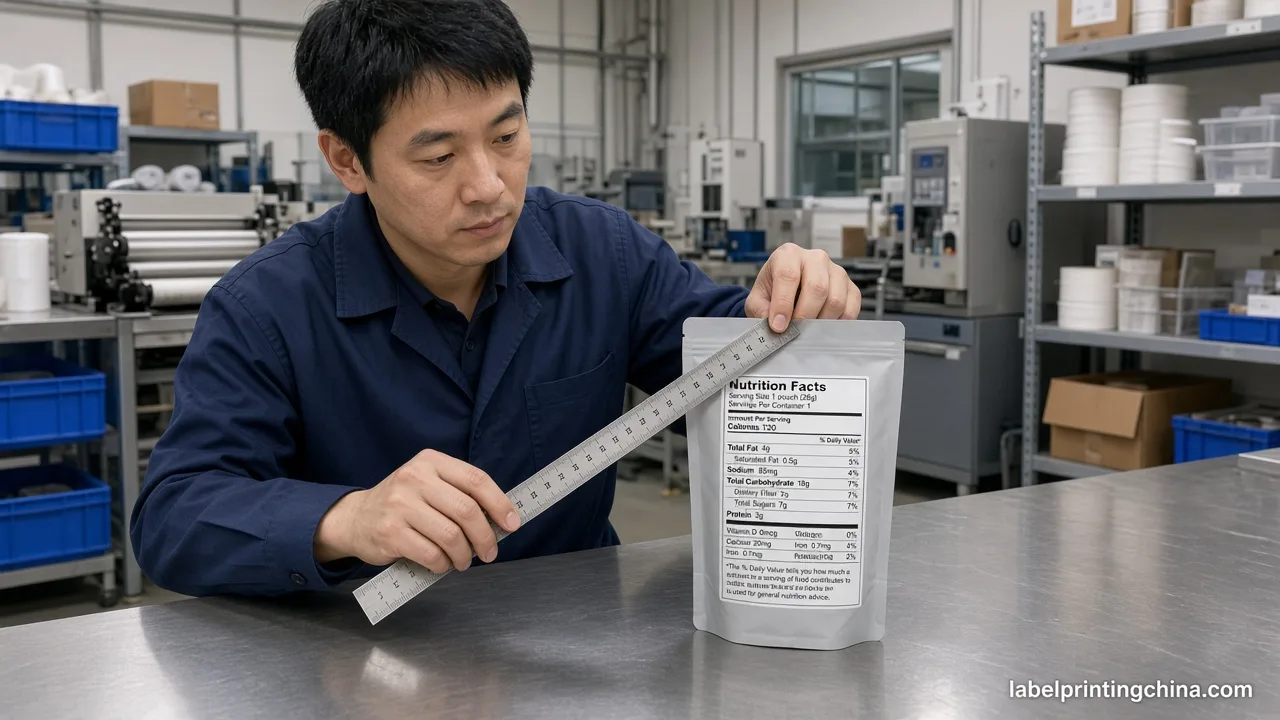
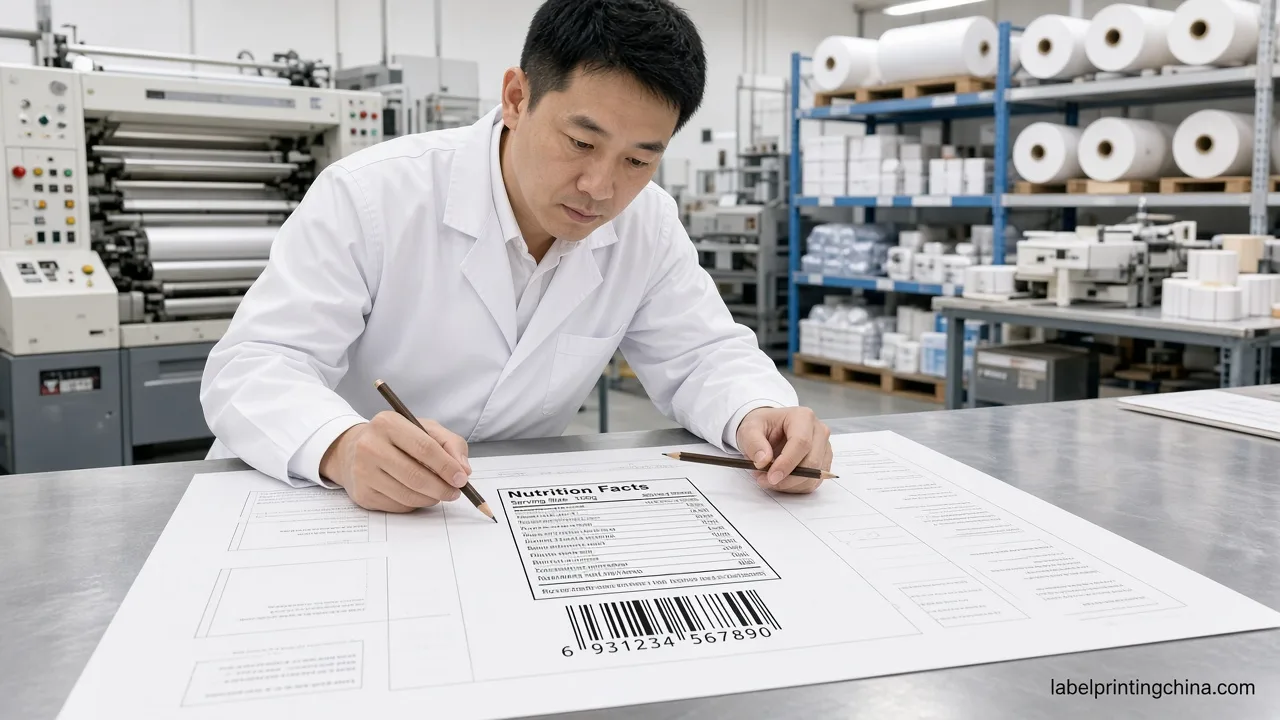
Mandatory copy on sauce SKUs must stay legible after the same oil exposure. Cross-check panel layout against 21 CFR Part 101 before you shrink ingredient type to fit a narrow shoulder—reprints triggered by unreadable net quantity cost more than one extra millimeter of die width.
Test your stack on real sauce bottles
Send jar photos with fill temperature and oil type. Receive printed samples on oil-proof BOPP or PET with grease-barrier laminate—run the 72-hour soak on your actual shoulder geometry.
Surface Prep and Grease-Tolerance Testing on Sauce Jars
Even the right triple stack fails when labels land on cap-line oil, rinse water, or mold-release residue. Hand-fill artisan lines see this at every batch change; semi-auto lines see it when warm sauce flashes on the shoulder before the applicator reaches the bottle.
Standardize a grease-tolerance protocol in your PO—not «oil resistant» as a marketing checkbox. Hold three production bottles through the full cycle before you approve mass print.
- Apply labels to dry bottles at ≥25°C surface temp; log alloy (glass vs PET) on the sample tag
- Deposit 0.5 mL vegetable oil on the cap band; store upright at 40°C for 72 hours
- Dry-wipe once with lint-free cloth; inspect ink migration and edge lift under raking light
- Wet-wipe with 5% IPA solution; confirm barcode quiet zone stays readable
- Fail any darkening, lift, or smear—swap ink or laminate before releasing plates
Peel adhesion on oily PET still needs 18–22 N/25mm on a 25mm strip after the soak—not a room-temperature check on a clean panel. What this means on your line: specimens that pass dry but fail post-soak usually trace to an adhesive rated for pantry service, not condiment fill.
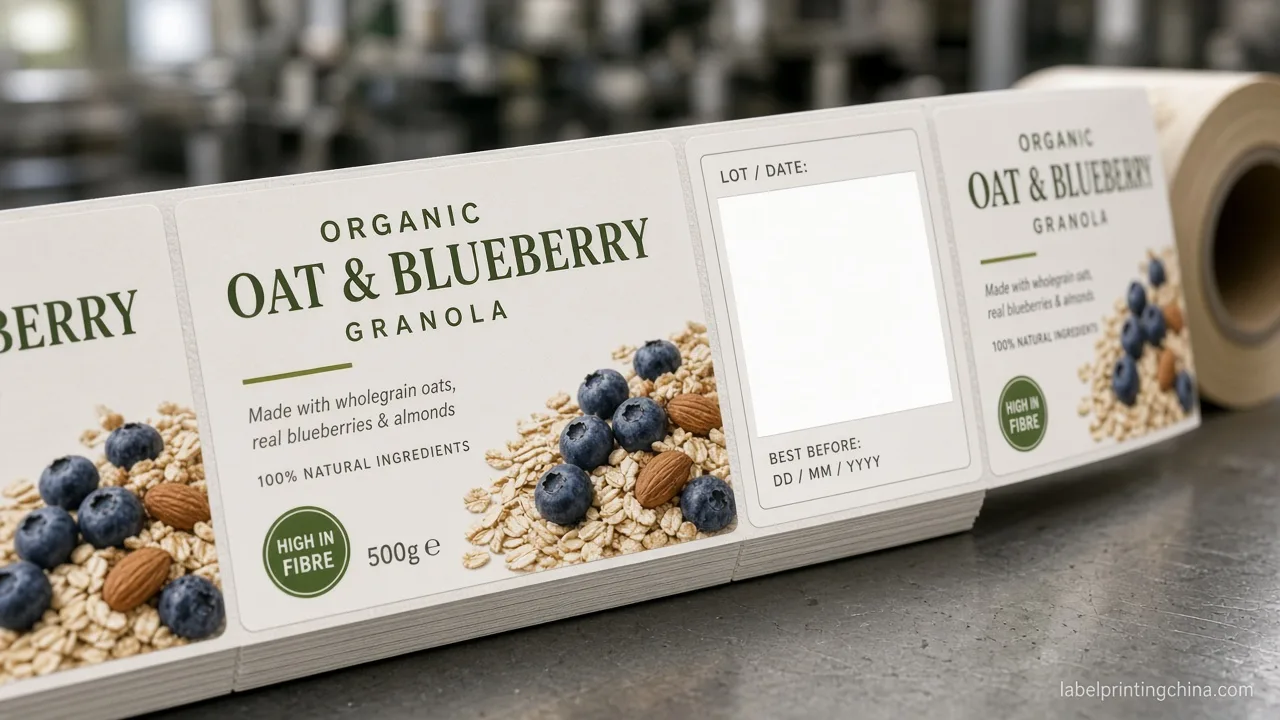
Machine-ready rolls reduce registration drift when you move from hand apply to wrap stations. Pair your oil-proof stack with custom food labels built for sauce SKUs at 76 mm (3″) core and verified unwind tension for oily shoulders.
MOQ Routing and RFQ Checks for Sauce Brands
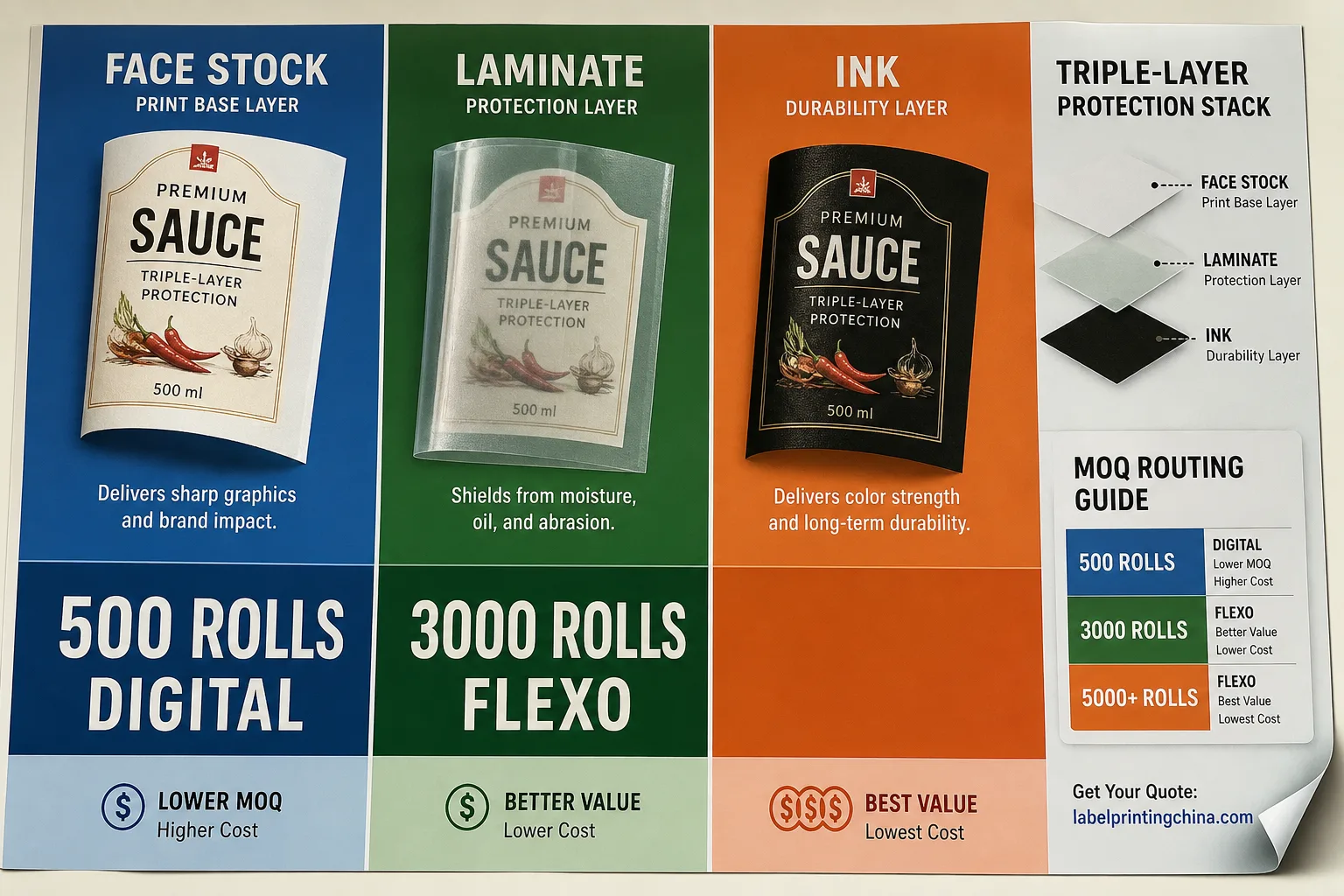
food label MOQ guide A quote that looks 10% cheaper per thousand often hides plate rules that block an adhesive swap when you add a sesame-oil SKU mid-season.
Ask for landed pricing that separates ex-works label cost, die ownership, and air freight for harvest windows. Request explicit 72-hour oil-soak test reports with temperature and oil type noted—not a one-line «excellent oil resistance» on a marketing sheet.
| Run Size | Recommended Route | Setup Note | Pass / Fail |
|---|---|---|---|
| 500–1,000 rolls | Digital + oil-proof BOPP | No plate; higher unit OK | Pass → 72h soak hold |
| 1,000–3,000 rolls | Flexo short run | Shared die saves $80–$150 | Pass if ink locked in PO |
| 3,000+ rolls | Flexo + dedicated oil-tolerant ink | Lowest unit; plan 3-week lead | Pass → golden sample archive |
Before you sign, confirm the converter documents laminate SKU and ink lot on the golden sample bag and ties both to your PO revision. Food-contact claims should align with direct-food labeling expectations under CDC food safety basics so ingredient panels stay credible after oil wipe in retail cases.
Oil-Proof Sauce Bottle Labels
What labels are best for sauce bottles?
Oil-proof routes use film face stock—white BOPP or clear PET—with gloss grease-barrier laminate and oil-tolerant UV or solvent flexo ink. Oil-resistant SKUs without a named soak protocol fail on hot-fill chili oil and sesame dressing within one distribution leg.
Are oil proof food labels food safe?
Food-safe means the adhesive and face stock meet direct or indirect food-contact rules for your jurisdiction, documented on the technical data sheet—not the marketing word oil-proof alone.Request FDA or EU migration statements and match ink chemistry to whether the label touches the bottle shoulder only or wraps near the fill line.
How do you keep labels from peeling on oily bottles?
Apply to dry bottles above 25°C, use oil-tolerant permanent acrylic adhesive rated 18–22 N/25mm peel after soak, and seal edges with gloss overlaminate. Run the 72-hour vegetable-oil soak with dry and wet wipes before approving mass print.
What is the MOQ for custom sauce bottle labels?
Factory-direct MOQ for roll labels on sauce SKUs typically starts at 500 rolls with digital or short-run flexo routing. Below that, sheet labels or split MOQ with another SKU may cost less per unit than forcing full flexo setup on 200 rolls.