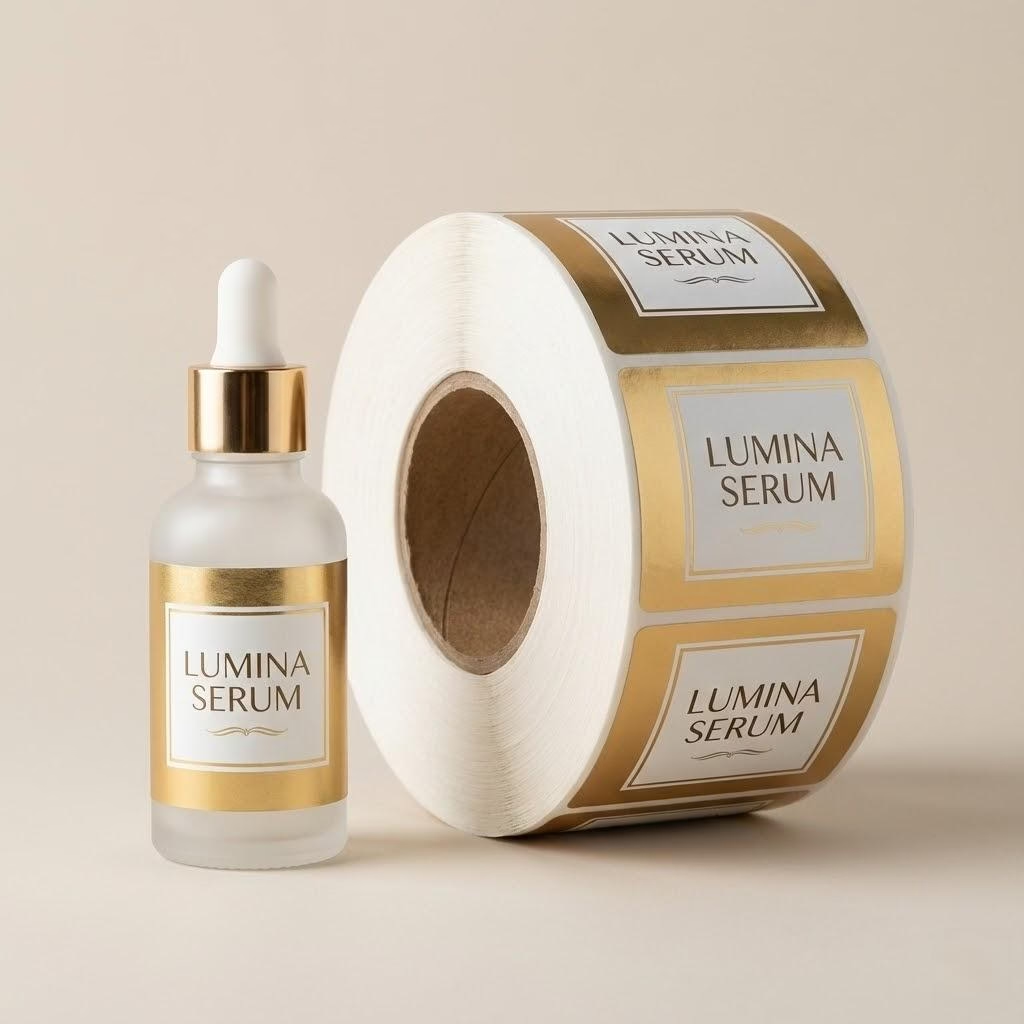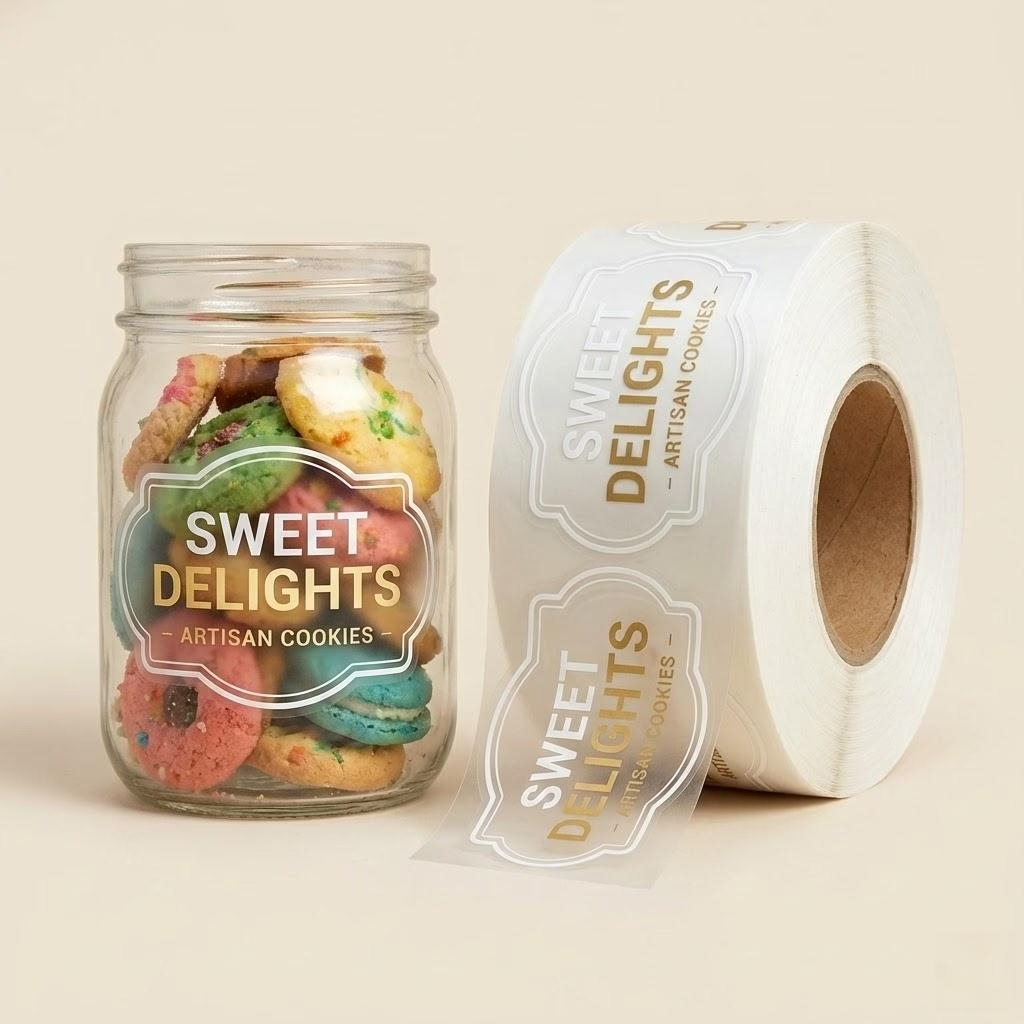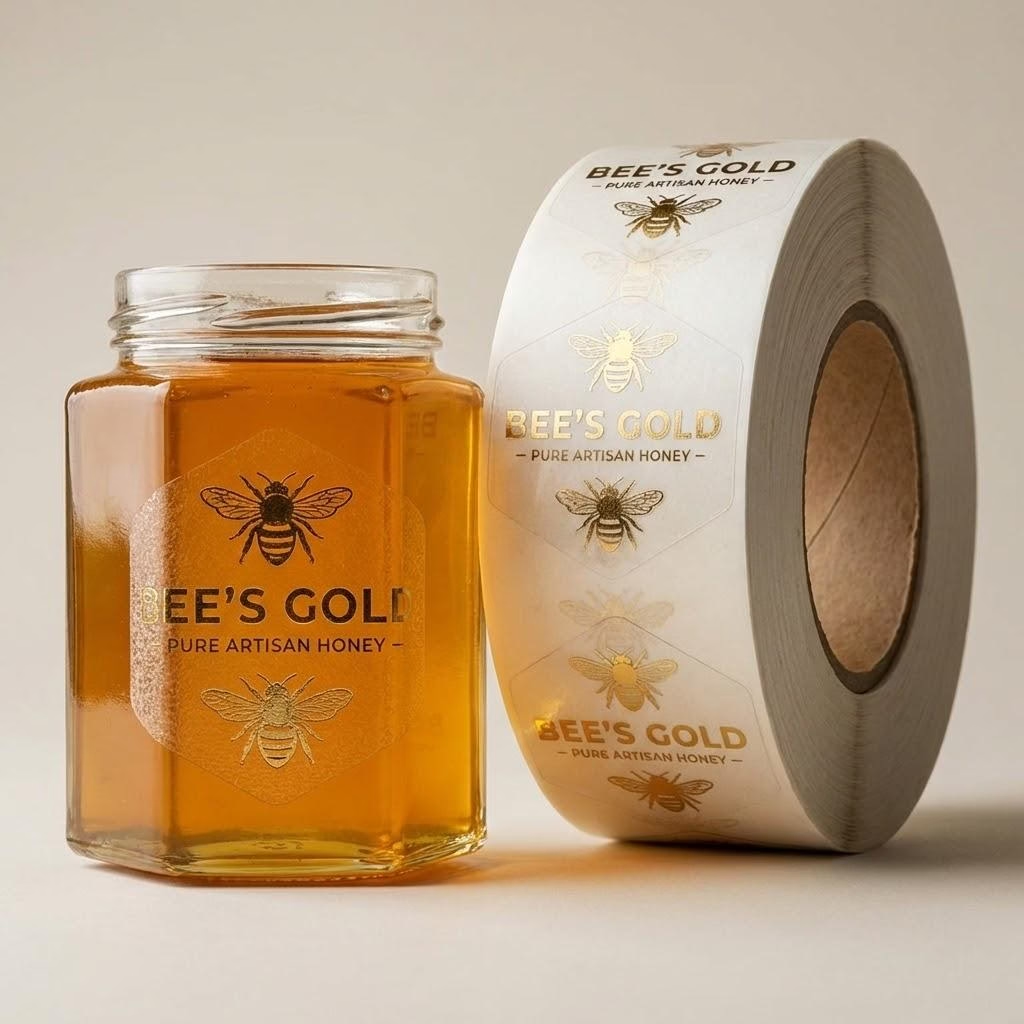
When a customer picks up a $80 bottle of whiskey instead of a $30 one, they are not tasting the difference. They are holding it. The weight of the bottle, the texture of the label, the way light catches a bronze foil accent — these are the silent salespeople of the premium spirits aisle.If you are a craft distiller or an established liquor brand looking to justify a higher price point, your label finish is where that perception begins.
This guide breaks down the four premium label finishes that directly impact shelf pricing for spirit and liquor bottles — hot foil stamping, cold foil printing, embossed and debossed textures, and wet-strength paper for ice bucket scenarios.Each section covers the visual effect, cost implications, minimum order feasibility, and the production realities we have refined over 18 years of label manufacturing experience.
Read on to discover which combination of finishes will elevate your spirit bottle to premium status.
QUICK TAKE
Premium spirit label finishes — hot foil, embossing, and wet-strength paper — add $0.15 to $0.35 per label but support $60 to $120 retail price points. The finish is the physical evidence of premium positioning.
Hot Foil Stamping — Metallic Bronzing for Luxury Shelf Impact
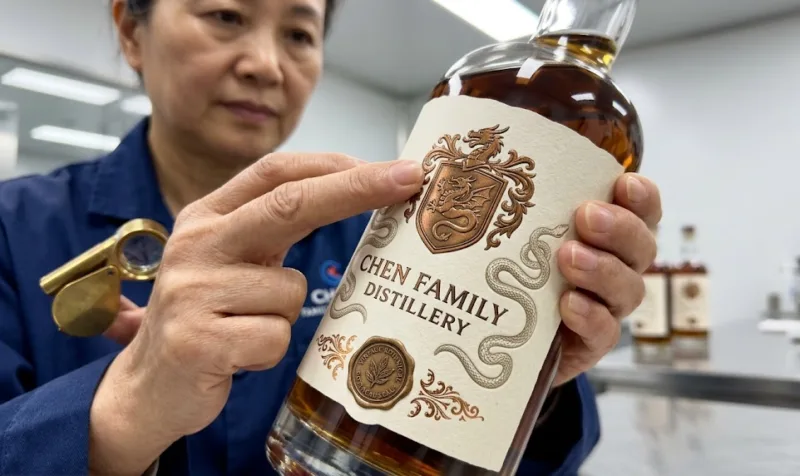
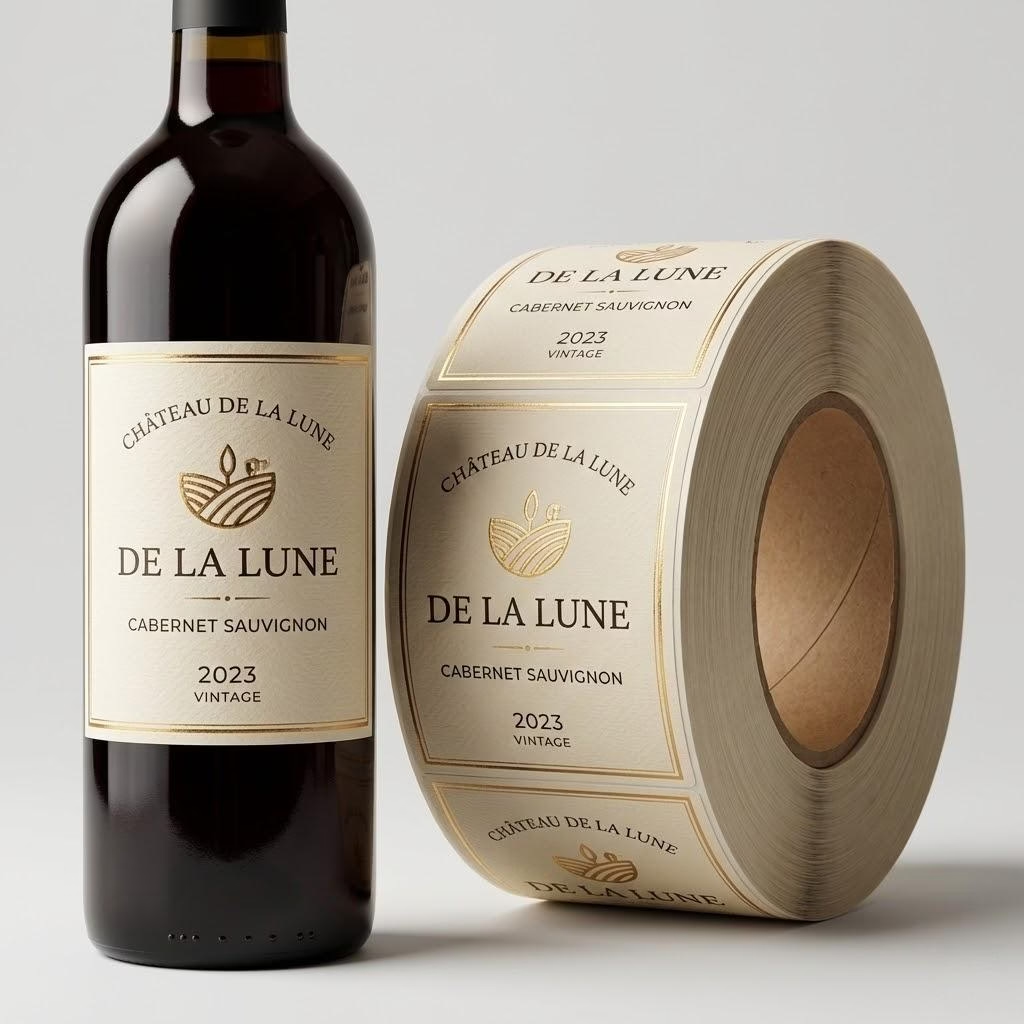
Hot foil stamping is the gold standard of premium label finishes, literally. A heated metal die presses metallic foil onto the label surface, creating a reflective area that catches light from every angle.For spirit and liquor brands targeting the premium shelf, bronze and gold foils communicate heritage and craftsmanship more effectively than any other visual element.
When whisky needs a warm antique tone—not generic bright gold—lock foil code, stock, and swatch with our antique gold foil labels.
The process works on both uncoated art paper and coated BOPP film. On art paper, the foil sinks slightly into the fibers, producing a sophisticated matte-metallic look. On BOPP, the foil sits on top with a high-shine mirror effect that maximizes visibility under retail lighting.The choice between matte and shine depends on your brand positioning — heritage brands tend toward matte art paper with bronze foil, while contemporary craft spirits often prefer the sharper contrast of gold foil on white BOPP.
Production reality check: hot foil requires a custom brass die for each design, which adds a one-time setup cost of approximately $80 to $150 per color.For orders above 5,000 labels, this cost distributes evenly and the per-label premium becomes reasonable. Below 2,000 units, consider cold foil as a more economical alternative that achieves a similar metallic effect.
Based on industrial precision standards, we engineer spirit labels with hot foil application accuracy within 0.2 mm tolerance, ensuring the metallic accent aligns perfectly with your logo or border design on every single label in the run.
Cold Foil Printing — Cost-Effective Metallic for Small Batches
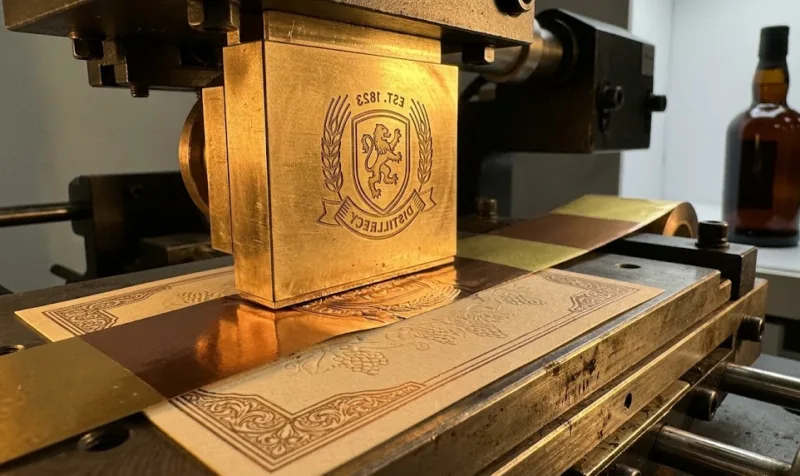
Cold foil printing offers the same metallic visual impact as hot foil but uses a different application method.Instead of a heated die, cold foil uses UV-curable adhesive and a transfer process that bonds the foil to the label substrate. The result is a shiny metallic finish that works beautifully for spirit brands running smaller batches.
The critical advantage for craft distillers: cold foil has no brass die requirement. This means you can produce 500 to 2,000 premium metallic labels without the one-time die cost, making it the most accessible premium finish for small-batch spirits, gins, and craft whiskies testing their market position.
There is a trade-off. Cold foil produces a slightly flatter metallic effect compared to the dimensional, slightly embossed feel of hot foil. Most consumers cannot tell the difference on the shelf, but if your brand story centers on traditional craftsmanship, hot foil carries more authenticity in its tactile delivery.
Embossed and Debossed Finishes — Tactile Quality That Sells
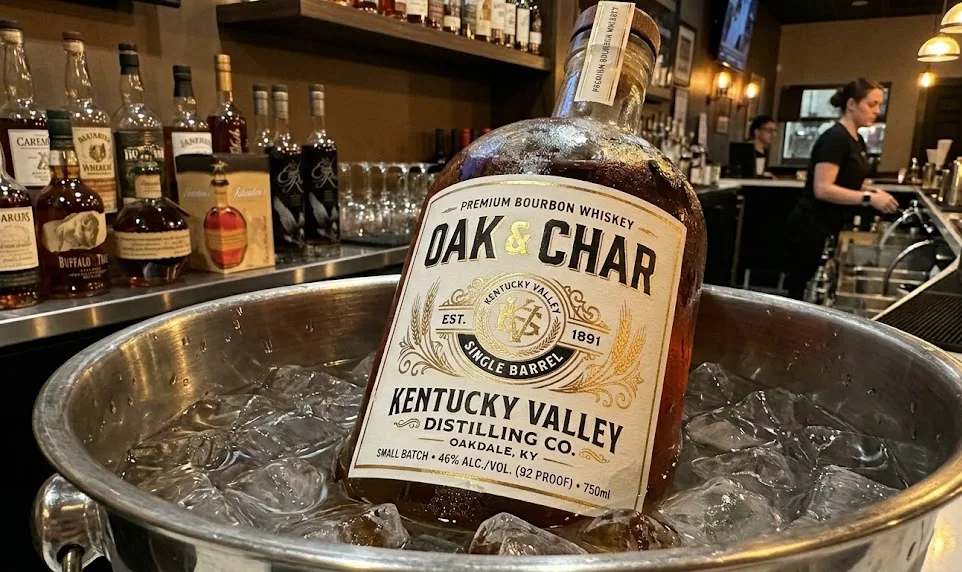
Premium spirits buyers do not just look at labels — they touch them. Embossing raises specific design elements above the label surface, while debossing presses them below. Both techniques create a three-dimensional texture that signals quality the moment a hand grips the bottle.
For spirit and liquor labels, the most effective embossing applications are brand logos, family crests, and decorative border patterns.A raised bronze-foil logo against a deep matte black label creates the kind of contrast that justifies a $60 to $120 retail price point. The tactile feedback tells the buyer this is not a mass-produced product.
Embossing works best on heavier label stocks — 80 gsm to 120 gsm art paper provides enough fiber depth for a noticeable raised effect.Thinner films can accept embossing but the relief is subtler. Combine embossing with hot foil for the maximum premium impact: the foil catches the light while the raised surface creates shadows that add depth and dimension.
From a production standpoint, embossing requires a matching die set, similar to hot foil. The setup cost is comparable, and the two processes can often be combined in a single pass, reducing total production time when both finishes are specified together.
Wet-Strength Paper — Ice Bucket Durability Without Compromise
Spirit bottles live in challenging environments. Premium whiskey sits on a shelf for months, but vodka and gin frequently end up in ice buckets at bars, restaurants, and events. Standard paper labels absorb moisture, warp, peel, and lose their premium appearance within minutes of submersion.
Wet-strength paper solves this problem. Treated during manufacturing with chemical agents that cross-link the cellulose fibers, wet-strength paper maintains its structural integrity even after hours of ice bucket submersion.The label stays flat, the print stays sharp, and the finish — whether foil, embossing, or spot UV — remains intact.
This is not a theoretical benefit. An Australian spirits client ordering 5,000 to 15,000 labels specifically required wet-strength paper combined with bronze foil because their bottles spent extended time in restaurant ice buckets.Standard paper labels were failing in the field, damaging the brand’s premium positioning. After switching to wet-strength paper with superior peel adhesion rated at 18 to 22 N/25mm, field complaints dropped to zero.
| Material | Ice Bucket Survival | Premium Feel | Cost Level | Best For |
|---|---|---|---|---|
| Wet-Strength Paper | 6 to 8 hours | High — tactile, warm | Medium | Whiskey, rum, premium gin |
| BOPP Film | 24+ hours | Medium — smooth | Medium | Vodka, flavored spirits |
| Standard Art Paper | 15 minutes | Very High — but fragile | Low | Display-only bottles |
| Metallic BOPP | 24+ hours | High — built-in shine | High | Contemporary spirits |
The table makes the case clearly: if your spirit bottle will see ice bucket time, wet-strength paper is the optimal balance of premium feel and functional durability.
Combining Finishes — The Premium Multiplier Effect
The highest shelf prices in the spirits industry come from labels that combine multiple premium finishes. A single technique is good; layered techniques create the kind of label that buyers photograph and share.
Consider this proven combination for premium whiskey and spirit labels:
First, start with wet-strength art paper as the base substrate. This gives you a warm, tactile foundation that feels expensive and survives ice bucket exposure. Second, apply hot foil stamping in bronze or gold to the brand logo and key decorative elements.Third, add embossing to the logo area so the foil sits on a raised surface, catching light from multiple angles. Finally, apply a spot UV coating to specific background patterns — this creates a glossy contrast against the matte paper that reads as intentional design rather than random shine.
This four-layer approach is what separates a $40 bottle from an $80 bottle on the shelf. The materials cost difference between a basic label and this premium combination might be $0.15 to $0.35 per label, but the perceived value increase at retail is measured in dollars, not cents.
Small-Batch Feasibility — What Premium Finishes Can You Actually Get?
Many craft spirit brands assume premium finishes are out of reach for small production runs. The reality is more nuanced. Here is what is practically achievable at different order volumes:
For 500 to 2,000 labels, cold foil printing is your best entry into metallic finishes with no die cost. Spot UV coating is also available at this volume and adds a premium glossy accent. Full-color printing on wet-strength paper gives you the durability upgrade without finish limitations.
For 2,000 to 5,000 labels, hot foil stamping becomes cost-effective as the die cost distributes across more units. Embossing opens up at this range, and you can begin combining two finishes — for example, hot foil plus spot UV — without the per-label cost becoming prohibitive.
For 5,000 labels and above, the full premium toolkit unlocks. Four-layer combinations — wet-strength paper, hot foil, embossing, and spot UV — deliver maximum shelf impact at a per-label cost that makes sense for established brands with consistent volume.
We support brands at every stage of this journey with 76 mm (3″), 2″, and 1″ core options for automatic applicators, plus large-core reels for Zebra industrial printers. Whether you are running a small craft line or a high-volume established brand, the production setup adapts to your filling line requirements.
Cost-Benefit Reality of Premium Spirit Label Finishes
Investing in premium finishes is a business decision, not just an aesthetic one. Here is the practical math based on production data from spirit brand clients:
A standard paper label with single-color printing might cost $0.08 to $0.12 per label at 5,000 units. Adding hot foil in bronze increases this to $0.12 to $0.16 per label.Adding embossing on top brings it to $0.16 to $0.22 per label. The full premium combination — wet-strength paper, hot foil, embossing, and spot UV — lands around $0.22 to $0.35 per label.
Against a spirit bottle retailing at $60 to $120, even the maximum label cost represents less than one percent of retail price.Yet that investment is what creates the shelf perception that supports the price point in the first place. Premium finishes are not an expense — they are the physical evidence of the premium positioning you are asking customers to pay for.
Buyer Takeaway
Choose a premium finish only after you have matched it to the bottle surface, the handling environment and the shelf effect you need to protect. A beautiful sample is not yet a production-ready specification.
Spirit Bottle Label Finish Decision Brief
Use this brief with the RFQ, sample approval and production release. It turns the material discussion above into a comparable buyer decision.
| Decision point | What to define before quoting | Evidence to approve |
|---|---|---|
| Bottle and application | Glass shape, label panel, fill/ice exposure and application method | Applied sample on the actual bottle |
| Shelf effect | Where foil, texture or embossing must be visible | Proof viewed at normal shelf distance |
| Durability | Wet-strength, scuff and handling expectations | Agreed inspection points after the relevant test |
| Production scope | Finish, artwork revision, quantity and pack-out | Comparable written quote |
Premium-Finish Approval Checklist
- Approve the finish on the real bottle rather than a flat swatch.
- State which visual effect is essential and which is optional before comparing costs.
- Keep the approved proof, material construction and inspection reference with the production order.
Making Your Decision — Next Steps for Spirit Brands
Choosing the right premium finishes for your spirit bottle labels comes down to three questions. What shelf price are you targeting? Will your bottles see ice bucket time? What is your order volume?
If you are launching a premium craft spirit at the $40 to $60 range, start with cold foil and spot UV on wet-strength paper. This gives you metallic impact and durability without requiring large minimum orders.If you are an established brand at $60 to $120, invest in the full combination — hot foil, embossing, and wet-strength art paper. The layered effect is what your price point demands.
Whatever your stage, the right label finish is the difference between a bottle that sells itself and one that needs a story to justify its price. Explore our custom beverage label solutions to see premium finish samples and request a material kit tailored to your spirit category.
For a bottle-specific brief covering front, back, or neck labels, wet-strength material, foil, embossing, and SKU quantities, start with custom spirit bottle labels before requesting samples or production pricing.
Eighteen years of label manufacturing experience means we have seen every premium finish challenge the spirits industry can present. From bronze foil on heritage whiskey to waterproof BOPP for vodka, the finish you choose today shapes how customers value your brand tomorrow.