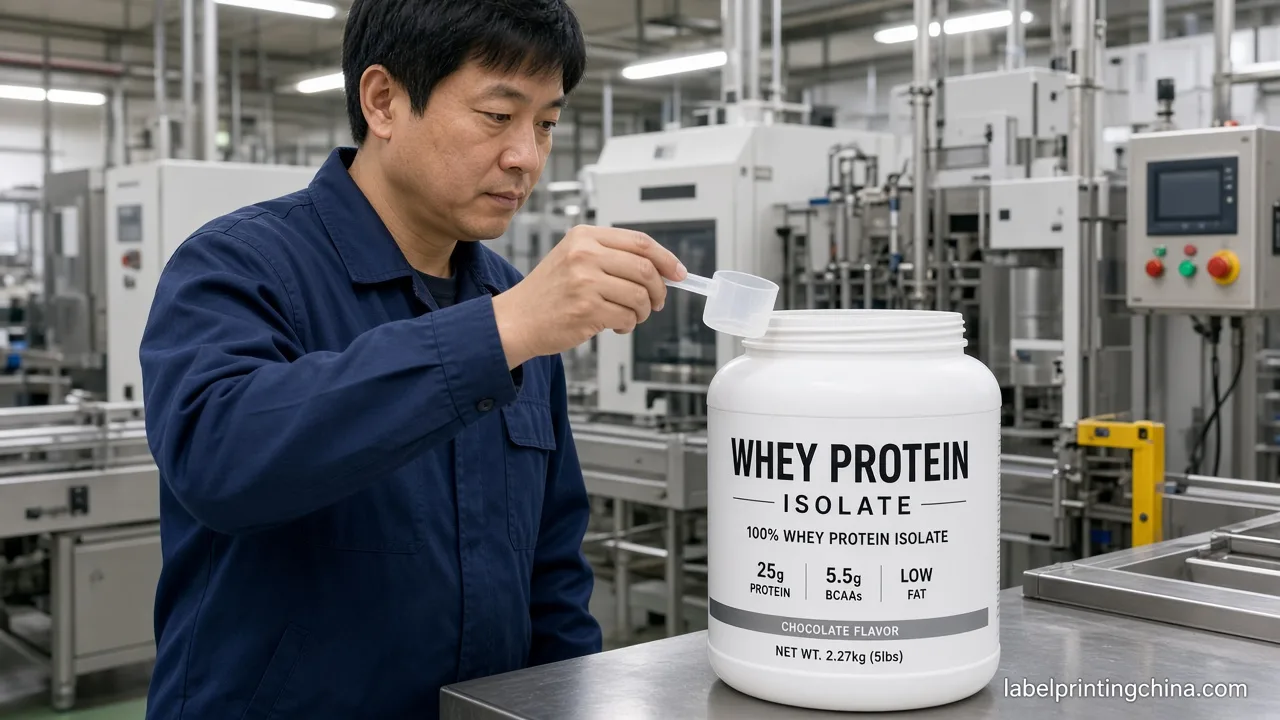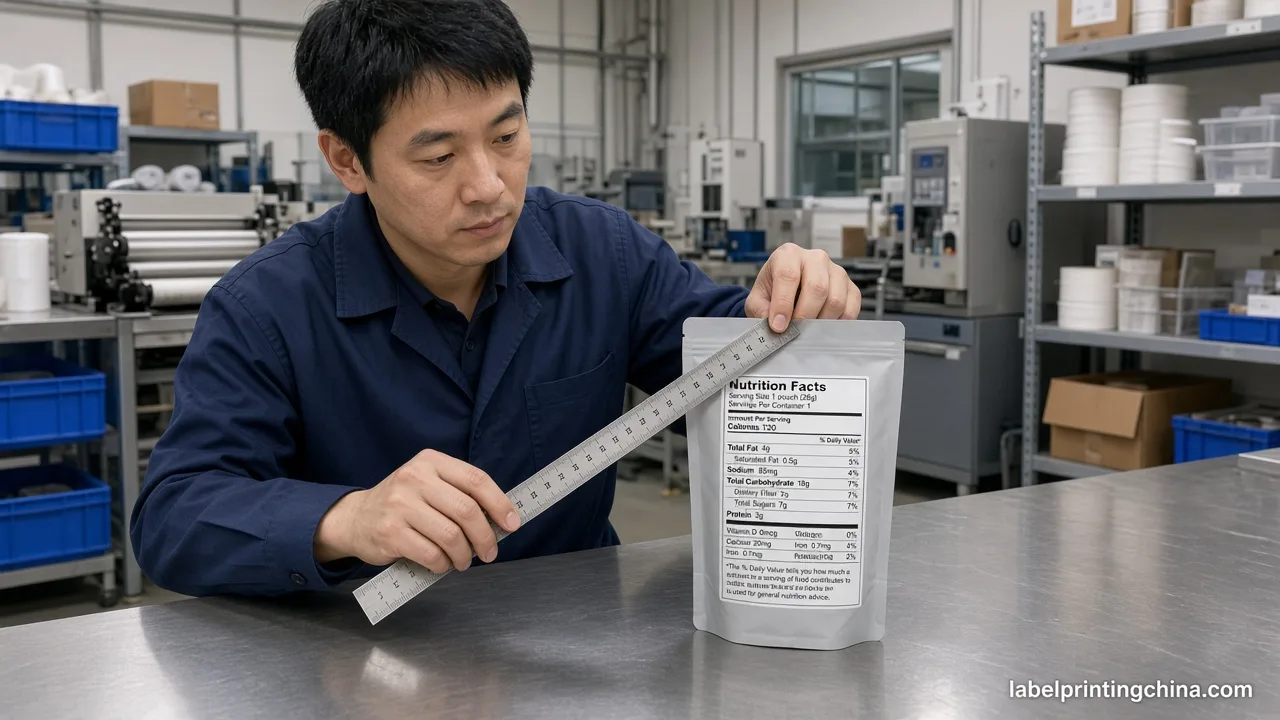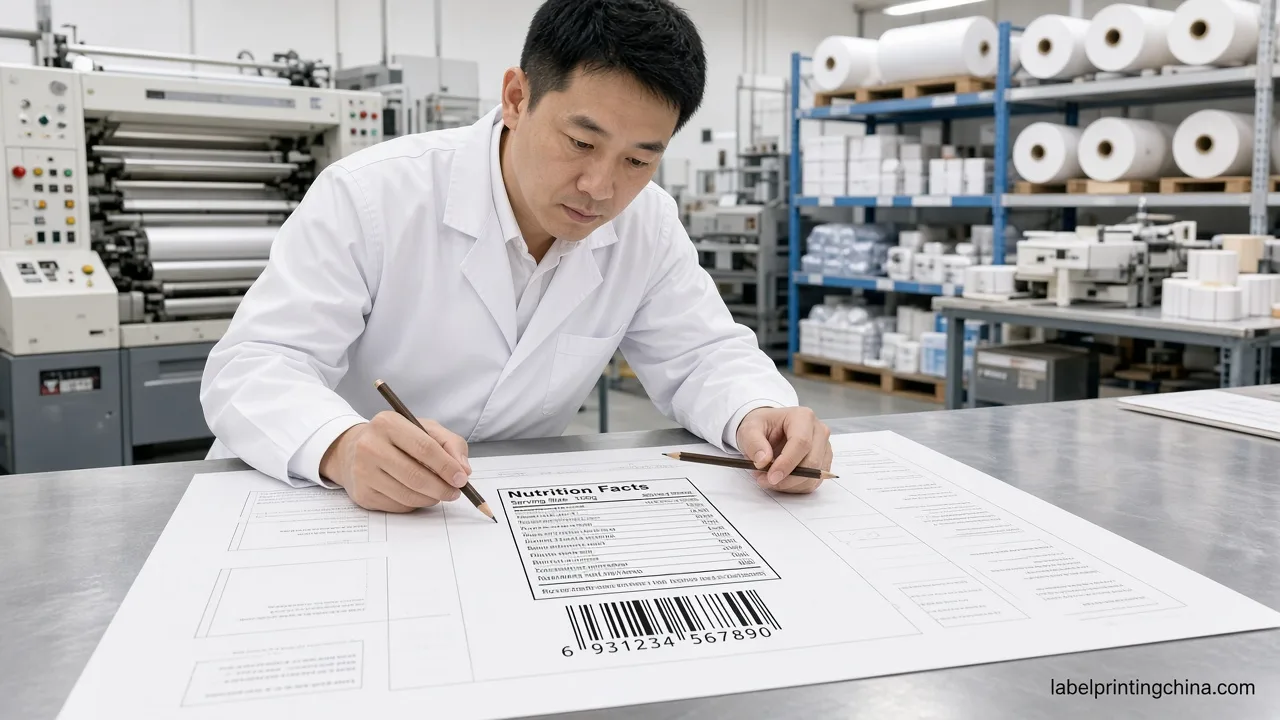
Scaling from 10 SKUs to 100+ can easily trigger catastrophic tracking errors and applicator jams on your packaging floor. But it doesn’t have to be that way. Discover the exact industrial variable data label printing process that guarantees zero sequence drops and keeps your automated lines running flawlessly.
Variable data label printing ensures zero tracking errors by utilizing Poka-Yoke pre-press data parsing and 100% inline CCD vision inspection. This dual-verification process prevents database shifts, verifies ANSI-grade scannability, and creates machine-ready rolls for high-speed applicators.
Want to see exactly how this works on a high-speed production floor? Drawing from 18 years of technical expertise in industrial manufacturing, the following breakdown reveals the precise mechanical tolerances and data protocols you need to bulletproof your supply chain. Let’s dive right in.
The Hidden Risks of Scaling SKUs
When sourcing dynamic SKU labels, evaluating suppliers purely on upfront unit price creates a dangerous illusion of savings.Procuring custom variable text printing from a basic digital press might suffice for a short promotional run, but standard printing infrastructure collapses under the rigid physical and digital demands of industrial-scale automation.
The true financial impact of variable data label printing must be evaluated through Total Cost of Ownership (TCO). A generic label that appears cost-effective on a purchase order often conceals critical mechanical flaws that trigger catastrophic secondary costs on the packaging floor.For instance, if a supplier uses standard 62g glassine release liners without precisely calibrating the release force, the extreme mechanical pulling of a high-speed label applicator will snap the backing paper. This physical rupture halts the entire packaging line, inflicting downtime losses ranging from $1,500 to $5,000 per hour.
Beyond mechanical failure, the digital risk is far more severe. When conventional print software processes a complex database containing hundreds of thousands of serialized barcodes, memory overflows frequently cause sequence shifts. A single dropped CSV row translates into duplicated tracking codes.
As Professor Yossi Sheffi, Director of the MIT Center for Transportation and Logistics, has established in his research on supply chain resilience, supply chain vulnerability often stems from a lack of visibility.An unbroken data integration flow is the primary mechanism to mitigate operational risks. A single unreadable serialized barcode represents a critical data rupture, paralyzing warehouse inventory tracking and triggering massive retail compliance penalties.
Standard Procurement vs. Industrial Engineering
| Sourcing Approach | Upfront Cost | Pre-Press Protocol | Physical Tolerance | Operational Impact |
|---|---|---|---|---|
| Standard Digital Print | Marginally Lower | Direct CSV Import (High Risk) | Generic 62g Glassine (High Breakage) | Frequent jams; data shifts; high downtime costs. |
| Industrial Machine-Ready | Optimized / Scalable | Poka-Yoke Hash Reconciliation | Precision Tension & Unwind Control | Zero interruption; seamless high-speed scaling; 100% scannability. |
Quick Guide: If your priority is protecting automated packing throughput and eliminating software data shifting, choose industrial machine-ready engineering.
Pre-Press Data Integrity & The Poka-Yoke Cleaning Protocol
How does an industrial label manufacturer guarantee that a massive, unrefined data matrix translates onto physical rolls without a single dropped digit? The solution lies entirely outside the printing press. It requires an engineering-grade pre-press validation loop.
Many conventional suppliers blindly import your raw database directly into their digital layout software. This is a fatal operational trap.Raw databases generated by enterprise software frequently harbor invisible system line breaks, hidden carriage returns, and formatting anomalies generated during backend exports. If these anomalies hit the RIP (Raster Image Processor) without aggressive filtering, the entire variable printing sequence will shift.
To achieve absolute supply chain traceability, every data batch must pass through a strict mistake-proofing (Poka-Yoke) cleaning protocol before it ever reaches the digital press.
When only lot or date lines change on a stable brand face, read the lot code method guide before you treat every batch as a full VDP reprint.
- Automated Parsing Scripts: Dedicated software washes the database, automatically identifying and isolating phantom characters, hidden spaces, and empty rows.
- Hash Value Reconciliation: The system generates a cryptographic hash of the original database and compares it against the parsed output, verifying exact field-level alignment.
- Zero-Shift Guarantee: By executing this rigid validation loop, the error rate during the data-to-plate conversion is hard-locked at exactly 0%.
Flawless physical label printing relies completely on a continuous, unshifted data stream. Before launching an expansive multi-variant product line, a secure data-to-plate conversion loop must be fully certified by the manufacturer.
This pre-press defense mechanism is the only way to insulate your brand from track-and-trace failures when scaling multiple SKUs. When the data foundation is flawless, the physical printing process becomes a precise execution rather than a gamble.
In-Line CCD Vision Inspection & Guaranteeing ANSI-Grade Scannability
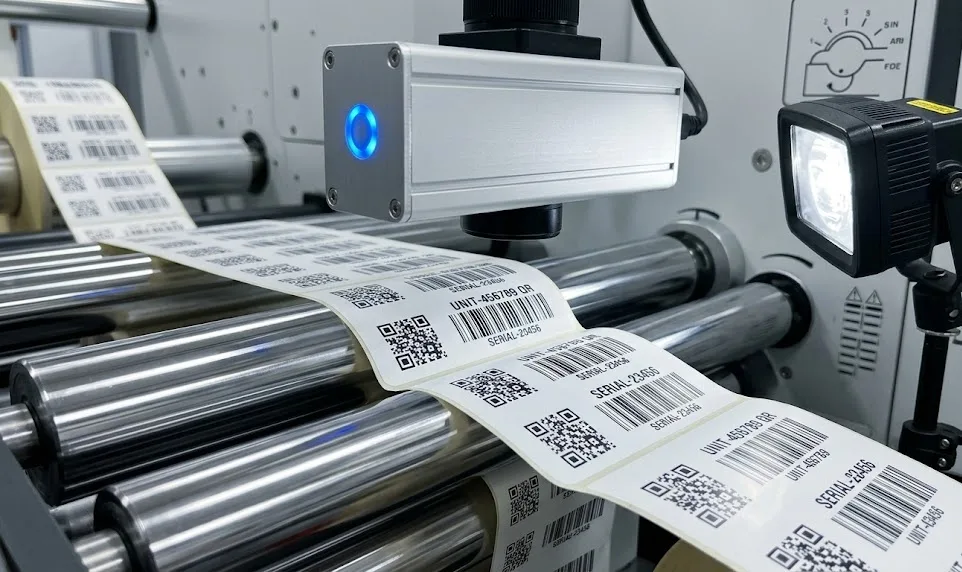
In high-speed digital printing, achieving visual perfection to the human eye is insufficient. Liquid ink naturally spreads as it absorbs into the paper fibers under mechanical pressure.This physical reaction, known as dot gain, causes the dark lines of a barcode to widen and the white spaces to shrink. To a consumer, the barcode looks intact. To an automated optical scanner on your warehouse floor, the diminished contrast renders the label completely unreadable.
Standard visual sampling by press operators cannot detect these micro-fluctuations. Guaranteeing zero tracking errors demands hardware-level intervention.
- 100% In-Line CCD Cameras: Deployed directly on the printing press, these high-speed cameras capture a pixel-level image of every single dynamic QR code and serialized barcode as the web moves at dozens of meters per minute.
- Real-Time Database Synchronization: The captured image is instantaneously cross-referenced with the original cleansed database to verify sequence accuracy.
- Dynamic Contrast Grading: The system dynamically evaluates every printed code against international GS1 standards, checking edge determination, minimum reflectance, and overall symbol contrast.
If micron-level printhead clogging or excessive ink spread causes the contrast to drop below an ANSI Grade B (or ISO 1.5), the CCD system instantly triggers an alert.It physically ejects or clearly marks the defective sequence before the roll ever reaches the final rewinder. This creates an impenetrable quality control loop, ensuring your inventory tracking labels are universally scannable upon delivery and preventing downstream bottlenecks in your automated distribution centers.
A single unreadable label can break an entire logistical sequence, making inline CCD optical tracking the absolute baseline requirement for multi-SKU variable production.
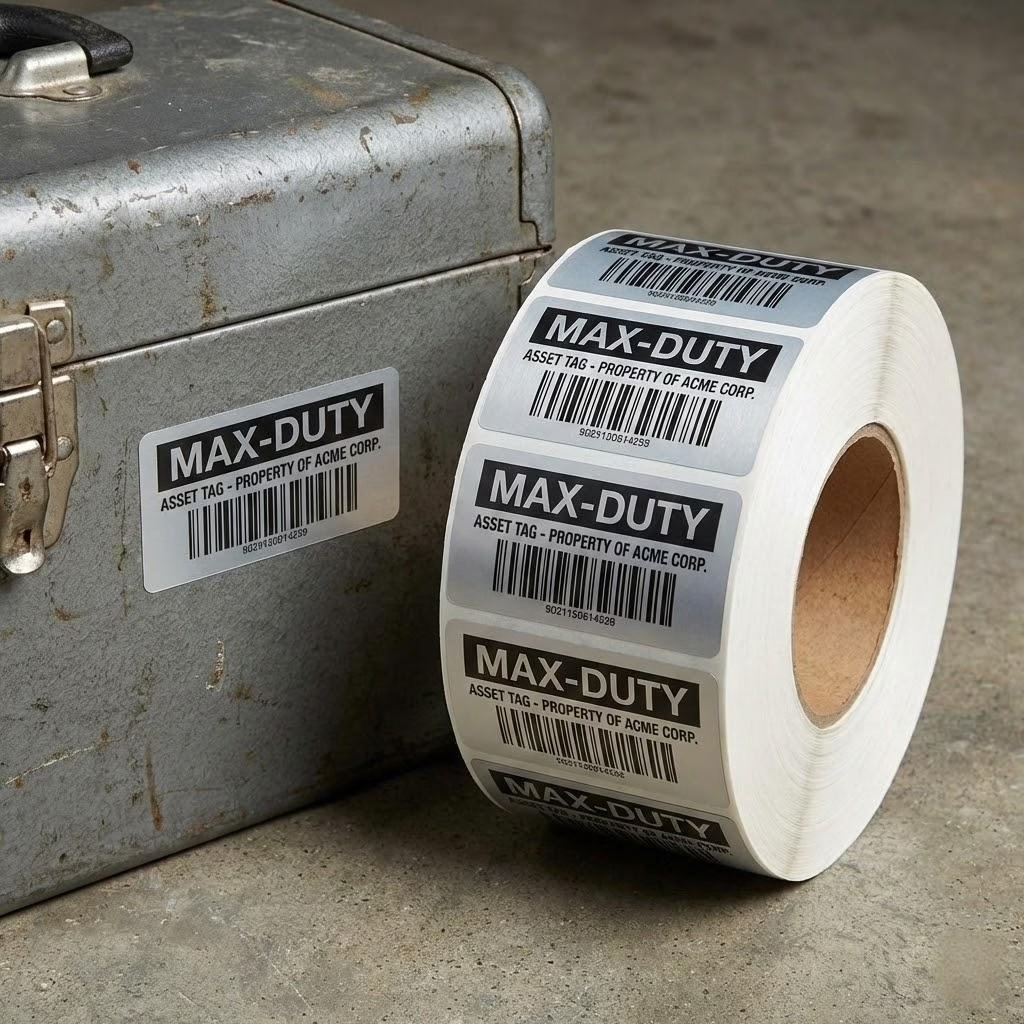
When those variable codes ship on rolls, custom barcode labels built to applicator specs keep every scan identical from first label to last.
Ready to Bulletproof Your Multi-SKU Production?
Avoid sequence drops and automated applicator jams with our 100% Machine-Ready variable label manufacturing. Get full database verification, high-tensile backing liners, and DDP shipping combined with a complete industrial pre-press audit.
The Physics of “Machine-Ready” Automation
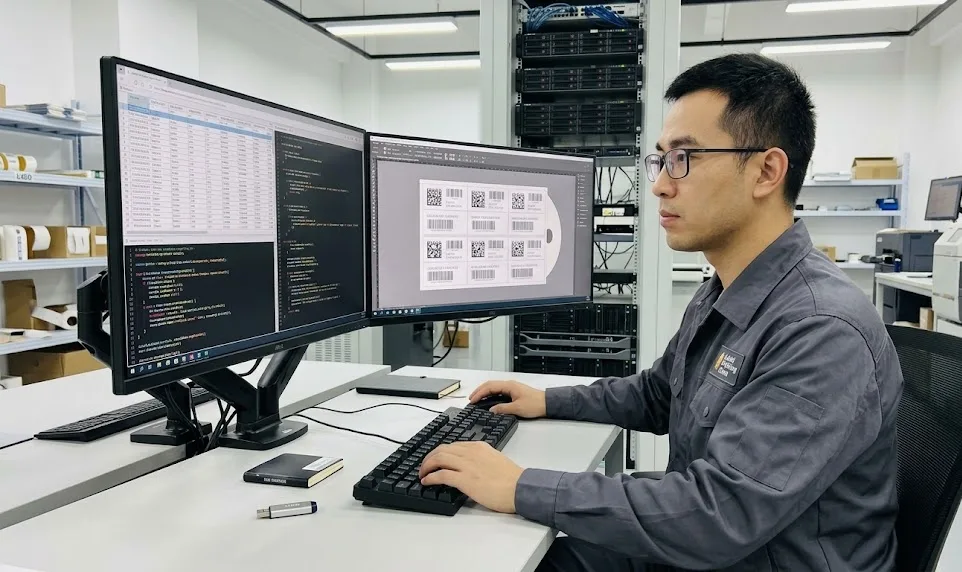
Even if your printed data is flawless and universally scannable, your variable data labels hold zero value if they choke your automated packaging equipment.Achieving a true 100% machine-ready status requires mapping the physical mechanics of the label roll to the exact tension limits and mechanical geometry of your label applicator.
When a roll is fed through an automated packaging line, the backing liner is dragged over a sharp peeler plate, forcing the label to detach and transfer onto the product. This creates immense physical stress on the web.
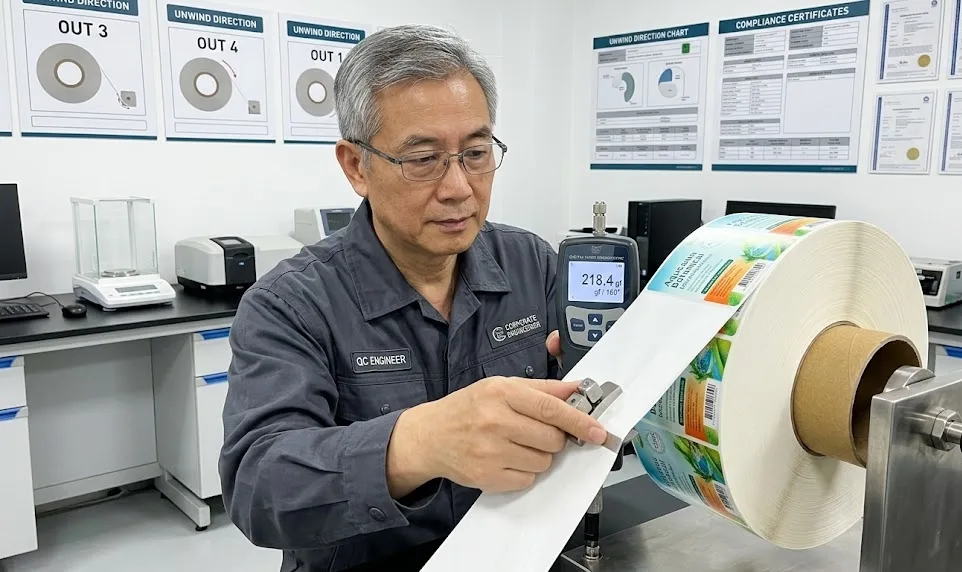
- Precision Release Force Calibration: The adhesive resistance between the label face stock and its liner is not arbitrary. For high-speed lines, this release force must be tightly calibrated to an exact tolerance of 15 to 20 grams per 25mm width. If it is too tight, the liner snaps; if it is too loose, labels prematurely detach inside the machine.
- High-Tensile Liner Selection: Discard standard, low-grade glassine. Automated lines require custom, high-tensile liners engineered to withstand rapid, continuous mechanical pulling without stretching or tearing.
- Standardized Unwind Direction: A label printed perfectly but wound backwards is useless. Industrial manufacturing dictates strict adherence to the eight standard unwind directions. Your roll must match your applicator’s orientation exactly. Refer to our comprehensive unwind directions label applicator guide to map your machine geometry correctly.
- Core Size Integrity: Industrial applicators operate on strict tolerances. Supplying a roll on a flimsy or incorrectly sized core guarantees slippage. Rolls must be wound tightly onto rigid, crush-resistant 1-inch vs. 3-inch cores depending on your specific engineering standard.
By locking down these physical parameters, the transition from the printing press to the packaging floor becomes frictionless, completely eliminating the primary causes of mechanical downtime.
Industrial Real-World Experience: In our manufacturing history, we frequently encounter brands changing suppliers to chase low piece-rate costs, only to suffer massive line ruptures because the new source utilized a standard 62g backing liner with loose thickness tolerances.Under 250+ BPM automation pulling, uncalibrated release liners create micro-tears along the die-cut matrix, triggering structural snapping that costs thousands in lost manufacturing time.
Global Delivery Continuity & DDP Logistics
Producing a flawless, machine-ready label is only the first half of the equation. In global trade, the physical movement of the product introduces immense risk. Managing complex SKU matrices requires a logistics architecture that guarantees continuity across borders.
This is where strategic project management ensures that technical precision translates into commercial value. Under the guidance of our global trade experts, the logistical delivery is treated with the same rigor as the printing process itself.
Optimizing the delivery pipeline requires strict execution across three primary logistical vectors:
- Volumetric Optimization: Roll dimensions and packing structures are mathematically configured to maximize carton density, significantly reducing wasted space in air and ocean freight. This precise packing engineering directly minimizes material handling waste and stabilizes international freight overhead.
- DDP (Delivered Duty Paid) Execution: Navigating customs with complex packaging materials can cause severe delays. Utilizing a comprehensive DDP framework ensures that all import duties, taxes, and customs clearances are completely managed at the source, eliminating local port clearance delays.
- Factory-to-Floor Integration: The finished rolls bypass intermediate trading brokers and arrive directly at your automated production facility, fully documented, securely packed to prevent core crushing, and instantly ready to be mounted onto your applicators.
3 Questions Your VDP Supplier Must Answer Before You Order
Before finalizing procurement for high-volume dynamic SKU labels, force your suppliers to validate their engineering standards. Relying on vague promises of quality will leave your packaging floor exposed to catastrophic risks. Use this advanced label sourcing checklist metric block to audit their operation:
- “Can you provide a Poka-Yoke pre-press data parsing log?” Do not accept blind file processing. Demand proof of automated CSV cleaning and hash-value reconciliation to guarantee a 0% data shift prior to printing.
- “Do you utilize 100% in-line CCD machine vision inspection?” Reject manual visual sampling. Your contract must stipulate that every barcode is dynamically graded to ANSI Grade B or higher and cross-referenced with your database in real-time.
- “What is the verified release force specification matched to our applicator speed?” Ensure the manufacturer explicitly documents the release tension and utilizes high-tensile liners specifically calibrated to your required bottles-per-minute (BPM) output and unwind direction.
Conclusion
Operating a global supply chain requires eliminating every variable that threatens your production lines. Scaling multiple SKUs with dynamic information is not a graphic arts project; it is an industrial science.
True cost-efficiency in high-volume label sourcing is never achieved by slicing a fraction of a cent off the raw print quote; it is earned by securing absolute line continuity and eliminating downstream execution faults.
Leveraging 18 years of technical expertise means looking far beyond surface-level print resolution to integrate robust data encryption with hardcore mechanical manufacturing. When your variable data label printing is engineered with Poka-Yoke data protocols, in-line CCD grading, and applicator-specific tension controls, you completely insulate your packaging floor from costly disruption.Partnering with a manufacturer capable of executing this level of precision, combined with seamless DDP logistics, allows you to achieve a critical 30% cost reduction without ever compromising on the 100% machine-ready reliability your automated lines demand. By enforcing these rigorous standards, procurement leaders can eliminate tracking errors entirely, securing the integrity of their global brands.