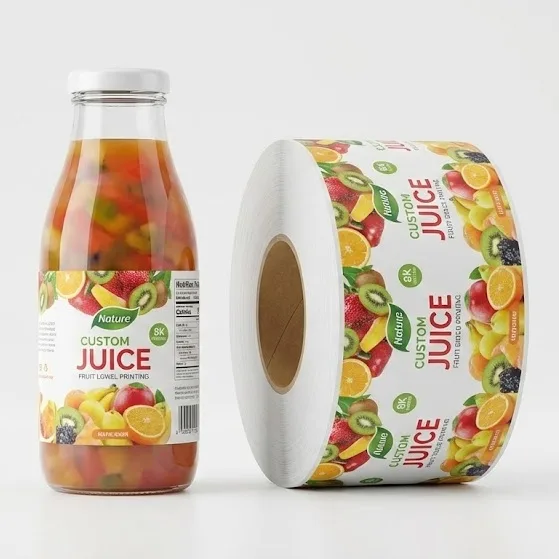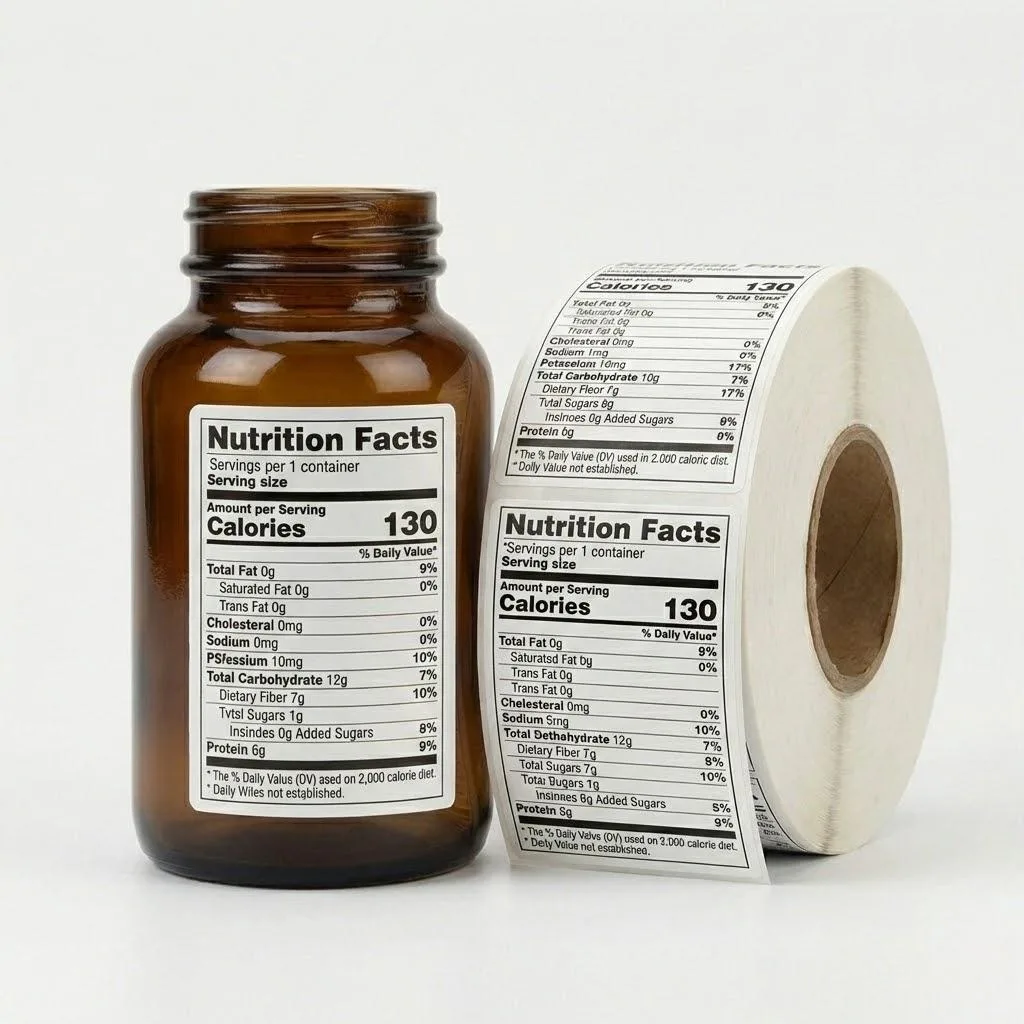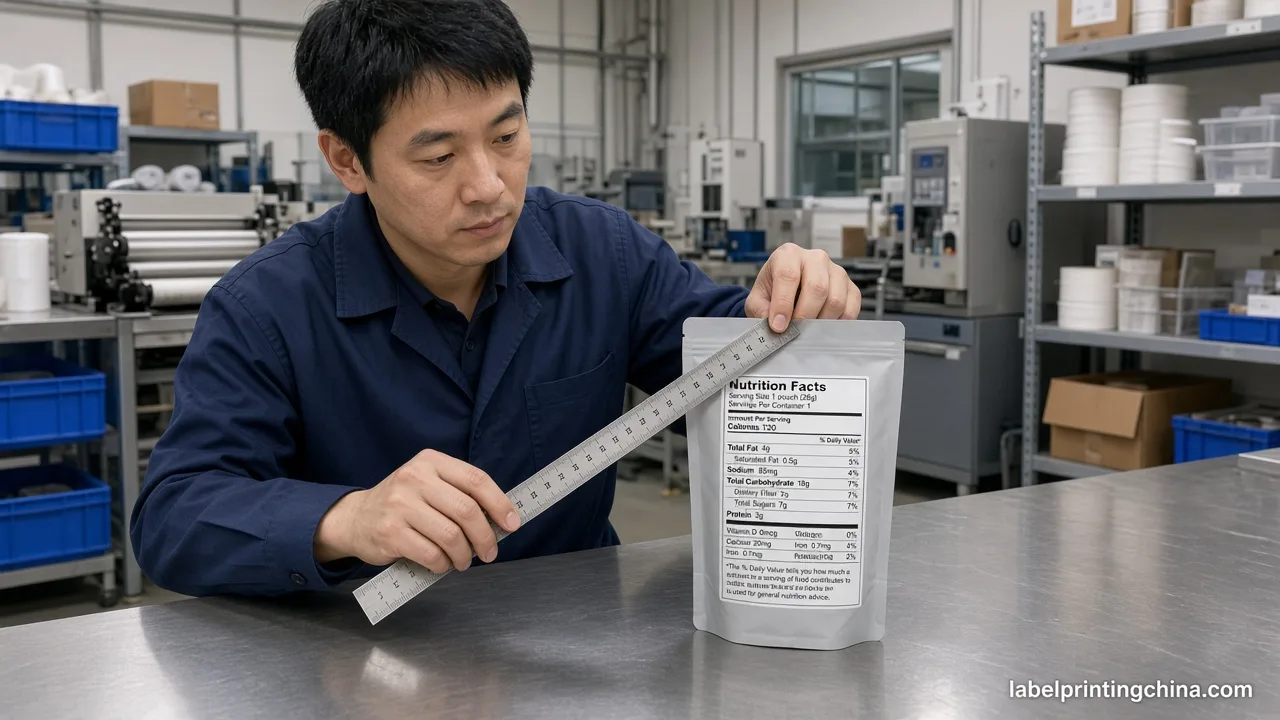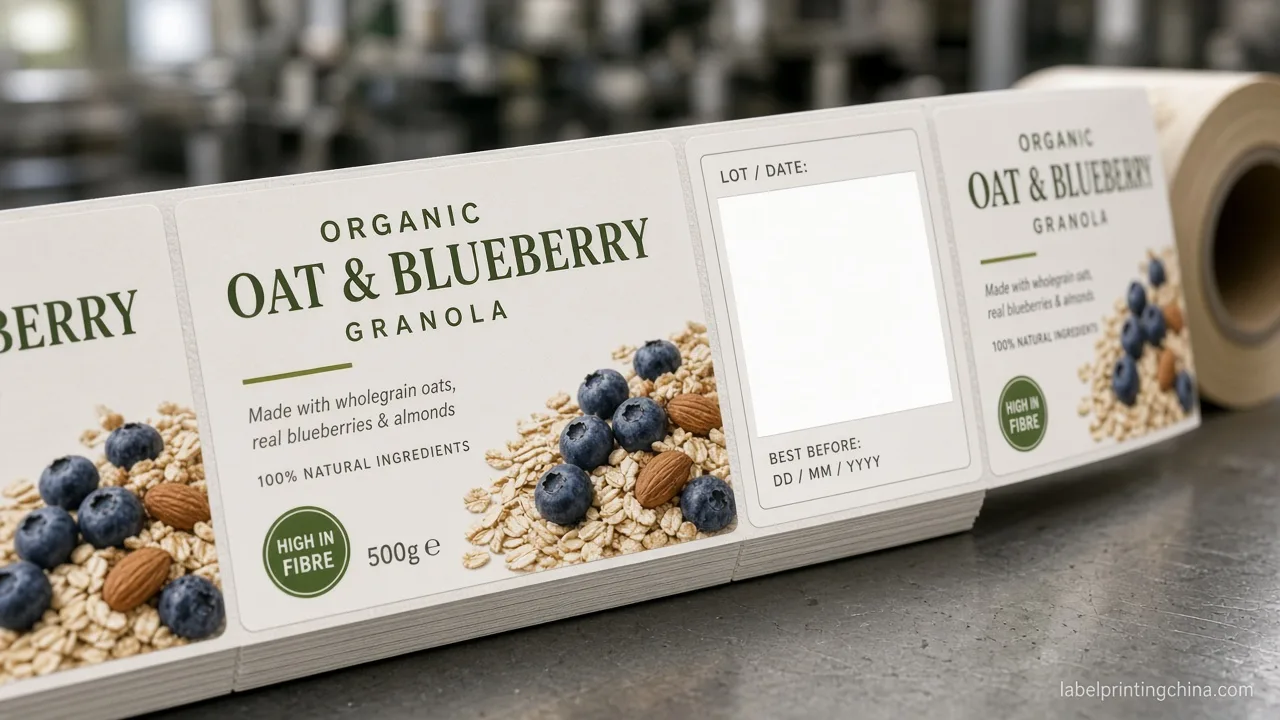
When a tall HDPE protein tub has to carry a full wrap, Supplement Facts, ingredients, flavor art, barcode, and a lot line, teams often approve a flat rectangle that looks perfect on a monitor. On a tapered canister, that same file wrinkles at the splice or lifts at the scoop rim after a few weeks of gym-bag handling.
Lock protein powder labels to real canister geometry first—top and bottom circumference, height, and seam. Then prove film and laminate against scoop rub, and version flavor art on a shared die so the lot band never moves.
You will leave able to gate wrap fit, abrasion-ready materials, and multi-flavor files—so the next tub SKU scales without reprinting the compliance bands.
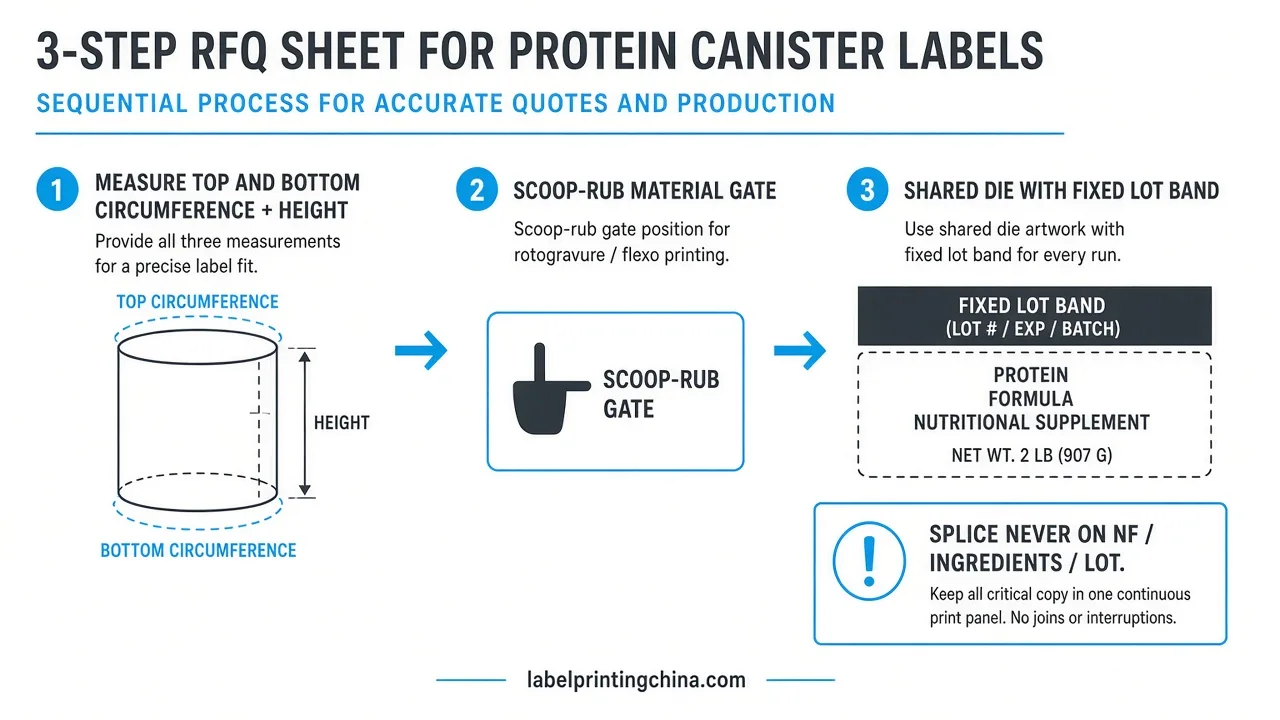
Measure Top and Bottom Circumference Before You Lock the Wrap
Measure top and bottom circumference, wrap height, and planned overlap on the real canister; proof a 100% tapered dieline so the splice never lands on Supplement Facts, ingredients, or the lot band.Use this when planning protein powder labels or other supplement canister labels on tapered HDPE tubs. This is a print-fit gate for wrap geometry—not an FDA Supplement Facts audit, and not a small-pack panel guide.
Use this table to lock wrap geometry before you spend hours on flavor illustration.
| Measure / check | Keep / Do |
|---|---|
| Top vs bottom circumference | Record both with a flexible tape; do not assume a straight rectangle |
| Wrap height + seam overlap | Set overlap away from NF, ingredients, and lot/date type |
| 100% paper dieline on the filled tub | Reject if edges climb, gap, or cover mandatory panels |
Curved and tapered labeling guides stress measuring top and bottom lengths and testing a full-scale template before art freezes—protein tubs fail the same way ice-cream pints do when a square wrap meets a cone. On large supplement canisters, the expensive mistake is locking brand photography first and discovering the splice cuts through calories or allergens.Allocate wide wrap bands for Supplement Facts, ingredients, and warnings on the tub wrap; use the small-pack panel layout page only for pouch or sachet cousins—not tub geometry. For long ingredient blocks once the wrap fits, use the ingredient artwork print-ready checklist. If your problem is a tiny pouch face instead of a tub wrap, switch to the small pack panel layout page.
Watch-out: approving a “full wrap” mockup photographed on a straight cylinder while the production tub is tapered—wrinkles show only after the first applicator run.
Factory-floor pattern: a flavor launch that looked shelf-ready still needed a new die because the overlap sat on the lot window after co-packers filled the tubs hotter and slightly fatter than the empty sample. Measure a filled canister when you can; empty samples understate circumference.
Write the three numbers into the RFQ in millimeters: top circumference, bottom circumference, and wrap height to the lid ring.Add a photo of the paper dieline taped on the tub with the splice marked in pen. That single attachment stops suppliers from quoting a straight rectangle “close enough” for a tapered HDPE canister.
Pick Film and Laminate That Survive Scoop Handling
Pick flexible film, laminate, and HDPE-ready adhesive that survive scoop rub and edge lift on a filled tub—not only a clean bench peel test.Apply when protein powder labels must stay readable after repeated lid opens, scoop scrapes, and humid storage. Material choice here is a print-durability gate; it does not certify Supplement Facts compliance or private-label manufacturing claims.
Read this table as a scoop-survival gate before you freeze finish and adhesive.
| Risk signal | Print decision |
|---|---|
| Gloss film that scuffs white at the scoop rim | Matte or scuff-resistant laminate over high-wear zones |
| Paper face stock on a condensation-prone tub | Switch to film/BOPP with moisture-ready adhesive |
| Edges lift after a week of filled-tub scoop use | Raise tack for HDPE; re-test on the real resin, not a glass jar |
Supplier pages for protein powder labels and supplement tubs routinely promise “durable” finishes; few force a filled-tub scoop-rub sample before art approval. That test is short: apply the candidate stack, fill the canister, scoop daily for a week under warehouse humidity, and photograph edge lift and scuff at the lid ring.Public material comparisons help frame options, but your RFQ still needs the resin name and a pass/fail photo—see a practical materials overview from choosing the right label material as orientation, not a brand endorsement.
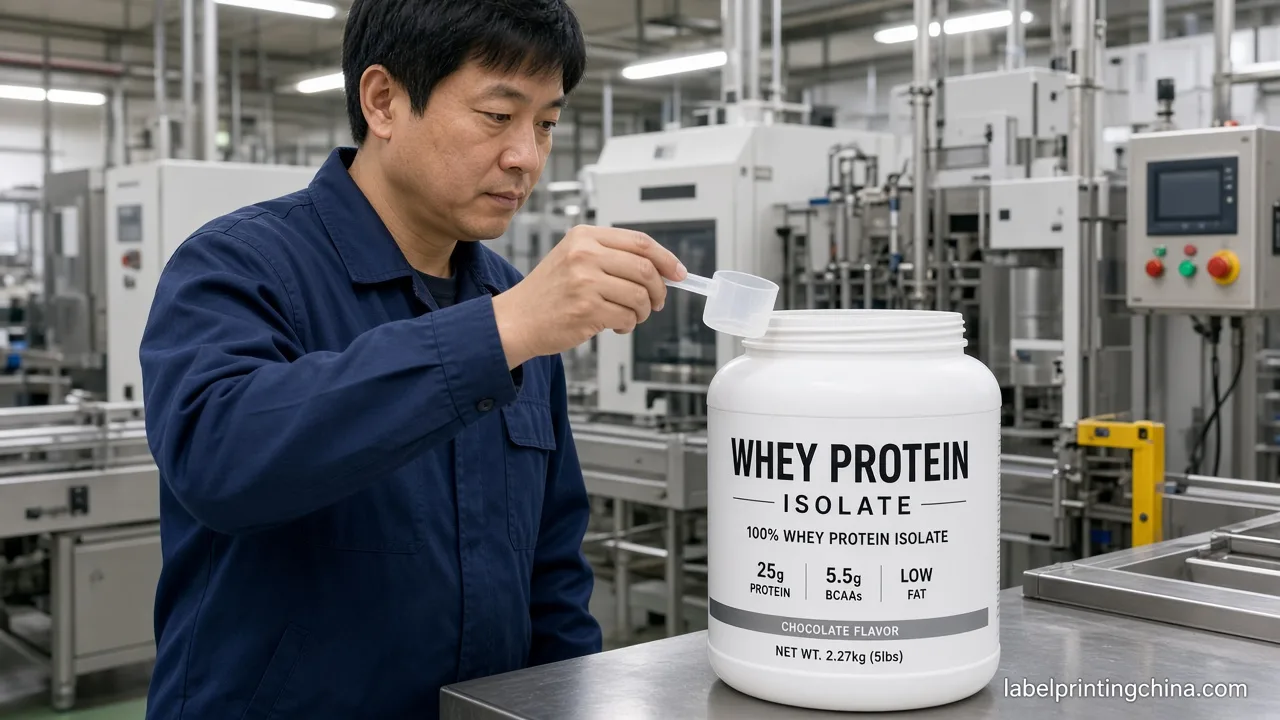
Red flag: locking a high-gloss “hero” laminate because the brand deck is shiny, then discovering white scuff rings where every customer digs the scoop.
Practical note: soft-touch coatings look premium in a booth and mark easily under protein dust. If you want soft-touch, keep it off the scoop arc or prove it on a filled tub before you print ten flavors.
Also confirm adhesive on the actual resin grade. HDPE tubs vary; a stock that held on a sample jar can lift on production resin after cold-chain shipping. Ask for a 48-hour edge-lift check after a fridge-to-room cycle, then the scoop-rub week. Two short tests beat one glossy brochure claim.
Version Flavor Art Without Moving the Lot Band
Version flavor art on a shared die so only the flavor layer changes—keep the lot/date band coordinates fixed and route variable data into that reserved strip.Use when one canister die must cover multiple protein flavors or sizes without re-prepressing compliance panels each time. Detailed marking-method choices stay on the lot-code guide; this page only locks the shared geometry.
Use this checklist when you scale flavors on one tub die:
- Freeze one master dieline: wrap size, splice zone, NF block, ingredient block, barcode panel.
- Put flavor name, swatch, and hero art on a replaceable layer only.
- Reserve a flat lot/date band that never moves between SKUs; list VDP fields separately.
- Export a flavor SKU matrix (SKU · flavor layer · revision · die ID) before plates or digital queues start.
Variable-data printing can swap lot strings and barcodes inside the reserved band without resizing the wrap—see sister guidance on lot date code methods.Keep the retail symbol on a flat, high-contrast zone using barcode scan-ready placement. Do not let a new mango flavor “borrow” three millimeters from the lot window because marketing wanted a bigger fruit photo.
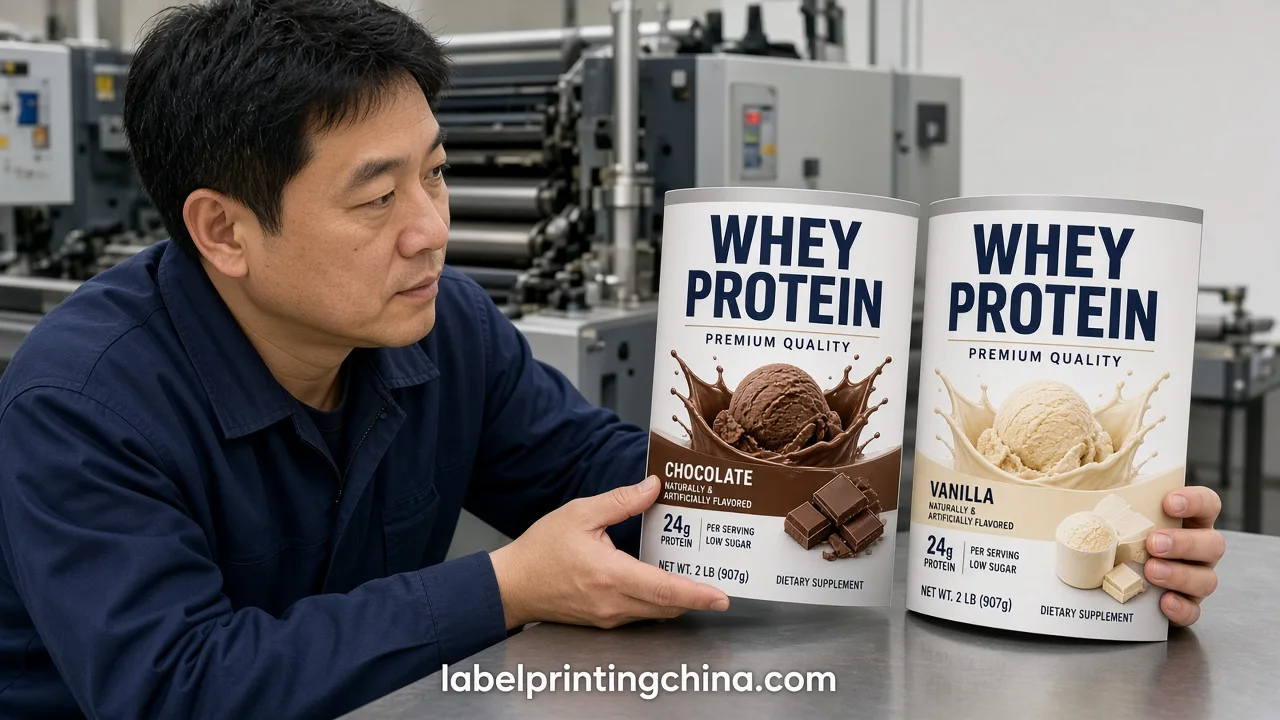
Lock the lot band in the packaging brief before illustration starts—late flavor art almost always shoves compliance type into the taper. Co-packers should receive the same SKU matrix you used for the shared die so nobody rebuilds each flavor as a full new file.
When a seasonal flavor joins the line, only the flavor layer and SKU code should change in the matrix. If the designer also slides the lot window “just two millimeters,” you no longer have a shared die—you have a new compliance proof for every SKU. Treat that drift as a hard fail in prepress.
Approve Canister Label Specs Before You Freeze Flavor Art
A readable protein tub wrap is a release decision: geometry measured, material scoop-proven, and flavor versions tied to a fixed lot band. That is the standard this page sets—monitor-perfect rectangles on tapered canisters are not approval.
If the structure still cannot carry every required block at print-readable size after measure and material gates, change the wrap height or labelable area while SKUs are still cheap to move.When canister size, surface material, flavor SKU list, approved panel copy, and artwork are ready, send them for a canister-label review so the next press proof confirms the die—not redesigns it.
Need factory-direct nutrition labels with a canister layout review?
Send canister size, surface material, flavor SKU list, approved panel copy, and artwork—we check wrap fit, scoop durability, and fixed lot-band versioning.