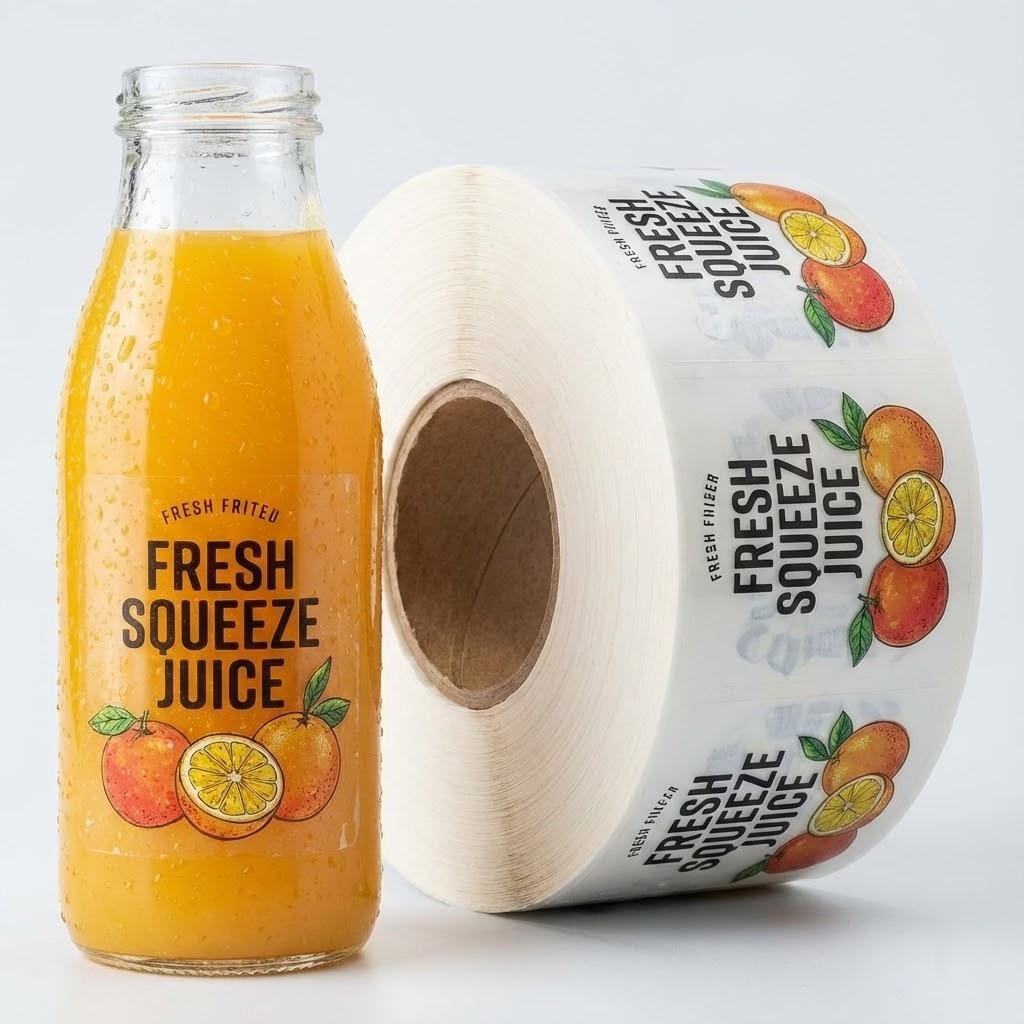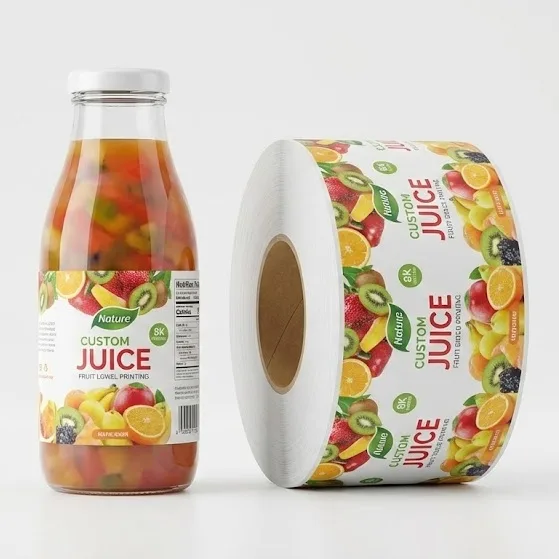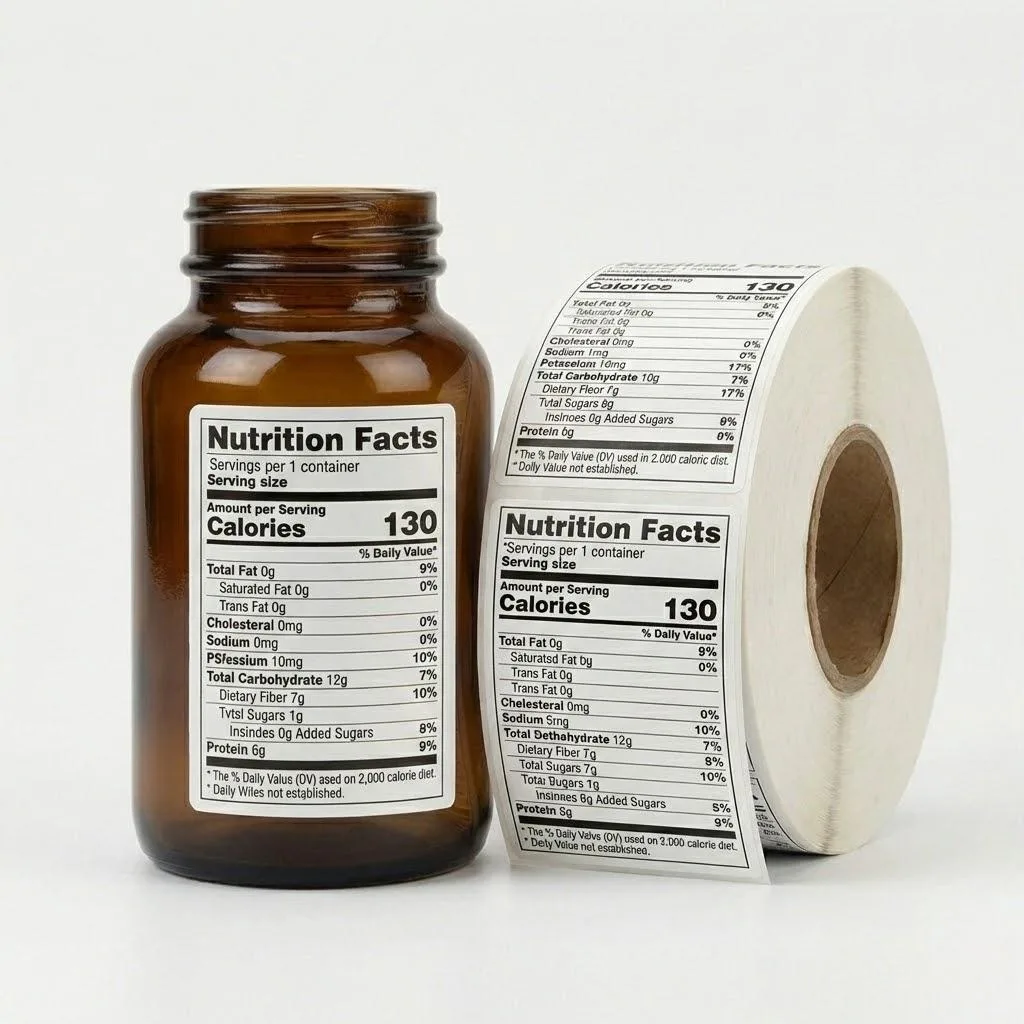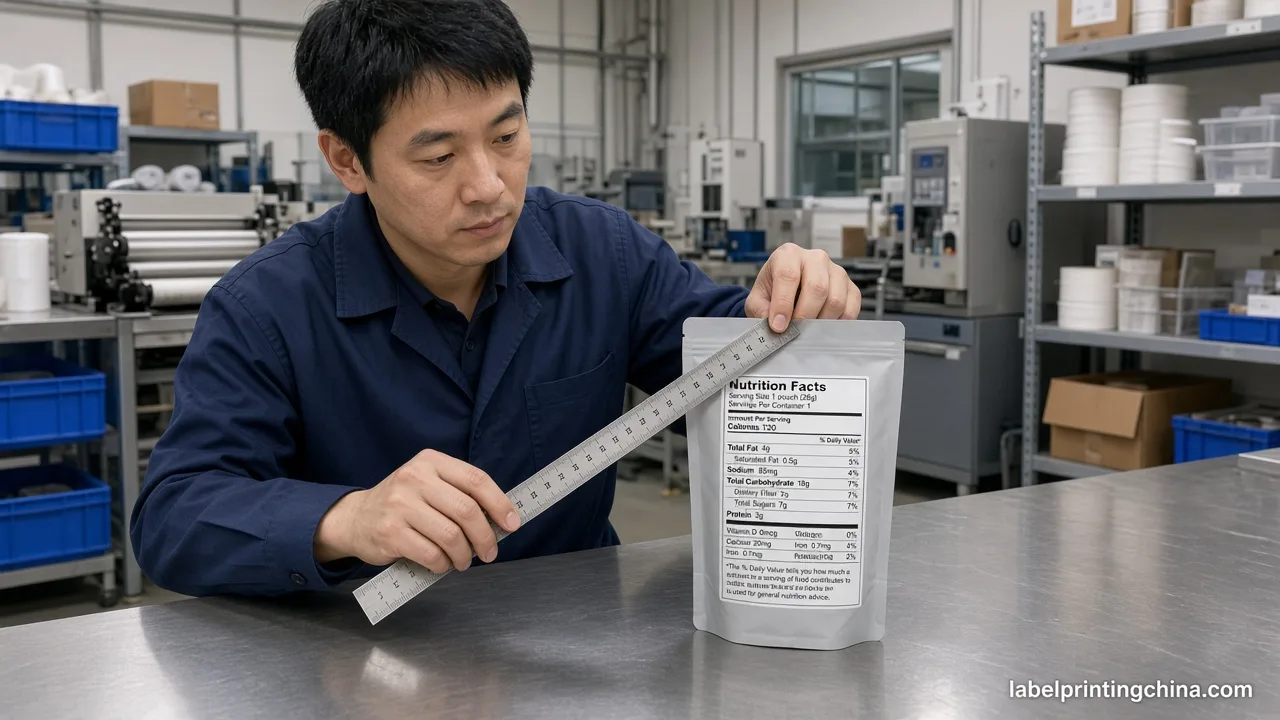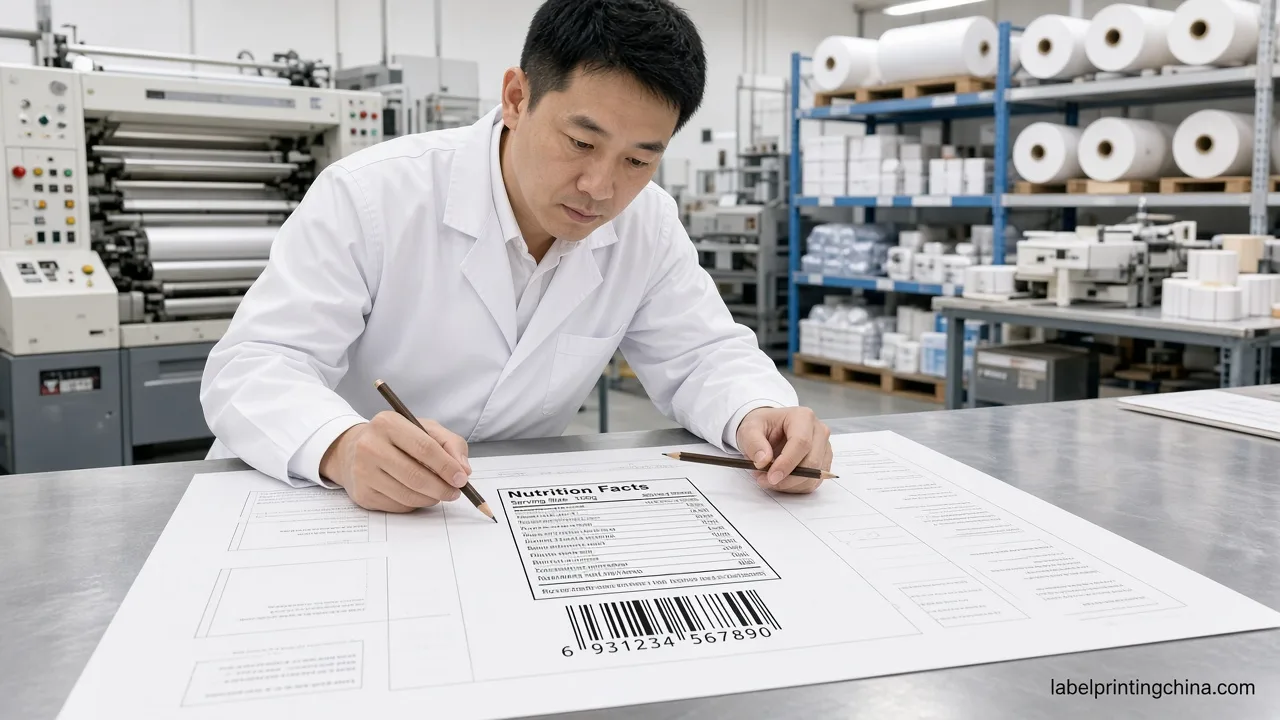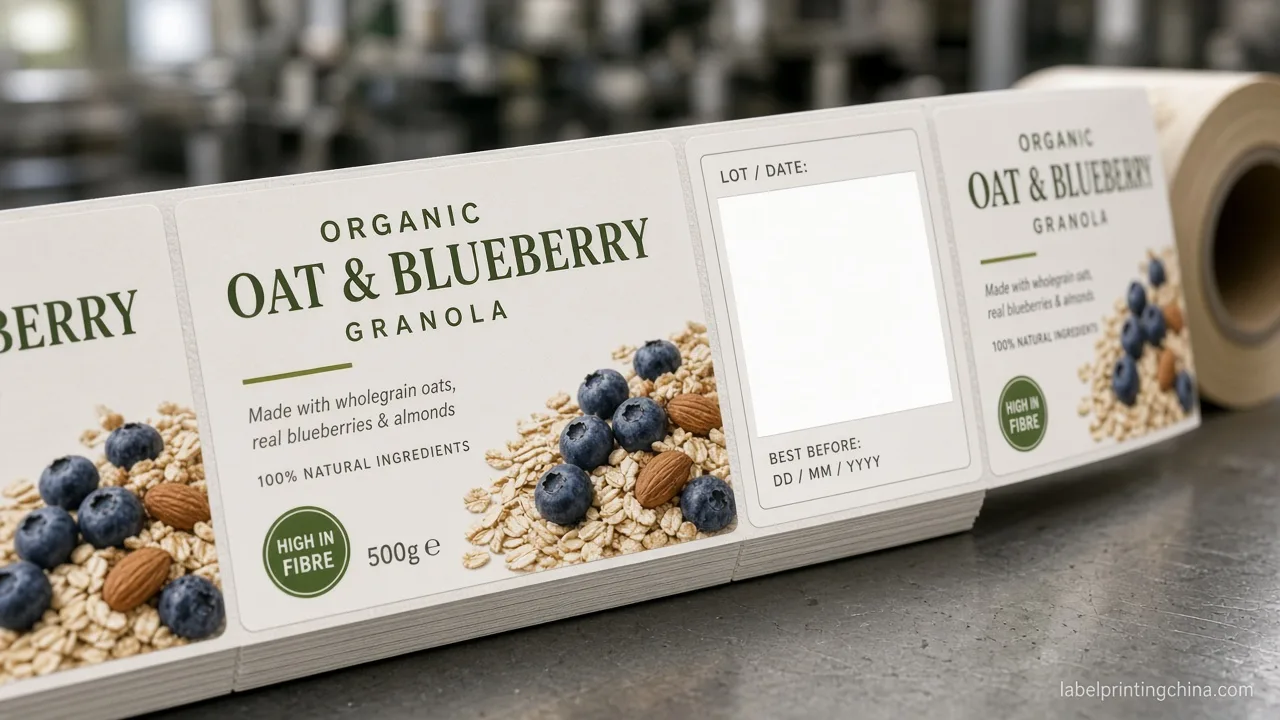
When a juice quote asks for label size but the bottle photo still hides the straight wall, designers guess and presses reprint. You can freeze width, height, and seam mode on the bottle you will actually fill before the die is cut.
To size juice bottle labels, measure round wraps from circumference (π × diameter) then subtract a seam gap or add overlap, measure square bottles by flat panel or full perimeter, keep height inside the straight wall, and confirm with a paper template on the real bottle before you print.
Keep reading and you will leave able to measure and sign juice label size yourself—so the next RFQ carries a real W×H, not a milliliter guess from a chart.
Measure Round Juice Bottles for Wrap Width First
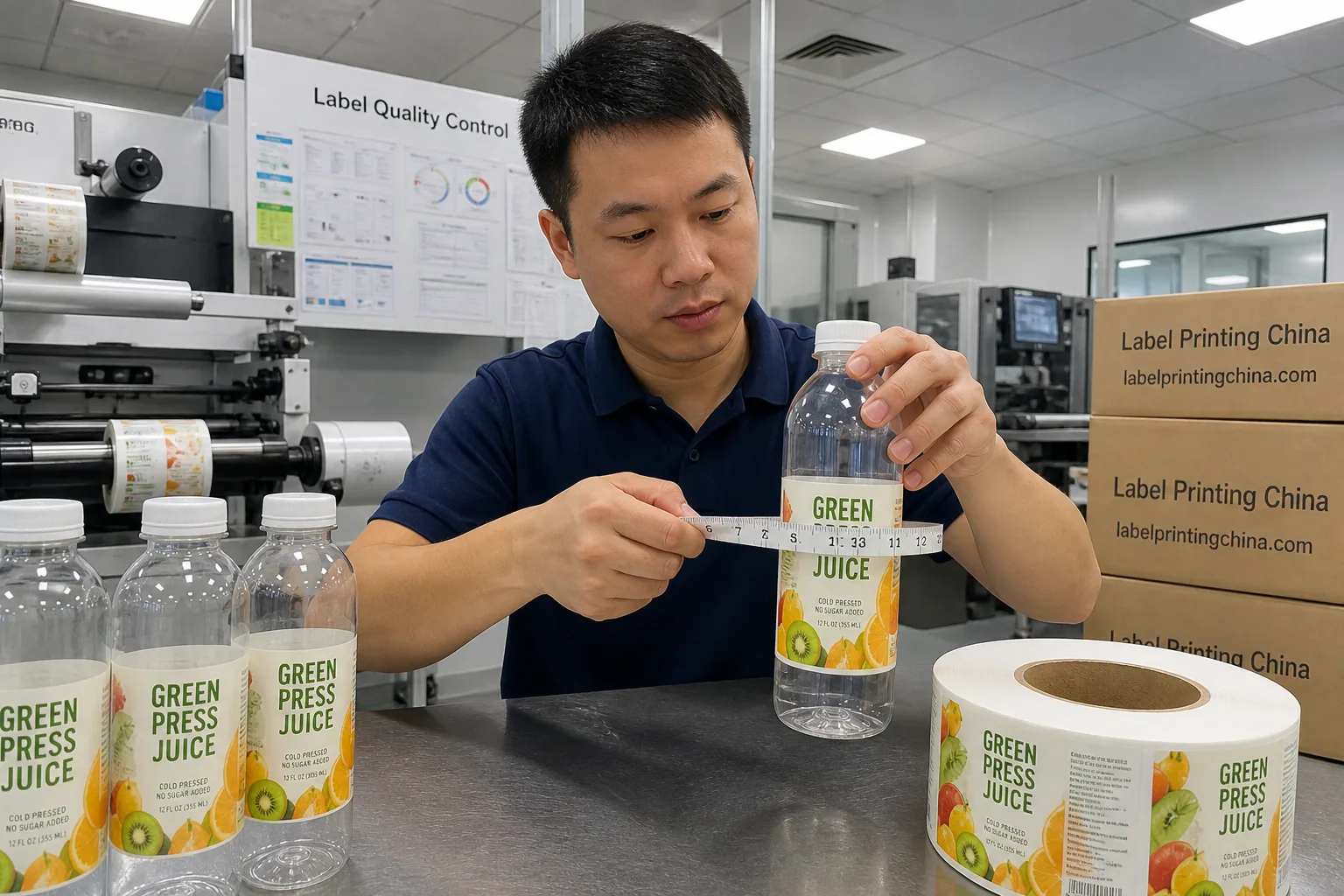
When you only write “250 ml juice labels,” you copy a chart that never saw your PET diameter. Round juice wraps start from circumference, then you choose gap or overlap.
| What you measure | What you write as width |
|---|---|
| Flexible tape around the straight body | Use that circumference as the base width before seam math |
| Diameter across the base or body × π (~3.14) | Same base width; check the bottle circumference formula if you only have a ruler |
| Paper wrap marked at the overlap | Measure mark-to-end; treat as circumference when tape is missing |
When a juice brand once ordered “250 ml standard wrap” from a web chart, the real bottle needed a 3 mm seam gap and the first roll wrinkled at the join. Your fix: write seam mode beside the number—gap subtracts about 2–6 mm (or 1/8–1/4 in); overlap adds a planned 3–8 mm instead.
Check the tape twice under fill temperature if bottles ship cold. A common red flag is using a display bottle that is 1–2 mm thinner than production PET—verify on the lot you will fill within 24 hours of freezing the quote.
Write diameter in mm and inches on the same RFQ line so overseas and US plants do not convert twice. Measure MOQ pilots on the same body as the mass fill—500 wrong wraps still teach the same expensive lesson.Ask the bottle vendor for a drawing with body diameter called out when photos hide the wall. Keep that drawing with your signed paper wrap in the same PO folder.
For can-diameter math on beer bodies, keep the sister method on the beer can size guide. This page stays on juice bottles.
Size Square Juice Bottles by Panel or Full Wrap
When you send a full-wrap width for a square juice bottle that only needs a front panel, the quote looks oversized and the art looks lost. Name the mode before you draw.
| Your square-bottle goal | How you size it |
|---|---|
| Front brand panel only | Measure the flat face width × straight height; leave 1–2 mm edge margin |
| Front brand + back nutrition/barcode | Two panel sizes; do not force one wrap die across corners unless tested |
| Full wrap for a mural look | Measure full perimeter; plan corner radius and seam away from the barcode |
When you once mixed panel art into a wrap-width RFQ, the plant cut a die that hung past the flat face and flagged at the corner. Your RFQ line should say “panel” or “wrap” in plain English—never “square juice label” alone.
Inspect corner radius with a paper L-shape before you trust a sharp rectangle. Square juice bottles with heavy radii often need a slightly shorter panel width so edges stay flat.
If two flavors share one square bottle, lock one panel W×H for both SKUs and only swap art. Shared dies save money only when you verify both faces with the same ruler marks—almost-same is still a new tool.
Test one wet bottle from the cooler if cold chain is part of your story. You are still checking fit here, not adhesive chemistry, but a panel that peels at the corner tells you the margin is too ambitious.
Stay Inside the Straight Labelable Wall
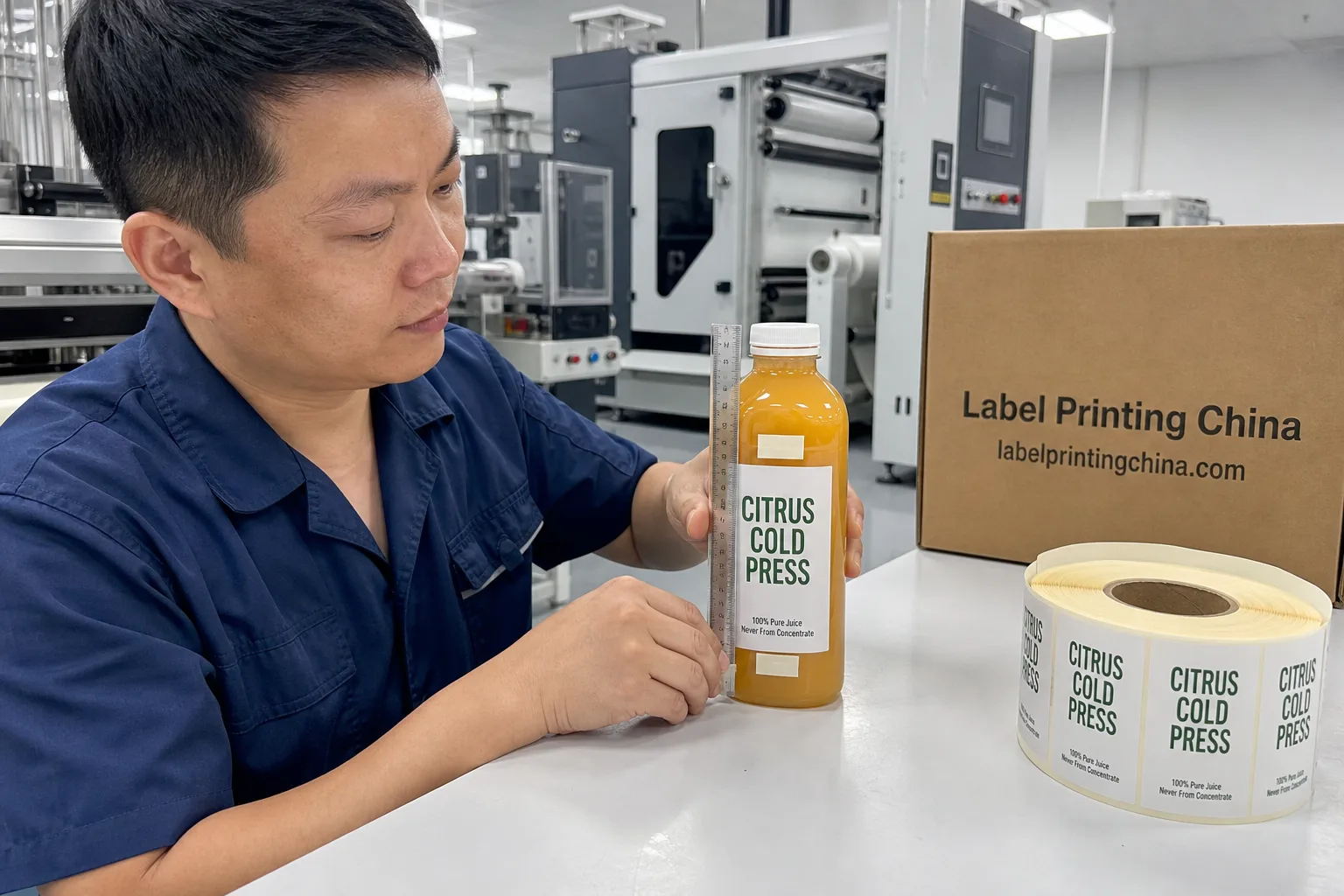
When you include the shoulder curve in height, labels climb and wrinkle. Juice bottles—especially cold-pressed PET—need height locked to the straight wall only.
- Mark top and bottom of the straight wall with tape; measure only between marks
- Leave about 2–3 mm (≈1/8 in) clearance from shoulder and base ring unless your applicator specifies otherwise
- Reject height copied from a tapered wine chart—juice walls differ
- If the bottle tapers, Hold a rectangular die until you test a curved cut or a smaller panel
When a cold-pressed line signed digital W×H that included the curve, printed labels climbed the shoulder on day one. Your height freeze is the straight band you can see with a ruler edge held against the wall—no gap means taper, and taper is a different problem.
Film and condensation belong on a separate track after size is locked. If you still need wet-wall material later, skim the juice waterproof labels guide—then come back and freeze fit first.
Once fit is frozen, choose clear or white BOPP for your fill color using our clear vs white juice labels.
Convert once if design works in mm and the bottle drawing is in inches—keep both units on the freeze line. Mixed units are how a “correct” artboard still cuts the wrong die after 48 hours of email ping-pong.
Need a juice bottle label size check?
Send bottle volume, diameter or panel width, label area, quantity, and artwork for a juice-label size review.
Choose Seam Gap or Overlap Before You Draw Art
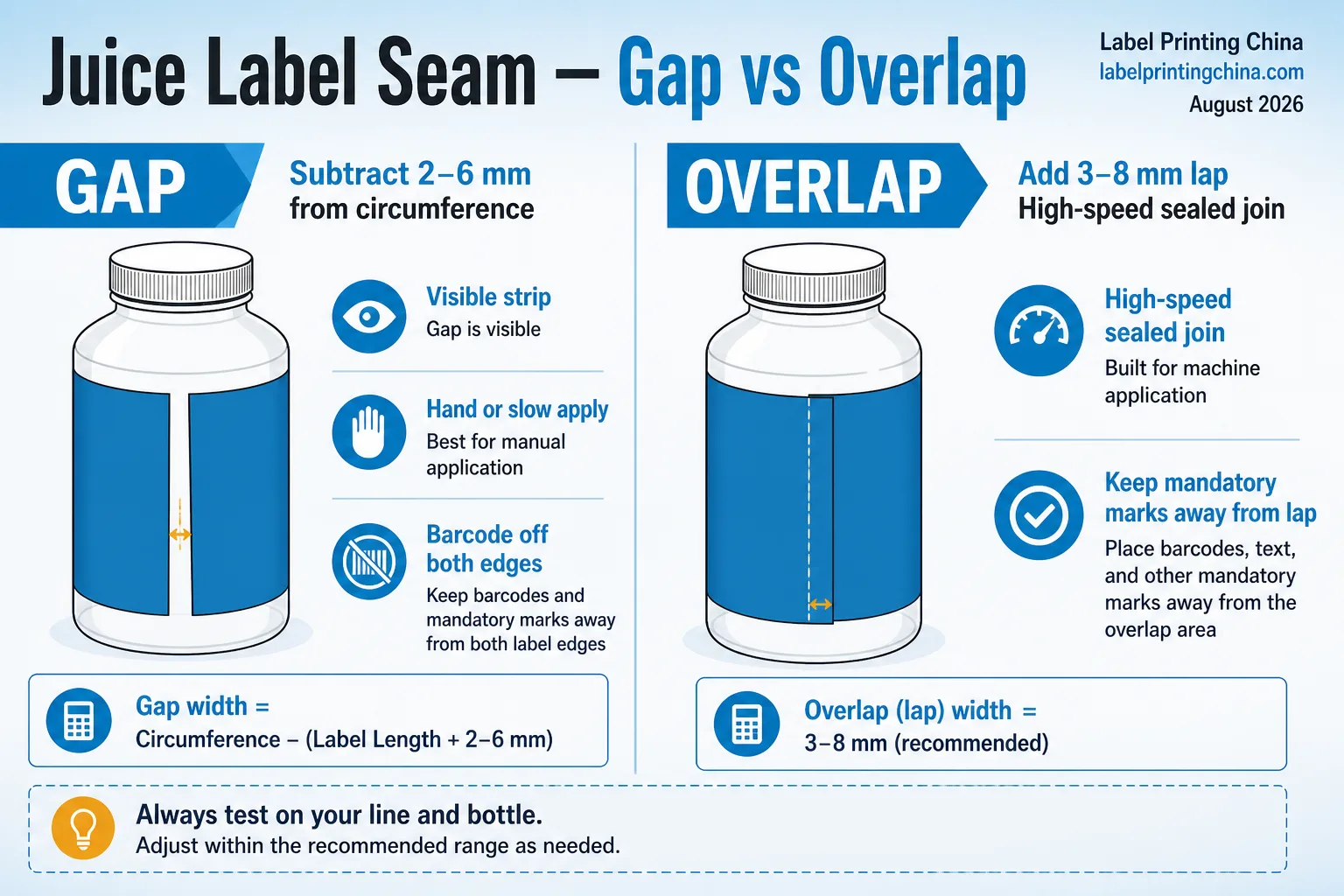
When art assumes a butt seam but production needs overlap, barcodes drift into the join. Pick the seam rule before the mural.
| Signal on your juice line | Your call |
|---|---|
| Hand apply or slow applicator; you want a visible aluminum/PET strip | Gap — subtract 2–6 mm from circumference; keep barcode off both edges |
| High-speed wrap that fights open edges; you want a sealed join | Overlap — add a planned 3–8 mm; park mandatory marks away from the lap |
Write the seam mode on the artboard die line in the same units as W×H. Designers paint rectangles; applicators apply physics—your seam note is what keeps the barcode scannable after wrap.
If nutrition layout on the back panel is still open, size the panel first, then route copy density to custom nutrition labels after the rectangle is frozen—not before.
Watch-out: a full mural that places the barcode on the lap looks premium on screen and fails at receiving. Move the code 8–10 mm away from the join, then re-check scan paths on a curved pack.
After seam clearance is locked, follow our juice bottle barcode placement to set ladder or fence orientation and keep Nutrition readable on the wrap.
Confirm Size on a Paper Template Sample
When you only approve W×H in a PDF, you skip the bottle. Cut paper, wrap the production juice bottle, and run a short Ready/Hold gate before tooling.
| Check | Ready if… / Hold if… |
|---|---|
| Width vs seam plan | Ready: gap or overlap matches the plan ±1 mm; Hold: edges fight, wrinkle, or leave an uneven canyon |
| Height on straight wall | Ready: stays off shoulder and base ring; Hold: climbs the curve or leaves an unplanned bald band |
| Critical marks | Ready: barcode and claims sit away from the seam; Hold: join bisects the code |
Photograph the wrapped paper template with a ruler in frame and save it next to the PO. When a new bottle lot arrives 10 days later, repeat the wrap even if milliliters match—your freeze was for last week’s wall, not this week’s.
MOQ talks only after size is Ready. A 500-label pilot on the wrong W×H still wastes the same die lesson a 5K run would teach—cheaper to Hold overnight.
If three juice SKUs share one body, list them on one size sheet and only note art differences. Verify each flavor bottle once—shared tooling fails when one SKU quietly switched to a taller shoulder.
Keep a signed template in the brand kit for 90 days. When marketing asks why the new batch “looks shorter,” you compare paper to paper instead of arguing from memory.
Lock Your Juice Label Size Before You Print
Juice bottle label size only stays honest when the PO carries measured width, straight-wall height, seam mode, and a signed paper wrap. That packet turns a bottle photo into a die you can trust.
Once those locks sit in one folder, releasing artwork and meters is a controlled step—not a hope that “250 ml standard” meant your PET. Recheck the freeze if the bottle vendor changes mold tooling mid-season.
When volume, diameter or panel width, label area, and artwork are ready, start from custom juice bottle labels with that size-check pack attached—so your next juice run ships against a measured wrap, not a chart guess.