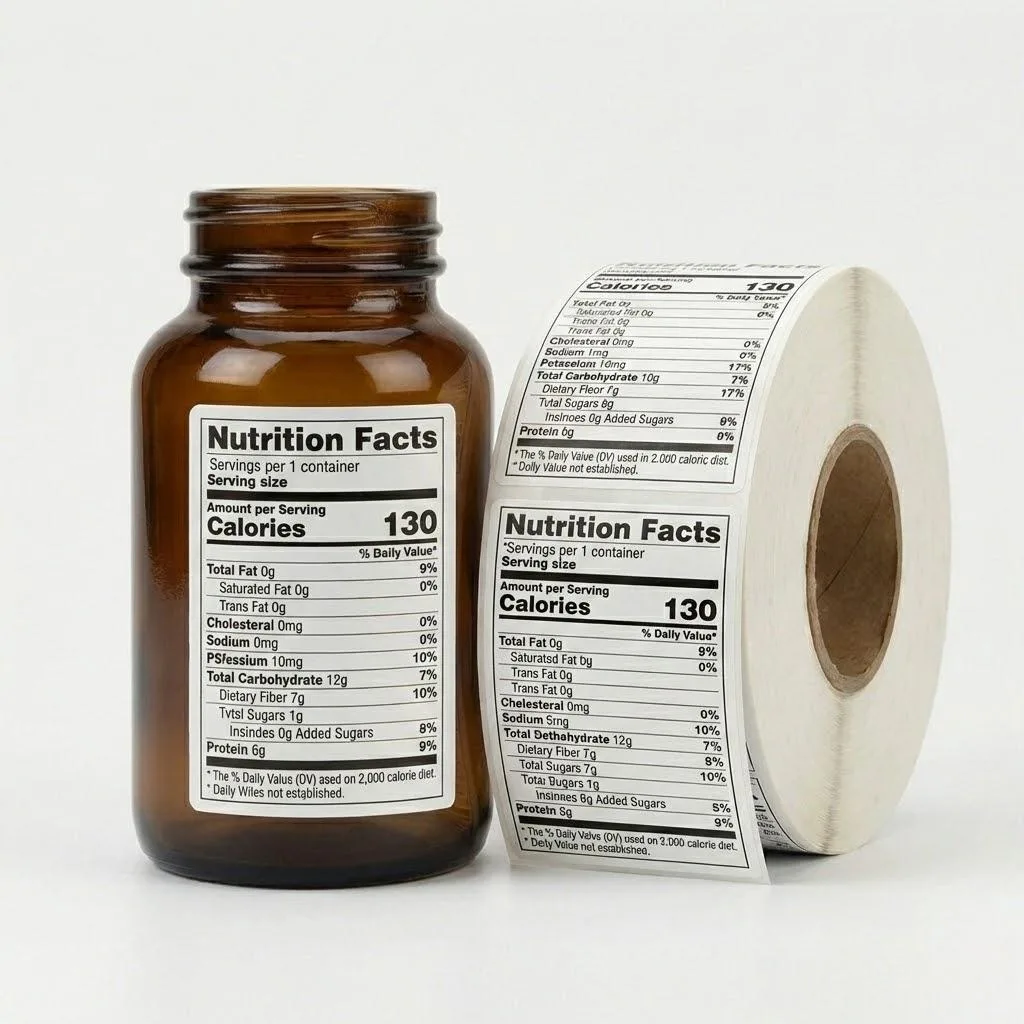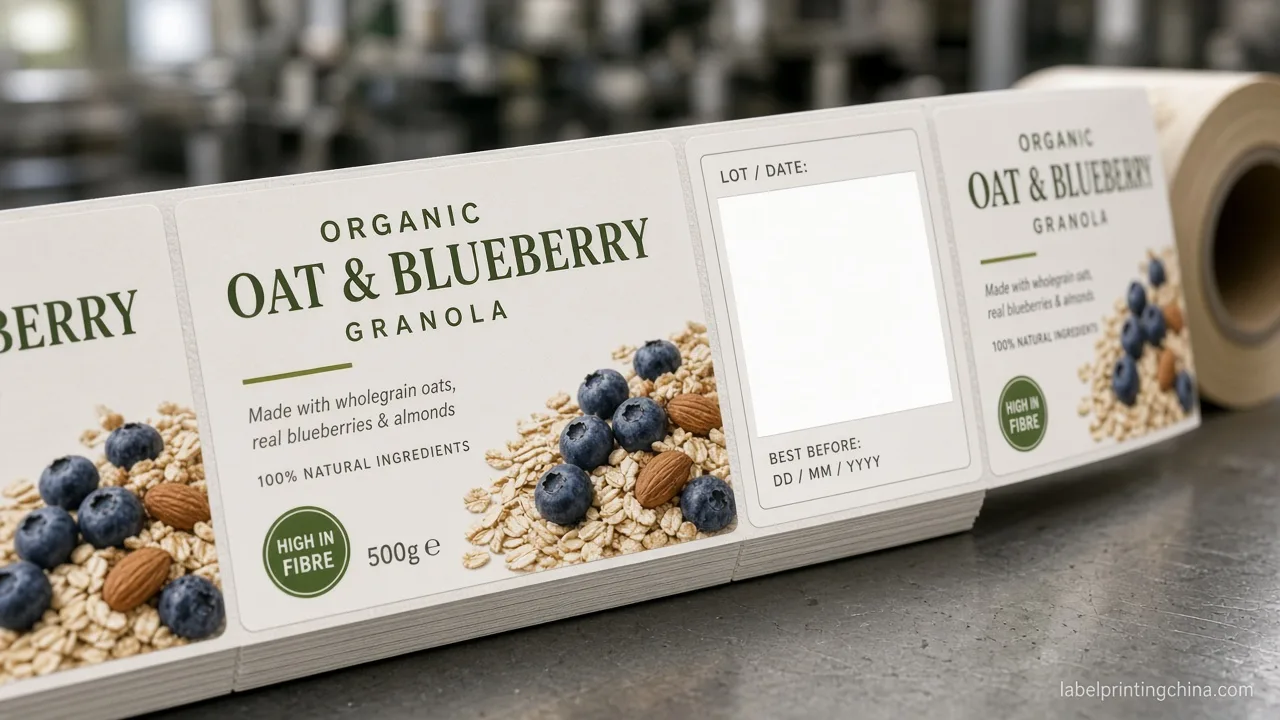
When the nutrition panel is already approved and the next lot only changes the code or the date, reprinting the whole label turns good stock into scrap.
Keep the nutrition panel on the preprint. Put lot code labels on a later pass when the batch or the date changes, and leave a high-contrast zone the coder can hit.
You leave able to separate the fixed panel from the code line, and to check that the later mark still reads on the container you fill.
When a Printed Date Would Scrap the Rest of the Roll
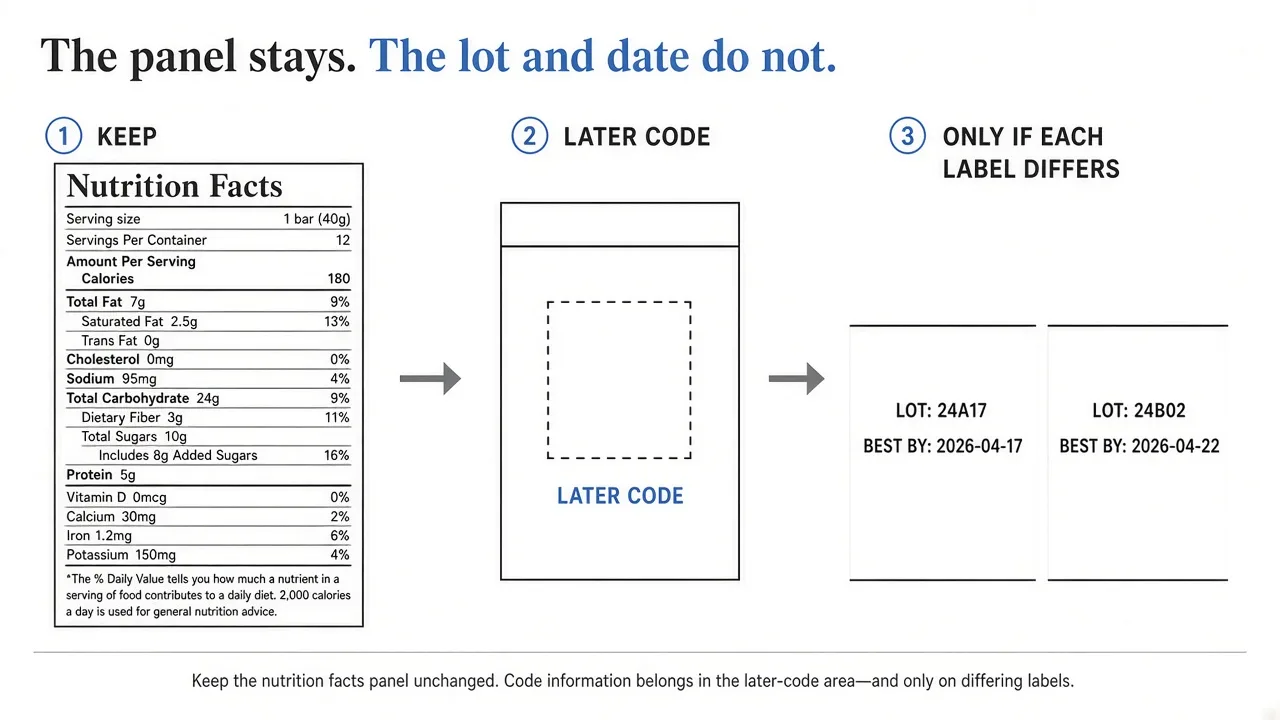
When a date is locked into a long roll and the next batch expires on a different day, the leftover labels are the expensive part. Treat a changing lot or date as a second pass, not as part of the nutrition panel—lot code labels still need a reserved zone before the preprint is locked.
Use this when the nutrition facts and brand stay the same across batches and only the lot or date changes.
This split does not assign a traceability lot code format, and it does not set a factory minimum or a ship date.
Use this table to see which line can stay on the plate.In the Food Traceability Rule, a traceability lot code means a descriptor, often alphanumeric, used to uniquely identify a traceability lot within the records of the traceability lot code source. That definition does not tell you to preprint, overprint, or use variable data.
| What changes between batches | Where it should live |
|---|---|
| Nutrition facts, brand, and net contents that stay stable | Preprint them with the panel |
| One lot or date shared by every label in the run | Overprint it in the reserved zone |
| A code or SKU that differs from label to label | Variable data, not a static plate |
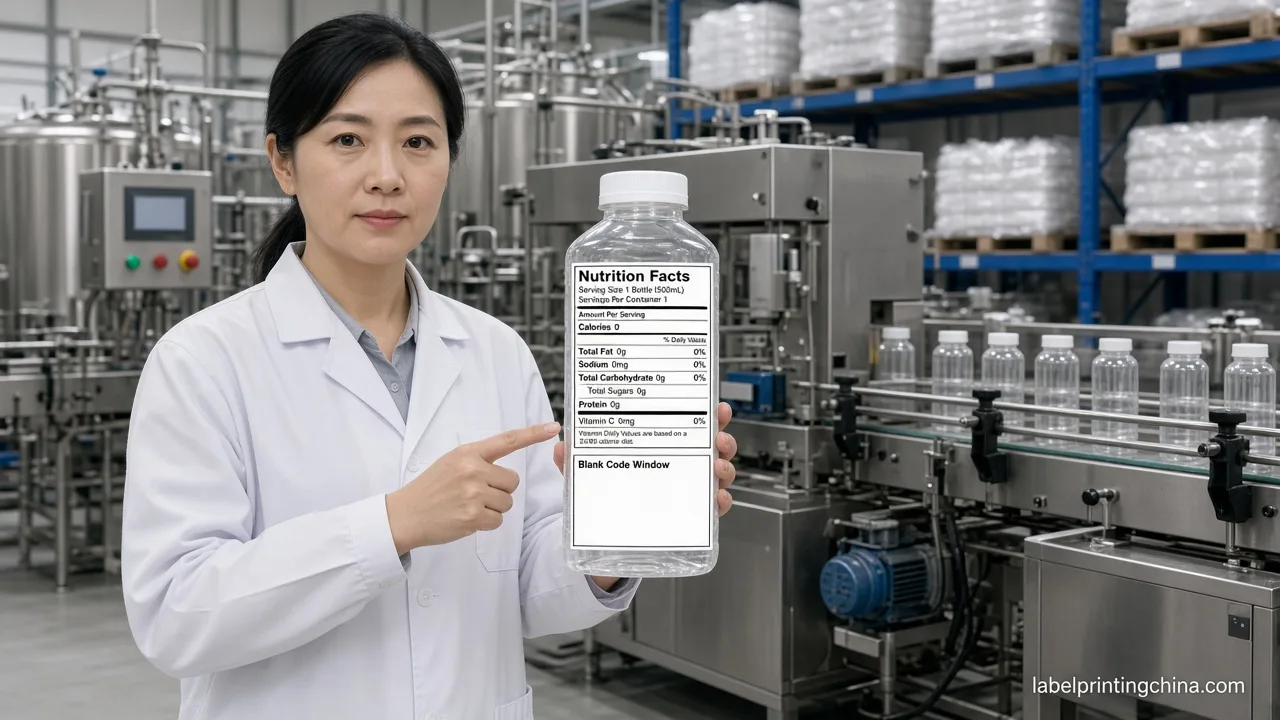
When the code has to be checked at the end of a noisy line, a low-contrast date sitting inside the nutrition rules is the one people miss. Keep the code zone high contrast and clear of the nutrition rules, then check that the later mark still reads after the label is on the container.
Apply this after the panel layout names where the coder lands.
A readable code on carton board is not proof that the same ink will hold on a film or a cold, wet jar.
Red flag: a date that looks sharp on the white proof can still fail once the label is on a curved, cold, or glossy container. Inspect that container, not only the flat sheet.
A date baked into the nutrition panel is a finished-goods decision, not a design flourish. Carton date-coding notes say the code needs to be visible, readable, and correctly positioned, and that high contrast matters when the mark is small.Measure the clear zone on your own dieline and check it on the filled container before you approve the plate. The plant-wide choice among the three methods is already mapped in the lot code method guide; this page stays on the nutrition panel.
Switch to Variable Data When Labels in the Same Roll Differ
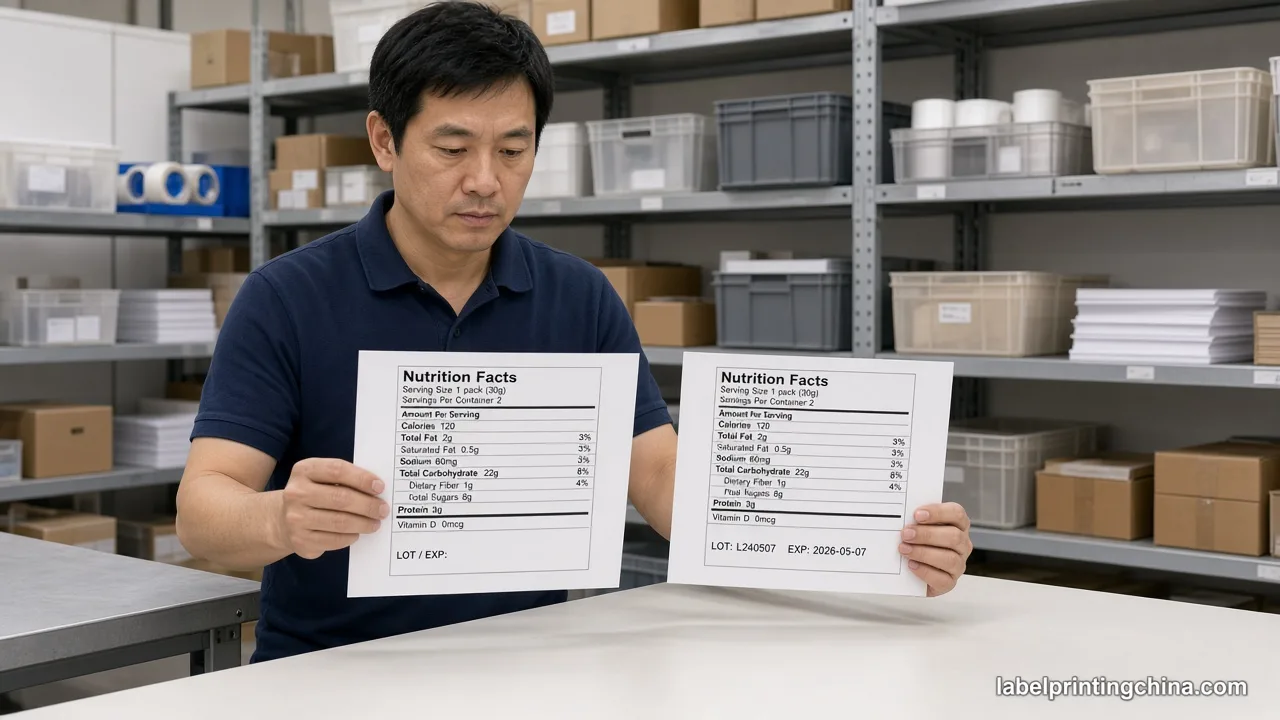
If two labels in the same roll must carry different serials, SKUs, or lot strings, a single overprint plate cannot do that job. That is the point of variable data printing: the fixed panel stays, and the changing fields come from a data file.
Approve one labeled container from the real batch rule before you print a date into a long roll.
Use this when a date change would otherwise leave finished labels you cannot ship.
Sample approval does not make a food exempt from a traceability rule, and it does not promise a coder speed.Public Law 119-37 says no funds appropriated by that act may be used to administer or enforce the November 21, 2022 traceability-records rule, or another rule under FSMA section 204, before July 20, 2028. That 2028 enforcement funding limit is not a printing method and not a waiver for every packaged food.
- Name the fields that stay on the preprint and the fields the coder may change.
- Leave the code zone off the nutrition rules and off the mandatory net-contents line.
- Check one filled container for contrast, position, and whether the mark still sticks.
Send the Batch Rule With the Panel
Send the batch rule, the date-code method, the container, the quantity, and the artwork when you want a variable-data recommendation for this nutrition label.
Lock Your Code Zone Before You Print
A nutrition label is ready to print when the panel is stable, the code zone is named, and one filled container shows that the later mark still reads. That is the bar for lot and date codes on this label, not a reason to preprint a date you already know will change.
Leave the general method map on its own page. If the next batch would scrap a roll of dated labels, move the date off the plate before you approve the art.
Next, send the panel, the container, and the batch rule you actually run. The recommendation should say what stays printed and what the coder is allowed to change.