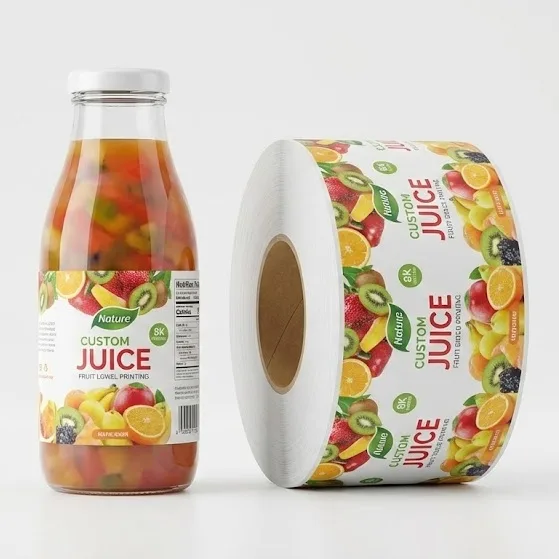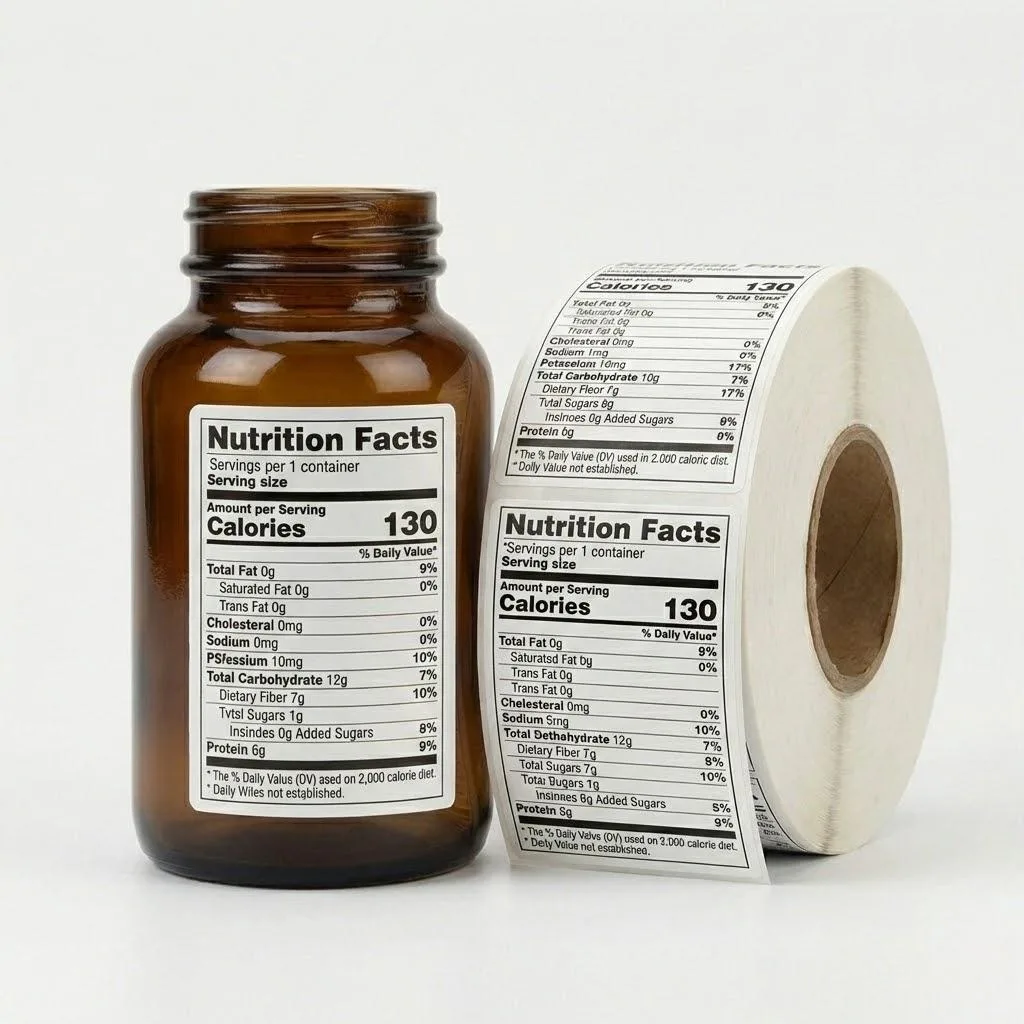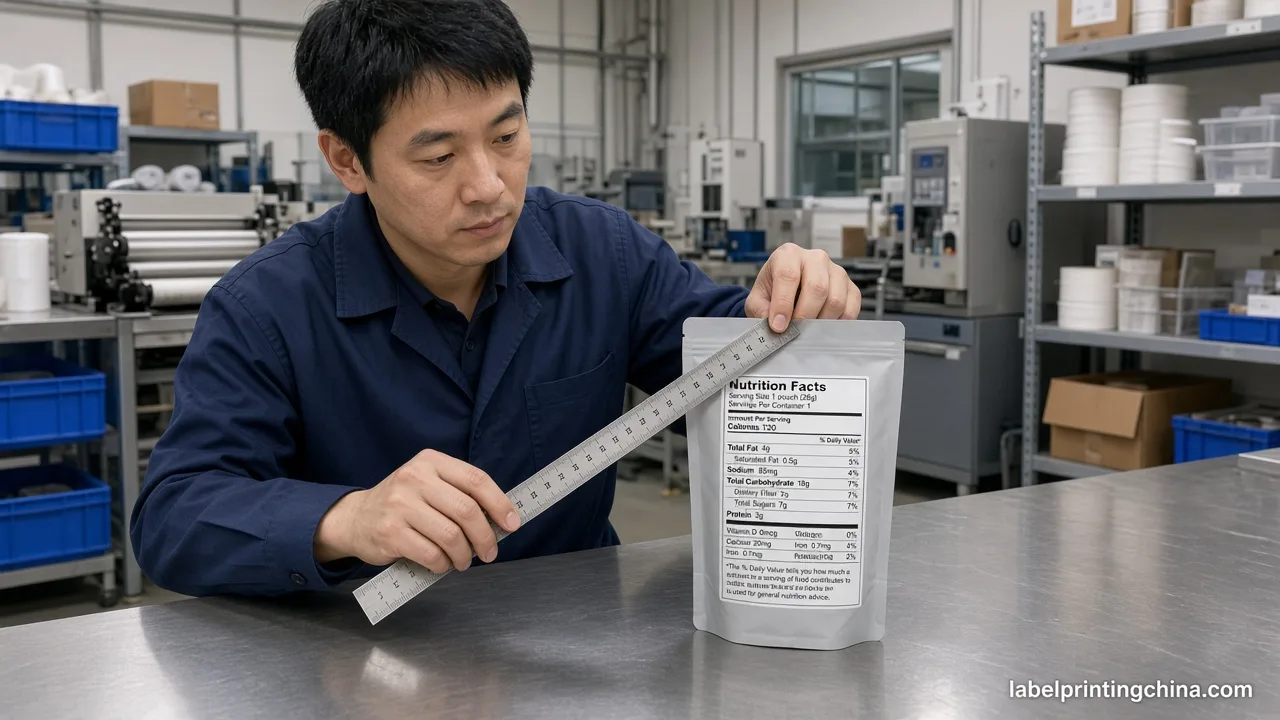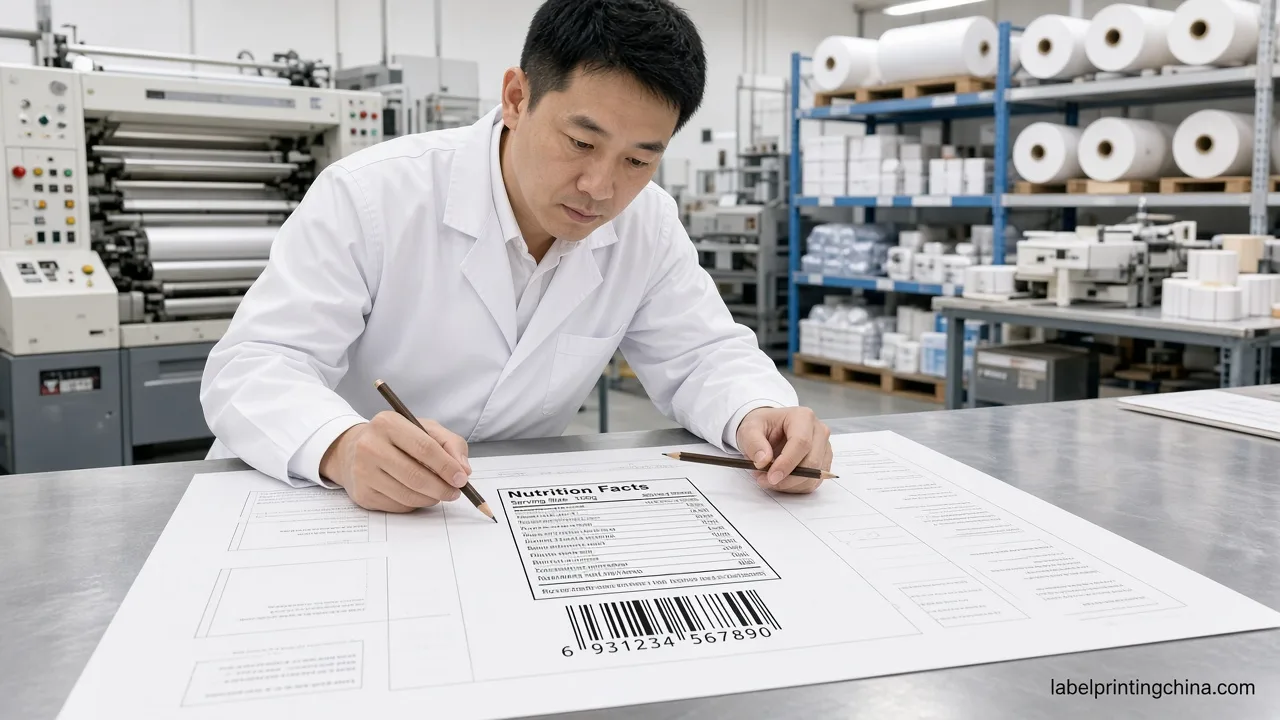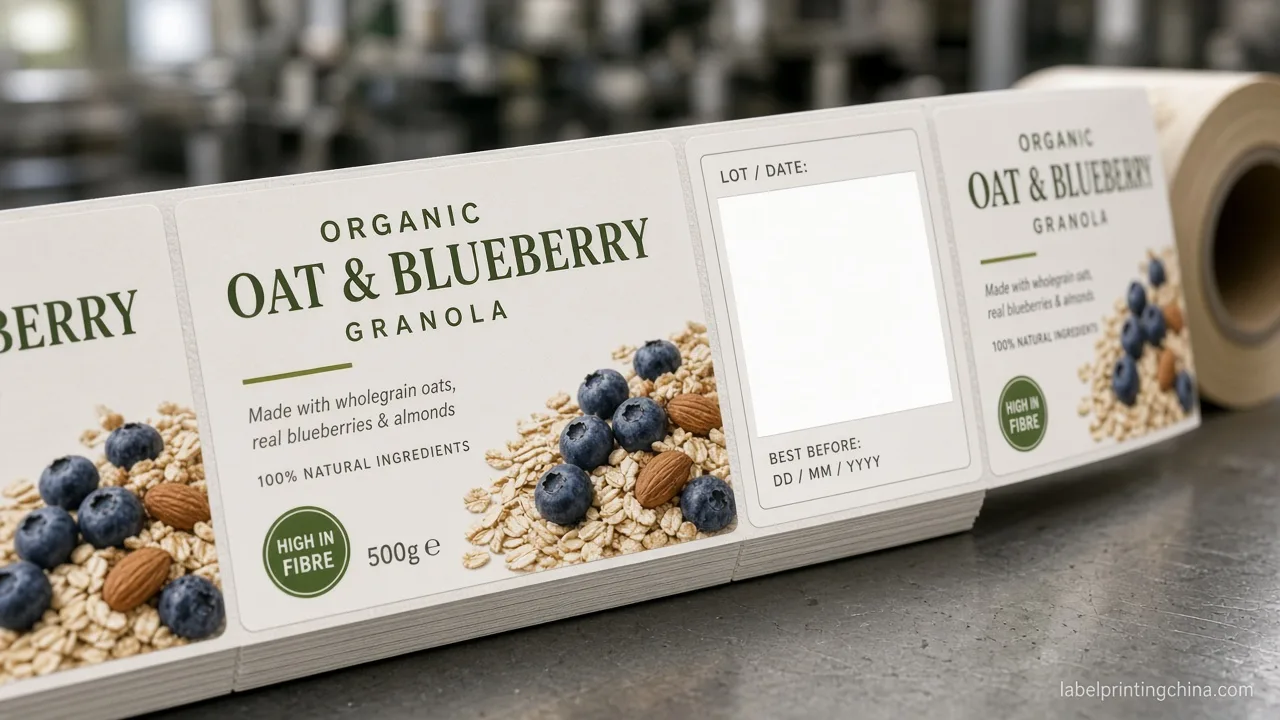
When cold-pressed juice ships in chilled PET and your label was specced like a room-temperature SKU, edge lift and smeared batch codes tend to show up after the first fridge cycle—not on the flat prepress proof.You can still lock a print-ready label pack before the HPP window closes and before a 500-bottle pilot teaches an expensive lesson.
For most refrigerated cold-pressed bottles, use white or clear BOPP with a beverage-grade permanent adhesive, reserve a dedicated batch and best-by zone on the back panel, and run a wet-bottle cold-chain sample for at least 24–72 hours before you release production.
Keep reading and you will leave able to match film to cold fill, lay out batch space, and gate your first cold-chain run yourself—so the next PO survives fridge handoff, not just the PDF on your desk.
Match Film to Cold Fill and Fridge Storage
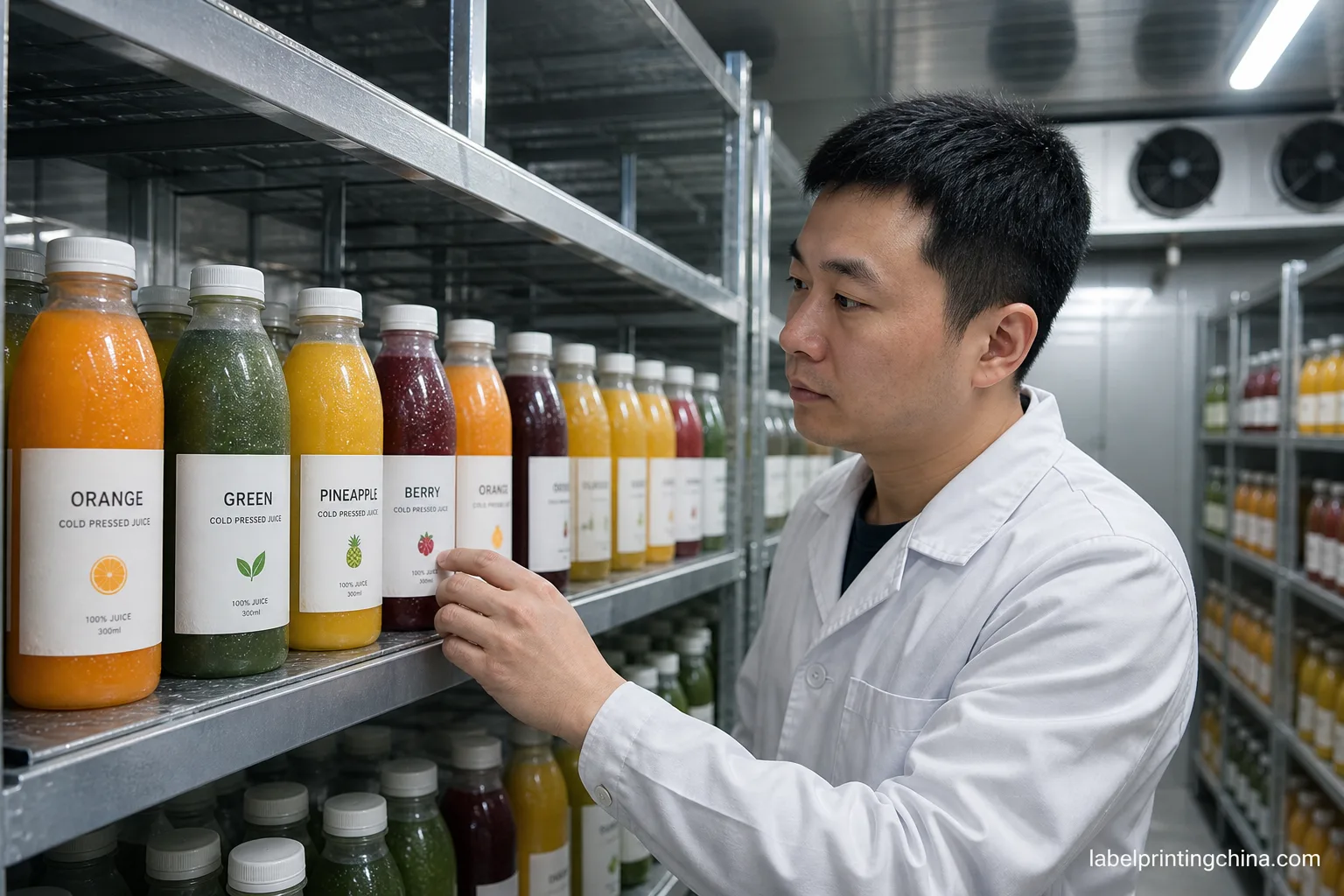
When you copy a “waterproof juice label” spec without naming cold fill, a converter quotes generic BOPP and your cold-pressed line sees edge lift by day three in the dairy case. Cold-pressed juice adds pulp oils, tight fill windows, and bottles that go wet before they ever reach the shelf.
| Your cold-pressed setup | What you write on the RFQ |
|---|---|
| HPP or cold-fill PET, standard fridge display 0–4 °C | White BOPP + gloss or matte laminate + beverage permanent adhesive |
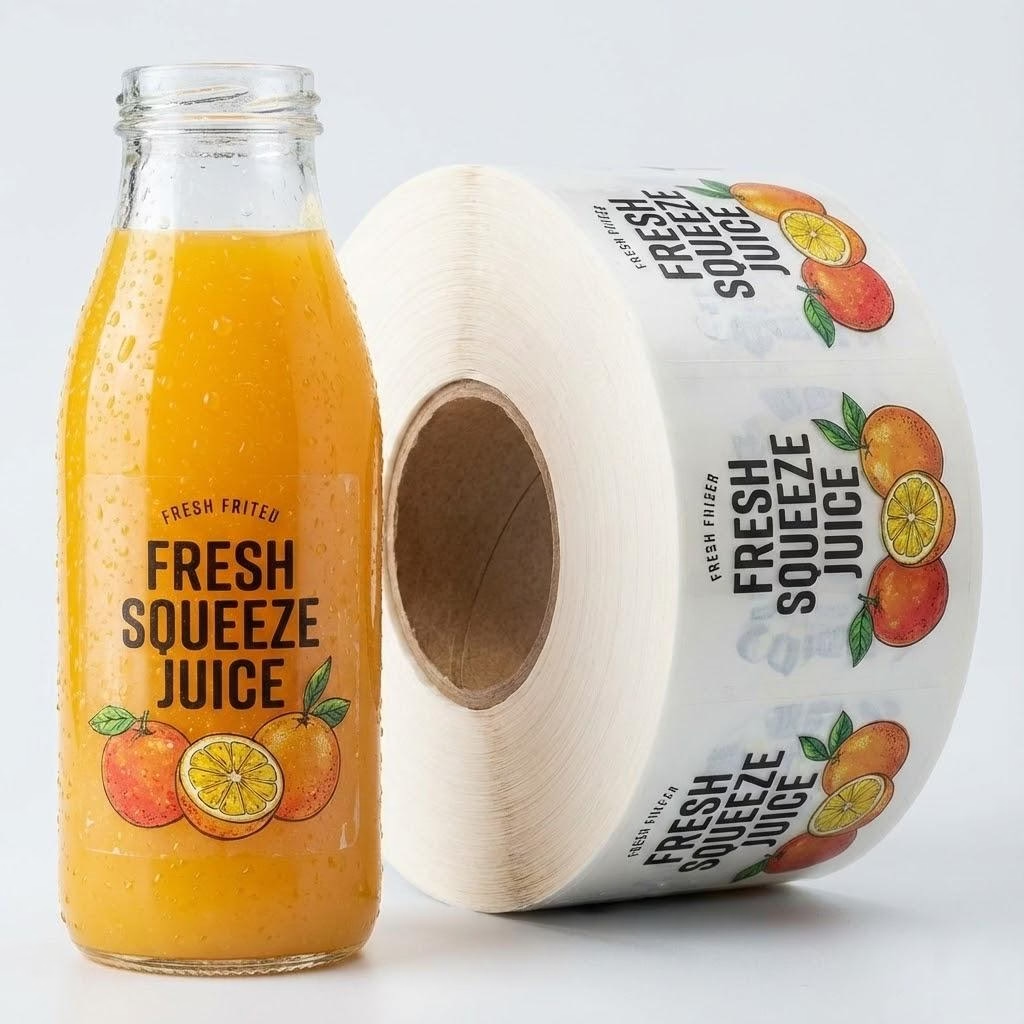
| Clear bottle, drink color is part of the brand story | Clear BOPP with white-ink underprint behind type; see clear white juice labels before art final |
| Long cold-chain or freezer-adjacent storage | PET face stock or heavier BOPP; flag freezer touchpoints on the PO |
| Hand apply right after fill while bottles are still cool | Cold-tack friendly adhesive + 24 h wet-out before refrigeration |
When a cold-pressed brand once ordered the same adhesive as its room-temperature lemonade, receiving flagged corner lift after one distributor leg. Your fix: name fill temperature, storage band, and whether bottles ship same-day chilled—not only “juice label waterproof.”
Red flag: if the quote never mentions adhesive wet-out time, assume the plant will label dry and chill immediately. That mismatch is how a perfect flat proof fails on the truck.
Material depth beyond film choice lives on the juice waterproof labels guide—but freeze face stock and adhesive here first so condensation tests match what you will run.
Write fill temperature in both °C and °F on the same RFQ line if your bottle vendor and label plant use different units. A one-degree mix-up on “cold fill” still sends the wrong adhesive recommendation when the line actually runs at 38 °F.
If you run both 12 oz and 16 oz cold-pressed SKUs, spec film once but verify wrap height per body—shoulder height changes how tight curves stress the same adhesive on a taller bottle.
Reserve Batch Code Space on Cold-Pressed Panels
Once film is picked, the next failure mode is art with no home for batch, best-by, or line code—then someone prints codes on the shrink band with a handheld gun the night before ship. Cold-pressed runs need that zone locked before the plate is made.
| Panel you are planning | What you reserve on the die |
|---|---|
| Front brand wrap on round PET | Keep front free of variable data; put batch/best-by on a flat back panel |
| Back nutrition + barcode band | Dedicated 12–18 mm tall strip above or below the UPC for lot/best-by |
| Small 8–12 oz shot bottle | Separate code panel or neck ring—do not shrink type into the nutrition block |
| Multi-SKU line sharing one bottle | Same code zone coordinates on every flavor artboard; only front art swaps |
When art once shipped without a marked code box, the press added a last-minute font so small that store staff could not read best-by under cooler LED. Mark a labeled rectangle on the PDF—height, width, and minimum 6 pt type—before you send files.
When that back band also holds your UPC and Nutrition Facts on a round bottle, use our juice barcode panel layout so quiet zones and panel height survive the curve.
Once several flavors share that bottle, lock color codes and seasonal naming with our juice bottle SKU labels before you gang the next print.
If nutrition density is still open, route copy rules through custom nutrition labels after the code rectangle is frozen, not before.
Watch-out: placing batch ink on a clear window over green juice looks premium on screen and fails arm-length reads in the store. Flood white ink behind the code zone even on clear film.
Variable-data quotes should list font, minimum height, and whether codes are inkjet, laser, or pre-printed in-line. Cold-pressed lines often batch-code after fill—your reserved box must match the print head width, not just the designer’s placeholder text.
When two flavors share nutrition boilerplate, still verify best-by format per SKU if shelf life differs. A shared back panel fails when one flavor gets a 14-day code and another gets 30 days in the same coordinate box.
Run a Cold-Chain Label Check Before First Fill
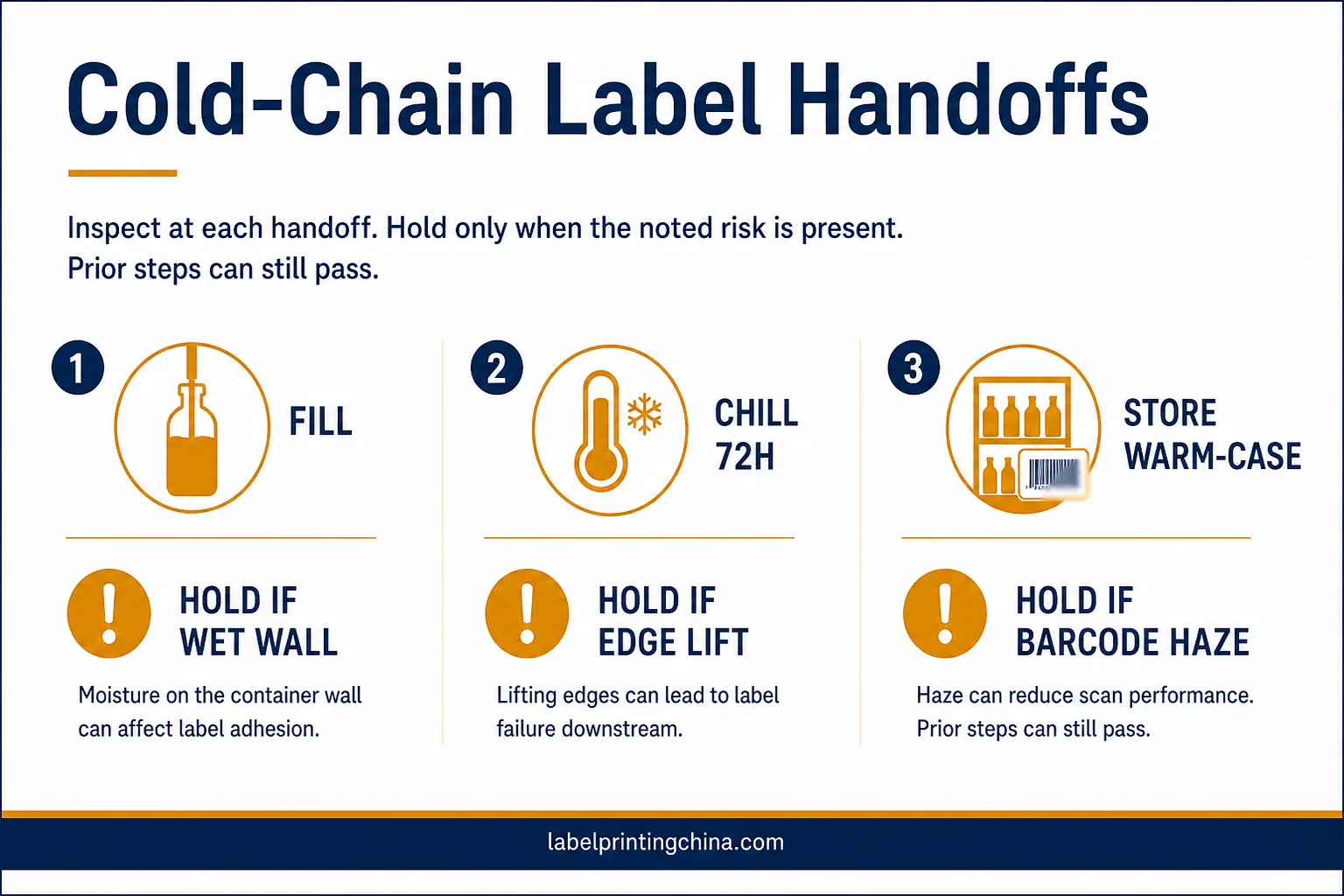
Film and panel layout mean little if nobody signs the handoffs from fill line to fridge to store shelf. Cold-pressed juice moves fast; the label is the only control surface that survives every leg.
| Handoff moment | Ready if… | Hold if… |
|---|---|---|
| Post-fill, pre-chill labeling | Bottles dry or wiped; 24 h wet-out scheduled before cold room | Labels applied over condensation or pulp drip on the wall |
| After 24–72 h at 0–4 °C | Edges flat; batch type readable; UPC scans on three bottles | Corner lift, ink rub on brand panel, or code band haze |
| Store display warm-case cycle | No new wrinkles after one condensation cycle under LED | Milky laminate band or barcode fade when wet |
When a functional juice line skipped the warm-case cycle, club receiving rejected pallets that looked fine leaving the plant. Your gate photo should show droplets on the label face—that is the shelf your buyer handles.
Food labels must meet market rules for identity and dating; understanding high pressure processing helps you align fill windows with label timing, but your plant still needs the cold-chain photos above to approve print.
If wrap width is still unfrozen, lock size on the juice label size guide before you rerun this gate—code zones shift when the die height changes.
Assign one owner per handoff row on the checklist—fill lead, cold-room manager, and retail reset contact—so a passed sample does not expire because nobody rescans after a recipe tweak. Date-stamp the signed sheet in the same folder as the approved PDF.
Distributors often photograph one lifted corner and reject the lot. Your cold-chain gate exists so that photo never becomes the first time you see wet-wall stress on your brand panel.
Need a refrigerated cold-pressed label review?
Send bottle volume, storage condition, panel copy, and artwork for a cold-pressed juice label check.
Test Labels on Filled Cold-Pressed Bottles
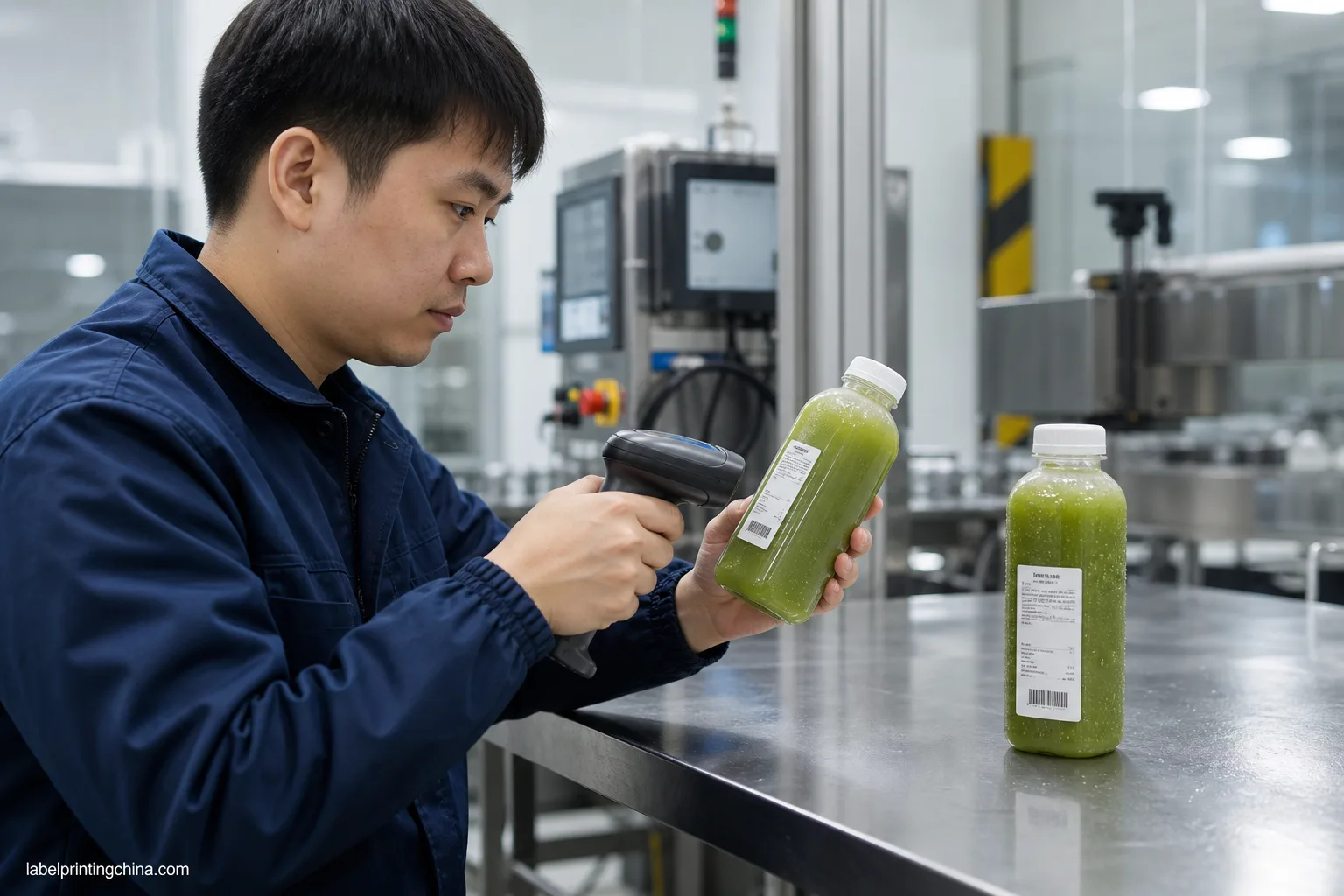
A flat proof cannot tell you whether pulp oils will haze a clear window or whether batch ink will smear when the bottle sweats. You need a short sample protocol on filled production bottles—not an empty PET shell from marketing.
- Apply labels to clean bottles with production pressure; note hand vs line apply settings
- Fill to real headspace with the coldest recipe you will ship; chill 24 hours minimum
- Move bottles to warm air for 30 minutes; photograph condensation on the label face
- Scan UPC and read batch/best-by at 30 cm under cool-white LED on three units
- Rub the brand panel with a damp cloth once—check ink transfer, not just dry gloss
- Carton six bottles; inspect scuff at shoulder curves after a short shake test
- Sign a one-page photo sheet: film, adhesive, fill temp, and pass/fail on each step
When a cold-pressed startup signed a PDF proof but skipped step three, the first retail reset showed a milky band across the hero flavor name. Hold the PO until the photo sheet shows wet bottles—not until the designer replies “looks fine on my screen.”
HPP and high-pressure processing shorten your decision window; treat sample approval like a batch release gate, not a marketing sign-off. Document who approved and which bottle lot the photos came from.
Store the signed photo sheet with roll direction and core size if you label on an applicator—cold rooms slow adhesive flow, but jammed rolls still stop the line on launch day. A sample that passed hand apply can fail at 120 bottles per minute when tension differs.
For broader beverage cold storage, the custom beverage labels hub covers shared cooler rules—cold-pressed PET fails faster on curved walls than most can wraps.
Before you scale past pilot MOQ, repeat steps two and three on a second bottle lot from the vendor. PET wall thickness drift of 0.2 mm is enough to change edge stress without changing the milliliter stamp on the mold.
Lock Your Cold-Pressed Label Pack Before Production
Cold-pressed juice labels stop being a design task once your RFQ carries film, adhesive, code-zone art, cold-chain photos, and a signed sample sheet. That pack tells your converter what “print-ready” means and tells you what receiving should inspect.
When those locks sit in one folder, releasing a pilot run is a controlled step—not a hope that chilled BOPP will “probably hold” through your first distributor leg. Reopen the gate if fill temperature, bottle vendor, or storage band changes mid-season.
Send bottle volume, storage condition, panel copy, and layered artwork through custom juice bottle labels when you are ready to print against a measured cold-pressed pack—not after the first lifted corner hits the dock.