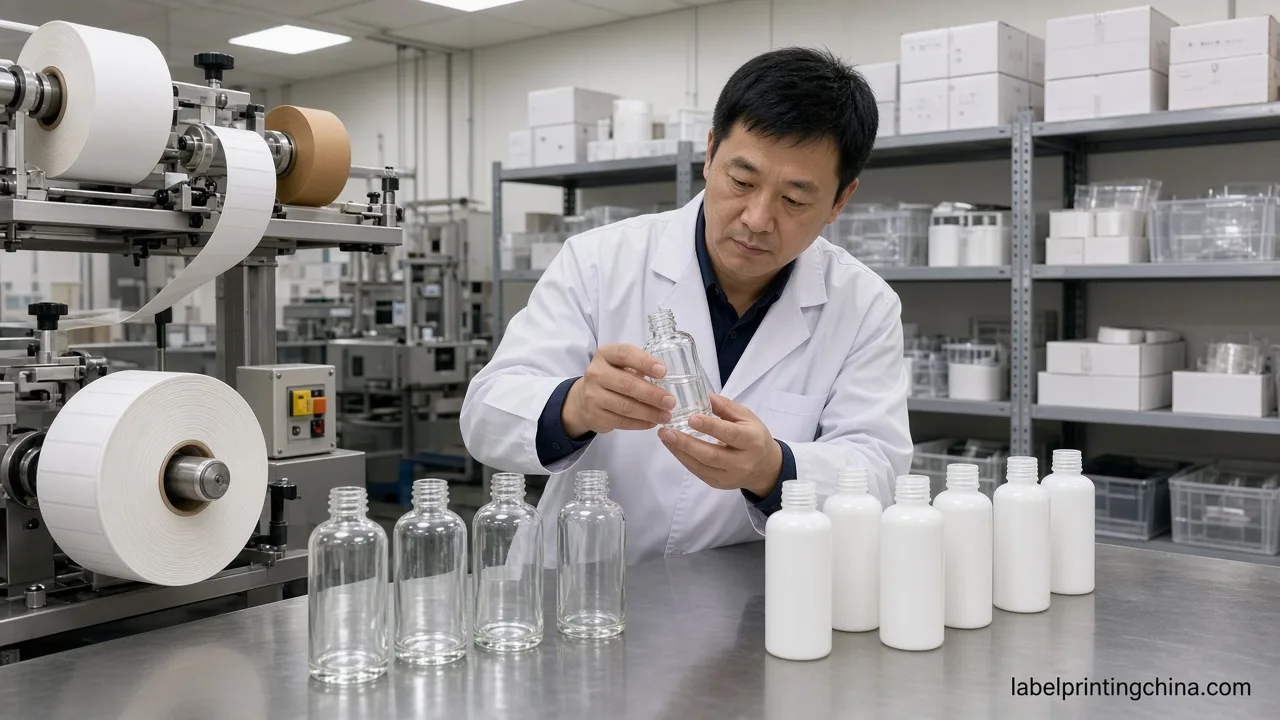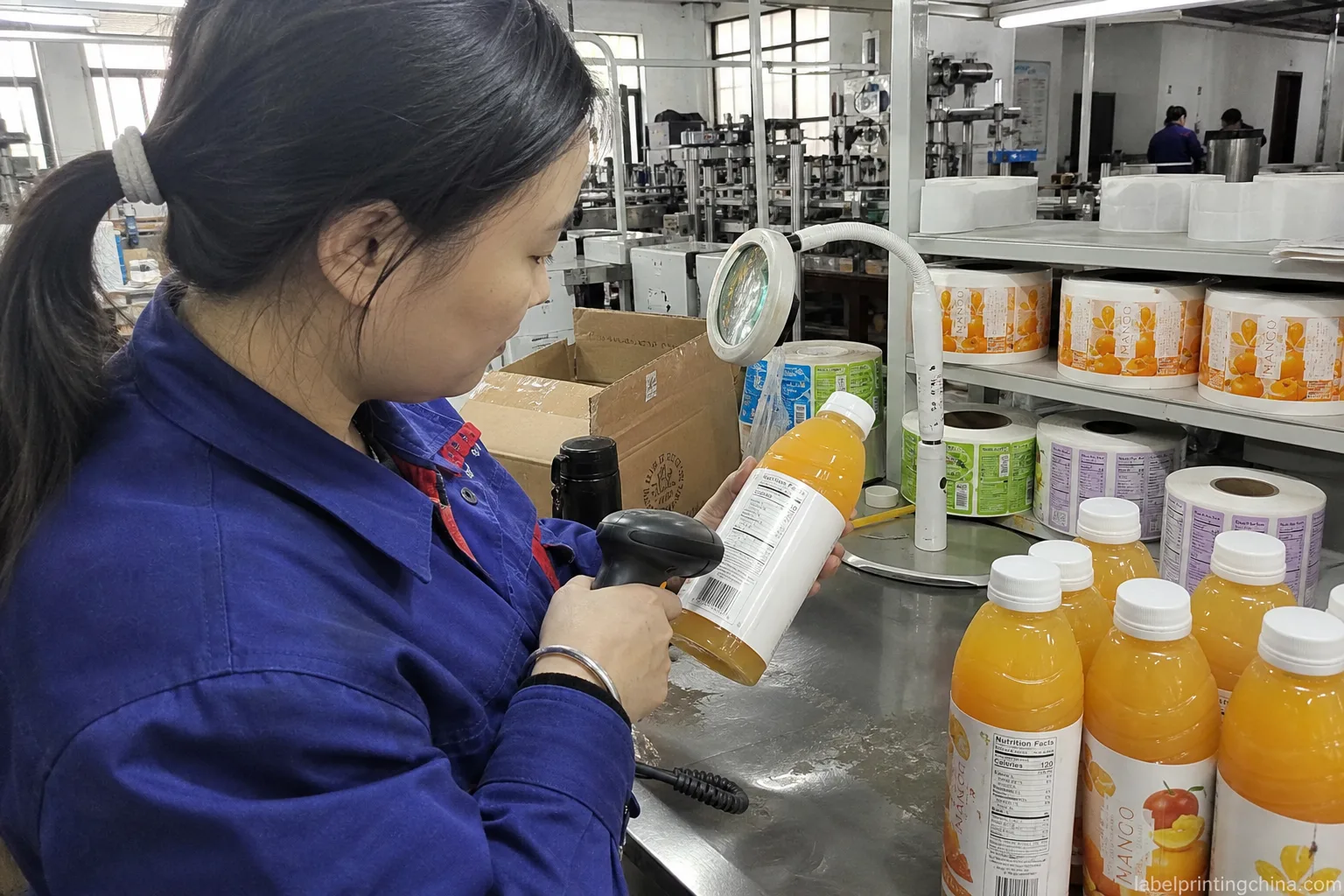
Your sample vials looked fine at 5 p.m., then edges lifted by morning—and your line still wants an IPA wipe before every apply. You do not need another vague “vial label” overview; you need a spec that locks face stock, adhesive, and roll format together before the PO leaves your desk.
For 3–10 mL vials, specify a conformable film face stock (typically BOPP or thin PET), a permanent adhesive rated for your glass or plastic and any fridge or IPA wipe exposure, plus machine-ready roll format—core size, max outside diameter, and unwind—before you approve artwork or place the PO.
When your project needs that construction evaluated against a vial, bottle, tube, or carton, use the custom pharmaceutical labels page to send the container, storage conditions, variable-data needs, and roll requirements together.
Keep reading and you will see how to separate face-stock problems from adhesive or wet-cold apply conditions, how to choose a build that survives fridge time and alcohol wipes, and how to write core, OD, and unwind into the same quote pack so the rolls actually fit your applicator.
What Breaks First on 3–10 mL Vial Labels
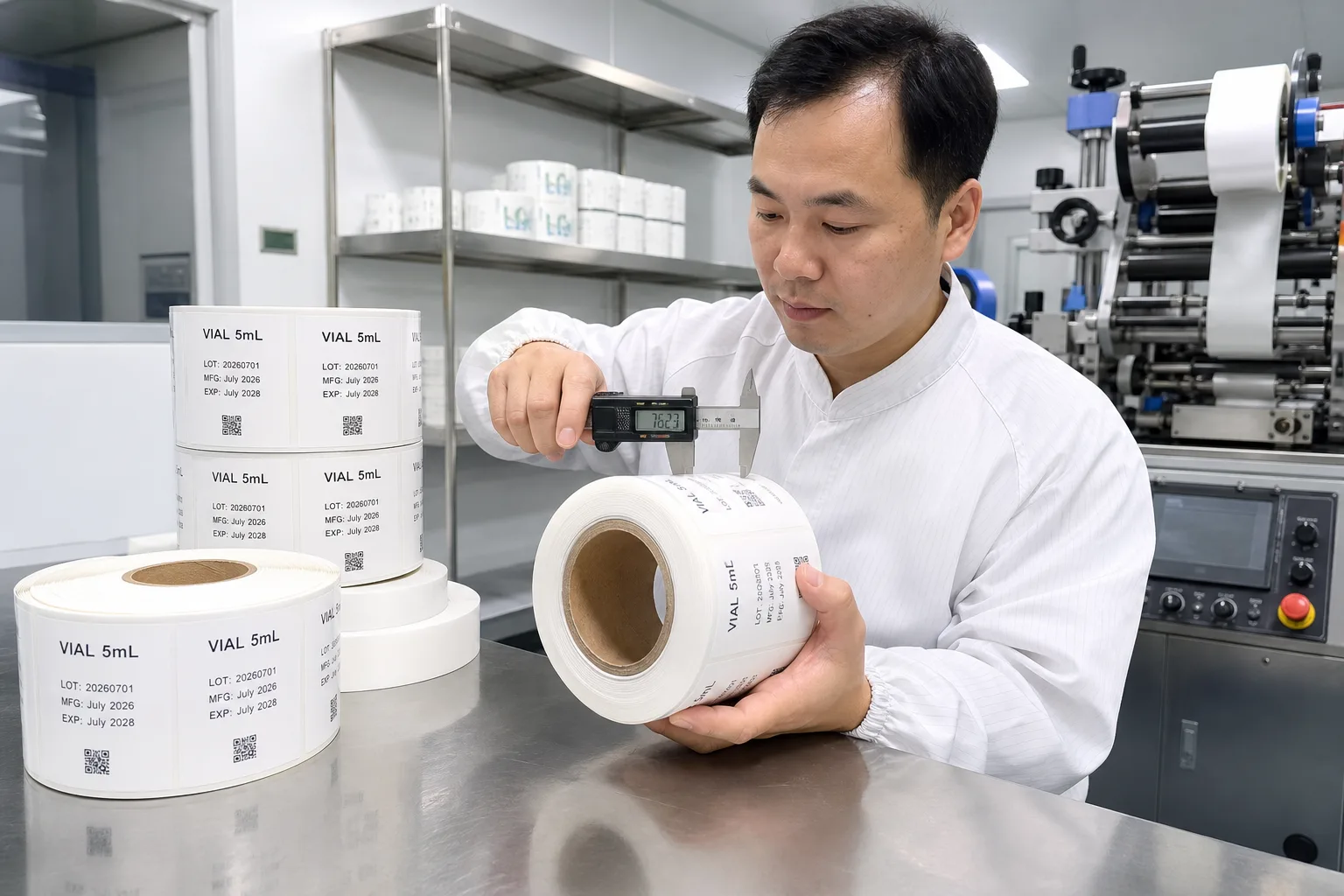
When you only say “use better material,” your team still argues about the wrong failure. Name what breaks first on your small-diameter vials so your next sample request matches the real leak—not a generic film upgrade.
| What you see | Clear signal | Watch / next move |
|---|---|---|
| Corners lift within 24–72 hours on dry glass; print still sharp | Stiff face / poor wrap | Move to thinner, more conformable film; re-check die size vs vial OD |
| Edges lift after fridge or condensation; warmer room samples were fine | Adhesive / temp mismatch | Specify cold-capable permanent adhesive; test on cold vials, not only room samples |
| Ink smears or varnish dulls after IPA wipe; adhesive still holds | Print / topcoat weakness | Add chemical-resistant topcoat or ink system; do not only “upgrade glue” |
| Lift only on the applicator; hand samples look perfect | Apply-condition miss | Record wipe residue, line speed, and vial surface temp in the RFQ |
When you once swapped to a thicker “premium” film after edge lift, the wrap got worse on your 3–10 mL glass. Your Clear row was stiff face—not a call for more caliper. A common watch-out: chasing “stronger film” when the real red flag was wrap stiffness on a small radius.
If your room-temp hand samples pass but fridge vials fail by morning, treat that as adhesive or temperature mismatch before you reopen artwork. Your vendor conversation should start with vial OD, storage range, and wipe chemistry—not unit price.
Before you blame the applicator alone, photograph lifted corners with a timestamp and note whether the vial was wiped, cold, or dry. When you can point to one Clear row, your next sample cycle stops burning two variables at once.
Industry lab methods such as those published by FINAT test methods exist for mandrel hold and related adhesive checks—use them as a shared language with your converter, not as a substitute for locking your own vial OD and storage window.
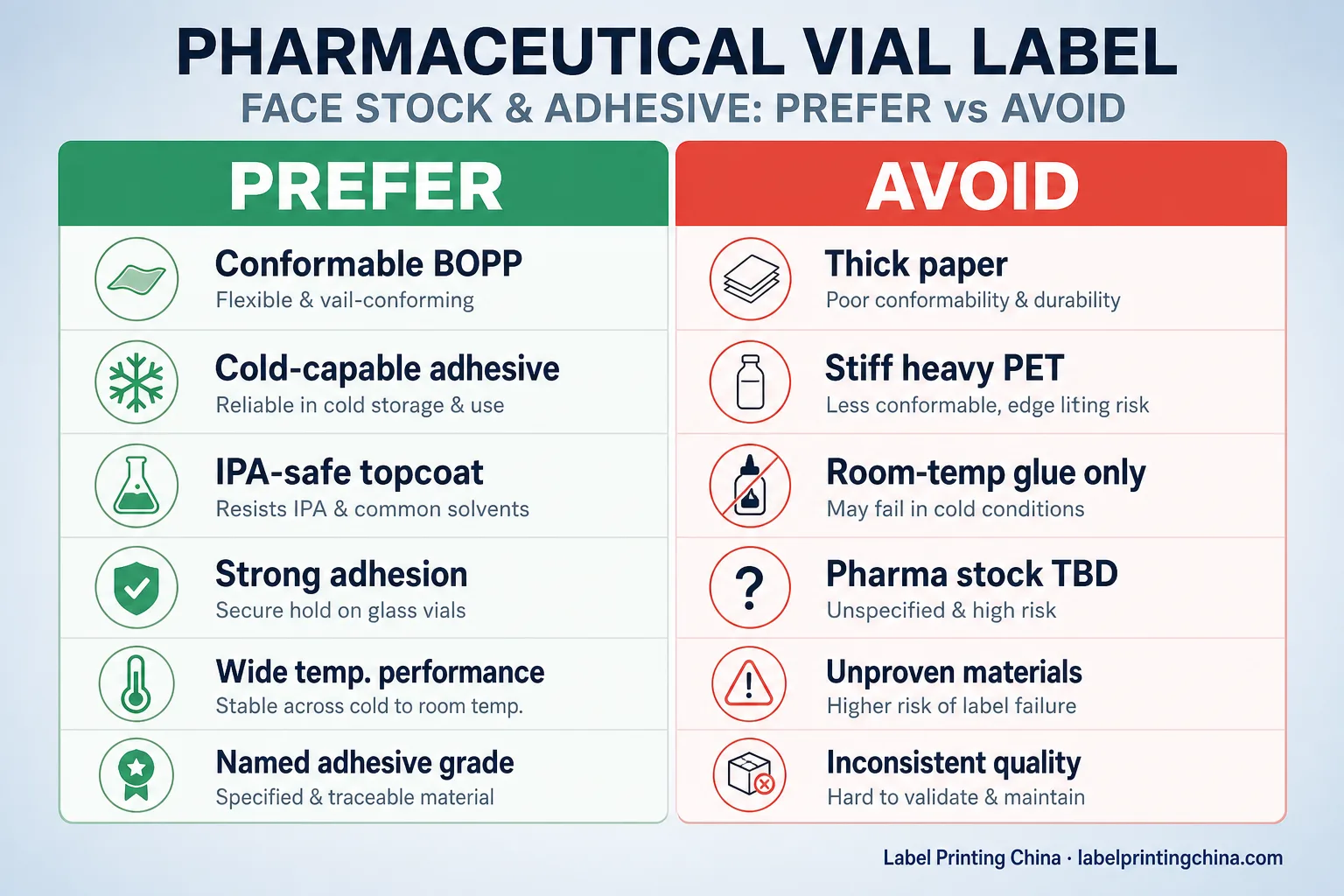
Prefer or Avoid — Face Stock and Adhesive for Small Vials
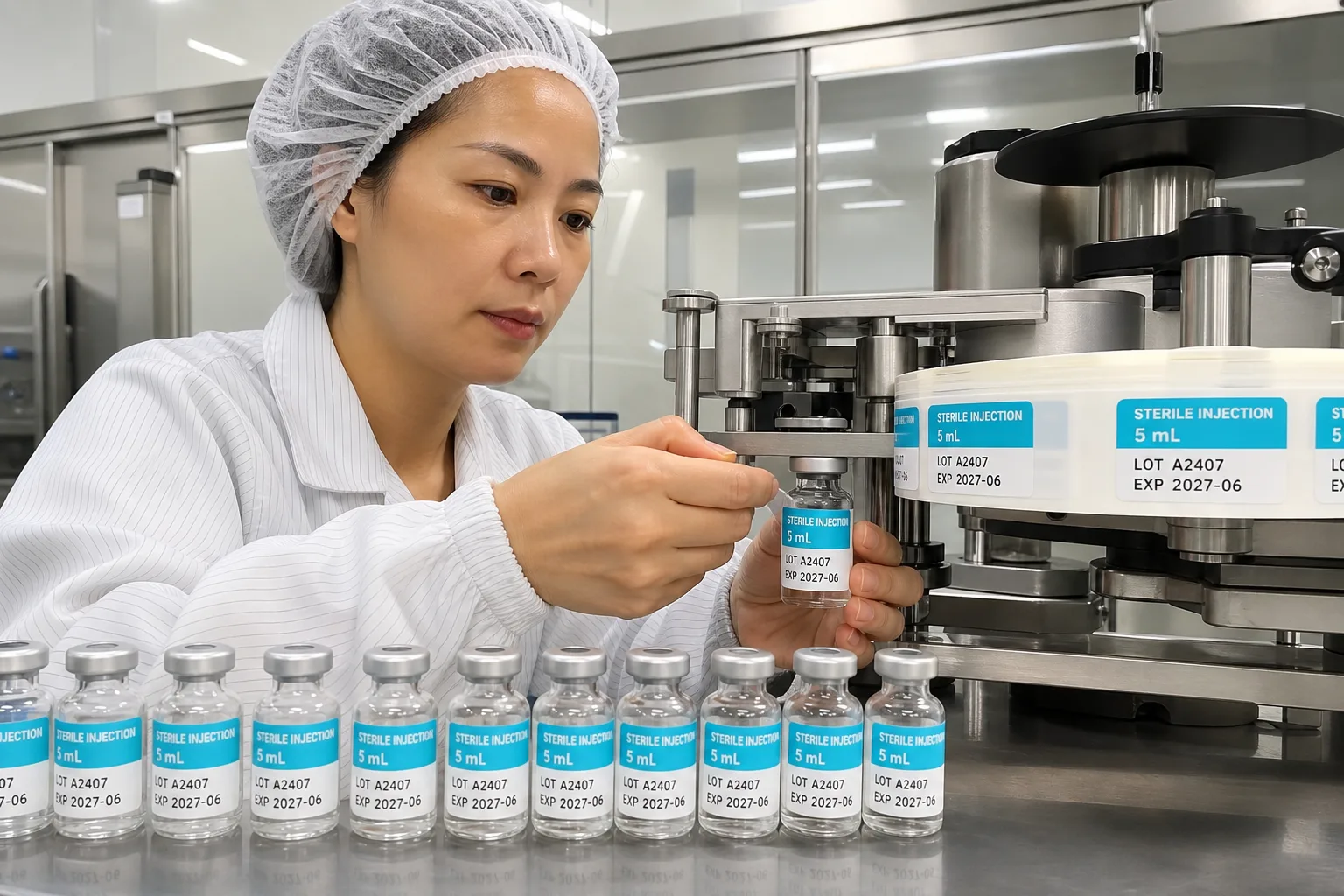
When you copy a cosmetic BOPP permanent build onto a tight vial, you often buy a label that looks fine on a flat card and fails on a small radius. Choose face stock and adhesive together against your real storage and wipe conditions.
| Your condition | Prefer | Avoid |
|---|---|---|
| 3–10 mL glass, ambient or mild fridge, ~20–40 mm label | Conformable white or clear BOPP + permanent adhesive proven on glass | Thick paper, stiff heavy PET “for durability,” or removable office adhesive |
| Fridge / freeze-thaw; condensation on glass | Film face + cold-capable permanent adhesive; test on cold vials | Standard room-temp permanent only; paper faces without moisture plan |
| IPA or alcohol wipe before apply | Chemical-resistant ink/topcoat + adhesive that recovers after wipe-dry | Uncoated paper; “any permanent glue” with no wipe trial |
| Plastic vial / low surface energy | Adhesive rated for LSE plastics; confirm resin family on the quote | Glass-only adhesive copied from a prior glass SKU |
When you previously ordered “BOPP permanent” with no wipe or fridge note, your converter filled gaps with a general-purpose build. Your Prefer row must name storage and wipe chemistry—or you will re-learn edge lift on the next lot.
If you need a shared definition of how pressure-sensitive constructions work, skim the overview of pressure-sensitive adhesive basics, then force your quote to name face, adhesive grade, and liner—not just “pharma label stock.”
Before you pay for a full die, run a short wipe-and-fridge trial on real vials with the candidate construction. Your Avoid list exists to stop you from approving art on a build that already failed the bottle in your hand.
When your artwork needs tiny lot codes on a 20–40 mm panel, Prefer a smooth film that holds fine type; do not chase a textured paper look that fights both wrap and legibility on a small cylinder.
Lock Core, Max OD, and Unwind for Small Vial Rolls
When you freeze material but leave roll format blank, you still risk a carton that will not mount. Lock core, max outside diameter, and unwind with the same rigor you use for face stock—especially on small die sizes that change labels-per-roll math.
- Core: Match your applicator—commonly 1″ or 3″. Do not assume “industry standard” without checking the mandrel.
- Max OD: Cap the finished roll diameter to your machine limit; small labels tempt oversized rolls that jam or will not fit the cage.
- Unwind / rewind: Confirm the number (#1–#8) your applicator expects before the press winds the job.
- Labels per roll: Ask for a target that fits changeover rhythm—not only the cheapest huge roll.
- Gap / matrix: Keep waste-strip and gap settings compatible with your sensor and peel plate.
When you once accepted a beautiful material quote on a 1″ core while your line runs 3″, the rolls sat unusable. Your next RFQ should cite the 3-inch core OD guide numbers you already trust for machine-ready rolls.
If your small vial die packs more labels per meter, double-check Max OD before you “save” freight with one giant roll. You want changeovers you can live with—not a hero roll nobody can lift onto the spindle.
Before artwork approval, write core, Max OD, and unwind on the same page as face stock and adhesive. Your pressroom cannot invent the correct rewind after the job is already wound the wrong way.
Need machine-ready vial rolls quoted to your applicator?
Send vial OD, storage/wipe conditions, core, Max OD, and unwind—we will return a build you can trial on real 3–10 mL containers.
Clear or Watch — Pre-PO Spec Fields for Vial Labels
When your quote only lists size and quantity, you invite silent substitutions. Run these fields Clear before you release purchase money—Watch means you pause, not “hope the converter guesses right.”
| Field | Clear if… | Watch / Hold if… |
|---|---|---|
| Vial OD + fill volume (3–10 mL) | Measured OD and label W×H written on RFQ | Only “10 mL vial” with no OD or die drawing |
| Face stock + adhesive grade | Named film + adhesive rated for substrate and temp | “Pharma label stock” with no grade |
| Storage + wipe chemistry | Fridge range and IPA/other wipe stated | Ambient-only assumption on a cold or wipe line |
| Core / Max OD / unwind | All three match applicator docs | Any field blank or “TBD after print” |
| Sample plan | Wipe + fridge trial on real vials before mass PO | Art approved with zero bottle trial |
When you leave unwind as TBD, you often discover the mismatch only after freight. Put the correct chart number from the unwind direction guide on the PO line—not in a side chat.
If any Watch row is still open, Hold the mass order and run the missing trial. Your cheapest reprint is still more expensive than a one-page Clear checklist.
Before you sign the proof, read the quote aloud against this table. If your vendor cannot name adhesive grade and Max OD in the same email, you do not yet have a machine-ready vial label PO.
Freeze the Spec Before Your Next Sample Run
When you treat the next sample as “just artwork,” you restart the edge-lift lottery. Freeze face stock, adhesive, core, Max OD, and unwind as one package—then print the sample on that frozen build.
If your team still debates materials after the die is cut, pause and reopen the Clear/Watch fields instead of adding another ink tweak. Your 3–10 mL vial label wins when the bottle trial and the applicator mount both pass on the same construction.
Freeze face stock, adhesive grade, core, Max OD, and unwind on one page before you release mass quantity—your bottle trial and spindle mount must pass on the same construction.
Send that locked pack when you request custom roll labels so the quote returns a build you can approve once—not a series of silent substitutions. Your next morning vials should still show clean edges, and your spindle should accept the roll on the first try.