When your packing line already runs an automatic applicator, the roll that arrives at the mount is not a generic die-cut SKU. Core, maximum roll diameter, gap, unwind, and leading edge all have to match that machine’s manual—and buyers who quote only width and length still get teach failures on the first shift.
Label roll specs for applicator setup start with the named machine model, then lock core, max OD, gap, unwind, and leading edge on one sheet before volume rolls are cut.
After this page you can build a pre-production roll checklist that covers mount geometry and feed geometry together, split OEM-owned fields from converter-owned fields, and judge when a sample roll is worth the delay before the full PO.
Start With the Applicator Model on the Sheet
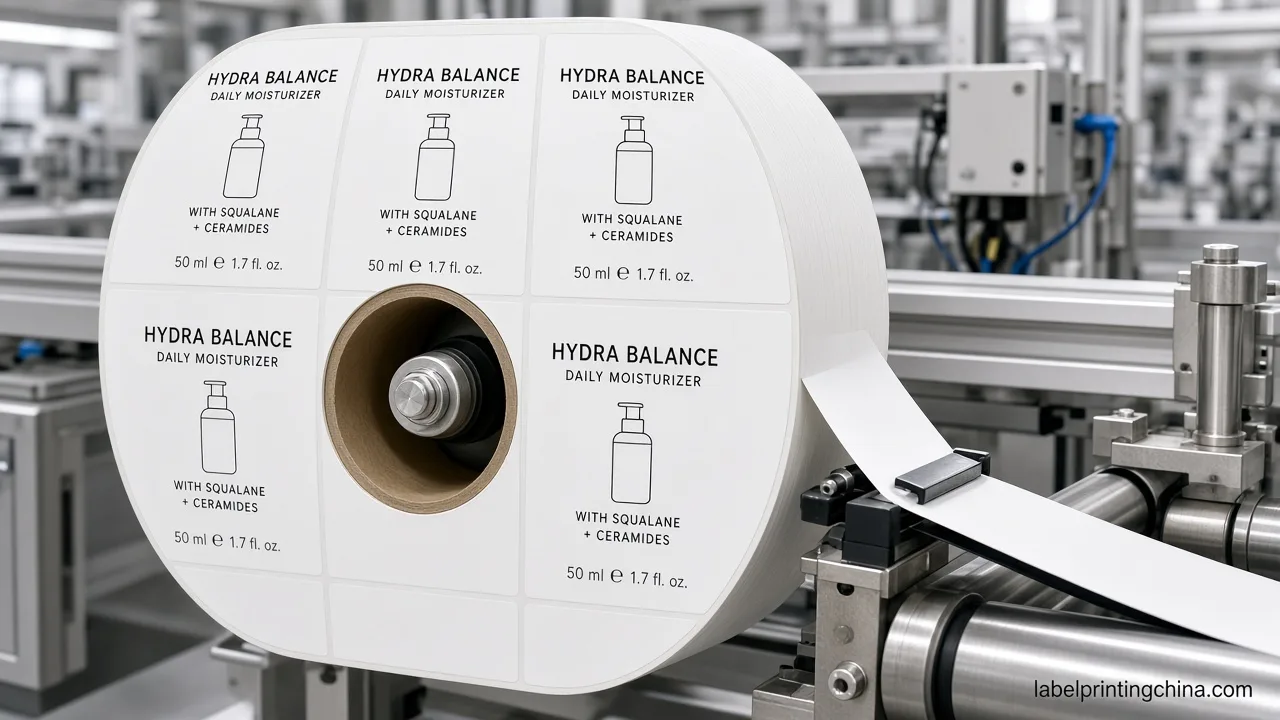
Lock the applicator model, core, max OD, gap, and unwind on one RFQ sheet before anyone die-cuts volume rolls.
Every roll field ties back to a make and model—and a manual page—not a “standard machine roll” note. Buyer threads on roll RFQs often pair a named applicator class with a face material because mount and feed windows move with the OEM, not with your last supplier.
Put the applicator model, serial or series if you have it, and the document version on the quote header. If the manual is missing in-house, mark gap, max OD, and sensor rows “confirm with integrator” so nobody die-cuts against a guess copied from another plant.
The machine-ready label manufacturing overview explains how factory-side roll prep fits a full line audit; this checklist is the customer-side sheet you complete before that quote leaves your desk.
Match Core Size and Maximum Roll Diameter
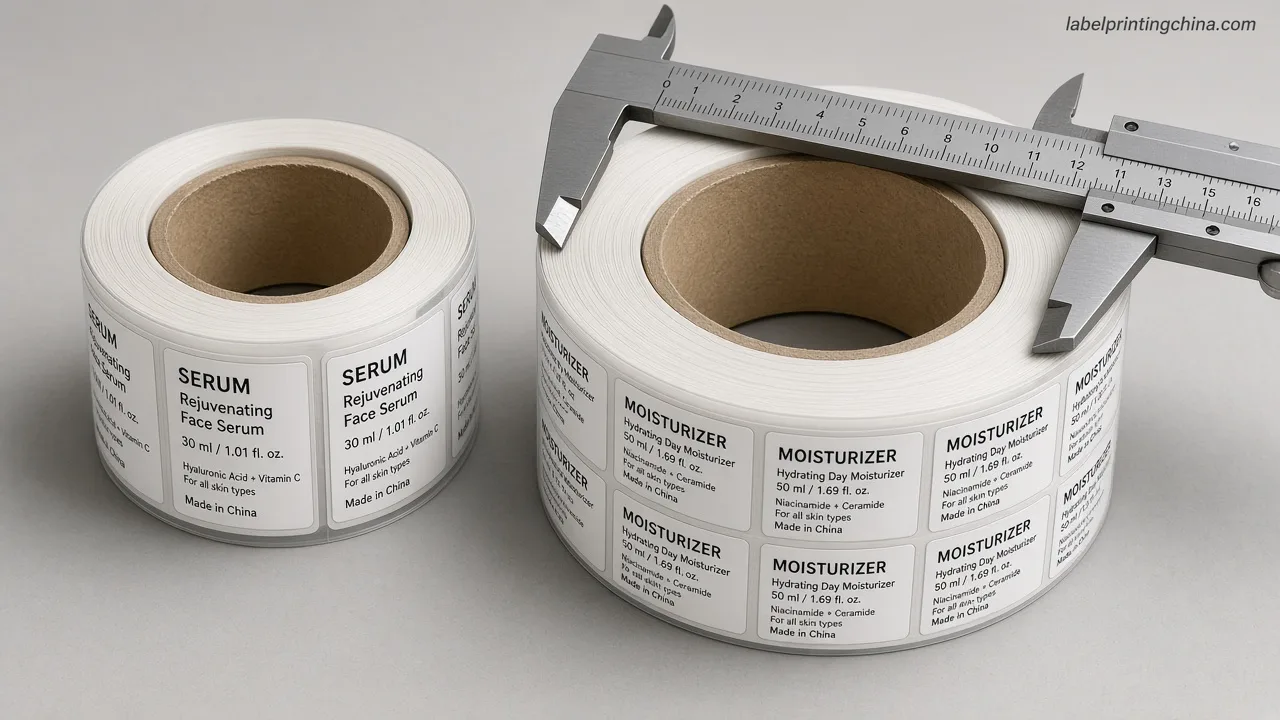
Core and outside diameter decide whether the roll fits the magazine and whether the line can run a full shift without a splice at the wrong moment.
For machine application, Resource Label Group notes that depending on the label application equipment you use, the core will be either 1-inch or 3-inches in diameter—and unless you are hand applying your labels with no machine assistance of any kind, the converter will need to know which core size to use.Each machine is different for maximum O.D. as well, so check with your equipment manufacturer for exact specifications rather than copying a peer’s OD cap.
On a semi-automatic bench, the numbers shrink fast. The Afinia A200 manual lists diameter of label roll under 203 mm (8 inches) and core size from 46 to 76 mm (1.8 to 3 inches).Those limits sit on the A200 specification table for that semi-automatic applicator. That window does not transfer to a high-speed 3-inch-core magazine without a new read of the book.
Write core ID and max OD as hard limits on the RFQ, not “about 8 inches.” When you need magazine math and 3-inch paths in depth, use the 3-inch core and max roll diameter guide after the model row is filled in.
Record Gap, Unwind, and Leading Edge Together
Gap alone does not tell the mount how the web leaves the roll, and unwind alone does not tell the sensor where the blank sits.
American Price Mark’s roll guidance is blunt: if you use a dispenser or applicator, roll label unwind direction helps determine how the label arrives at the package, and it should be confirmed before production, not discovered when the order reaches your packing bench.Share the diagram your printer uses and confirm which edge of the artwork comes off the roll first—a verbal “standard wind” leaves too much room for interpretation. The same post lists core size, maximum roll diameter, liner width, label dimensions, and the gap between labels as applicator-side requirements that belong on the order, not as afterthoughts.
Equipment rewind is numbered, not guessed. Resource Label Group states that the equipment you use will specify a rewind direction between 1 and 8, and that is the number your rolls must be produced with to be compatible with your label applicator.Put that integer beside gap and leading-edge notes so die-cutting and winding use one drawing.
Gap minimums stay model-specific. The CTM 360a service manual asks for labels on a liner web with a minimum label gap of 1/8 inch and accepts rolls up to 20 inch O.D. on that family. That eighth-inch figure belongs to that manual and that machine family.Those figures are not a universal law for every brand. Label stop at the peel edge is quoted within plus or minus 1/32 inch when using labels constructed with a liner that does not stretch, so a stretchy liner belongs on the exception list beside gap.
For gap-only depth—pitch, sensing, and teach—the sibling label gap guide for automatic applicators carries the feed-geometry half; here you only need gap, unwind, and leading edge on the same RFQ block.Unwind chart detail lives on the unwind directions for label applicators page when the diagram is not already in your manual.
Need an applicator roll review before production?
Send machine model, core, max OD, gap, unwind, material, and label size so mount and feed fields are audited on one quote.
Add Material Thickness, Label Size, and Line Speed
When the applicator book lists a label width and length window, those rows are mount and peel limits—not suggestions you can “average” from artwork.
The Afinia A200 specification table caps label width from 25 to 150 mm, label length from 25 to 500 mm, label gap above 2.5 mm, and dispensing speed at 0.1 m/sec—and it warns not to use labels outside the specifications listed.Industrial lines run different ceilings; the point for this checklist is to copy the finished die size, caliper stack, and target line speed beside the model name so the converter is not reconciling a wide web to a narrow peel plate after the fact.
Face stock and adhesive change how aggressively the peel plate can run, so material belongs in the same block as gap and speed even when the manual is silent on brand names.A thick film with aggressive adhesive can behave like a shorter label in the feed direction once tension builds, which is why buyers who only send artwork PDFs still see mis-registered peels on day one.
Split Who Owns Each Spec Before the Quote
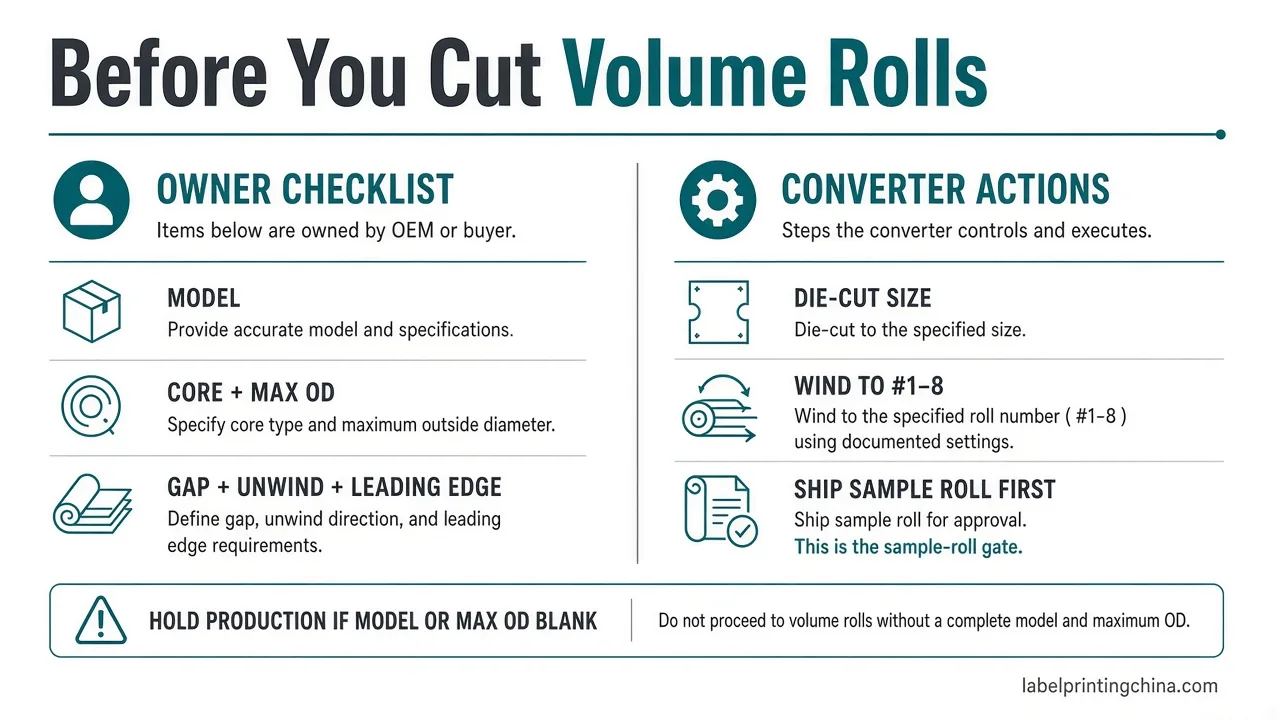
This table separates what your OEM or integrator must confirm from what your label supplier die-cuts and winds—so blank cells do not turn into assumptions on press.
| Who provides | Owner |
|---|---|
| Applicator model, manual min gap, max OD, core window | Equipment OEM or line integrator |
| Rewind direction (#1–#8), leading edge, liner width | Buyer confirms; converter winds to drawing |
| Finished die size, gap, material, roll quantity | Buyer specifies; converter manufactures |
| Sensor teach, peel registration at speed | Plant maintenance / operations after sample approve |
Once owners are named, the write-this column keeps quotes comparable across suppliers.
| Spec | Write this |
|---|---|
| Applicator | Make, model, manual revision; link or attach unwind diagram if required |
| Core / max OD | Core ID (in or mm); maximum roll OD from manual—not “industry standard” |
| Gap / pitch | Gap (blank on liner); pitch if the OEM uses leading-edge repeat |
| Unwind / leading edge | Rewind #1–#8 per equipment; which artwork edge exits first |
| Label / material | Finished W × L; face and liner; target line speed if known |
OEM citations belong in the header, not buried in email threads. The Resource Label Group roll basics post is a useful cross-check for core, rewind, and OD language when your manual is sparse; the CTM 360a service manual shows how one high-speed family states gap and OD limits together.
Test a Sample Roll Before Full Production
After gap, unwind, and OD are written, a taught sample on the real mount still beats a larger die-cut bet—especially when the sensor path or liner is new on that line.
American Price Mark recommends treating applicator compatibility as a pre-production decision: confirm unwind with a diagram, align core and max OD with the equipment, and prefer a test roll when the setup is new.That sequence matches what maintenance teams already do when a teach fails—they swap in a short roll before anyone approves ten thousand mis-wound labels.
Run the sample at the speed you intend for production, not only at jog. A gap that holds at slow feed can still skip once BPM rises, and a stop tolerance quoted for non-stretch liner means nothing if production moves to a different liner SKU without a re-teach.
Send the Roll Checklist With Your Applicator Quote
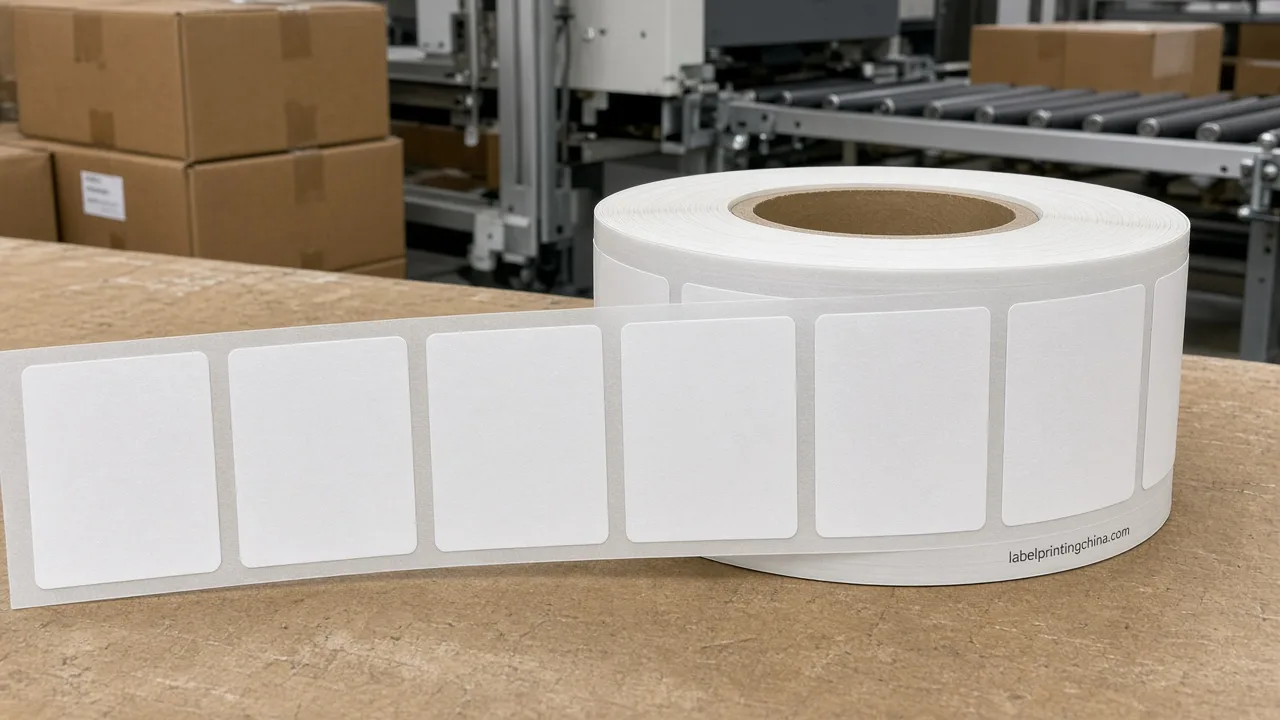
Label Printing China publishes machine-ready custom roll labels with 1-inch or 3-inch core ID options and unwind positions #1–#8 on the custom-roll-labels path when size, unwind, and quantity are on the factory quote.Those converting options hold only when size, unwind, and quantity are already on the factory quote. Converting tolerances on that path are not a substitute for the gap or OD windows in your applicator manual.
A complete applicator roll checklist does not replace the OEM manual—it forces every mount field onto one sheet before the converter quotes die-cut volume.When model, core, max OD, gap, unwind, material, and finished size travel together on the custom roll labels path, the first full roll that hits the peel plate is an approval step, not a troubleshooting shift.
Keep the checklist live: any applicator swap or magazine change reopens core, OD, and rewind rows even when artwork stays the same. That habit is what separates a roll that feeds cleanly from one that looks “close enough” until the line speeds up.