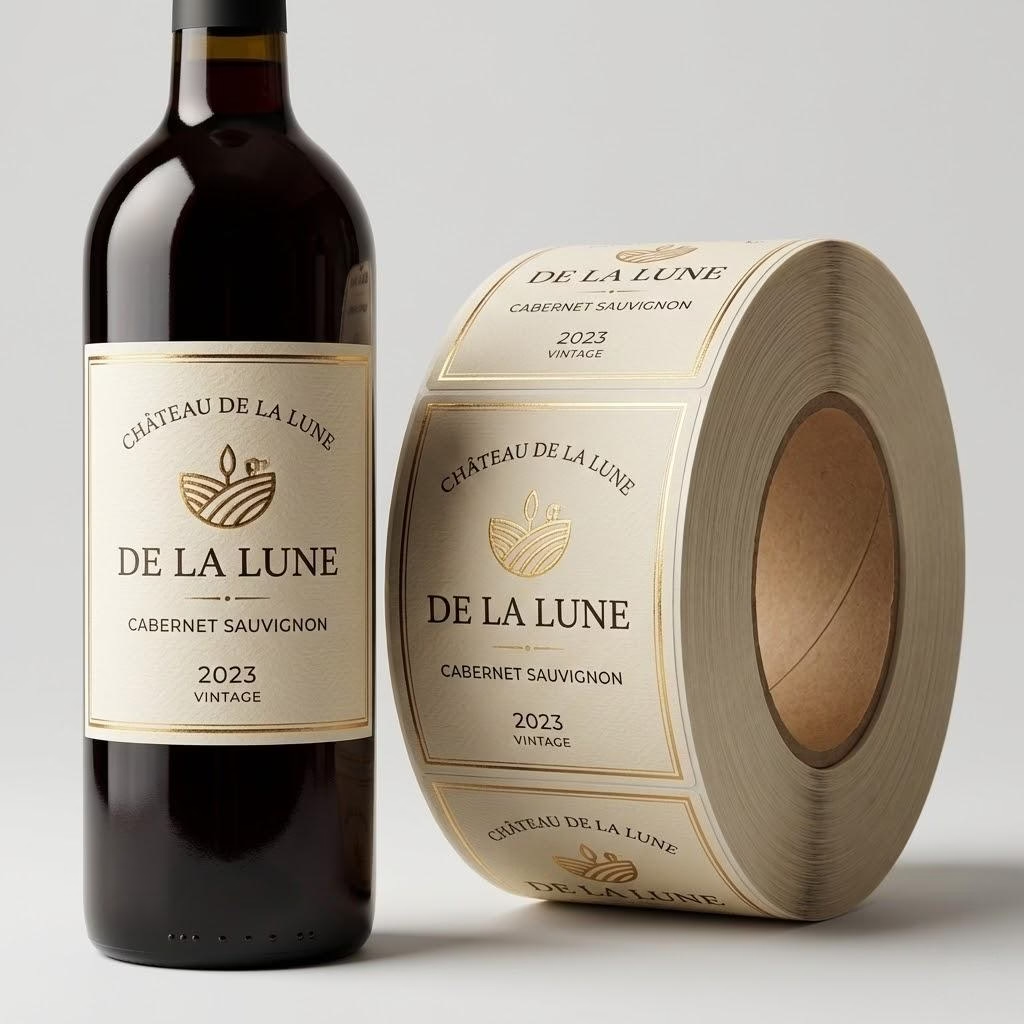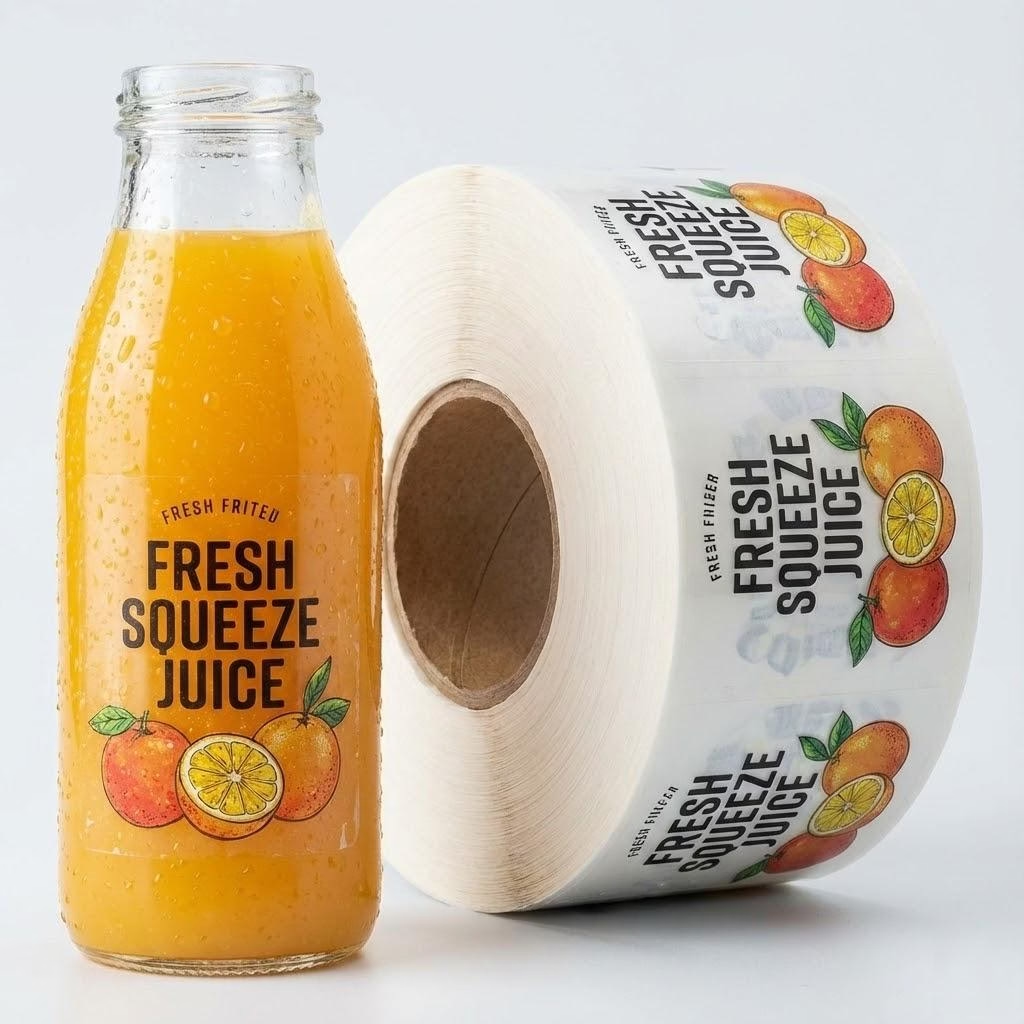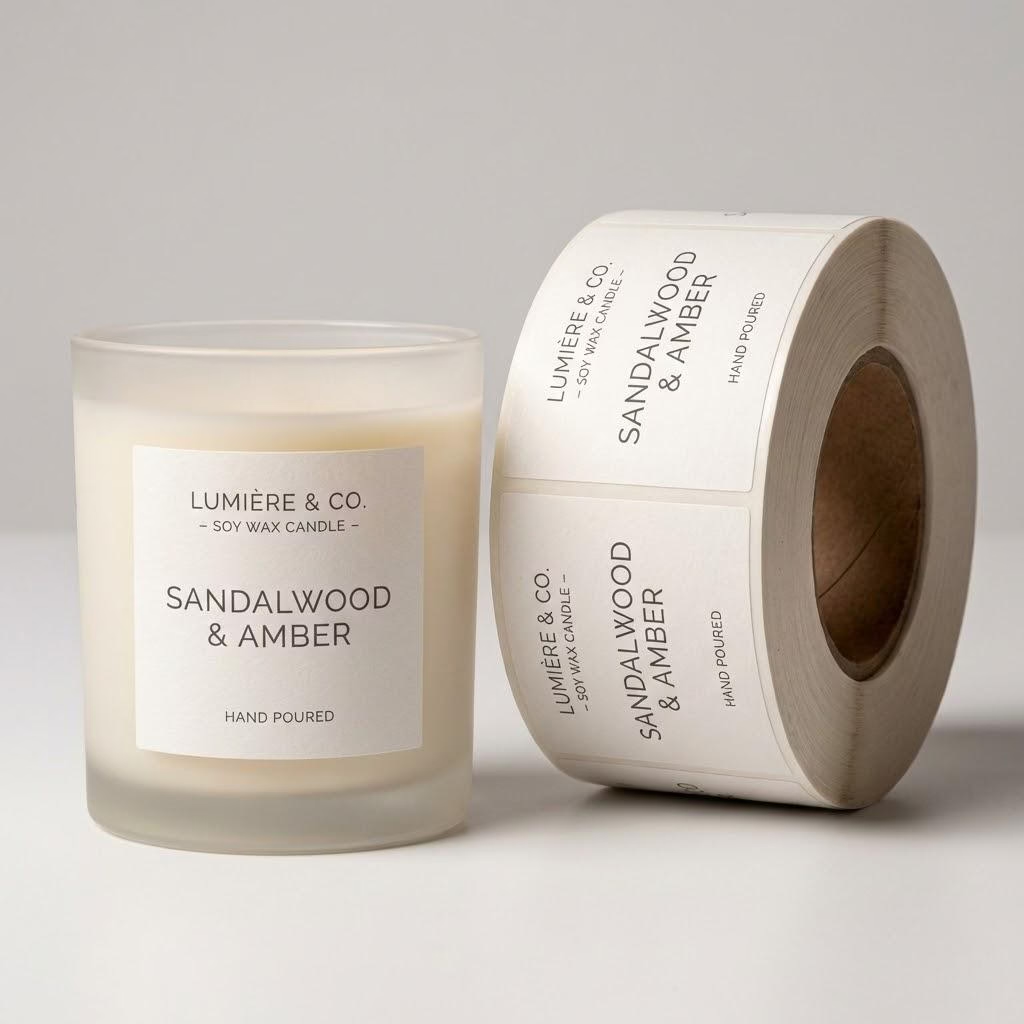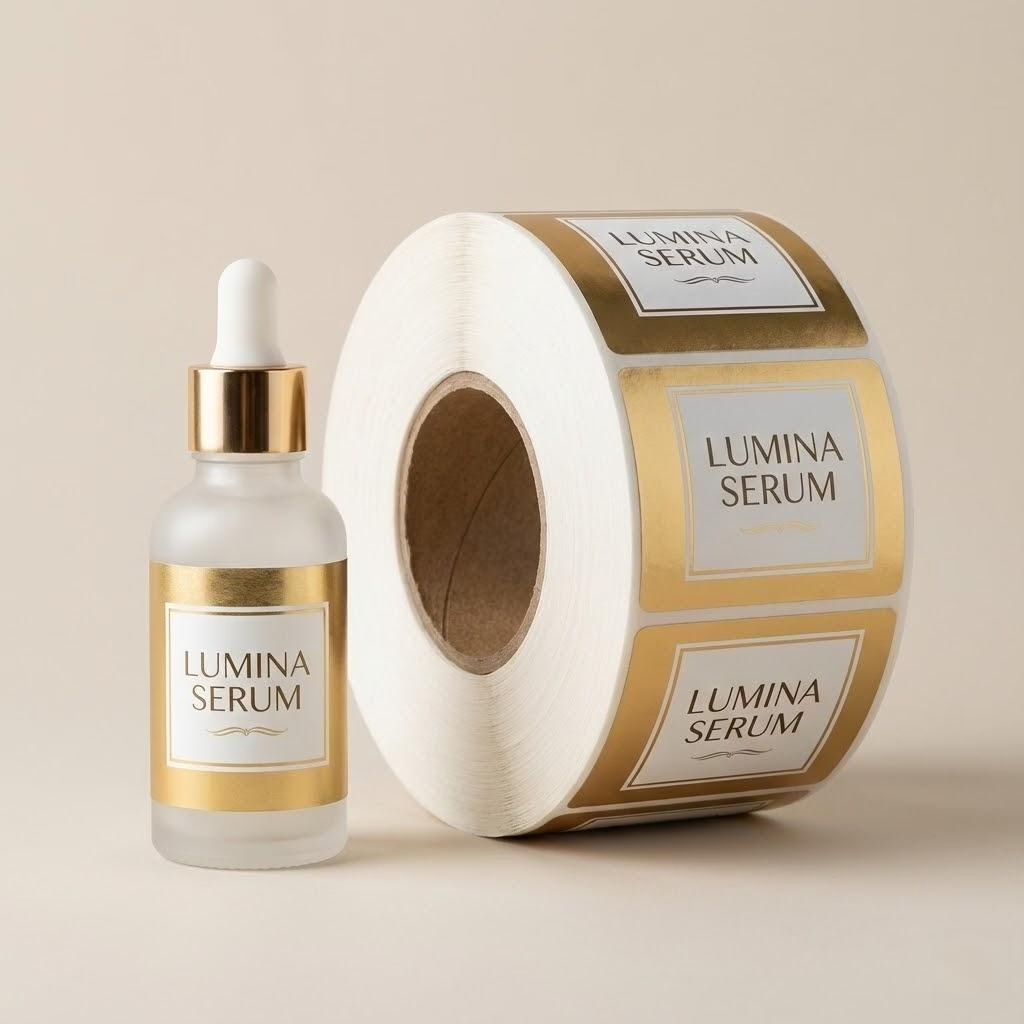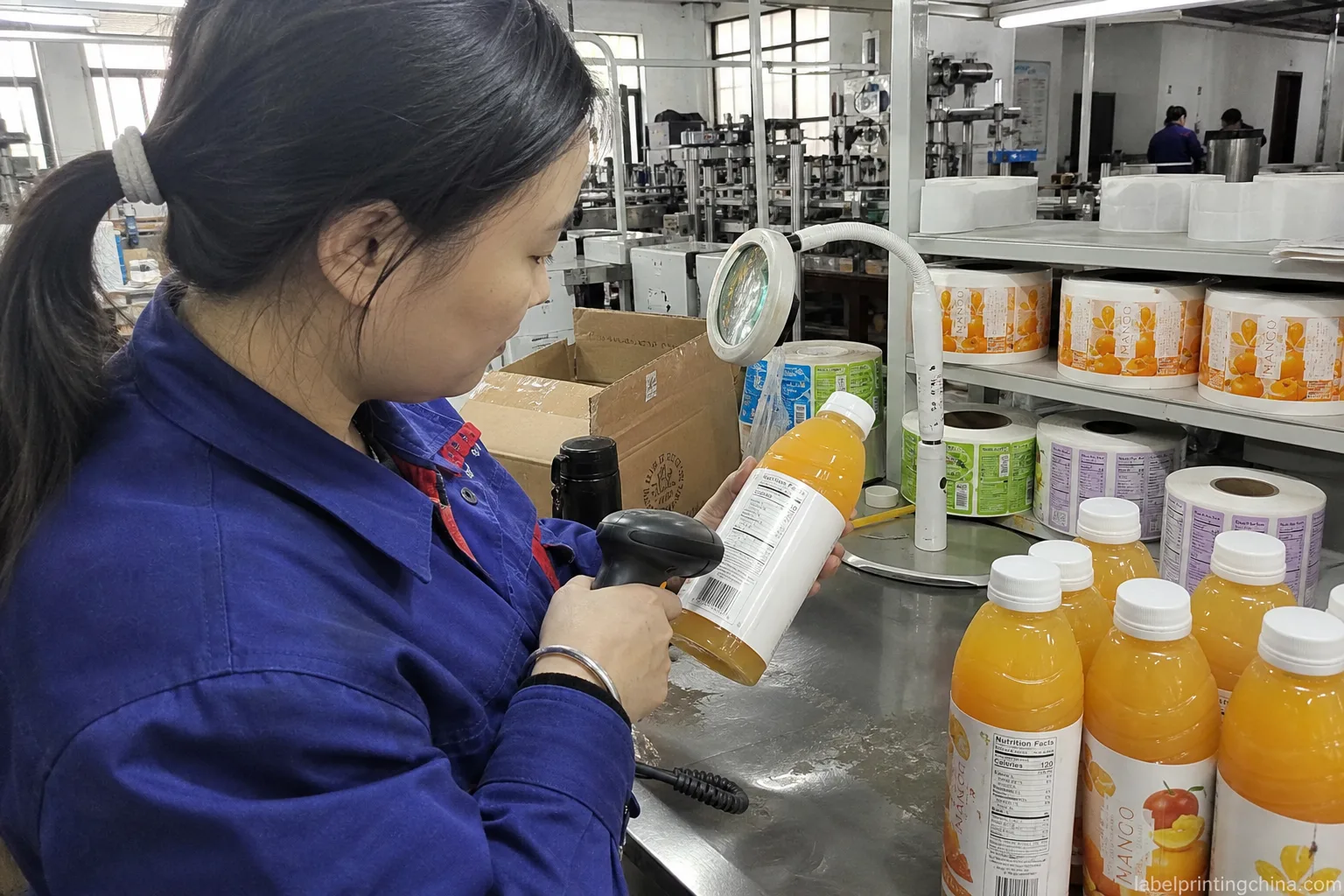
When skincare bottles live on a shower shelf or beside a steamy sink, labels face condensation, cleaner wipe-downs, hand oils, and grip friction that dry vanity packs rarely see.You can still lock a durable construction before the next reorder if you diagnose the failure layer first and match film, adhesive, and laminate to that bathroom load.
For humid bathroom skincare bottles, choose a film label with moisture-aware adhesive and protective laminate—not unprotected paper—then prove the stack on your real bottle under bathroom conditions before you scale.
You will leave able to name whether the damage is smudge, edge lift, or full peel, shortlist a film-plus-adhesive-plus-laminate path for that load, and hold volume until a bathroom-condition sample clears—so the next reorder does not repeat the same wet-room complaint.
Separate Smudge, Edge Lift, and Full Peel
Bathroom complaints often get collapsed into one word—“peeling”—even when the print face, the edge, and the full wrap fail for different reasons. Split the symptom before you change the whole bill of materials.
| Symptom | What to check first |
|---|---|
| Ink rubs, fades, or smears after steam, cleaner, or lotion wipe | Facestock face and laminate (or missing laminate)—ink and face protection, not adhesive first |
| Corners curl or lift while the center still sticks | Adhesive wet-out, edge wipe of formula/oil, squeeze flex at the rim |
| Whole label slides, tents, or comes off in one piece | Bottle surface prep, adhesive grade vs resin, and how labels peel off bottles when moisture sits under the wrap |
| Face looks fine but grit or scrub leaves white scuff | Laminate hardness and abrasion path—upgrade face protection before reprinting artwork |
Water- and oil-resistant cosmetic films help with bathroom moisture and oily formulas, but adhesive and bottle substrate still decide lasting hold — do not treat ‘waterproof’ as permanent.Use that framing when someone asks for a “waterproof forever” skincare label for shower-shelf bottles. Lasting hold still depends on adhesive, bottle substrate, laminate, and how you use the pack.
A peel-adhesion check on a representative bottle is a QA tool — one peel number alone does not tell you why a label smudged, lifted, or peeled in the bathroom.Run that check after you have named the failure mode, so you are not chasing a single lab reading while the real problem is an uncoated face under cleaner wipe or oil at the edge. One peel reading still will not separate smudge from edge lift in the field.
Photograph the worst bottle from the grip zone, the seam, and any lifted corner. Those three shots keep your team from arguing about taste when the issue is a layer stack.
Confirm Bottle Surface Before You Blame Labels
Many bathroom failures start on the bottle, not in the pressroom. Condensation, mold-release residue, soft PE squeeze walls, and curved shoulders change how adhesive wets out—even when the film facestock is correct on paper.
- Name the resin (PET, PP, PE, glass) and whether the wall flexes when users squeeze.
- Note finish: glossy, matte, soft-touch coat, or textured sleeve over the label zone.
- Check for silicone, oil film, or powder left from molding or filling.
- Mark high-flex zones (shoulder, grip, near pump) where stiff stacks wrinkle first.
- Record how the bottle lives: shower shelf steam, sink splash, or mostly dry vanity with occasional wet hands.
If the surface is still oily or dusty when you apply a sample, you will blame “bad adhesive” for a prep problem. Wipe a clean test area the same way your filling line will, then apply.Soft PE tubes and high-squeeze shampoo bottles need a flexible film path and an adhesive discussion that matches flex—not a stiff paper panel that cracks at the crease.
When two SKUs share artwork but sit in different rooms—one dry vanity jar and one shower gel—keep the design family while splitting construction. Forcing one unprotected paper look across both environments is how bathroom complaints show up on the wet SKU only.
Surface notes also keep you from over-ordering specialty clear film when you really needed opaque coverage on a dark formula. Clear constructions belong when the bottle wall is part of the brand look; confirm that path against a dedicated clear-film guide only after the wet-room load is honest.
Match Film, Adhesive, and Laminate for Bathrooms
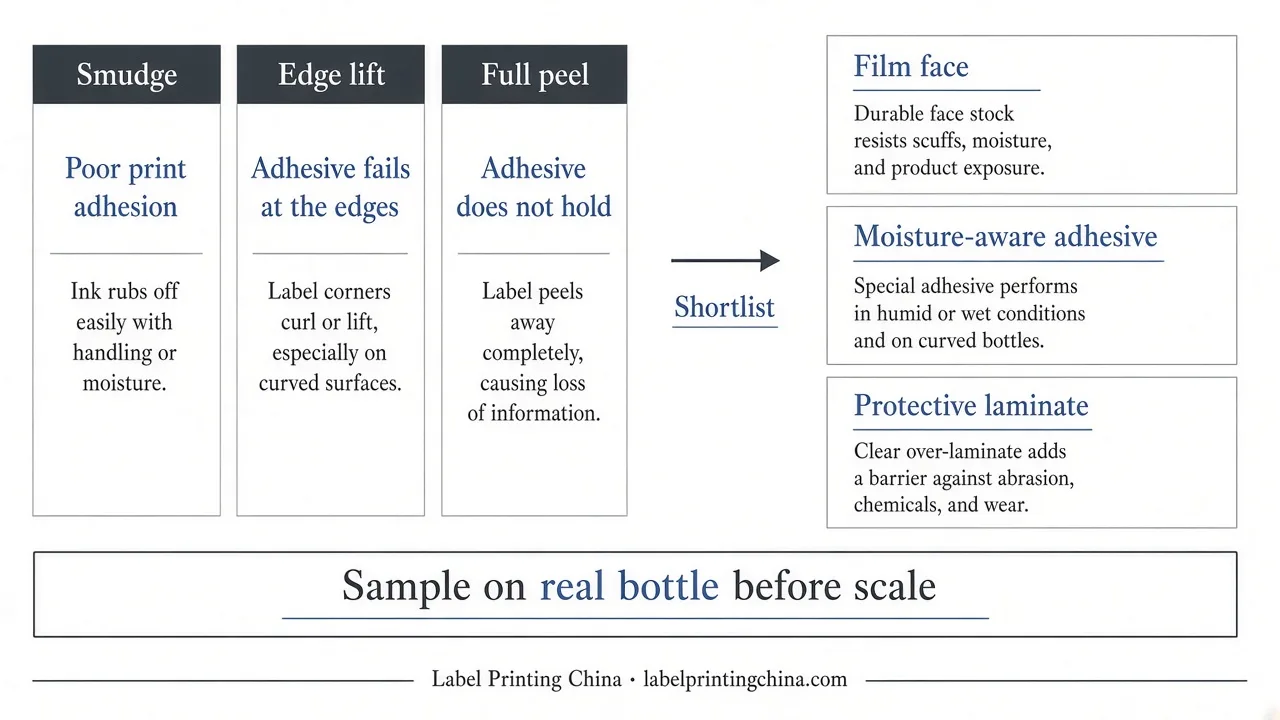
Once the failure mode and bottle facts are clear, lock a short construction—not a marketing synonym for “waterproof.” For damp bathroom hair and body packs, choose a film label construction rather than unprotected paper, and match the label to bottle shape and squeezability.Use this when shampoo, shower gel, or body-care bottles live in steamy bathrooms or are squeezable wet-use packs. This does not promise permanent waterproof performance on every PET or PP bottle.
| Bathroom situation | Keep / Choose |
|---|---|
| Dry vanity display only; rare splash; gentle handling | Paper can stay if you accept laminate when any wet risk appears later |
| Shower shelf steam, condensation, or frequent wet hands | Film facestock (e.g. white BOPP) + moisture-aware adhesive + protective laminate |
| Serum, oil, or fragrance wipe across the label edge | Film + oil-aware adhesive discussion; keep laminate—do not drop to uncoated stock |
| Squeeze bottle or soft wall with crease risk | Flexible film path; avoid stiff paper on high-flex zones |
| Clear bottle and “no-label” look still required in a wet room | Clear film stack with laminate; lock wet-room load before chasing a no-label look specialty |
Material hubs such as UPM cosmetic label materials frame the same idea: match film and adhesive to personal-care pack conditions, then print. Your job as the buyer is to bring bottle resin, shape, and bathroom-use facts so the printer is not guessing from a flat PDF.
Laminate is not a vanity upgrade after the fact. Gloss or matte laminate buys splash and abrasion resistance when it is a real film layer, not a light varnish.Soft-touch and foil can follow for brand feel, but they should not replace the durability decision. If a designer wants uncoated paper texture for a “natural” story on a shower SKU, either move that look to a dry vanity line or accept laminate that slightly changes the tactile feel.
For the wider facestock-and-finish map across dry and wet skincare packs, keep this bathroom path short and send teammates to the broader material checklist when they need the full paper / white film / clear film catalog. This article stays on humid-room failure and the stack that survives it.
Run a Bathroom-Condition Sample Before Scaling
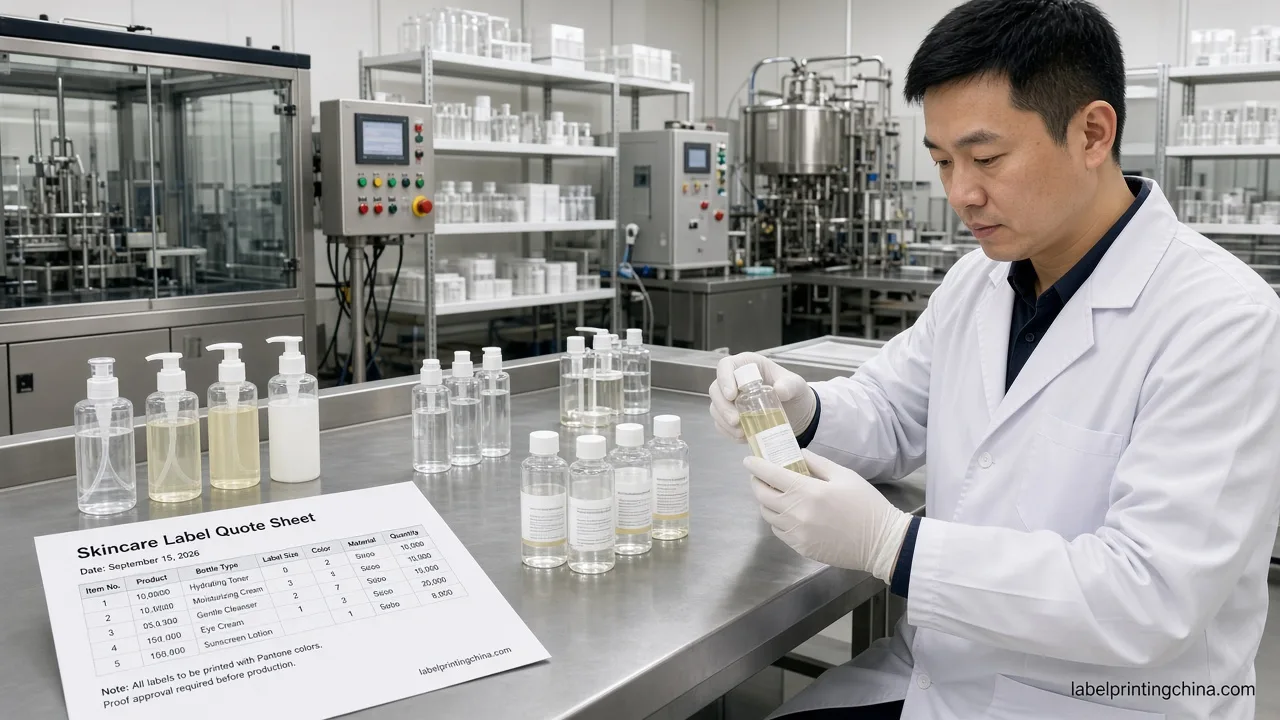
A PDF proof shows color and layout. It does not prove the wrap will stay flat after a steamy week on your curve. Hold mass volume until a bathroom-condition sample on the real bottle clears a simple Ready or Hold gate.
| Signal | Ready or Hold |
|---|---|
| Film + adhesive + laminate match the bathroom situation table | Ready to request an application sample on the real bottle |
| Only digital mockups; no physical bottle or clear surface notes | Hold volume until you ship or photograph the container and resin |
| Smudge, edge lift, or full peel after steam, damp wipe, or product wipe on the sample | Hold—change face, adhesive, or laminate before reprint |
| Sample stays readable and flat after bathroom-like handling | Ready to lock roll specs and place production quantity |
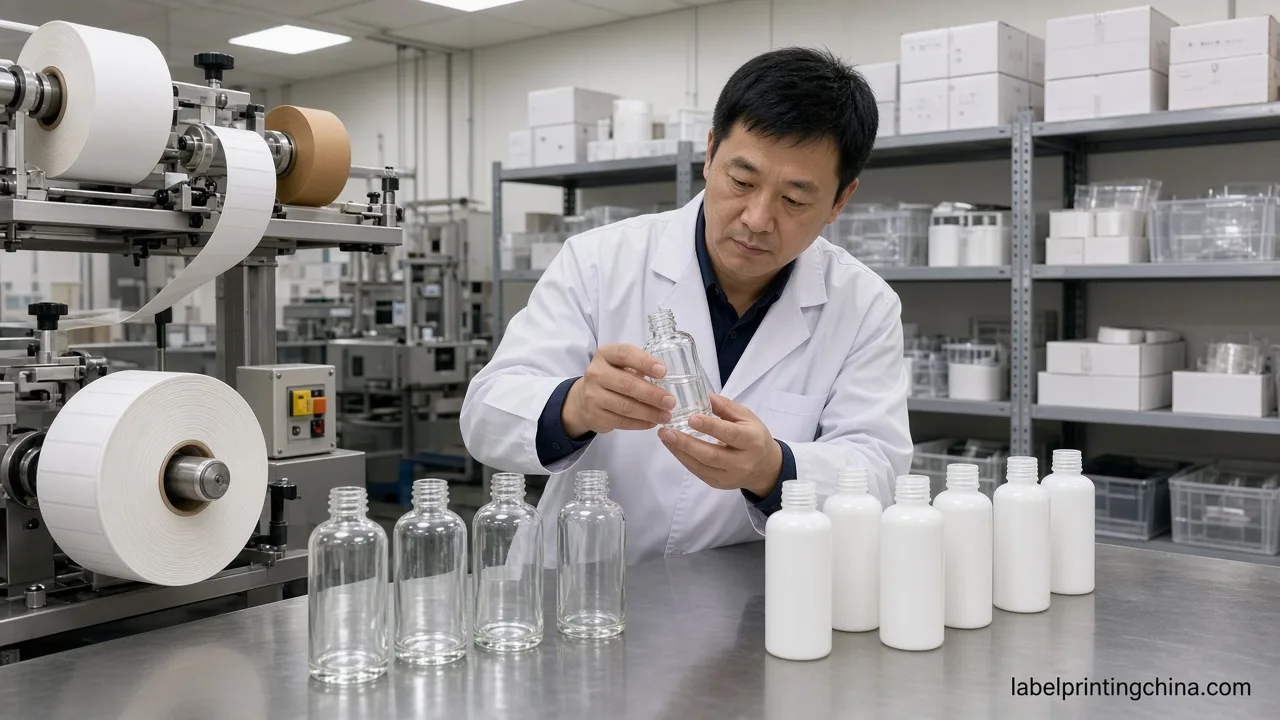
Zhongda keeps a factory photo record of cosmetic labels under multi-hour chemical and adhesion sample checks — enough to say sample checks happen, never enough to publish a failure rate.Treat that practice as evidence that bathroom-condition samples are a normal gate before you release volume. Do not treat the photo record as a published failure rate or a universal shower-cycle guarantee.
Standards such as the ASTM peel adhesion method help quality teams check pressure-sensitive stocks on a representative substrate. Pair any peel reading with your symptom table.
Watch-out: a clean PDF color proof is not a bathroom-condition sample. If steam, damp wipe, or formula wipe lifts an edge on the real bottle, hold volume and change the stack before reprint.
On the sample, wipe once with a damp cloth and once with a thin film of your formula if product can reach the label. Flex the bottle if customers squeeze it. Photograph seam, curve, and grip. If the edge lifts, change the stack now—not after cartons of finished goods sit in a warehouse.
- Red flag: unprotected paper on a shower-shelf SKU with no laminate plan.
- Red flag: quoting “waterproof forever” without bottle resin or bathroom-use notes.
- Red flag: approving volume from mockups only, with no physical sample gate.
Need a bathroom durability review on your bottle?
Send a bottle photo, bottle material, bathroom-use details, and artwork for a durability review.
What to Send for a Durability Review
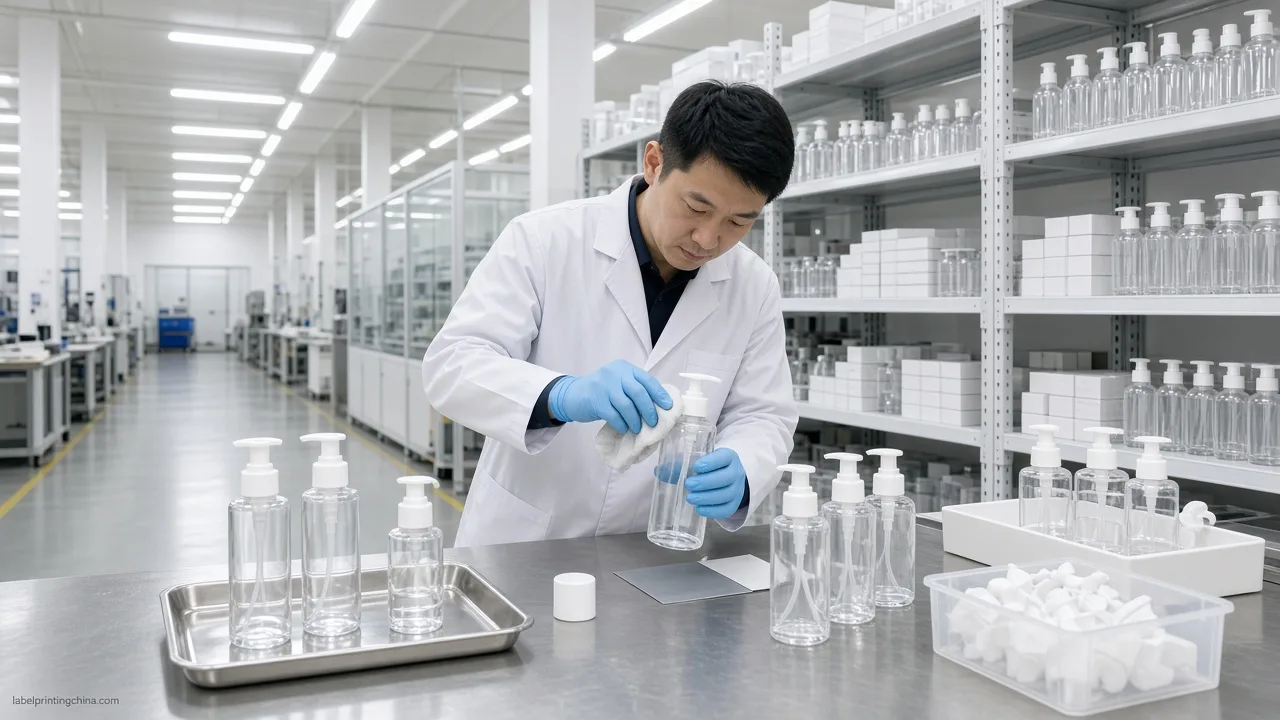
When you are preparing a bathroom-durability quote for skincare or haircare bottle labels, send a complete brief—not a mood sentence.Before you ask for a durability quote, send bottle photo, bottle material, bathroom-use details, and artwork — the same fields real waterproof matte shampoo and oil-dropper RFQs already need. Those fields let the printer match film, adhesive, and laminate to how the bottle lives in the bathroom. They are not a promise of permanent waterproof performance.
- Bottle photo (front, seam, and any current damage if you are reprinting).
- Bottle material and whether the wall squeezes or stays rigid.
- Bathroom-use details in one line (shower shelf / sink splash / wet hands / oil contact).
- Failure mode you already see—or fear—smudge, edge lift, or full peel.
- Artwork status (final PDF or still draft) and preferred matte or gloss look after durability is locked.
- Quantity band and whether you need roll labels for line application.
Completeness here protects schedule. When bathroom-use details are missing, the printer must guess between paper and film.When bottle resin is missing, adhesive gets requoted after the first sample fails. Keep ingredient-panel legal copy on a separate compliance track; this list only decides what you print on and how you protect it for wet-room handling.
If you still need the wider paper / white film / clear film catalog after this wet-room shortlist, use the cosmetic label material checklist. For a true no-label look on glass after wet load is locked, open the clear BOPP cosmetic guide.
If you are comparing two quotes, ask both suppliers to price the same film-plus-laminate path and the same sample gate. A cheaper unprotected paper line that skips bathroom sampling is not a comparable offer for shower-shelf SKUs.
Lock Your Bathroom Label Spec Before Ordering
When failure mode, bottle surface, film-adhesive-laminate stack, and bathroom sample agree, you are no longer shopping vague “waterproof” language. You have a reorderable construction for humid-room skincare bottles and an RFQ pack a factory can price without endless redraws.That lock is what keeps the next launch from repeating smudge or peel on the shower shelf. If the next SKU changes resin or moves from vanity to wet room, run the same path again before you reuse last season’s stock call—and send the durability brief to your cosmetic label partner only after those fields are written down.