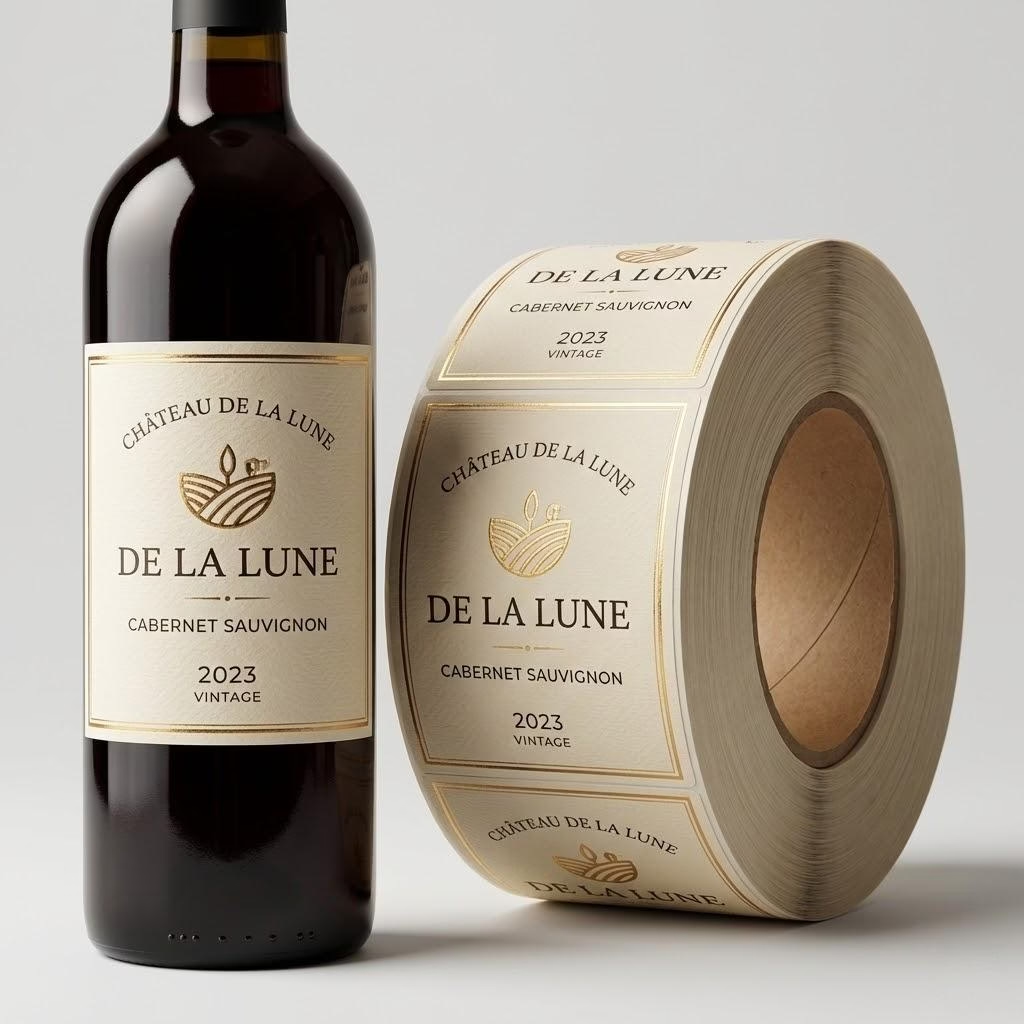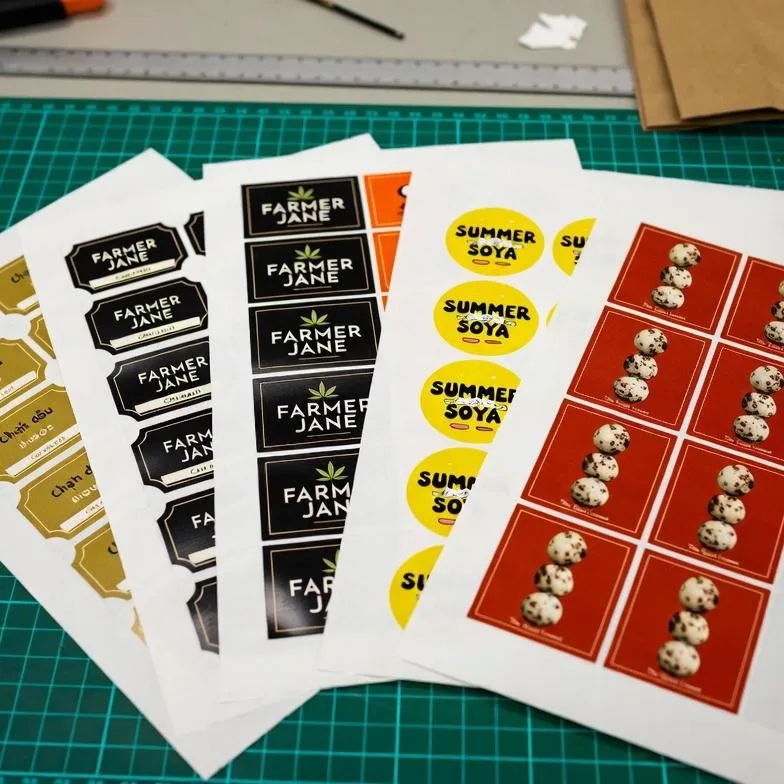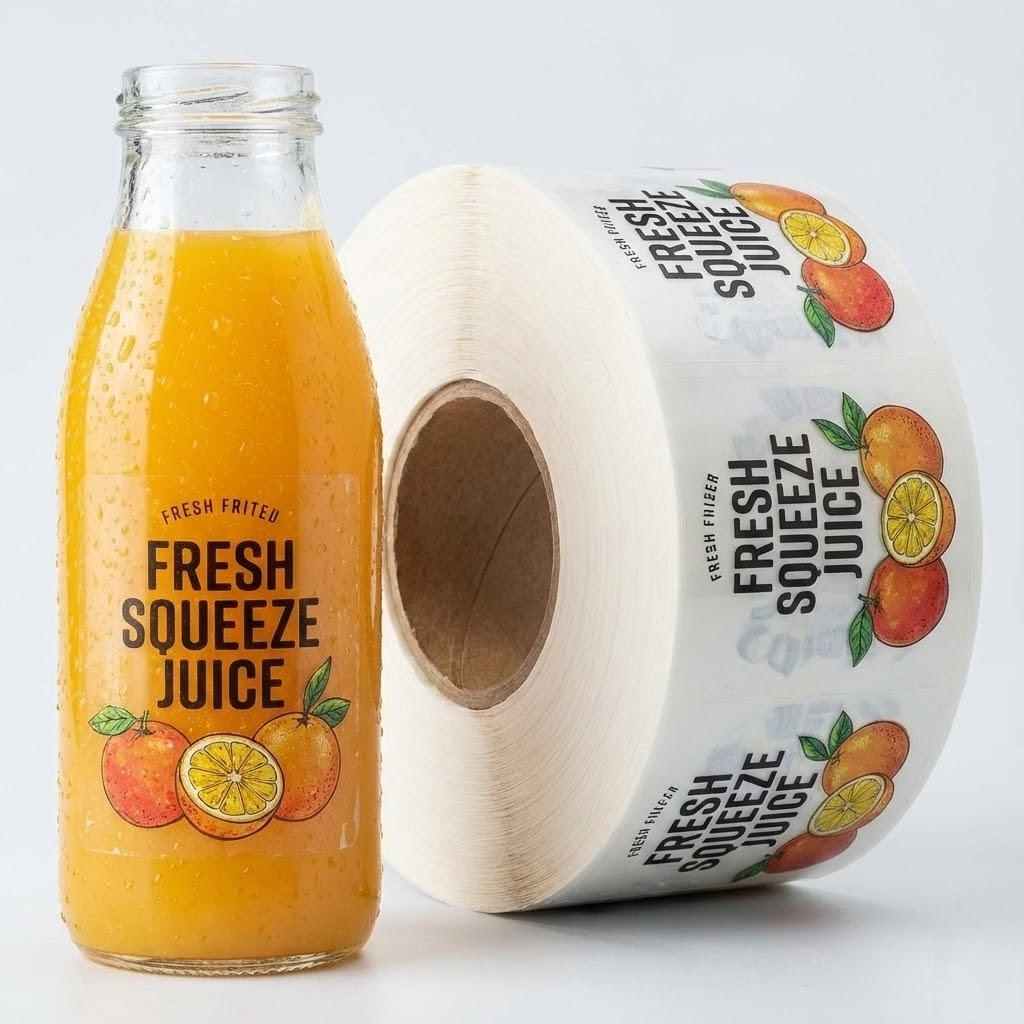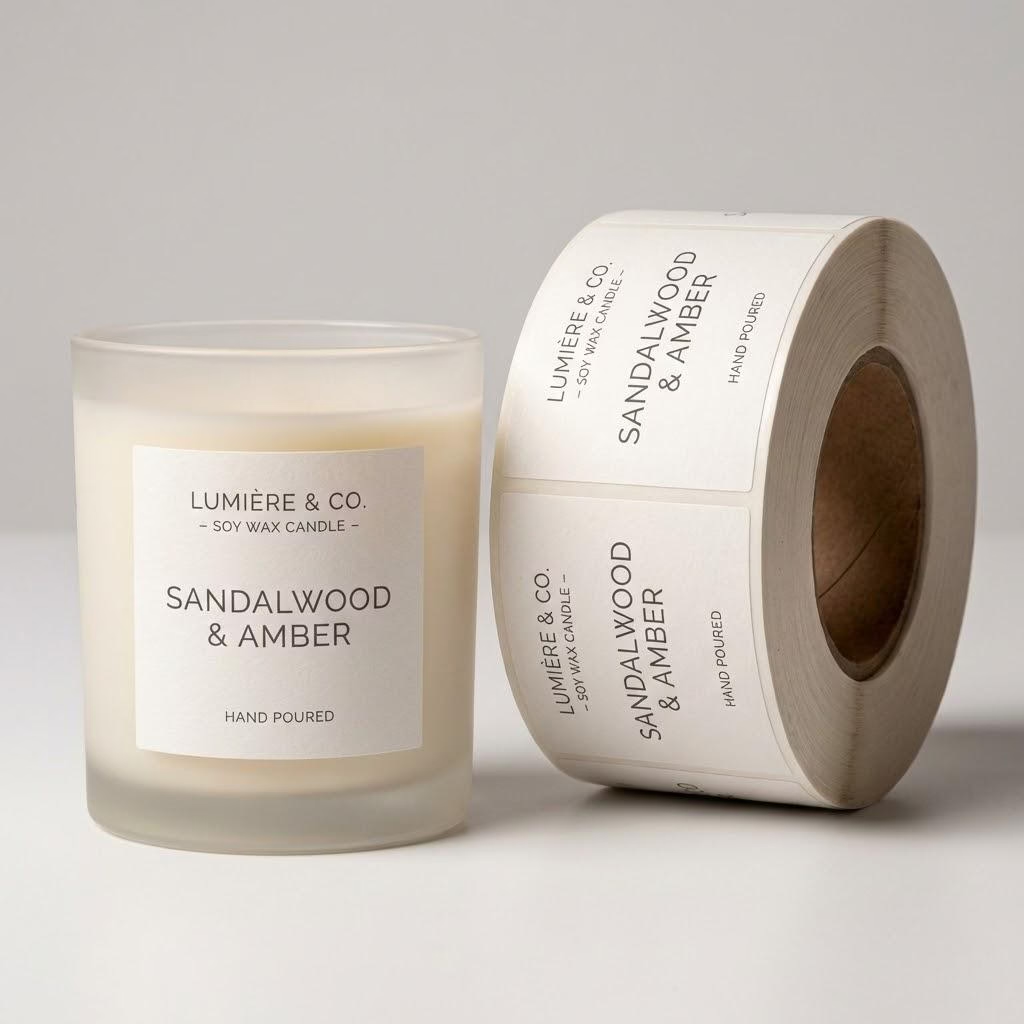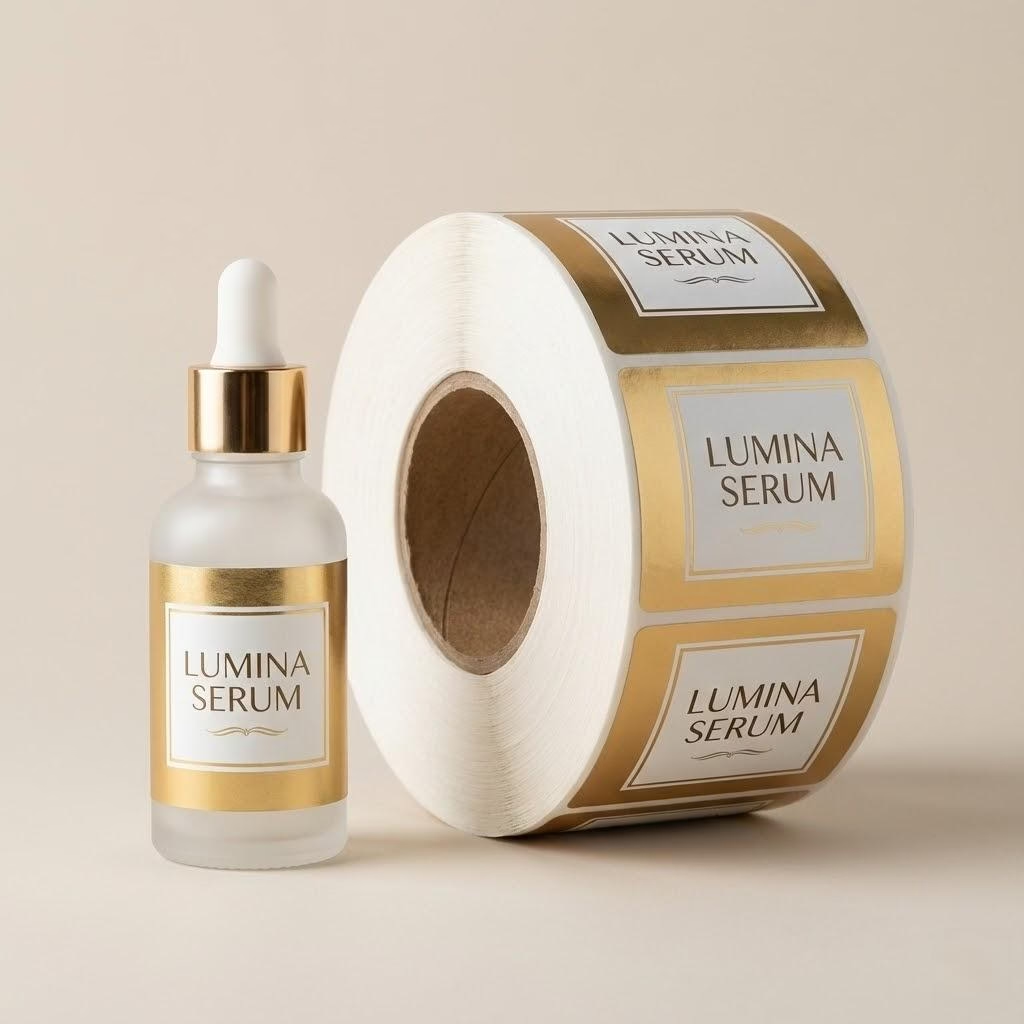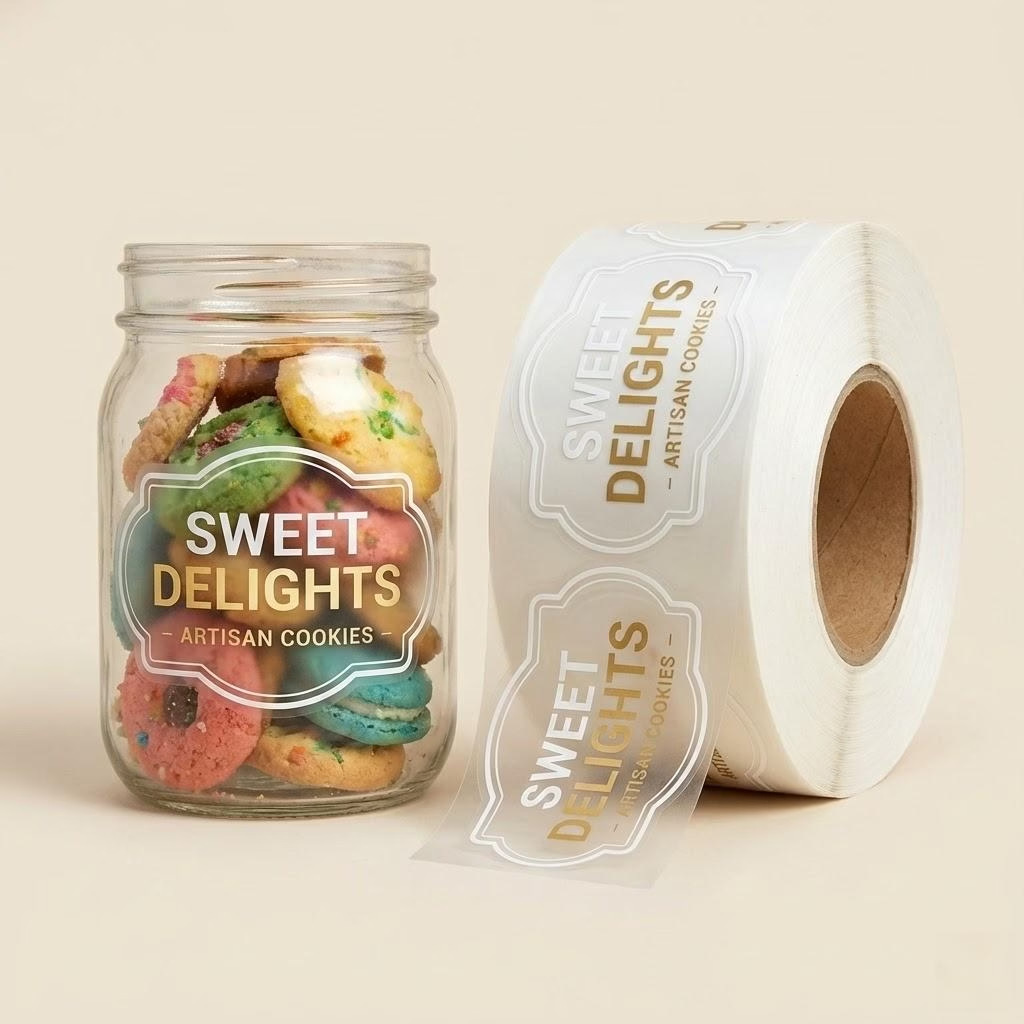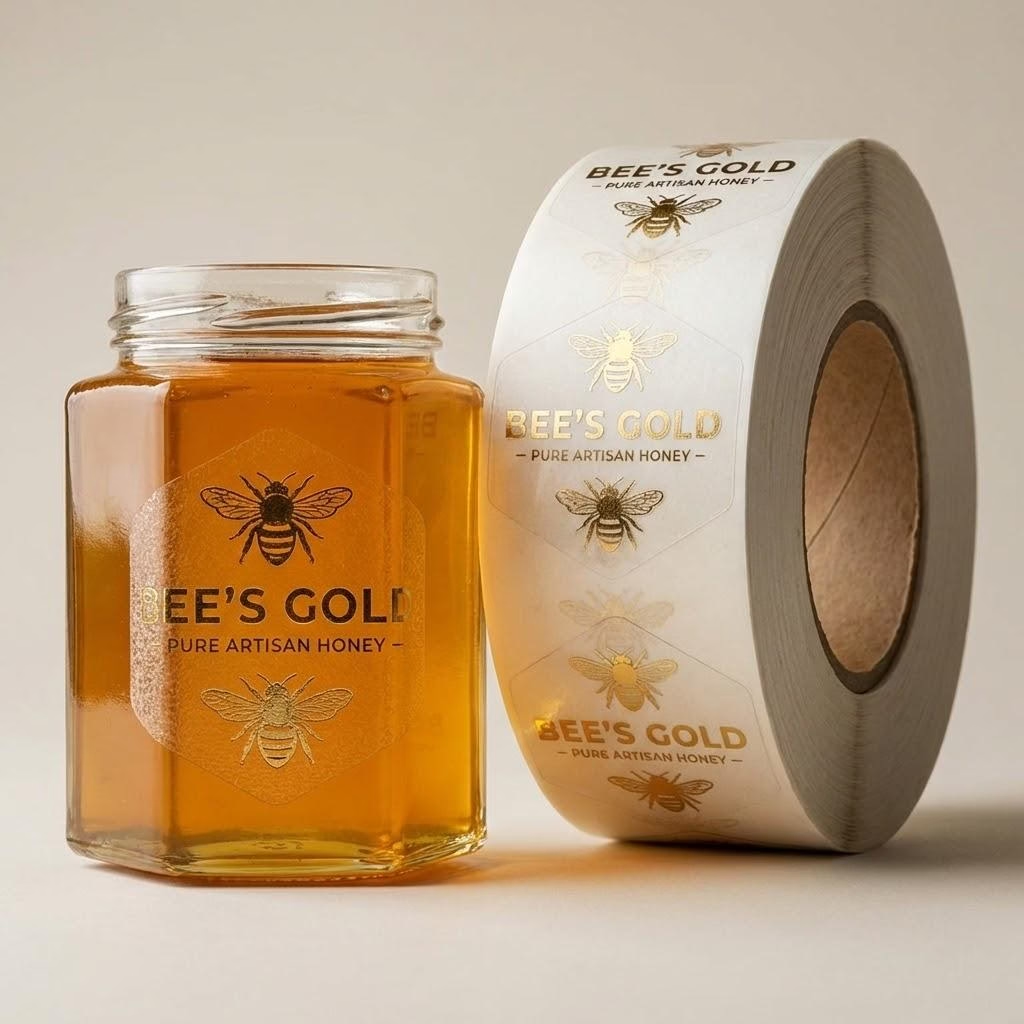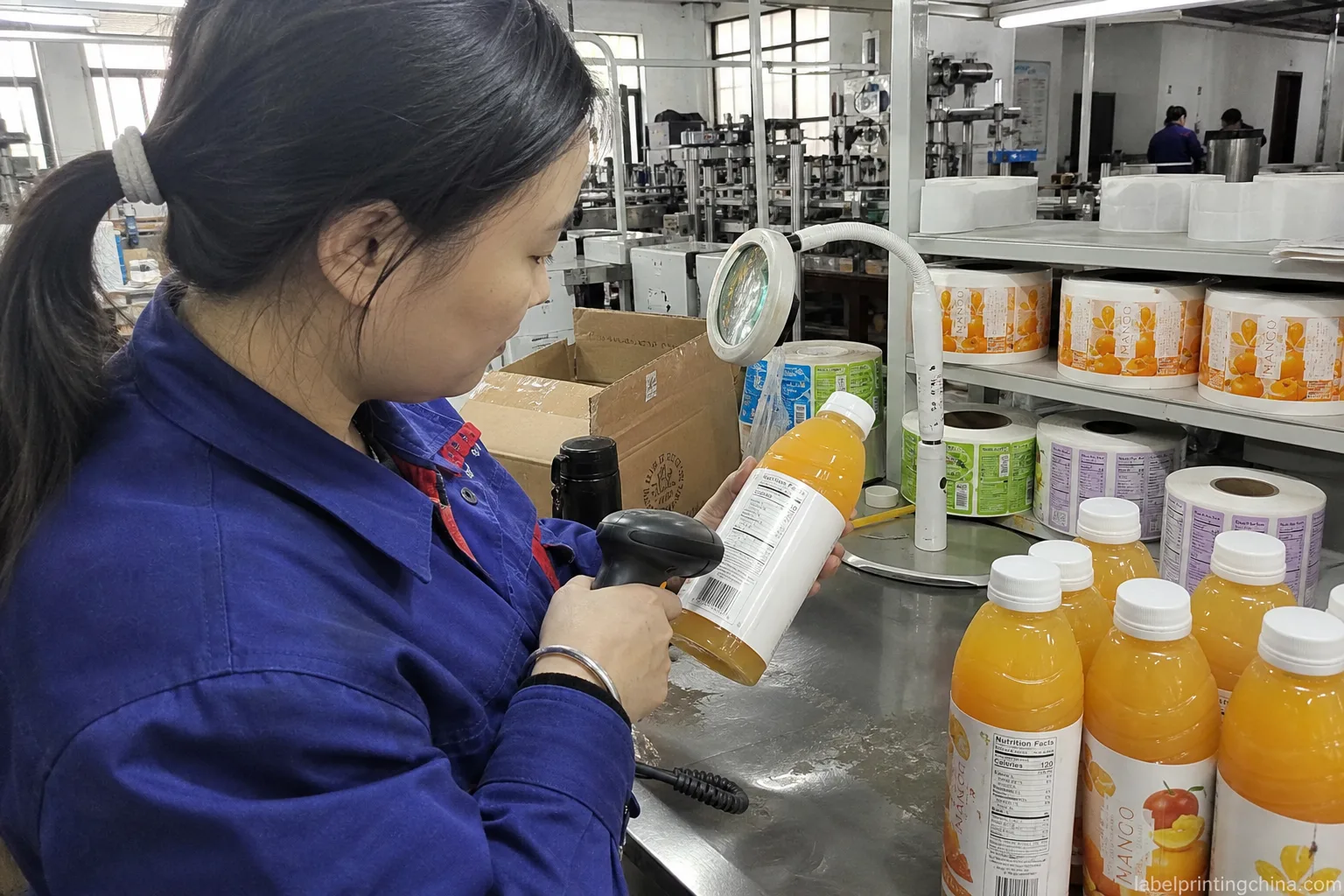
When you are lining up a new serum, cream, or cleanser for production, the label decision usually arrives before you have locked every pack detail. You still need a durable, quote-ready combination of facestock and finish that matches the bottle and the bathroom shelf. You can settle that path without guessing.
Choose cosmetic label material by matching your container and use environment first, then lock paper, white BOPP, or clear film, add gloss or matte laminate for wet or oily contact, and clear a physical application sample before you scale.
You will leave with a single checklist path: environment → facestock → finish → sample gate → RFQ fields, so the next skincare label round does not stall in vague “premium look” debates.
Read Your Container and Use Environment First
Start with what your pack actually does on the shelf and in the bathroom, not with a finish mood board.
Write down the container material (PET, PP, PE, glass), whether the surface is flexible or rigid, and whether the label will see steam, condensation, hand oils, formula wipe-down, or mostly dry display. Those four facts already rule out half of the material catalog.
- Name the container resin or glass and note squeeze vs rigid walls.
- Mark wet-zone use (shower shelf, sink splash) versus dry vanity display.
- Flag oil, alcohol, or fragrance contact on the label face or edge.
- Decide if you need an opaque brand panel or a clear, no-label look.
- Only then open facestock options—paper, white BOPP, or clear film.
If you skip this order, you will often pick a pretty paper stock for a steamy bathroom SKU, or chase clear film when you really needed opaque coverage for a dark formula. Environment first keeps the rest of the checklist short.
If your line is automated, tell the printer the preferred unwind and core early so the material choice does not fight the machine later.
- Steam and condensation after showers
- Product transfer from oily or alcohol-rich formulas
- Friction from bags, drawers, and repeated gripping
- Retail lighting that shows scratches on soft finishes
Those stresses are why skincare packs punish weak facestocks faster than dry pantry labels. Your notes here become the first column of every later table.
For shower-shelf SKUs, use our bathroom label durability to lock film, adhesive, and laminate before you freeze the facestock path.
Pre-press note for your team: if the bottle resin, wet-zone mark, or oil-contact flag is still blank, pause artwork approval until those three fields are written down.
- Red flag: ordering uncoated paper for a shower SKU
- Red flag: locking foil before the facestock survives a wet wipe
- Watch-out: clear film on dark formulas without a white underprint plan
Treat those watch-outs as hold points, not taste debates.
Pick Paper, White BOPP, or Clear Film for Your Skincare Pack
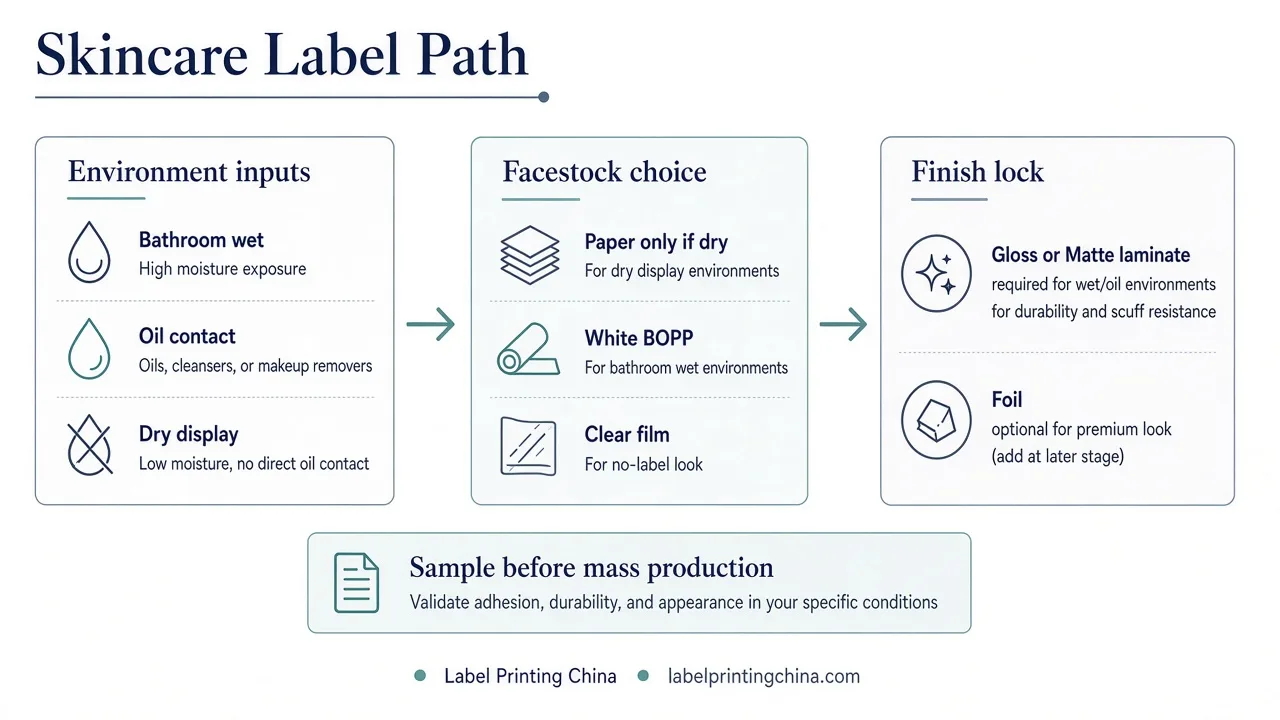
Once the environment is clear, pick one facestock path. If your pack sees bathroom moisture or oil contact, choose a film facestock such as BOPP rather than unprotected paper.Use this when the pack sees wet-use, oily formula contact, or frequent bathroom and retail handling. Adhesive and liner still decide how long the label lasts, and this path does not cover ingredient-panel wording.
| Your situation | Keep / choose |
|---|---|
| Dry vanity display, gentle handling, eco or textured look | Paper facestock—add laminate if any splash risk appears later |
| Bathroom moisture, condensation, or frequent handling | White BOPP (or similar film)—default for most commercial skincare |
| Oil, serum, or fragrance wipe across the label edge | Film facestock + oil-aware adhesive discussion on the RFQ |
| Clear bottle and a printed-on “no-label” look | Clear film—then review the dedicated clear BOPP cosmetic guide for specialty detail |
| Squeeze tubes or soft walls with flex and crease risk | Flexible film path; avoid stiff paper on high-flex zones |
Paper still earns a place for dry organic lines, but only when you accept laminate if humidity rises. White BOPP covers most lotion and cleanser launches because it stays readable after splash and hand contact.Clear film is a brand choice, not a default—use it when the bottle surface is part of the design, and keep white underprint plans ready for dark formulas.
Do not treat vinyl-versus-BOPP marketing slogans as your only decision. For this checklist, decide film versus paper first, then confirm roll or sheet format with your applicator team.
When two SKUs share a brand family but live in different rooms—one vanity jar and one shower gel—you can keep artwork related while splitting facestock. That split is cheaper than forcing one weak material across both environments and reprinting both after complaints.
Material OEM hubs such as UPM cosmetic label materials frame the same idea: match the construction to the pack and use case, then print. Your job as the brand buyer is to bring the pack facts so the printer is not guessing from a flat PDF alone.
Choose Gloss or Matte Laminate After You Lock the Facestock
Finish comes after facestock. Protect cosmetic labels with gloss or matte laminate; skip uncoated or varnish-only finishes when moisture and oils are in play.Use this when labels face product residue, moisture, or frequent handling. Gloss is not automatically better for sales than matte; soft-touch and foil stay optional after durability is locked.
| Finish goal | Keep / choose |
|---|---|
| Soft, low-glare clinical or clean-beauty shelf look | Matte laminate over the locked film or laminated paper |
| Saturated color pop under retail lighting | Gloss laminate—expect more fingerprint visibility |
| Wet or oily contact still expected after branding is set | Keep a protective laminate; do not drop to uncoated stock |
| Optional luxury accent (foil or raised UV) | Treat as a branch after durability is locked—see tactile cosmetic branding guide |
Matte and gloss both buy you abrasion and splash resistance when the laminate is real, not a light varnish.Soft-touch can follow later if feel is a brand requirement, but it should not replace the durability decision. Foil and spot UV belong after you know the facestock will survive the bathroom—otherwise you decorate a label that lifts at the edge.
If your designer wants uncoated paper texture for a “natural” story, keep that look on dry SKUs only, or accept a protective laminate that slightly changes the tactile feel. Selling an uncoated wet-room label as “premium” usually becomes a peeling complaint, not a brand win.
Ready to turn this checklist into a factory quote?
Send your container material, use environment, finish preference, quantity, and artwork for a cosmetic-label recommendation.
Hold Mass Production Until Your Application Sample Clears
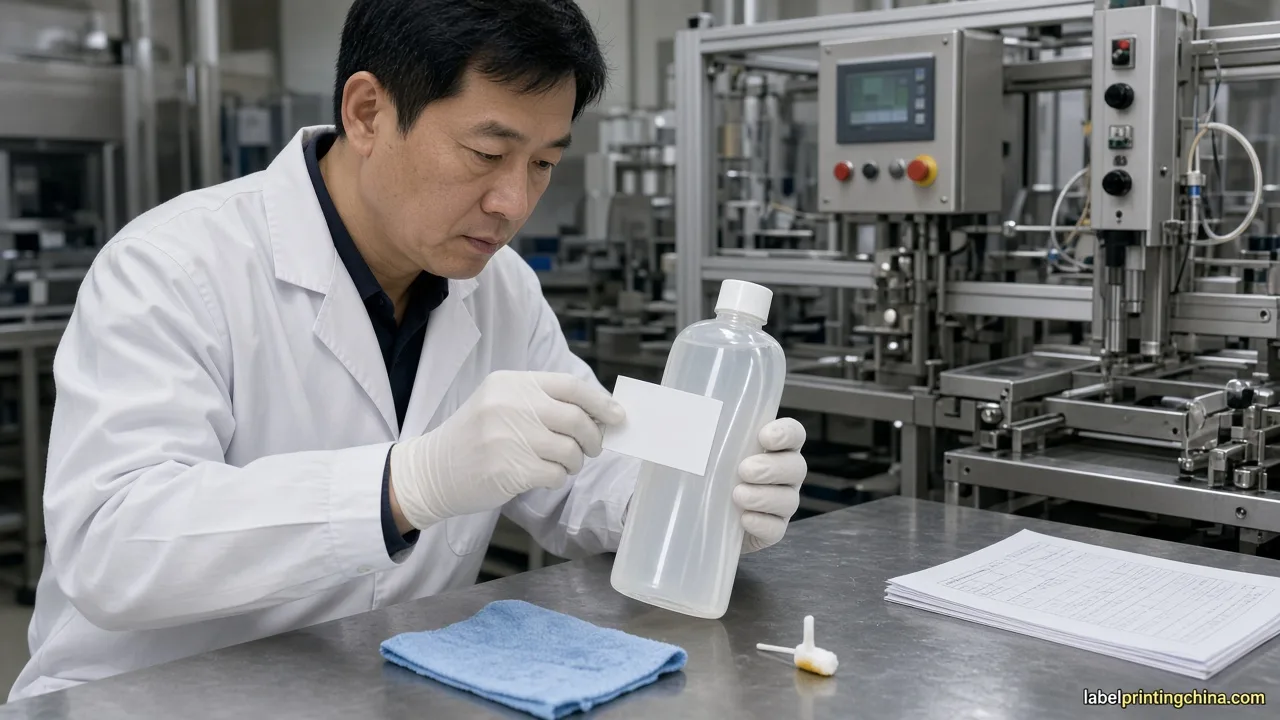
A PDF proof shows color and layout. It does not prove the label will stay flat on your curve after a steamy shower week. Use a Ready / Hold gate before you release the full roll order.
| Signal | Ready or Hold |
|---|---|
| Facestock + laminate pair matches the environment table above | Ready to request an application sample on the real bottle |
| Only digital mockups; no physical bottle in hand | Hold mass production until you ship or photograph the container |
| Edge lift, wrinkle, or ink smear after wet wipe or oil wipe on the sample | Hold—change facestock, adhesive, or finish before reprint |
| Sample stays flat after handling and light moisture exposure | Ready to confirm roll specs and place the production quantity |
Ask for a sample on the actual container resin whenever the SKU is wet-use, oily, or flexible. For most first runs, verify adhesion within 24 hours and again after 3 days of normal handling; measure wrap height in mm on the real bottle, and confirm MOQ against your 500–5,000 pcs launch band before you approve plates or digital queue time.Wipe the face once with a damp cloth and once with a thin film of your product if the formula can reach the label. If the edge lifts, you change the combination now—not after five thousand labels sit in a carton.
Photograph the sample from the seam, the curve, and the grip zone. Those three angles catch wrinkles that a flat phone photo of the front panel will miss. Share the photos with the same RFQ thread so the factory sees the failure mode, not just the word “peeling.”
Before you ask for pricing, lock container material, use environment, finish preference, quantity, and artwork — the same fields real cosmetic RFQs already need.Use this field list when you are preparing a production quote for skincare or cosmetic labels. This does not publish a measured factory failure rate or invented lab numbers; send the locked fields with your quote request.
Those five fields keep the conversation on custom cosmetic labels productive. You are not shopping desktop sticker printers or free templates; you are sending a production-ready skincare pack brief.
Build the RFQ So Sales Can Price Without Rework
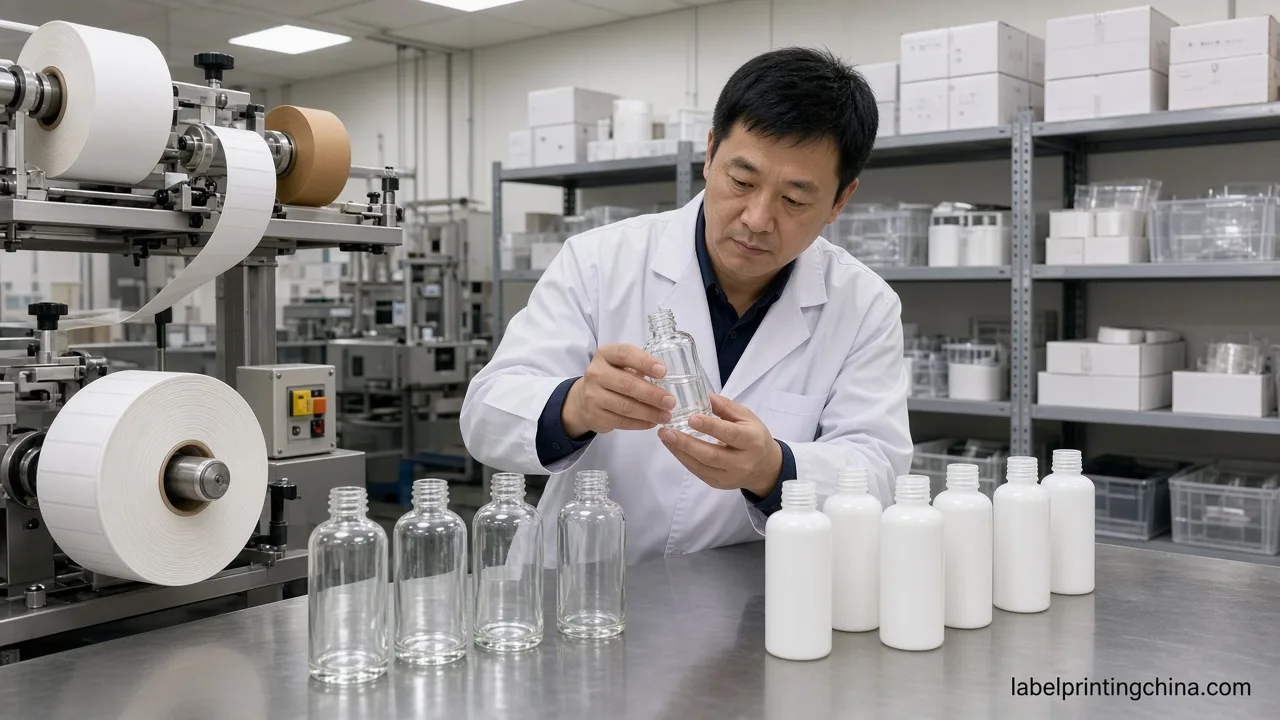
Once the sample clears, write the RFQ like a short engineering note, not a mood sentence.
- Container resin, diameter, and whether the wall flexes.
- Use environment in one line (dry vanity / bathroom wet / oil contact).
- Facestock and laminate choice from the tables above.
- Quantity by SKU, roll vs sheet, and target ship window.
- Artwork status (final PDF or still draft) and any foil/UV branch.
That list mirrors what multi-size fragrance and finish-open perfume projects already force into the inbox. When you omit environment, the printer must guess between paper and film.When you omit finish, gloss and matte get requoted after the first proof. Completeness here is how you protect both schedule and brand look.
Legal ingredient panels and MoCRA-style disclosures stay with your compliance owner. This checklist only decides what you print on and how you protect it; keep copy compliance on a separate track.
What Your Locked Spec Means for the First Production Run
When environment, facestock, laminate, and sample gate agree, you are no longer arguing about vague “premium” language. You have a combination your team can reorder, and a money-page RFQ that a factory can price without endless redraws.
That is the point of this checklist: fewer reprint surprises on bathroom and vanity packs, and a clearer path from brand intent to roll labels. Keep clear-film specialty work and heavy foil storytelling on their own guides, and keep legal panel copy with your compliance owner—not inside the print-material decision.
If your next SKU changes bottle resin or moves from dry display into the shower, run the same four steps again before you reuse last season’s stock call. A locked checklist is a living control, not a one-time launch trophy.
Keep a one-page internal note with the winning facestock, laminate, sample date, and RFQ link. When a new shade or fragrance joins the line, you only re-check the environment row instead of restarting the whole brand debate from scratch.